
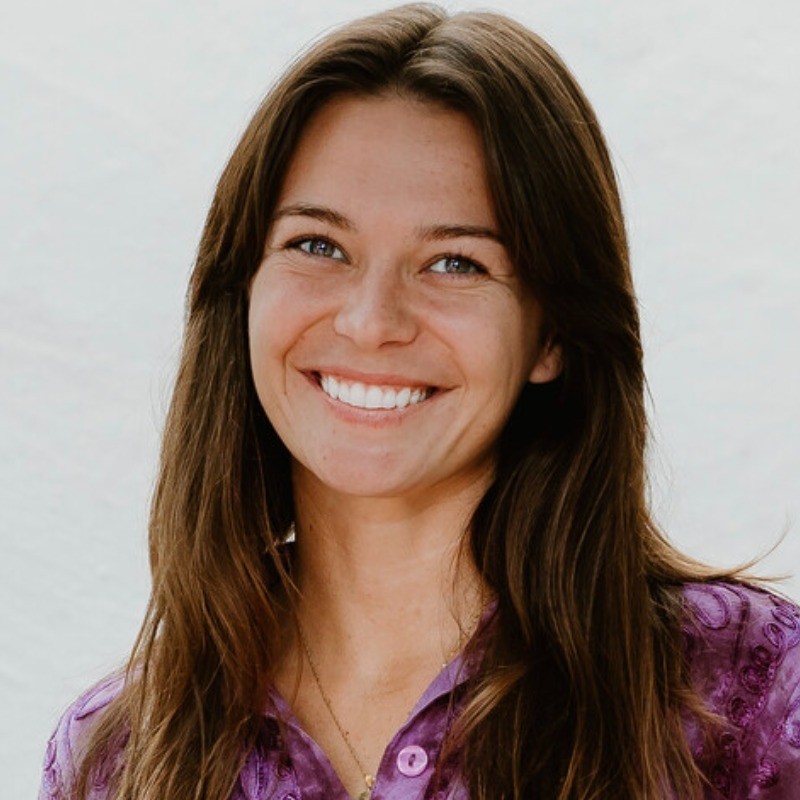
Paige Finn Doherty
Behind Genius Ventures
Doherty is a former engineer (Northrop Grumman, working on unmanned autonomous systems) who got into venture after writing a children's book about VC, and that background shapes a thesis most generalist seed investors don't share. She backs what she calls "technical storytellers," founders with deep domain expertise who can also communicate, and she writes $250K to $500K checks into overlooked markets with a path to billion-dollar scale. Notably, she co-invests rather than leading, but says she takes pride in having independent conviction, meaning she won't sit in a holding pattern waiting for a lead to validate a deal. For founders, that's a reminder that "we'll do it once you have a lead" is a choice some investors make and others don't, and it's worth asking early.
Her most actionable material is on market sizing and outreach. She studied the last hundred-plus billion-dollar exits and found most companies were IPOing at $300M to $500M in revenue, and she expects that bar to keep rising, so she underwrites whether a founder can capture a meaningful share of a genuinely large market. Her tell: she likes when "1% of this market" is already a large dollar figure, because it shows margin of error on execution. On outreach, she's blunt that obvious AI-generated emails are a "beige flag," since communication quality is itself a signal of how the founder will handle customers and investors later. She wants brevity, a specific customer seeing ROI, and one sentence on why this founder is uniquely suited to the problem, the kind of detail "you can never AI away."
The closing-phase advice is the most quotable. She frames a raise like a race: when the starting gun goes off, every conversation should start at roughly the same time so decisions cluster and momentum compounds through back-channeling. She's also specific on etiquette (BCC the person who introduced you so they drop off the thread, and send fast, well-written forwardable intros, pointing to Roy Bahat's post on the format). One honest moment worth noting: asked what mistakes founders make right after closing, she declined to give a pat answer, saying it's too early to tell that soon and easier to judge in hindsight. That refusal to manufacture a tidy lesson is itself a useful signal for founders sorting real pattern recognition from投 generic advice.
On AI in cold outreach
On the timing of a raise
On the detail you can't fake
On building a network from scratch
Mat Vogels (00:10)
Hey everybody, welcome to another episode of Fundraising, a podcast where we interview early stage investors and ask them all the questions that you, as a first-time fundraising founder or second time fundraising founder, want to know about the fundraising process, which indeed is not very fun at all. And today I have a very special guest, Paige, the founding partner of Behind Genius Ventures, with us from San Francisco to go into the
fundraising process and talk a little bit more about her fund. Paige, thank you for being on today. Could you start with kicking off a little more about the about the fund, the average check size, what you're looking to invest in, and then maybe a little background story on how you got started.
Paige Doherty (00:52)
Mm.
Sure. Matt, thanks so much for having me on today. Behind Genius is an early stage investment firm. We focus mainly on the pre-seed and seed stage. Over the past five years since I founded Behind Genius, made over fifty-eight investments. And as a former engineer, I love working with very we define them as technical storytellers. So folks with a technical or domain expertise background who are incredibly strong communicators.
Our average check size anywhere from 250 to 500K. And let's get into it.
Mat Vogels (01:27)
I love it. Are there any so you mentioned is it mostly gonna be on the t highly technical areas? Are there any particular sectors that you're excited about or looking at right now?
Paige Doherty (01:38)
Say I'm a very founder driven investor. From a sector perspective, I love being d like finding overlooked markets with venture scale potential where like other people aren't looking. So I am more thematic in the types of opportunities we're excited about from both like the founder as the technical storyteller and then also understanding like how does this business get to like five hundred million to a billion dollars in revenue, capturing sub ten percent of the market. So
Mat Vogels (01:40)
Mm-hmm.
Love that. Yeah, that's great. You mentioned kind of a technical background. What were you doing before you decided to get into venture?
Paige Doherty (02:06)
⁓ yeah. Yeah.
Mm-hmm.
So I was I started out at San Diego State as a mechanical engineering student. It's one of the best mechanical engineering programs. I worked at Northrop Grumman for three years in college on early days of Unmanned Autonomous Systems, which was amazing. And then I watched Silicon Valley, became obsessed with venture capital. I was like, this is what I meant to spend my life doing. And quit everything to get an internship in venture, learn as much as possible, did a bunch of cold outreach, wrote a children's book.
I spent a year at a cybersecurity company called Work West, which was series A when I joined, and they were most recently valued at two billion dollars, which was pretty crazy. So that's what I was doing prior. I was an engineer and then a writer. Like I love being behind the scenes, these amazing stories getting getting told.
Mat Vogels (02:59)
I was gonna say you mentioned the storytelling
aspect and at the end of the day, fundraising is is also very much storytelling, but founding a company and growing it is very much a storytelling journey as well. What was it I'm curious about the Silicon Valley that made you excited about going into venture?
Paige Doherty (03:05)
Yeah.
Mm, there's this great scene in Silicon Valley where Peter Gregory, who's moderated after modeled after Peter Thiel, goes on this long tangent about sesame seeds. And I'm a supply chain geek and I just it's like one of my favorite scenes of TV. he goes on this incredible tangent and then ends up like placing a bet on an early stage company as a result of that. And I just thought that was the coolest thing in the world. And I was like, I did not know that was a career.
Mat Vogels (03:43)
I love that. Yeah, it's one of those things that yeah, venture capital doesn't feel like a real career until you're actually doing it. But until you actually do it, it feels like a made-up career too. Like it's so nebulous and and bizarre. and and we'll certainly dive into more of that today. One thing that founders are always curious about when they're listening or talking to VCs is what their favorite part about the job is and what their least favorite part about the job. Do you have a really good favorite and least favorite part?
Paige Doherty (03:44)
Yeah.
My favorite part of the job well, I'll take it back. I think a lot of our role as a venture capitalist is to make the next best decision. For me, my favorite part of the job is finding the next founder who I have deep conviction in and I'm so excited to invest in. That's my like hands down, like that whole body feeling of conviction is just incredible and it's one of my favorite parts of the job. my least favorite.
I don't know. I like I I feel like it's like there's so many harder jobs in the world. So I just feel lucky to get to do this job and there's, you know, occasional administrative things that you have to do as a venture capitalist, a lot of paperwork, but yeah.
Mat Vogels (04:53)
Yeah. Our our least favorite parts about the job or the hard parts about the job are still very nice. I agree. It's a very fortunate job that we get to have.
Paige Doherty (04:58)
Yeah.
Yeah,
exactly.
Mat Vogels (05:03)
Is there something then on a similar lens that you wish founders maybe better understood about what it is to be a VC? Because like I said, again, it feels like a very nebulous career and founders certainly, if they haven't had this before, it's even more distant. Is there anything that you could share that maybe peeks behind the curtain a little bit for founders that if they maybe they better understood this, it could help them in the fundraising process?
Paige Doherty (05:16)
Mm.
Mm. one piece I read very early on in my career that was illuminating is this piece on the social capital of angel investing, which kind of breaks down the social theory behind venture. It's a very network driven industry. It's by Alex Danko, probably written in like twenty eighteen. But I would highly recommend checking out that piece for a peek behind the scenes. ⁓ it's basically like people make early stage investments for different reasons. So like
Mat Vogels (05:47)
I like what is what does it kinda get into a little bit?
Mm.
Paige Doherty (05:55)
A common question you might get is, you know, why don't I just put my money in the public markets? Like in the public markets, you're looking at specifically mainly like numbers and returns, but there are benefits in early stage investing, like a asymmetric information, I would say, is one of the biggest ones. And then the ability to compound relationships over time is just incredible. It's very like long-term thinking field.
so that piece goes into how social capital specifically gets transitioned around the ecosystem. It is just like fascinating, more theoretical piece.
Mat Vogels (06:28)
Yep, I like that. Last question before we jump into the fundraising process, a little time for you to shine a little bit, but why should founders pick you andor behind genius to be on their cap table?
Paige Doherty (06:41)
of a specific person when it comes to answers. I think with the founders that we work with, it would be like our ability to demonstrate our conviction and show our work on why we believe that the company that you're building is a multi-billion, perhaps multi-trillion dollar opportunity. And here is like exactly why we believe that and what we believe you're capable of. So I'd say that's more of a specific case by case example, but I that's one of my favorite
Things that we do.
Mat Vogels (07:11)
Yeah, and then helping a founder identify that for themselves is such a unlock for the fundraising process, but obviously as they continue to scale too.
Paige Doherty (07:20)
Yeah. And I would say, like, you know, my background's grounded in very pragmatic fields like engineering and investing, but I also have a side of myself that's maybe a bit more woo-woo. And so I was just on the phone with one of our founders and a as I think about like advising them, I think we have a relatively unique role of like, you know, g like go to sleep and ask what your dreams would tell you about this decision and kinda like I think
I like bringing that element because I don't think there's as many investors out there who are as into that spirituality or ⁓ company building as an expression of self. Like I think as a younger founder you can get very into like what would other people say or what would my mentors say. And I think a lot of becoming a founder and stepping into that role is learning to trust your own gut and really listen to your intuition about what is right for you and the company at that.
Mat Vogels (07:53)
Definitely not. Yeah.
Paige Doherty (08:13)
stage. So
Mat Vogels (08:15)
Yep. I love that. And y I think because of that mindset, you would end up being one of the first calls from founders. then some of the other VCs that are a little bit hard around the edges.
Paige Doherty (08:16)
Yeah. Yeah.
Yeah. Yeah, I mean like I see our role as a guide and try to limit my recommendations really is always try and like reflect it reflect it back onto the founder and push them on what they think is is the right thing to do.
Mat Vogels (08:40)
Yeah.
Yeah, I like that.
All right, let's jump into the fundraising process itself. We break it into three different pieces. The first is how can they actually get in the room? A lot of people that are going to be listening to this are first time founders. They may not have the Rolodex or the network to just start emailing or getting in touch with VCs. So part of the section here is to give advice that would help them in either building that network or not having it, but still finding a way to get their decks or their pitches in front of the right and
investors.
But before that, one of the things that we kind of like to talk about is how do you end up building up the initial list of people that you should be reaching out to? Do you have any advice for founders in what characteristics or things they should be looking for with the initial investors that they want to reach out to, keeping in mind that this is most likely their very first round of capital.
Paige Doherty (09:23)
Mm.
Okay, so there's a bunch of elements of that question. Let me start first with like the key to building a great network is is having a huge intention or goal behind that. Like I I was talking to one of our founders about this, but like the more ambitious your goal or project, the more interesting people you will meet. Cause you'll talk to someone and be like, I don't know, like I wanna I wanna build data centers in space and people are like, hmm, like I have like one
super out there person in my network who this would be perfect for. So I think the first step to building an incredible network is having a very ambitious goal that you are uniquely suited to see out and then telling everyone you know about it. That that's like kind and like understanding who else would be interested. I think if you don't come from a traditional, like a super well networked background in space, like I n certainly didn't when I was building our first fund
It's like start a media side project, whether that's an event series, if you live in one of those like well capitalized cities, or if you don't, starting a media business. or just like pro like could be a blog, could be an interview series, so that you can meet those people. and I would say those would be like some of my tips on approaching networking in terms of finding the VCs that would be the best fit for your company.
I there's an element of it that's a numbers game and then there's an element of it that's like an energy game. Like I believe deeply that you will be on a ten to fifteen year journey with these investors. So you better make sure these are people that you want in your corner. I think that oftentimes if you are coming from a mindset of like, this might be like the only check or like interest that I'm receiving, then you might be more willing to accept
money from someone who you don't feel aligned with for whatever reason. And I think one of the biggest challenges that first time founders face who haven't fundraised before is like going with their gut and trusting that the right capital will appear as a result of building a great process and talking to a bunch of people.
Mat Vogels (11:41)
Yep. I I like that. and you mentioned it it's a it's a very long journey and the likability and you know is as much as it's maybe cliche to say, but it is vibes based in a lot of ways. And if you can find people that you vibe well with, it is gonna be a much easier journey for you throughout that ten to fifteen year journey.
Paige Doherty (11:42)
Yeah.
Yeah. And
I guess to like go one click deeper on that, I think that there's also certain styles of investors that work really well for folks. Like for example, some people may react really negatively to negative feedback, like constant, constant, constant. Versus like some founders really like that. So I think getting a getting a feel for the type of investor base that you will flourish best with supporting you is is very helpful.
Mat Vogels (12:28)
What are some of the best ways that you would recommend? So starting something where you can create a name for yourself, build a network, all of that would help here, because then you're going to start having some inbound. But if you were going to give advice to some founders on some outbound tactics on how to get a pitch deck, let's say, or a memo in front of an investor, what are some of the advice that you would give them or tactical tips or tricks that you would give them?
Paige Doherty (12:54)
I did a cold outreach workshop that's still like one of my most viewed pieces of content. So I will send you the link to that to drop. ⁓ in it, like I basically said
Mat Vogels (12:59)
I love it. Yep.
Paige Doherty (13:05)
It's kinda like this like matrix of expectations that people think about like there's a right way to do it and there's a wrong way to do it. But I think the reality is like you're gonna try things and some of them will work and some of them will not work. So being just getting over that first leap of sending that first email makes a big difference because then you're like, All right, well, like that was my first email. I did it, I did my cold outreach, and then you just continue to get better. and then as you
Go along, you get better, and you see what gets responses. So I I think it's about not being afraid to make that leap into action. Because if you're always waiting for like the perfect time or the perfect situation, just might take a lot longer, I would say. yeah. I think the best cold emails are personalized. I would say surprisingly, not that many people send.
Mat Vogels (13:45)
Agree. Yeah.
Paige Doherty (13:54)
Super great personalized email. So it definitely does stand out. I will caveat that. However, the best way to get in front of a VC is definitely through an introduction in your network of someone that like carries a good amount of weight in that relationship. So I was and and the reason like I used to rail against this when I got into venture, and then I started to understand like that's
part of the game. Like that's also how you get customers. That's also how you build great partnerships. Is is like allowing that trust build up in the network to work in your favor. so I anyways, that that's mine.
Mat Vogels (14:32)
Yep, I like that.
The other thing that yeah, the personalized email piece, it it does go a long way, especially with AI these days. I feel like I get more slop. So if you can write something that feels authentic and personalized, I do think it stands out a little bit more. because VCs, we still read a lot of inbound. I know I we read a ton of inbound, at least the first blurb or sentence. so yeah, having something that feels personal, which kind of goes into maybe the next question as well. Is it the personalization? Is it that
Paige Doherty (14:34)
What I'd say about that.
yeah. Yeah.
Mat Vogels (15:01)
unique line or blurb, the warm introduction, you mentioned all those things. Is there anything that they can say that, you know, specifically that gets you excited? Is it related to the idea? Is it enough for you to like just open the pitch deck and then that's a whole other conversation, but just to have some form of, I don't know, what's the exciting thing that you can read in that email or cold outreach that gets you excited to move to that next step?
Paige Doherty (15:27)
Mmm, I think it it's hard to remove the relationship of who is sending the email from that. For example, if it's an email from a founder we backed before who's done spectacular and they were like, I wrote an angel check in this company. This is like one of the best founders I've met. Like, I'm like, okay, intro me right now. I think in in cases where they're, you know, that's a extenuating circumstance.
But in other cases where I'm reading a cold inbound or maybe from someone who I'm like don't have as much of a relationship with, I I look for specific I look for brevity, short email to the point. I look for a specific example or customer that is seeing ROI or like expected ROI from it. And this can be across hard tech or enterprise
But like what like an understanding of a grounded problem solution set and then a sentence on why this founder is the best person in the world to build this company. Like if we think about the competitive landscape, what unique insight do they have? And this could be they spent ten years in the industry, like it so I think so much of what is written in the email is actually just like letting your life experience speak for itself. So in that case it's
it th the advice would be more like, have a bunch of interesting life experience and that will eventually like result in a very interesting email.
Mat Vogels (16:52)
Yep, I love that. Let's say that you've it it's gotten past your guard, you're excited about it, and you're looking at the pitch deck itself, ⁓ or the memo, whatever is sent over. What particular part of a pitch deck gets you excited or are you gravitating towards? We notice a lot of founders, sorry, a lot of VCs have a slide or two that they kind of go towards first before diving in a little bit deeper. Do you have a slide or a thing that you're looking for?
Paige Doherty (17:00)
Mm-hmm.
Mm, I'd say while I am a very founder oriented investor and want to understand that unique domain expertise that makes them the best team in the world to attack this problem. One of the things I look for that I think is like a very learnable or teachable thing is an understanding of the market and expectations of venture back companies. So we studied the last hundred billion dollar plus exits and we found that.
Most of the companies that were IPOing were IPOing with between 300 to 500 million in revenue for the the past year. And as you think about raising capital from early stage venture capitalists, I like ideally your portfolio companies in the future will IPO. And if we look at what that bar to IPO is, it's growing. See like the SpaceX multi-trillion dollar IPO. it will continue to grow as time goes on.
And so what I'm looking for is like like how big truly is this market? And I think there's a couple great ways you can represent that. Like sometimes it'll be like one percent of this market is a million dollars in annual revenue. I I I really like that like percentage is a big number because it shows that you have a margin of error on execution. So for example
the market you're playing in might be call it like a billion dollars in annual revenue. But then what I need to underwrite as a venture capitalist is that you're going to get fifty, seventy five percent of that market share. So I I look a lot at the market side and how the founder articulates it is ⁓ important to me. Yeah.
Mat Vogels (18:50)
No.
Yeah, I like that. There how you mentioned earlier, like you have to be brief and specific, but tea just deep enough to show that you understand it. It's such a it's a fine line, but if you can articulate that well, it again, it it not only helps in fundraising, but it'll help throughout your entire startup journey. So we're seeing a pattern here. Things that you can do well in fundraising can help you throughout the entire journey. I love it.
Paige Doherty (19:15)
Yeah, yeah.
Mat Vogels (19:18)
So let's go into the next phase. Let's say that they've they've excited you enough to get into that initial meeting, which we have is its own phase in the fundraising process. The initial meeting is typically 30 minutes, let's call it. You're lining them up with a bunch of investors. And a lot of investors will use this as an opportunity to make their decision. It's sometimes even within the first five minutes, investors will say, and sometimes that does happen. But for you personally, what are you looking for in that initial meeting, the first time?
that you're meeting with a founder, what is it that you're looking for in that first 30-minute conversation?
Paige Doherty (19:53)
Hmm, one of the things I think about in a first founder call is there's almost like element of performance. And I think you see this a lot in founders who have a sales background is a guiding of you as the investor through here is my background, here is the size of the market and the opportunity, here's the interesting wedge we found. And there's kind of this like
natural flow of the conversation that you're being guided through. I I like I can speak for myself and for other investors when I say like I think that is a fantastic experience. And this happens when founders have deep clarity about the opportunity and where they stand. And I think I really like that. It's a fine line 'cause you know, you it can come across as harsh but
Sometimes so it's like a well rehearsed dance is ideally how I would like for it to happen. and then I'd like to understand, you know, I saw the deck and the the opportunity is interesting. Like how does the founder present the opportunity? Like is there that same level of being able to oscillate between different levels of abstraction of the product and the team and the market and the landscape and like with a landscape specifically
Mat Vogels (20:45)
Yeah.
Paige Doherty (21:07)
Have they evaluated other products? Like h have they talked to teams? Like I think that's really interesting is the specificity of detail because that's something you can never like AI away. Like you can't be we have a founder, Ray Zhang from Maneva, and in our first call he was like, Yeah, me and my co-founder slept on factory floors and like toured factories for six months. Like that's just a sentence that is from direct life experience that is very difficult to replicate.
so that that's those details are what I'm looking for as well.
Mat Vogels (21:38)
Yeah. So is there I'm kinda noticing maybe there's a dichotomy here of
Before like the pitch deck version of your pitch and then the meeting version of your pitch. Cause the pitch deck and the memo and the cold outreach, you can certainly AI away on a lot of those things. And sometimes it'll work in in getting something read or scheduling the meeting. But you're right in that you can't really AI away that first call. And especially if you have a really good investor that's asking these questions and they're looking for some of these things. you kind of have to know your stuff in order to really crush this meeting, basically.
Paige Doherty (22:10)
Yeah, and I would almost say like AI, even in the initial outreach, is kind of a like it's a beige flag for me. I think that communications is one of the most important elements of a business and whether that's investor communications, customer communications, et cetera, like that matters to me a lot. so I don't really like to see super obvious AI. Like th there is like a
Mat Vogels (22:18)
Yeah.
Agreed. I don't think anybody wants to see
it. Yeah.
Paige Doherty (22:35)
There was a six month period where someone had like they must have posted a YouTube video about how to do it, but it was like here is here is the template you should use when reaching out to early stage investors and I must have gotten like fifty emails that were the same, like the problem, the solution, the market in like bold and the same formatting. I was like, What is going on? so yeah, not that.
Mat Vogels (22:57)
Yep, I agree. You mentioned I mean you mentioned earlier that you definitely have like you like to read energy and you're almost getting like a vibes based reaction from founders. I feel the same way. When you're in these calls with them, is there any particular energy or vibe that you're trying to pull from them that gets you excited?
Paige Doherty (23:09)
Mm.
Yeah.
I think it's just the like the details of the lived experience really speak to me. And I think a vibe of like this is my life's work and I'm so excited to be doing this and I really care about who the investors are who are inner corner. I I think like you can have different styles of founders depending on the industries that they're in. They could be like more chill or more aggressive or like i that varies. But
life's work and like I really care around who th that like discernment is the vibe I'm looking for.
Mat Vogels (23:51)
Yeah.
Yep.
Yeah, you mentioned something on there I've heard a lot that that VCs like in that it's that they take the fundraising process seriously in a way. and that kind of comes out of here too, where if you can show that you care about not just this conversation that you're having, but you're being methodical about who you want on your cap table, what you're looking for in an investor, and you've taken that ownership almost as a founder, and you can present that well, I think it goes a long way in showing maturity and that again, you've thought through this and that
Paige Doherty (24:00)
Mm-hmm.
Mm-hmm.
Mat Vogels (24:22)
That's gonna have something that applies again throughout the entire founding journey.
Paige Doherty (24:26)
Yes.
Mat Vogels (24:27)
The next kind of question in here, the one that we always get a lot. So these are maybe more rapid-fire questions from founders where they get kind of mixed signals, and I'm curious your thoughts on it. One, to bring a pitch deck or not to bring a pitch deck, or how they should kind of present during these initial meetings. What are your thoughts on having a pitch deck versus not in that first call?
Paige Doherty (24:48)
Hm not if there's a specific graphic that's relevant to the conversation, bring that slide. Pop it up.
Mat Vogels (24:54)
But not go through slide by slide as if you're just like doing a presentation.
Paige Doherty (24:57)
I think the best investor conversations are like the investor's asking a ton of questions and you can barely get through like what you prepared.
Mat Vogels (25:04)
Yeah. Yep. And you mentioned it's like a dance, so a little bit of back and forth. And it's hard to do that if it's just me presenting to you and going through thirty slides.
Paige Doherty (25:12)
Yeah.
Mat Vogels (25:13)
The next one that we get for founders that get a little again, mixed signals sometimes is whether or not they should bring their entire founding team. I've had founders that have said, first meeting, VC said no because he was expecting to meet the entire founding team. but then they've had other ones where they have a f of they go into a meeting and they bring the founding team and VCs are like, you know, it felt a little distracting, or you know, when they gave feedback on it, they just wanted to meet with the founder or the one founder.
Paige Doherty (25:29)
It's weird.
Mat Vogels (25:39)
What are your thoughts on that? Any advice you'd give to founders as they as they try to navigate it?
Paige Doherty (25:44)
I do think meeting like one founder is
I don't know I don't know if easiest is the right word, but I I prefer meeting with one founder and then if I'm interested in the opportunity, I may ask to meet the other founders to understand more of the dynamic.
Mat Vogels (25:57)
That's I think the the typical one that a lot of VCs will will have. That's the advice I would give as well. and then typically it's the CEO or whoever's leading the fundraise in that initial meeting. but then eventually VCs will wanna meet the entire team. So I I agree with that.
Are there any mistakes that you see founders make in these initial calls that they should try to avoid? Not just the opposite of maybe what you were saying earlier and being able to you know articulate a story and specificity and everything there. Any other traits or things that that kinda come off as a negative?
Paige Doherty (26:23)
Mm.
I would say maybe to go back to like the dance of the conversation is
having some questions prepared. Like if you give a presentation, you're like, awesome, that went well, is it's not it's more of like a one sided relationship sometimes. So I think like asking solid questions and they can be pretty similar. But I I would say like, yeah, not asking strong questions is a beige flag for me.
Mat Vogels (26:49)
Okay. Are there any specific questions that you think founders should ask VCs during these initial conversations?
Paige Doherty (26:54)
Pool.
as I said before, I think there's some founders who have been very trained in like the sales process. So I I actually like this. And in our first and second fundraises, I was very much like this is like I wanna get to qualification as soon as possible. So, you know, what is your mandate? How many investments are you making to looking to make this year? What is your average check size? What is like your typical timeline for making an investment? and
VC she is awesome for getting some of this information, but it can also change. And I think I really like it's part of the dance. Like I'm like, I love I love when we're asking these questions. We're really getting into the nitty gritty.
Mat Vogels (27:34)
and it's you're exactly right that it changes a lot too. And sometimes it changes on the fund cycle of where the fund is. I remember when I was fundraising I talked to VCs where traditionally they may be writing, you know, five million dollar checks, but at the tail end of their fund maybe they're all of a sudden writing like smaller checks and you have to ask those questions for sure.
Paige Doherty (27:39)
Yeah.
Mm-hmm.
Yeah.
Mat Vogels (27:51)
What any last piece of advice or feedback you give to founders in the initial meeting, maybe not even just the initial meeting itself, but the phase kind of around that where you're scheduling them and you're chatting to multiple VCs simultaneously?
Paige Doherty (28:05)
the BCC. I feel like sometimes people don't like BCC, whoever intros them. And I'm like, get that person off our email chain. They don't need to see these links. so I think that's like a easy, like more etiquette focused one. And then Roy Bahat has a great blog post on how to write a great forwardable intro. Like once you follow up with someone, they offer an intro, like do a great forwardable intro quickly.
Mat Vogels (28:11)
Hm. That's a good advice. Yep. Yep.
Yep. I like that. That's really good advice. Yeah, I like it. All right, let's go into the last phase of the fundraising process, which is very much a dance. And it's usually the simultaneous action of building FOMO and hurting cats, and you're really just trying to push this fundraiser over the finish line. And I'm curious from your perspective, cause typically would you say in a way, you are you leading rounds?
Paige Doherty (28:34)
Those would be my Yeah.
Mm-hmm.
No, we're co investing, but we we we won't lead, but occasionally we'll meet a founder before the round comes together, we'll introduce them to their lead. Occasionally we'll come in like right after a lead and then introduce them to like other co investors, and then sometimes we may sneak in a check like in between rounds. So varies.
Mat Vogels (29:00)
Perfect.
Yeah, yep, I like that. So in a way you're you're not
leading, but you're not that you're following. You're not waiting necessarily for a lead to come in to have your conviction or anything like that.
Paige Doherty (29:27)
No, we I I would say like I take a lot of pride in having independent conviction in these companies, being able to demonstrate it.
Mat Vogels (29:34)
Which is rare. I wish that there were more investors like you, because I think as a founder, it's frustrating when you meet really good investors, but you're in this holding pattern of not being able to take any checks or to go deeper until there's a lead. and it's very frustrating. I know a lot of founders listening to this probably get really frustrated by it, but it's just kind of the name of the game. If you could find incredible investors like Paige that can, that's the the the best case scenario.
Paige Doherty (29:46)
Yeah.
Mat Vogels (29:59)
But from your end, that means that you've also then seen founders navigating this, where if you've given some money or you've written a check or thinking about you're you're in that process, what advice would you give founders in trying to build up a little bit of that FOMO to maybe go find that lead? is it leveraging folks like yourself that are already interested in bought in to use your network? What what other tips and tricks would you give founders that are trying to fill out their round?
Paige Doherty (30:24)
Mm, I'm I think this is where timing comes into play and really batching out here my top tier folks that I really want to talk to, like talking to them later in the process, talking to folks who you think are friendlies but maybe not your topics, like or like from a lead perspective earlier on, and then just making sure like if you have any existing angels that everyone is like on the same page about.
when intros are getting sent out, when you're taking first calls, when you expect term sheets, and then filling your pipeline with a lot of investors, that will ultimately lead to momentum because you're gonna be getting decisions like pretty quickly. And then also a lot of people are back channeling. So it's like, did you meet with X? Like, yeah, my gosh, me too. And then like, we talked to another friend. And they d so I think the
The founders who have the most success with fundraising have like very strict timing processes.
Mat Vogels (31:20)
Is that setting strong deadlines and what yeah, what does that look like from the timeline perspective that can work well? 'Cause it can backfire too. If you're like too rushy or pushy it can come off poorly as well. So how do you balance that?
Paige Doherty (31:31)
Hmm, well I don't think it's pushy. It's kind of just like if you if you think about a race and like the starting gun goes off, like all of your conversations are starting at the same time, then there's just like more concentration and then like I yeah, I I think it's not even about being pushy, it's just like, hey.
Cool, like we got a verbal commit or like hey, like we're expecting term sheets from two other firms this week. Just wanna keep you guys in the loop. so I think when you when you choose to have the starting gun go off really matters.
Mat Vogels (32:07)
Although it's a nice problem to have, founders could find themselves in a situation where they do have to start making choices at the finish line where they have maybe a little bit left, or maybe they have a few leads that they have to pick from. You mentioned some reasons earlier, but are there specific things that you would have these founders index on as they're in the final stages of picking the final lead or the final checks to come into the first round?
Paige Doherty (32:23)
Mm.
Hmm. I think as a great founder, this is one of the most important skills judgment in a situation of abundance. You're like, wow, I have many investors who I would be excited to take on. And this will happen like as you continue to get more successful. Is like, what is your discernment when all the options are good? I think a lot of it just comes down to like,
Finding a quiet place and really sitting with yourself and playing out in the future ten, fifteen years down the road, who do you want to have on your team rooting for you? Who do you think will be the best in really challenging times in your business? so I think it just goes back to like quieting the world and really listening to your intuition on what feels right to you as a founder. Yeah.
Mat Vogels (33:20)
That is really good advice.
I had not heard the the kind of that way of thinking about it. Because when you have limited access or limited options, what choice you pick is sometimes picked for you. But when you have a lot of options, the choice that you pick says a lot about you. so I think that's that's a really interesting way to look at it.
Paige Doherty (33:34)
Yeah.
I think that judgment in a situation of abundance is is just becoming more and more important as things get like easier to build, as there's more VCs in the world, as like all the options are getting better and better and the outcomes are bigger and bigger. That that j that just becomes a very important skill. in terms of mistakes, I think like not like not listening to your intuition. Your intuition's like, ooh, this person, I don't know what it is, but like
there's something a little off and not listening to that, I think like that can be that can that can get challenging sometimes.
like one of my friends and I talk about this. Like sometimes you're just like, I don't just don't really vibe with that person. And sometimes we don't have to diagnose why. Sometimes we can just chalk it up to like misalignment. so yeah, I would say like not listening to their intuition.
Mat Vogels (34:26)
that. Intuition is typically built off of like pattern matching that maybe we don't understand. So I agree. If you can listen to your gut more often than not, I think it is it is right. So I think that's good advice for sure.
Paige Doherty (34:38)
Yeah. And and not even like sometimes you you might not have a pattern for it. Sometimes it's like the first time you've encountered the situation. So I think that's actually when it's most important to ask yourself, how do I feel? And then, you know, you can talk to advisors and things like that. But a really asking yourself first about what you what you want out of the situation, what you don't want.
Mat Vogels (34:43)
Mm-hmm. Yeah, true.
Paige Doherty (35:00)
what you're scared of and like confronting those fears, is it something else than the decision, or is this person reminding you of someone in your past that you d had a n you know, bad time with or something like that? those are some of the questions that I recommend thinking about.
Mat Vogels (35:16)
Yeah. All right, let's say the round is closed. They're celebrating for five minutes and then it's like right back to work. What are some of the mistakes that you see founders make right after they fundraise? usually within the first three to six months. This is the first time maybe they've seen money like this, certainly the first time that they may be in a position where they now have to spend it in the right ways. What are some of the mistakes that you see? And then how can founders maybe avoid those?
Paige Doherty (35:41)
that's a a good question. I don't know that I have a good answer for this.
Mat Vogels (35:45)
Mm-hmm. That's okay. Sometimes it's like there's almost too many to have one specific one.
Paige Doherty (35:48)
Yeah.
Well, it's kinda hard to tell that soon. 'Cause sometimes you're like, ⁓ like, you know, you could have like punch the gas more aggressively on GTM, but maybe they had like a core product bottleneck that they had to figure out with our engineering team or you know, it's it's it's kinda like too early to call the shots on what a mistake might be at that point in time. I think it's much easier to like look back and be like, This was wrong, but yeah.
Mat Vogels (35:53)
That's true.
I like the actually I really like that answer. It's almost as if that there's it's hard to give specific advice for this because one person's answer is gonna be different for certainly in hardware, depending on what they're building or where they're at. So I think a no answer is actually a really good answer and for founders listening to like individualize it, personalize it and and do with it what you will.
Paige Doherty (36:28)
Yeah.
Do it the way you will.
Mat Vogels (36:37)
What are some of the ways or one of the best ways that you see founders continuing to build the relationships with their investors after they've closed their round and they're navigating forward? Is it text messages all the time? Is it the monthly or quarterly updates?
Paige Doherty (36:48)
A consistent a consistent
written email update. I don't know when they went out of vogue, but I love those. I I think like
Mat Vogels (36:54)
There you go.
They have gone out of
vogue. You're actually right. I feel like I don't get them as much as I used to.
Paige Doherty (37:04)
Yeah. I think I feel like this is something YC is very specific about. I feel like they very much push their founders to like write consistent updates. I say that because like I write consistent written updates to our investors and if I'm asking that of you as a founder, like I better make sure I'm doing it myself. but I think they're also like helpful as you're on your journey to look back and be like, wow, like a year ago, two years ago, like here I was and
Here's where the business was and here's what I was thinking through. So like a really simple one. and then I have like I I would say it just I try and like adapt to what the founders like. So there's couple there's a few founders who like like I'm the first call in strategic stuff or like we'll text back and forth. And then there's some founders who I have like a more formal, like email based relationship with. It just depends on like what they want to again to go at like do with it what you will.
Mat Vogels (37:55)
Yep, I like it. Paige, this was awesome. We covered a lot of information in a little bit here. You mentioned some links earlier that I'll definitely include in the show notes, but where can folks continue to follow you and find you and and and go along with your journey?
Paige Doherty (38:10)
the behind genius page on LinkedIn and Twitter is a great way to find us. I'm Page Findorti on LinkedIn and Twitter as well.
Mat Vogels (38:20)
Very cool. Love it. We will link to those for sure. Thank you so much for being on. I appreciate the the honest answers. I think we we don't get as many honest isn't the right word. Authentic is maybe the the better word. So I appreciate you being on and being authentic today.
Paige Doherty (38:37)
Thank you so much, Matt. I appreciate the questions.
Mat Vogels (38:40)
And I'm sure that we'll chat again here soon.
Paige Doherty (38:42)
Yes. All right. Thanks, you two.
Mat Vogels (38:44)
Have a good one.

























.jpeg)