Taylor Sargent
Industrious Ventures
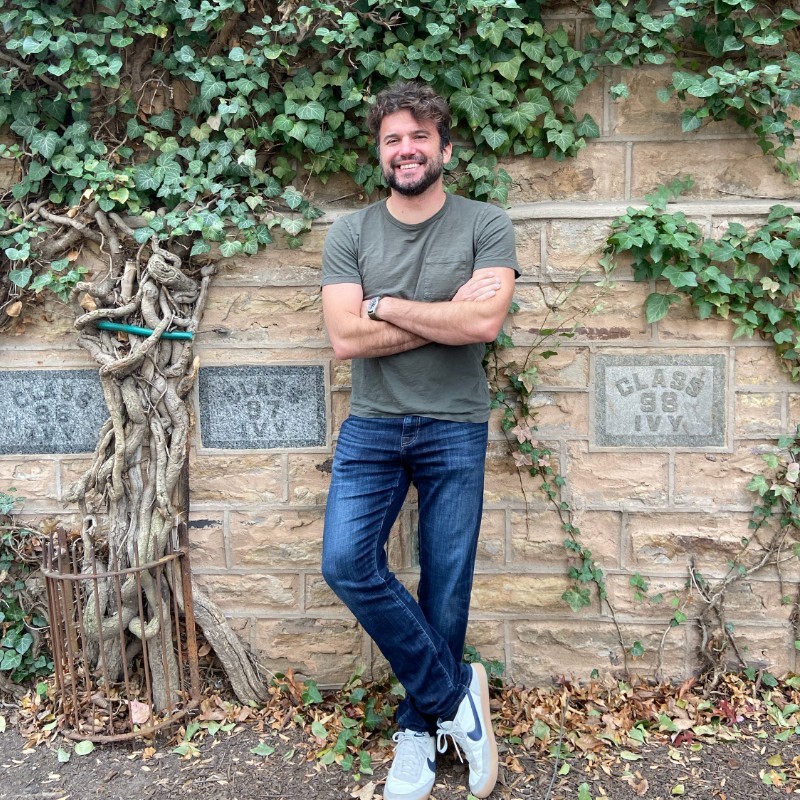
Taylor did not come to venture through a typical banker or operator path. Space was the through-line: physics undergrad, aerospace and defense consulting on NASA Goddard ground-station work, time with the Defense Threat Reduction Agency, then two and a half years at DARPA headquarters helping deploy nearly $150 million across advanced technologies. When he left government, he chased the role that felt most like DARPA without being government-facing, and that landed him in deep tech VC. At Industrious he brings that buyer-side lens to early companies chasing non-dilutive paths, while the fund's genesis in industrial-company relationships (and a model that flips the usual check-size curve toward heavy follow-on) gives later-stage founders a different kind of leverage. One unusual detail: when Industrious takes a board seat, they do not park a partner in it. They recruit industry operators who are better suited to advise the company than anyone inside the fund.
The tactical spine of the episode is how to get into a sector-focused inbox without sounding like a blast. Taylor's filter is blunt: if you can swap his name and fund for another pair and the email still reads the same, he will almost certainly skip it. Specific alignment to his background or the portfolio, on the other hand, routinely clears his first-call bar - cold or warm. Once in the room, he is listening for two things: an element of uniqueness he has not already seen a dozen times in the category, and whether at least one core pillar of company-building (tech, government sales, industry relationships, or deep domain fluency) is already covered, with honest awareness of the gaps. Diligence often includes the fund's outside advisors and, when founders allow it, quiet industry feedback from relationships Industrious was literally founded around - without treating a "no" on sharing materials as a deal-killer.
The sharper warnings are cultural as much as tactical. Early venting about how miserable fundraising is can be hard to look past when many more rounds still sit ahead; capital-intensive companies need fundraising resilience, not just product resilience. Equally counterintuitive for technical founders: the under-promise, over-deliver instinct that wins in the lab is often a liability when a round is pricing in growth. After the close, going dark until the next raise is one of the fastest ways to forfeit follow-on from a fund that invests by following the story. Taylor's closing frame is simple and hard: companies sometimes talk to hundreds of investors before a lead term sheet lands - it takes one, and when the process feels senseless, you have to be soldiers and keep marching.
On why templated cold emails get ignored
On the two signals that make him lean into a pitch
On the hardest kind of pass to deliver
On why going dark after closing kills follow-on capital
On why it only takes one lead, and you have to be soldiers
Mat Vogels (00:10)
Hey everybody, welcome to another episode of Fun Raising, a podcast where we interview early stage investors so that you, as a first-time fundraising founder, can get all the tips and tricks directly from the horse's mouth on how to raise a round of capital, which at the end of the day, as we like to say, is actually no fun at all. And today I have a very special guest. I always like to call it out, but another Colorado VC.
I always like to say that we're more authentic and give the best advice. so Taylor, you have some high expectations to live up to today. Today I have Taylor Sargent, partner at Industrious Ventures, a deep tech fun here in Colorado. Taylor, thanks for being on.
Taylor Sargent (00:53)
Thanks for having me. Excited to chat. Hopefully, give that good advice
Mat Vogels (00:55)
Yeah. Could you
Taylor Sargent (00:57)
that you just hyped me up to give.
Mat Vogels (00:58)
You're you're gonna do I have no doubt. I have no doubt.
Taylor Sargent (01:01)
Yeah.
Mat Vogels (01:01)
we mentioned it before. I always like being able to to chat with people that I already know. so I can say definitively I know this is gonna be a a good episode. Could you start a little bit with what you guys are investing in, maybe a high level overview of of some of the sectors you're interested in, the checks that you write, stages that you're interested in?
Taylor Sargent (01:20)
Sure. So yeah, so Industrious Ventures, we're we're largely based in Colorado. We've got team members in New York and Texas as well. you know, we we made it pretty easy with the name of the fund and what we focus on. We focus on the industrial sector. So I think anything across aerospace, national security, manufacturing, energy, and a little bit of agriculture. generally when we're writing our first checks, it's in the seed to series A, although sometimes we flex down to seed or up to series B.
We have a a a modestly unique model in that we're very follow-on heavy. So we you know generally start off with tracking checks around, you know, two fifty K up to two million. you know, ne next round maybe one to five, and then we can scale up to fifteen to twenty million over time for th those follow-on rounds in in companies that are performing exceptionally well. so we we kinda take that that you know initial follow-on equation that I I think a lot of funds function.
with and kind of flip that flip that on its head a little bit.
Mat Vogels (02:14)
Yeah. Yep, I love that. And think that being able to be a partner over the course of the entire process is a huge advantage. and I think that, you know, some folks might think of a multi stage fun doing that, but I think you are unique in that you can certainly follow along for that entire journey. And you mentioned even as early as pre seed, but I think that it's exciting, especially in the deep tech space.
Taylor Sargent (02:37)
these companies take a long time to build and it's sometimes it's not
Mat Vogels (02:39)
Yes.
Taylor Sargent (02:40)
always apparent on if the tech's gonna work or if the market's gonna be there to absorb the technology if it is working. you know, these these kind of long, long tail companies and and you see this in the hardware sector that's become a very popular investment space. you know, it's it's not gonna be your your two to four year exit timeline. And so we love following the story and getting to know the founder over the course of the the entire process.
Mat Vogels (03:01)
Yeah, that's such a good point. A big difference between what people were investing in, you know, five to ten years ago with with SaaS controlling the market, you would not only not necessarily have the exits that were earlier, but you would certainly see the progress earlier. You could be a seed stage investment and then a year later be hyperscaling. Granted, I think a lot of those AI companies are experiencing that today. But in hardware, it might be years before there's even a single product to go to market, let alone a scaled product that's going to market.
Taylor Sargent (03:31)
Yeah, yeah, and and especially when you're building extremely complicated systems like lunar rovers and rockets and satellites and nuclear reactors. It it takes a minute and you gotta be patient. But we we we
Mat Vogels (03:40)
Yep.
Taylor Sargent (03:41)
do love following the story.
Mat Vogels (03:42)
Yep. I love that. let's talk a little bit more about about you. So the first questions are are ones that founders kind of volunteered. They want to know and get to know the founder the VCs that we talked to. Let's start with why you chose to be a VC in the first place. What were you doing before Industrious?
Taylor Sargent (03:57)
Yeah, I mean so so the I I think kind of a guiding thread for me has always been space. I've I've loved space since I was little, went to space camps growing up. It it's kind of informed everything I've done on the education and career side. You know, I did my undergrad in physics. I went straight into aerospace and defense consulting in the DC area. And while I was there, I was always on like on client site. I was at NASA Goddard for a little bit working on some ground station and mo
Inser satellite communication and ground station modernization efforts. I spent a little bit of time with Defense Threat Reduction Agency helping mitigate threats from weapons of mass destruction. And then for the last two and a half years I spent the DARPA headquarters and helped DARPA invest almost $150 million across advanced technologies in aerospace
Meta materials, quantum sensing, and some some other really cool technologies. And so my my my kind of love of space kind of guided that thread. And then when I got to DARPA, really my my aperture opened quite a bit to to kind of see how fascinating a lot of this advanced technology or a lot of these advanced technologies are. So it went from just kind of being focused on aerospace to now being focused on material science and some quantum applications and and even even some applications in biology as well.
So when I left DARPA, I I actually I I wanted to do something that was most like DARPA, just not government-facing, but it was always guided by this advanced technology, deep tech love. And so when I was then kind of interviewing and pursuing VC, I was specifically pursuing VCs that, you know, this is back in 2019, 2020 that were focused in these areas of aerospace and manufacturing and energy and deep tech more broadly.
I I I even in my interviews, they're like, why VC? And I was like, well, for me, it's actually the advanced technology portion. I would rather go join a startup working on this or go join a larger company that has a deep tech incubator than just do VC for the sake of VC. But I think VC has an interesting position and and kind of a nice lever arm to impact.
Where technology is headed, that was really appealing for me. And so that's kind of the Y VC specifically, but for me, it was always more of the advanced technology that was that was more appealing.
Mat Vogels (05:59)
Yeah. Do you feel like the the experience at DARPA is also benefited you as a value add to a lot of the funds or folks that you're investing in because you have that experience almost from the buyer side in a way and can help them navigate that? It's one of the things that Harpoon we talk about a lot as the government becomes such a big and important customer, navigating that world becomes more important. Do you feel like that carried over pretty well?
Taylor Sargent (06:23)
I I I think it it carries over well for the companies that are early. you know, I I I I joke because I I think I asked like seventy five percent of the same types of questions as I was asking at DARPA, but then because we're investing and and you know, DARPA's not looking for financial return, right?
Mat Vogels (06:39)
Mm-hmm.
Taylor Sargent (06:39)
Yeah,
VCs are. And so, you know, you you layer on the additional 25% kind of business and revenue questions. but you know, I'm still asking mostly about kind of the impacts of the technology that's being built. but yeah, I mean I I have worked with our portfolio companies on strategies to approach these kind of early funding mechanisms across NASA, NSF, DARPA. once you kind of graduate beyond that, right? Well, you as as these companies scale, DARPA kind of becomes either too small for them or too long a time high.
high
time horizons for them because you know that generally there are four year programs outside of of a few of their shorter, smaller efforts. But, you know, eventually you want to kind of graduate to programs of records where you've got actual kind of line items and and just bigger dollar amounts because DARPA does top out in a couple hundred million dollars spread out generally over four years and and across a couple teams. And that's great. but but if you're trying to scale a business that's not
Exactly what you're looking for.
Mat Vogels (07:34)
Yeah. Kind of a follow-up on that. Have you noticed over the last few years, we we've kind of seen it on our side, but with more dollars seemingly becoming available for some of these companies, have you seen it not necessarily get easier, but maybe more of an opportunity for companies that are building and and having some of these alternative funding sources, whether it's through DARPA or NASA like you mentioned?
Taylor Sargent (07:56)
Yeah,
I absolutely. I mean, even even back when I was at DARPA back in, you know, twenty seventeen, twenty eighteen, there was a recognition inside the agency that, you know, the the government doesn't have the best technology anymore. And, you know, if if you if you were graduating, you know, twenty, thirty years ago with a PhD in one of the scientific fields or engineering and you wanted to work on the most exciting problems, a lot of those most exciting problems were in government, right? At the government labs, or NASA.
And and and so i if if if that was a huge motivator for you, then the government made a lot of sense. but the the commercial sector has caught up on the technology and and well surpassed what a lot of the different government agencies are working on. And so there was a a pretty clear desire, even you know
back in the mid-20 teens to start engaging industry more. And that was kind of the the early days of it. And and I think that over the course of the last 10 years, the government's kind of tried a couple different things. Some of them have worked, some of them haven't worked, but now they're starting to I I think that they're starting to grease the wheels pretty well on how to better engage industry with groups like DIU, with the OSC, you know, loans program office. so so these these new vehicles and new mechanisms and and
probably most importantly the new perception and willingness to take risks on new entrants is certainly there and that that you know didn't exist even even just five years ago. so so from that perspective it's it's gotten a lot easier, which is you know really encouraging to see from from our side.
Mat Vogels (09:19)
Yeah. Back to a a a V C question here. One of the most common questions are ones that we get from founders is what is your favorite part about the job and being a V C and then what is your least favorite part about the job? And I think that as a as kind of a note on there, i this is opening the door for maybe a world that founders don't understand or see. so maybe throwing in something that you feel like if founders better understood would have more empathy towards what it is to be a V C.
Taylor Sargent (09:48)
Yeah. Yeah. So I you know, my my favorite part is just I mean there there's just so many smart people building in the sectors that we invest in. I mean
Mat Vogels (09:55)
Mm-hmm.
Taylor Sargent (09:55)
there there's smart people building in in in every industry, but the the combination of the things that I I personally have you know paid a lot of attention to over the course of my life and now being able to kind of work with these companies and talk to them on a on a you know weekly basis and just hear
so many incredible ideas and and creative ideas. So like interacting with with a lot of the founders that are just world class in in these technologies and and and again like so creative in terms of how they're building solution sets for for industry. that's so fun. It's really inspiring. It's extremely humbling and I felt this way at DARPA too when we were kind of it in or you know working with with some of the top researchers around the world.
It's a really humbling experience because you see kind of the long tail of of expertise. You see the long tail of of intelligence and knowledge in in certain categories. that's gotta be one of my favorite parts. One of my least favorite parts is is the fact that we we have to say no a lot. And that that for me personally is is is really difficult because every founder that we're talking to, they know more about the industry than I know. They know more about the tech than I know.
you know, more about the processes than I know. They've taken a huge, you know, personal and career risk to go commit everything that they have to to to trying to move the needle in a particular sector. And the reality of the situation is that, you know, we invest in single digit percentages of the companies that we talk to over the course of a year. And that is an incredibly uncomfortable thing to do, to be like passing judgment on this this thing that somebody that knows more about this thing
has committed everything that they have to. And the passes can be for so many different reasons. And you know, sometimes it's just not a fund fit, or sometimes I really like the tech. I just don't think that the market's gonna be there as they expect it to. My probably my least favorite reason to pass is to say I love this thing, but I just don't think that there's gonna be a













.jpeg)

.svg)