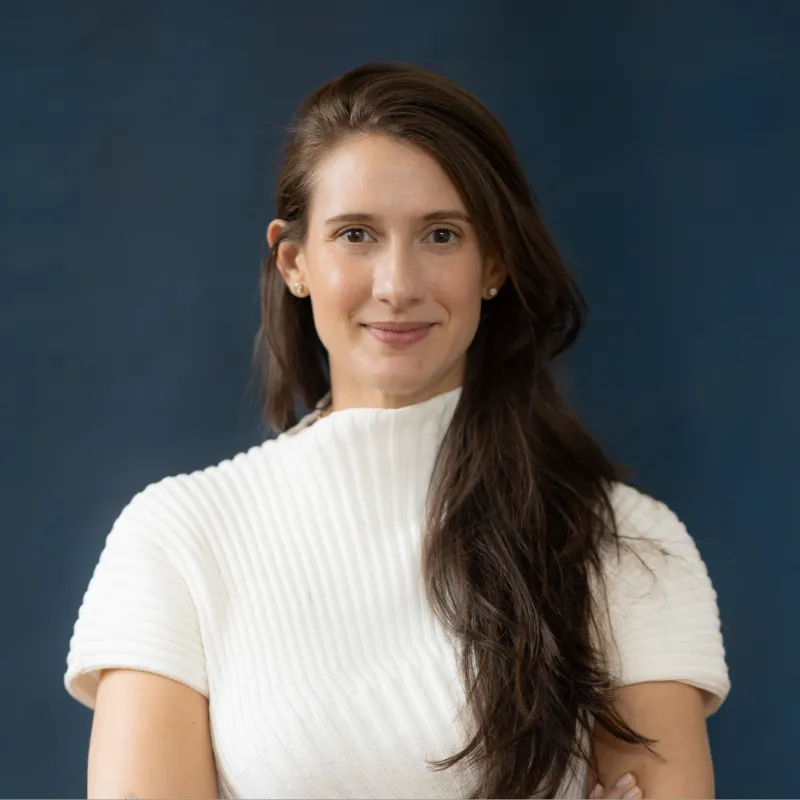
Patty Wexler
Avila VC
Patty Wexler is not a default VC. She spent the first half of her career funding consumer internet at a $1.9B firm, then made a deliberate bet around 2015 that "so much IQ and so much capital in this little zip code" could not keep chasing the same three ideas. She now invests out of a small fund one at seed to A, across nuclear fusion, industrial automation software, magnesium, and drilling tech. That combination, a consumer-software pedigree plus an engineer's bias toward the physical world, is why her advice skips the usual talking points.
Her most useful reframe is about the power dynamic in a first meeting. Founders walk in braced for a skeptical loan officer; Wexler says the opposite is true, that she is hoping to be sold and is leaning in. The practical version of that is calibrating your pitch to what the investor already knows. If you are solving nuclear energy, do not spend a slide on how big the energy market is, because everyone gets it. Save the TAM case for markets she cannot size in her head, and if you are one of a thousand teams building the same agentic tool, spend that time on why you specifically. Her read on VC attention is blunt: it is drifting toward "fruit fly level," so lead with the hook and elaborate later. A related prep tactic is to run a search on yourself before pitching, the way you would before a date, and assume any lazy investor will spend one minute doing the same.
On process, she sets expectations founders rarely hear stated plainly. Investors are "an inch deep, a mile wide," so expect lateral insight and warm intros, not domain depth you already own. Her diligence ranges from a single weekend when she knows the founder and space to six or eight weeks to a term sheet plus a couple more months to close the syndicate when she is leading cold. The most actionable framework is how to sequence the raise: do a few test runs with firms that are good but not your first choice, then concentrate on your target firms, then work the rest, so a middling firm is not deep in your process when your dream firm finally engages. She also normalizes the quick no (nobody holds a grudge over a fast, clean pass) and the reminder that you are always fundraising, so you should not wake up six months from cash-out and start cold.
On the real power dynamic in a first meeting
On when to skip your market-size slide
On VC attention spans
On what an investor can and cannot give you
On sequencing your fundraise
Mat Vogels (00:10)
Hey everybody, welcome to another episode of Fun Raising, a podcast where we interview early stage investors so that you, as a fundraising founder, can get all the tips and tricks to hopefully make
The fundraising process that much easier to you. As we like to say in the show a lot, the fundraising process is no fun at all. But hopefully after this interview, you'll have a little bit more to make it hopefully a little bit easier. Today, I have a very special guest, Patty Wexler, founder and managing partner of Avila VC. Thank you so much for being on today, Patty. Could you give a quick background on yourself and the fund, maybe what you're investing in, average check size, the stages you're investing in?
Just a high level summary.
Patty Wexler (00:53)
Amazing.
Well, thank you for having me. Let me try to answer all those things somewhat succinctly. So, you know, Avila is a early stage VC. We're investing out of a $25 million fund one. our focus is and has been for a very long time: reindustrialization, energy abundance, and
Mat Vogels (00:57)
Yeah. huh.
Patty Wexler (01:13)
What we now call physical AI, but for a decade I've been investing in returning to the physical world and the things that digital can enable to make the real life we all touch and feel. and our investments span from nuclear fusion to software for industrial automation to magnesium to drilling technology. So open-minded about all of that.
We usually enter at the seed stage, perhaps seed to A. if we lead or co-lead, our check sizes are maybe in the couple million, and we also often participate not as leads or co-leads, and then our check sizes might be two fifty to five hundred K range. what else? Okay.
Mat Vogels (01:52)
Nope, that was perfect. That was a perfect summary.
And we were kind of mentioning before we hit record here, you've been investing into deep tech, hard tech before anyone. so what was kind of the earlier insights before the crave kind of started happening that led you into investing into this space?
Patty Wexler (02:08)
Perfect.
So I've been doing venture for a couple of decades now. And the first half was doing very traditional consumer software. my firm invested early in Facebook and Yelp and Palm and had a great time, was obviously a very interesting run, and there was obviously huge opportunity to make money. But around 2015, I was living in the valley and
My days were full of founders coming to pitch me the Uber for this, the Pinterest for that, the Facebook for this. And a confluence of factors led me to this insight that it wasn't possible for so much IQ and so much capital in this little zip code to be focused on the same three ideas.
Venture capital is an extremely illiquid asset class that requires thinking about the long term. And so it's not about obvious ideas. It's about really difficult, hard ideas that take time to build. and I had had some really great mentors in my career that had
Taught me about the history of venture. And we had kind of homed in on everything had to be a very particular kind of founder with, you know, three guys coating around a pizza pie for one week to get an MVP. And that left out many of the successes that historically had brought, you know, what we think of today as the incredible transformation that venture-backed companies brought to our world. And combined with the fact that
I'm an engineer by training. I had worked in corporate and in industry coming from Latin America. The big companies were in those spaces. I went to my boss and mentor at the time and said, Hey, I think I'd like to go back to investing in real stuff and harder problems. And he said, That sounds really interesting. I think you're onto something. Go figure it out. I'm gonna go play my band. So ⁓ that's what
Mat Vogels (03:52)
Huh.
Patty Wexler (03:54)
was the genesis of it. And it's obviously meandered around the themes as a venture capitalist, you're observing what's happening in the world and leaning in. But that was the the the gist of it.
Mat Vogels (04:05)
I love that. That's a great that's a great summary. Maybe as a as a quick side quest question here, why do you feel like the trend has now shifted? It seems like maybe it's because of the worlds that we live in, but it does seem like hardware and and hard tech is having its day in the sun right now. Do you have any any take on on maybe why that is?
Patty Wexler (04:23)
I mean, I have lots of things that many other people have said. These aren't like deep insights. I think that, you know, like the chicken is coming to roost. I don't even know if I did the analogy right, but ⁓ the pendulum is swinging back in some ways because it had to swing. Like it went so far in one direction that it was only
Mat Vogels (04:33)
Yeah, yeah.
Patty Wexler (04:42)
a matter of time for it to happen. And so I think it was gonna happen anyway when I had my insight that the entire world cannot possibly be built just on software. And also we were becoming really extractive. Like, you know, you can build Uber when other people bought cars, and you can build that when other people bought stores, and you can at some point somebody has to redo the things. And it combined with geopolitical change,
COVID kind of alerted us to wow, just in time and zero slack in the system doesn't cut it in moments of crises. And now, of course, the uptake of energy, AI waking us up to it, but electrification more broadly and the growth of our population and middle class incomes rising and things require all of that is kind of like pushing it forward. I guess in particular in venture.
investors that historically had kind of said, look, it's easier and just yeah, my my I'm gonna stick to my knitting, which is software, in parallel, that's kind of becoming a little bit less obvious of a play. And even the kind of companies that we think of today as software plays
themselves are kind of recognizing that they need to invest in physical assets. So it's a combination of this is growing and this is becoming a little more difficult to underwrite. So obviously. So here we all are. And I always say that I used to have to explain why what I was investing in made sense. And now to my own investors, you know, as an early, you know, as a founder myself, now I really that conversation goes quick. And then people ask me, you know, how are you gonna compete? Because now everybody else is doing it.
Mat Vogels (06:16)
Yep. Yep. No, that was a great summary. I I completely agree with that. A couple more questions, personal to you before we jump into the fundraising process itself. What is your favorite part about the job and being a VC and then what is your least favorite? And the reason we ask is I think a lot of times VCs are vilified is maybe too strong of a word, but it is this kind of mysterious black box, and I feel like giving founders a little bit more of an insight humanizes us a little bit more and helps them in the process.
Patty Wexler (06:42)
Yeah.
This is funny 'cause somebody literally just asked me this yesterday in another context. And what I was saying is the
Mat Vogels (06:46)
Mm-hmm. Yeah.
Patty Wexler (06:50)
Absolutely for me, favorite part of the job is the part that doesn't feel like a job at all, which is I am an avid consumer of information and I want to talk to the people that are thinking about it. I want to read about it. So, for example, over the last few weeks, I was on a family vacation and I would say I did not work at all. But what does that mean? That I probably spent eight hours a day when we were on, you know, buses getting somewhere, when we were relaxing, when the people were in downtime, listening.
I'm reading, I'm thinking. And the thinking is what allows me to place bets that are three to five to seven years out in the future. If you're very clear, like this is the only thesis I'm investing in, and I've thought about it, and I'm kind of investing. Let's say you were a SaaS software firm five, six years ago, you're just meeting amazing founders and hearing their nuance, which is a really fun part of the job, but you're not kind of like.
rethinking how would the world work. But when we do the kind of categories that we do, I think there's also a big important part of the job, which is where do I think the world is going and how that, you know, comes down into the implications for where I think it's a good use of my time and my capital. And so that part of the job doesn't even feel like a job to me. And if I ever stop doing this job, I will probably keep doing that anyway. so that's maybe, you know,
The deep thinking and the opportunity to talk to the people that are thinking about it is by far my favorite. And then the least favorite is the admin. You know, the there's plumbing to a company. And, you know, I have to check the math has to tie and the, you know, financials have to be filed on time, and the legal has to be blocked and tackled. And, you know, the website has to be formatted the right way and things have to be updated. So, you know.
Mat Vogels (08:15)
Yeah, yes.
yeah.
Patty Wexler (08:33)
Probably the least fun, but must have
Mat Vogels (08:36)
Yeah, you must
you have to do it. It is tough. And that's a very common answer that we get on here. In a similar vein, is there anything else that you wish founders maybe had a better understanding of in the the day in the life of a VC? Obviously the admin side. You mentioned, you know, having bosses like LPs and our own investors. Anything else do you think that if founders understood or appreciated would give them, maybe again, humanize us a little bit more?
Patty Wexler (08:52)
Yeah.
Yeah. Totally.
I mean, I think I think this has been said a lot and it's really true. Early stage founders and smaller firms that, you know, typically are kind of the first checks in this world, I think there's an incredible empathy and alignment because
We also are founders. And so I have deep empathy. And I think there's a lot of analogies in how we think through screening, assessing, strategizing, prioritizing, and you
You know, we prioritize founders the way founders prioritize their core hires and their team and their core customers. And sometimes things slip through the crack. So I endeavor to be really responsive and thoughtful and on time with founders. And sometimes I don't. And you know, I ask for grace, I assume that on the other side too. so that that's probably the part that is the most similar when you're like a small early firm, there's a ton of things. And then the the truth, which is a a sad
true reality of the nature is we are an inch deep, a mile wide. And so I think so long as we acknowledge that it works. but for sure when we ask, I would encourage founders, like no one knows your business and what you're doing more than you. And obviously investors come with an orthogonal experience that is, look, I have a lot of time to talk to your peers, your competitors and the market and I can bring you
lateral insight, but the depth is never gonna come from, you know, your potential investor or board member. you know, so you shouldn't expect that because it it won't be. If I was, I'd be in your shoes instead.
Mat Vogels (10:33)
That's exactly right. That's a that's a good one. Our last question here before we jump into the fundraising process. A little time for you to shine. Why should founders pick you andor Avi Lot to be on their cap table?
Patty Wexler (10:44)
Yeah. I mean what I always tell founders is call my other founders and that's probably the best. And hopefully they say what I think they would say. no, but I I treat people the exact same way I would like to be treated. And by the way, that means it's not for everyone. I am incredibly direct and pragmatic. I like to you know, I think what the bus what I would want if I had a business.
Is honest constructive feedback. You know, my time is valuable. And what I want is somebody around the table who first is self-aware, as I said, like I'm not going to be providing feedback on things that I don't know about. Like just today, I was talking to a founder. We were discussing some things about the business model. And I gave the feedback with the I think appropriate caveats on where my advice should be taken with a huge grain of salt and where.
I think I have relevant domain expertise and hear the the comps of why I'm saying what I'm saying. I try to understand how to stay out of the way. And I think a venture investor can add a ton of value by not destroying value. And then, you know, in the early stage, where you add the most is strategic guidance, opening doors, and helping prep for that next step.
And that's what I think I do best and I try to do. And then you always want chemistry. Like not everyone has chemistry. And you're taking money from a firm and you're also just taking money from a person. And the best, best outcomes that I've ever seen, like the household names, even those names had so many ups and downs. So let alone the ones that don't end up being fang companies. So find somebody that you think you can have around for a long, twisty journey.
Mat Vogels (12:29)
It is a long game, that is for sure. And that's a very common response we get on here and we reiterate over and over again. It's a long game. You gotta like the VCs that you're working with. and having that relationship can make all the difference. So that's a that's a good one.
Patty Wexler (12:40)
And also you want by the way,
that's a good point, which is you really want somebody who understands that it's a long game. Cause I've seen misalignment in timing when investors are just pushing for timelines that are not the right timeline. So you know, if you're feeling pressure to get something done in eighteen months in a business that can't get stuff done in 18 months, that might lead to really uncomfortable situations.
Mat Vogels (12:46)
So true.
And we've seen that kind of more recently. Certainly during COVID when there was a lot of new funds entering the market. But then I think a lot is as a lot of funds migrate from software to hardware that maybe aren't as sophisticated on the hardware side. The expectations on timelines and all these things, it's almost more of a naive expectation. it's important to to have those investors that are in your corner and understand to your point what it is that you're doing and the timelines you're working on.
Patty Wexler (13:27)
Totally.
Mat Vogels (13:29)
All right, let's jump into the fundraising process. We break it up into three different categories or three different steps. The first we like to call getting in the room. A lot of folks listening, maybe they don't have the network, they don't know any VCs, they don't have any in the Rolodex, so they're trying to build up a CRM or a list of VCs they should reach out to. So the first question is around what would you recommend founders do as they're building that list? Is it looking at specific size of investors? Obviously, you want them to fit what you're doing.
But any feedback on on how you would recommend that they attack that?
Patty Wexler (14:00)
Yeah. I mean, this is I feel like a lot of the questions are or or my answers will be somewhat vanilla. But one is it depends on what you're bringing to the table, right? Like if what you start with is world-changing IP from a top-tier university, it's gonna be a different path. And if you're a operator that was working forever in an industry and you saw the problem. So one is understand who are the people that
Would leverage the network. A second thing is, when people are investing in you, they're investing, you know. Do I think this person has what it takes? In, you know, do they have the pr the the fit to tackle this problem? Are they thinking about the world in a way that I think is thoughtful? And can they build, attract a team? Can I attract? And one of those hurdles is can you get yourself to the right people? So if you don't have a network,
Figuring out how to get a warm intro is in itself like the first quest in all the things you're gonna get done. And so, you know, I would say if you start absolutely, totally and completely remove like zero degree, you know, nothing, then probably there are accelerator programs or opportunities to to to get into that periphery to start bringing in.
If you are if if you have a business idea that is game changing and that can be told in a story, I think people in Silicon Valley, including me, are extremely open. Like, I mean, I can't take calls from every person, but
Everyone has moments when they try. And so you can start getting info and insights from the relevant professors, the relevant advisors. Obviously, don't try to go talk to the main guy that's on every podcast and runs a $10 billion fund as your first person, but look at the ways in advisors to smaller firms that feed into those bigger firms or people that have that are understood as key opinion leaders in the space you're trying to tackle.
A cold email is possible. you know, obviously the conversion rate is lower. And if you're going to do that, make sure that it's to the point, highly targeted. in the age of AI, people are getting, you know, a thousand X more. So if you're going to leverage AI, make sure you screen it to make it feel authentic because then you'll definitely just get deleted. kind of common sense things, I would say.
Mat Vogels (16:22)
Yeah.
And it's it is one of those things where as it's gotten harder, I think, to get in front of VCs because there's so much noise now, the importance of a warm intro, unfortunately, is also becoming that much more valuable. And we like to say on here that sometimes fundraising starts, in fact it often does, you know, months before you are fundraising. Part of that is because you are trying to build the relationships. Because even if you don't have the relationships and you're sending out a bunch of cold emails, it's gonna slow you down in the actual fundraising process itself, even after you
you
start meeting with VCs because they're gonna ask you those questions around who are people that you know or how are you gonna bring on a good team and if you don't have a network then you're not gonna get funding anyway. So you might as well start building those relationships as early as you can because it'll make the whole process that much easier.
Patty Wexler (17:10)
And your relationships might be different. You know, if you were a senior executive at a company and that's a like, you know, your relationships don't have to be VCs that write checks. Your relationships have to be people who have known you, who have worked with you, who can vouch with you, that you know, the most important thing you carry with yourself as a founder is your credibility, your ability to convince people, your ability. So, like if you've been, you know.
Mat Vogels (17:23)
Mm-hmm.
Patty Wexler (17:36)
If you were an academic genius, then that will translate. If you were like a super hardworking person that innovated in your firm, so hopefully you have people who can vouch for you that will get you towards the people that can write the check at the end.
Mat Vogels (17:49)
Yep. Yep. Let's say that they've done some of those introductions and they're they're finding their way to your inbox. Are you typically looking at a pitch deck or a memo or what do you like to see before going into like the meeting or scheduling phase?
Patty Wexler (18:02)
I mean, generally, I think I always offer the founder the opportunity. Personally, for me, I think I become I come more informed and it's a more productive time if you send me your point of view in at least a short thing. So, but you know, to even get my interest peaked, first of all, people can read quite a bit about what I'm interested in. So they would know exactly, you know, if something is in my bullseye, I will definitely take a look. And so I would say a short.
email is usually enough and you can add more things. Like I love when there's a docs and link if they want to do that. And then they obviously can learn something about how people are spending their time and what they're doing if that's useful. But a crisp useful email most VCs spend a lot of time not sitting at their desk. So I
Where I received that information the first time is probably where I consumed it and made kind of a quick executive decision. So assume it's on a phone because that happens at least half the time. And so if it's something crisp that you can scroll and read, so you know, don't I mean never send something that requires inputting some password or some login just to even see what's there because the friction is too high. unless you're saying, you know, my name is Jensen and I have a business idea, but
So so make it frictionless and make it really easy for the receiver to understand why it's relevant to them. Without making up stuff, you know, also like this is the game changing business. We're at twenty million ARR, but then when you read a little bit, it's like, well, potentially one day.
Mat Vogels (19:24)
Yeah. Is there any pr yeah. Totally.
Yeah, yeah, yeah, exactly. No, you want to be truthful, certainly in all those things too. What are some of the is it a a slide or a problem set? What are you hoping to see during some of those, whether it's the email or the pitch deck or the memo? Is it the problem? Is it the team? Is it the TAM? What is it that you're looking for? Maybe it's a variety of those things.
Patty Wexler (19:36)
Yes.
Yeah.
I mean, I need to see what's the hook that distinguishes this from the otherwise similar thing, you know, the same way if somebody's gonna invest in a fund, well, I just got an email about Avila. What are the four or five things I need to know about Avila to make me take that meeting? Because I got, you know, a hundred other VC pitches in my inbox. And
Mat Vogels (19:59)
The unique insight almost. Mm-hmm.
Patty Wexler (20:13)
So part of that is what makes me different to other people, and also relative to who I'm pitching, what do I think would make them feel that I'm differentiated? And so I would say the same thing for a founder. Like, if you already know what Avila is interested in, so first of all, you're very quickly saying, like, in the first line, I can understand that this is not.
Not for me, so this is for me. What is it about you that would pique my interest to take the meeting? Like if it turns out that you are a receiver of a Nobel Prize, or if it turns out that you've done three successful startups, or if your thing is already patented, like what is the hook that makes it special? So, you know, if you're talking like I'm going to solve for nuclear energy, you don't need to spend time talking about the energy market. Like people understand it's big. I certainly understand it. But if you're talking about, I have this incredible world-changing idea that solves
you know, problems for lawnmowers. Yes, I probably need to understand what that market size is because I don't know. So for each problem is like what information is your receiver needing for you to rise above, you know, the hundreds of other comparable things in their inbox.
Mat Vogels (21:18)
Yeah, are are there any common bullet points or slides or things that you think founders spend too much time on trying to gain the attention of VCs?
Patty Wexler (21:26)
Well, I guess on what I just said, it's twofold, right? It's first of all, if something is so obvious, you don't need to belabor the point. Like we have very little time. If you're, you know, I I can I mean, I can just up at the size of an energy market. Like if you're solving that, we don't need to understand like I can make a data center ten times smaller. Okay, we get it. Data centers are a big market. So you don't spend time on market. if you don't have, you know.
An obvious reason why you, then I think you need to spend more time on team. Like what I think is if you are working on something that a thousand other people are working on, like it's pretty obvious. Like, I'm doing an agentic tool to solve, fake fill in the blank, like you know, procurement for industry. Then you need to.
somehow very quickly say why you. And so it's either because your team is special or because you already have 10 customers or because you you you you need to sit on the other side and say, How can I distinguish from the other ones? And again, if your market is new, if your market is big, don't waste time there. If you are, you know, God's gift to mankind, that is pretty obvious because you both graduated Harvard Stanford and you were a Teal fellow and you were a neoscholar, then you can just skip and say something else.
Mat Vogels (22:38)
You have to know your business, yeah, exactly.
Patty Wexler (22:40)
And understand where do you sit in the benchmark of that other person's mind and focus on the questions, right? Like I if so if I'm talking to an investor for me and they don't really spend a lot of time in venture and deep tech, I'll spend more time. But if I know that that's a firm that is looking for deep tech VCs, then I'm just gonna skip quickly to why me and my track record.
And and recognize that the attention span of humans is low. The attention span of VCs is probably getting closer to like fruit fly level. So ⁓ get to the point quickly and then you can elaborate on the other stuff.
Mat Vogels (23:11)
Ha ha.
Yep, yep. I love that. All right, let's say they've done
these things, they've piqued your interest. You're going into the second phase, which is that initial meeting. Typically we see founders in this phase, they're meeting with a lot of VCs for the first time. It it feels kind of rapid fiery and they're trying to get a lot out in the short amount of time. But let's flip it a little bit. What are you looking for as a VC in that initial meeting? you know, typically like you mentioned, you've done some homework, you know, a little bit going into it, so it's not completely blind. So what are you hoping to get out of that 30 minutes?
Patty Wexler (23:22)
Yes.
Yeah.
Yeah.
so one is I want to hear it from the founder, the founders. I want to understand how they see the world.
I want to see if I can believe. Like every meeting you walk in, you're like, I hope this is my Google, you know, like you're so excited. You are not skeptical. I think maybe going back to your original question, founders are like sitting there and we're twiddling our thumbs. This isn't like a a bank checking to see if they can give a loan. This is like every founder I meet, I'm hoping they sell me something amazing and I'm leaning in. So can you can I at the end of those 30 minutes be
That level of excited and what that will take is usually I would say things are the passion and understanding really has to come through. Like if you're not kind of on top of your numbers, if you're not able to articulate where you're going and what the steps are to get there, if you're not
Really understanding of your marketplace. Like, you know, one of my pet peeves would be say, I have no competitors, and literally I could just say competitor and there's like 75. So by the way, one piece of advice I would give people is, you know, do a little, you know, like the way you would do like a Google search on yourself before you go dating to see what like people so do that and try to understand what a super ignorant VC would be able to dig up on you if they had the interest to literally spend one minute online. and so
I wanna see that somebody has real understanding of what they're doing. I want to see that they have a really deep understanding of their own business. And you know, often if you're super, super early, there's no business. But I tend to come in when there's a little more, right? Like this isn't like a pre-seed incubator pitch. It's a bit more. So I want to know that you're on top of your things. I want to see if I believe when when I probe on like what are the biggest issues, what are the biggest questions? What are the challenges with recruiting?
Know many, many answers are valid, but I want to believe that I agree and that when I ask some follow-up, they understand. There's some level again of chemistry genesicwa that I can't really explain, but you know, we're all human and at least for some time. Well do I want to work with this person and do I feel like I can work with this person or these people? and and then I also want to feel
Mat Vogels (25:58)
There's a vibes thing to it, for sure. Yeah.
Patty Wexler (26:05)
transparency and trust and honesty and I the world is moving very fast and we can all move very fast. But I I when somebody comes in the first meeting and it's like I have 17 term sheets and you have two minutes and I don't want you asking too many questions. That's just probably not for me. and so you know I move very very fast. That's one of the benefits of being a solo GP. but I do need to ask my questions and get my
Mat Vogels (26:17)
Yeah. Mm-hmm.
Patty Wexler (26:29)
moment. And by the way, if I'm not a lead investor, many, many of the questions can be offshore to your lead. And so I definitely want to respect founders' time and and the minute I sense like I won't invest or I won't lead, I will tell them right away and because it's the nice thing to do, but also because I'm playing the long game. but but then I want in return also honesty, transparency and and you know not beating around the bush.
Mat Vogels (26:55)
Absolutely. one question I was like to to kinda ask on going into this as well, how many pitches do you think you see roughly on a on a monthly basis versus how many phone calls do you do you kinda get? Just 'cause the the reason being Yeah, exactly. Yeah.
Patty Wexler (27:04)
on a monthly basis. That that I take that first call. That I that I take that first call. ⁓
maybe maybe ten a week, maybe fifteen a week, I don't know, that I take that first thirty minute call.
Mat Vogels (27:18)
Yeah, versus the maybe hundreds of that y that are inbound and coming at you on a on a monthly basis. Good point. Absolutely.
Patty Wexler (27:24)
They're inbounds and they're also outbounds in all honesty. Like I do peruse like,
you know
Networks that I thrive in, you know, if you were a generalist, you were looking at YC. I have my own maybe more particular networks like Activate or other places that I look at the cohorts. I do talk to advisors and professors at university systems that have comp, you know, so there is some outbound work too, but I would say combined inbound between kind of like both spam and more warm than spam.
Mat Vogels (27:33)
Mm-hmm.
Mm-hmm.
Absolutely.
Course.
Patty Wexler (27:55)
And connected. Yes. I would say the conversion rate to take that meeting is I really don't know, maybe ten percent or maybe a little less than five percent.
Mat Vogels (28:02)
Yeah.
Yeah, five percent. And that's a you know a common answer we hear too. And the reason I ask it is that if you are taking the meeting, they've already passed a bar of quality that is, you know, they've beat the odds, at least in that first step. So going into it, I think, as a founder, to your point, having the energy, feeling prepared, being honest.
Being respectful, all the simple things, 'cause I think that sometimes they assume that they're you know, they take a hundred of these meetings and that it's just kinda like I'm just another, you know, grain of sand in here. But if you're on the meeting, you're actually in in a special place and you should treat it kinda like that. Mm-hmm.
Patty Wexler (28:38)
I think first of all, that's super, super true. Second,
even if it weren't true as a founder, you need to assume that that is true. Because if it's let's say it's only true half the time, fine, but you don't know which time that is. So just assume the best and give it your best because you don't want to mess up the one that was like that. But then I would say it's particularly true of smaller firms, right? Like obviously, if I have a slew of analysts, I actually do have to send them out and say,
Mat Vogels (28:59)
Yes.
Patty Wexler (29:04)
Just take a lot of meetings. And the first meetings might be kind of, I would say unimportant meetings in the sense of like, I'm not out farming out micro but when it's a solo GP, rest assured you really have cleared a bar.
Mat Vogels (29:20)
Absolutely. Absolutely. Are there any questions that you would recommend founders ask VCs during this meeting? Oftentimes it's maybe the only time they can also get to know the VCs and how their process works. What questions would you recommend that they ask so they can kind of take control of the process too?
Patty Wexler (29:36)
For
sure. I mean, I think usually VCs should give a few minutes at the end to ask something. And and look, long term, at some point you need to know like, I would like to speak to other founders in your firm. And how do you like to work with founders? Maybe in that first meeting, most importantly for you is to gauge process and qualify, right? Like try to get a sense at the end of the meeting of what is your next step.
When should I expect to hear from you? I assume they would have told you by now, but if they haven't, in running your process, you want to do that. If you're meeting someone slowly building relationships early on, and you're not like on a timetable, then I think you can more generically ask those questions like how do you work with people? What have been things that have made good investments and bad relationships are good with founders? and you know.
Those are probably the first basic things. And then at some point you want to back channel off reference, figure it out.
Mat Vogels (30:30)
Of course. Yeah.
Yep. Before we jump into kind of the last bit of the fundraising process, any other feedback, common mistakes you see founders make just in as it relates to this call, and maybe it's not even while it's on the call with you, but as they're in the phase of juggling multiple intro calls at the same time?
Patty Wexler (30:44)
Yeah.
Yeah, I will say like everything else in life, everything you're portraying is like the tip of the iceberg, right? Like there's a lot under the iceberg. Like, don't start taking meetings if you haven't done your stuff, so that when they say, let's say you did get somebody excited and you're like, send me the data room. And your data room can be obviously quite basic if your firm is, you know, if your month, if your company's a month old and you don't have much, it can be simple.
Mat Vogels (31:04)
Ha ha.
Patty Wexler (31:11)
But it has to be good. Everything you're doing is showcasing who you are, how you're gonna run your firm, and how you're going to build a team. And so, you know, the the tip that is being seen, like if you're not a good speaker, ask 20 of your best friends and relatives to do the practice run with you. If you don't have great memories, like sit there and practice and make sure you have your numbers and make sure that you you're you're ready for, you know,
All the analogies in the world, like you know, Federer fumbled 48% of his points and everybody said, you know, a thousand no's. But if when you do get your chance, you're not ready, then you are gonna fail. So make sure you have your ducks in a row when you when you're ready. And I always say, you know, you only have one shot to make a first impression. So a lot of the things I do with founders when I speak with them, like my own founders to prepare them, you know, I don't want to start like, you know, I'd like to start meeting people that I'm like, honestly.
Don't start meeting people until you're ready to start meeting people. You can meet people before you're fundraising. That that that you don't need to be like ready to take the capital or, you know, three months from cash out. But make sure that when you have that meeting, you are going to give that first impression because you don't have a second chance.
Mat Vogels (32:09)
Yeah.
Yeah, yeah. There's nothing wrong with being over prepared. especially as it relates to the the fundraising process. All right, let's move on to the last phase, which is kind of it's kind of hairy, it's this big thing. It's it's the the push to herding cats, doing diligence, you're calling for capital, you're trying to get those checks in, and it can be very, very stressful. But maybe taking a step back as it relates to to what you're doing. What does the diligence process look like for you from the you know, you just
stop the meeting, that first initial meeting to writing the check.
Patty Wexler (32:51)
Yeah. So usually I'll actually lay it out for the founder what are my core questions in a particular situation and what I see from here to a finish line. and I'll explain.
In what moments, like if I feel the need to involve some external advisor to do external things, then I'll explain what part of that timeline. And if it's not, you know, so a recent investment I made, I actually had known the founder for a long time and I knew the space. And I basically did all my diligence over the course of a weekend, and he already had a lead. So that was super fast because it was consuming and vetting something.
at the other extreme, let's say I'm super intrigued, but I really don't know the founder and I don't know the space as deeply, and I'm gonna potentially be the lead, which was let's say a an investment I made earlier this year fit that criteria. And I would say the total process took about
maybe six to eight weeks to get to the term sheet. And then it took another couple months to get the syndicate and get the full docs. And what that entailed was, you know, I had been introduced to the founder through a reference, but they weren't even located in the same geography I was. So spending some time with them and getting references on the team was probably the longest lead time during that process. I better understood what they were building, better understood what they had you know, built so far.
And I told them, look, ultimately they had a couple of like very prestigious customers that were piloting the product. I said, look, when I'm like everything is a yes, but I the last thing will be I will need to talk to those two customers. Let me not do that until I feel like, you know, that's the only thing that hinges. And so, you know, we went through.
that process. And in the end, I did speak to the customers to make sure that in fact my understanding was correct and they were there. And so in that particular case, they were building software. there wasn't much like IP to diligence in terms of the software. I kind of understood broadly the pain point. I wanted to look a little further. So it was a little bit more about vetting the team, where they were, and then talking to customers to understand what that adoption cycle would look like and the likelihood of them
Succeeding.
Mat Vogels (35:03)
Yeah, I love that.
And and you mentioned earlier, I mean, being a solo GP allows you to kinda move at whatever pace you need to. You can get to conviction yourself and that changes everything, which is why always recommend if you can, especially as an early stage founder, you should find and work with as many solo GPs and or certainly just smaller funds because it is really difficult, especially if you want to move fast, to meet somebody on a team and then they have to carry that bucket of water to maybe two or three other people and they're gonna spill it all over the place and
it's hard to get to conviction. ⁓ so
Patty Wexler (35:35)
Yeah. I mean, obviously
I'm here selling my own book, but there is a reason why things are the way they are, right? Like when you get to product market fit and you're just trying to figure out how to go from, you know, five million AR to 50 million AR, the the infrastructure that a big fund can give you, the PR, the network, that's super valuable and it's worth it. They're also going to get to the table with those metrics. You actually want them not just because they can make fast decisions, but
Mat Vogels (35:49)
Yeah.
Patty Wexler (36:02)
Obviously a two million dollar check in my fund is something I care about deeply. and if you're, you know, a two hundred million dollar fund that starts being a little less. And obviously current fund sizes, not even sure they remember.
Mat Vogels (36:13)
I know. Yeah, exactly. It's a it's a nice problem to have, but
Patty Wexler (36:15)
Right.
Mat Vogels (36:19)
For founders that are out there, maybe with a little bit of selection, they have, you know, they have a few different leads, they kind of have to pick one, maybe they have 50K left in a check or around they want to fill in. Any advice that you give to founders that are in a position where they kind of get to pick or choose, you mentioned earlier, obviously somebody that you like or that you enjoy working with, anything else that you'd recommend for founders as they're kind of in in this kind of picking mode or building up their cap table?
Patty Wexler (36:43)
Yeah.
I mean, high level, I would say golden rule, like just treat others the way you'd like to be treated. Like I've seen founders out of more ignorance and and fear and maybe just you know, not run a process in the right way and then tell somebody yes and then trade because somebody else that they liked more. So don't do that because again, you're you're in this for a long time and and people remember and and it's
Mat Vogels (37:05)
Yeah, no.
Patty Wexler (37:10)
Representing who you are, right? To so I would say tactically, because of that, I usually tell people I know the process is mostly out of your control, but try to keep it so that you are you do a few test runs with firms that you think are good, but maybe not your dream firm. Then you really bucket into the firms that you think are perfect for
For all the reasons you consider them to be perfect. And then go to the rest because what you don't want is to have someone that you thought was, let's say, good but not great, and have them so far down the process before you get a chance to go to the one that, let's say, was your dream firm. and I think if you do that, because sometimes things transpire in a way that you don't control, try to be as honest as you can. I always say that.
Fundraising has an incredible amount of analogies to dating. And I say, like, just think of those parameters and act in that way. and obviously the the the the ballot how you handle a lead and how you handle followers is very different. I would say, yes, try to make room at the right check size for the people that you want you know, rooting for you. On the other hand, just this morning I counseled a founder who was, you know, adding somebody else to their board as an observer, and I was like,
Mat Vogels (38:01)
Ha ha. It's true.
Patty Wexler (38:25)
You do have to get used to saying no. It's not healthy for the company to have so many cooks around the kitchen. And like, and I was telling him, like, I would be okay if you told me, you know, it's not so just decide if you think it's worth it for the firm, for the company. And and also be able to say no. I think a well done, quick no does not get anybody hurt. Like nobody holds a grudge for that reason.
Mat Vogels (38:49)
And if they do, they're probably not a good fit to have in your circle anyway. It is funny, founders never feel like they are in a position of power, especially in in the early days. So to say no to capital and plus, especially if you've spent weeks trying to fundraise and you get a lot of no's, even a small yes can feel like, my god, like going back to the dating, it's like they love me. I'm gonna anything they say, I'm gonna say yes. And it it feels good to be loved.
Patty Wexler (38:51)
Exactly. Right. Right.
Mat Vogels (39:15)
But it it it can be you know life or death as well. You need to make the right decision for your business. And sometimes, oftentimes, that's saying no. Any other common mistakes that you see founders make in the very last phases or even after the fact, if you had founders that go and they say, Patty, I made a mistake. I shouldn't have done that during the fundraising process, I shouldn't have let in that VC or fund. Anything else on the on the end side there?
Patty Wexler (39:23)
Absolutely.
Ugh, I mean, I I've seen it on both sides. I mean, I think people retrade and they feel they they they feel bad about it, but they kind of feel like they don't have a choice. On both sides, I think that's truly like horrible and should almost always be avoided. and I think a lot of that is with clarity, right? Like
Same with a VC. Like if I told you that the gating items were these, and then in confirmatory diligence, I reopened something that was a first level thing, but nothing has changed. I think that says a lot about your VC. And I think in reverse, the founder equal. So I would say try to
you know, think through what the things are and straight true to your word. I feel bad because the founders just have less experience and less information. So they just recently I saw a founder and I think she did fumble through a few,
adding investors, not adding, moving the cap. And and I don't think she did it with any negative intention, but I really did counsel her and say, th this is just not okay. And I think she took it to heart for other investors. It was after I had written my check, but so, you know, you're you're every action is you. Like you are the sum of all your actions. So
Mat Vogels (40:47)
Yeah.
And you mentioned something that I always like to to tell our founders is that we've we have so many reps. Sometimes we forget as VCs how many reps we have as well. So we've seen so many things and we we do it naturally. But for the founder doing it for the first time, they don't they're just such a disadvantage. ⁓ so it is it makes it so difficult for them. Let's say that they've yeah.
Patty Wexler (41:04)
Yeah.
Yeah. And I guess that's, you know, you don't
know what you don't know, but try to get some advisors on your side that can basically try to alert you to that.
Mat Vogels (41:14)
Yep.
Back to having the people that are hopefully on your cap table that you can count on and be those partners with for sure. Let's say that they've closed the round, they can celebrate for, you know, two minutes and then it's back to work, but it's a tough transition because founders go from fundraising mode back to company building mode, and it can be kind of jarring. Any feedback you give to founders on how they can kind of transition from that to that.
Patty Wexler (41:27)
Fifteen minutes, yeah.
I will say this is super important. And I think many do it, but many maybe are scarred from the experience. And it's like, whatever happened in your negotiation, now understand that you're both exactly on the same side of the table. And I always work one of the first things I typically do with my founders is start helping them work on kind of their management dashboard. And I always tell them, look, if you're doing, if you're running your business with the right dashboard.
Mat Vogels (41:57)
Yes.
Patty Wexler (42:10)
Board materials should be super easy because it's basically like summarizing and moving it. Like you're not preparing board materials because you're just showing them how you run your business. And if you think through how you run your business, then actually your entire team will be aligned. Like there's all sorts of benefits. So connected to that.
There's no need for any more selling or sugarcoating. Now we're all in it together. And if you're wondering, my God, now that this has changed in the LLM landscape, or now that these three fountainers started, or now that the Trump administration changed something, things are changing. This is the moment to open it and be
honest and authentic because no everybody's oaring in the same direction. And so that's probably the biggest thing. It's like you're no longer selling. You've sold. Now transition to a partnership and be as honest and transparent because your VC can't help you if you're just, you know, selling them. And it's not true. Yes.
Mat Vogels (43:02)
It's so hard. It's so hard to
do. but you're right. The faster you can do that, the better. Any other common mistakes you see founders make after fundraising in the first, you know, three to six months, even the first year once they have that capital?
Patty Wexler (43:14)
I mean, I don't even know if it's connected to fundraising, right? Like building a business is super, super hard. Almost everything by definition you're doing, it's like the first time. and you're in this crazy rat race with a increasingly rapid shifting. So I think it's more like, you know, can you grow yourself into a CEO while
You know, you're building this business and things around you are changing. And maybe finding the right balance between focusing on your business and your product and your team and elevating to see what's around you. Like, know, I think founders that spend half of their day on Twitter are probably not investing enough time in building their business. Conversely, if you don't spend 10% of your time understanding who's out there and how the landscape is shifting, talking to customers, talking to the future hires, then
So finding that balance is probably interesting. And then also, and I say this, you know, and it applies to funds too, is like it is nice when you close your fund and you're like, I'm not fundraising, but it it really is a one minute exercise because in reality you're always fundraising. And so, you know, don't wake up six months before you're out of cash to remember that you need to raise again.
Mat Vogels (44:25)
Yep, yep, you're always fundraising. Patty, this was awesome. Thank you, thank you so much for being on today. Any last words of wisdom, you know, high level I I'm gonna call it like the halftime locker room talk of founders that are currently in the thick of it right now, fundraising, last minute motivational talk for them.
Patty Wexler (44:40)
Yes. Okay. I will say,
well, first of all, just remember Avila. And if you're doing something that is in where the space that we play, we would love to hear from you. come through Matt, come through LinkedIn, come on the website, get a warm intro. We would love to help you build what you're doing. And then in terms of I don't know, wisdom, but you know, I have three kids and I always tell them this thing about I think others I I don't think I made this up. Somebody said it, but said it very eloquently, like
When you look at social media, you're comparing other people's external view to your internal. So remember that everybody's putting their best 1%. And by the way, you guys are amazing on social media too. And I think for founders too, it's like, of course, it's important to understand what's happening out there and how the guy next to you had seven term sheets when he left his house and took AIR for ARR from one to 100 million in three months.
And that's great, but actually take a deep breath and remember that everyone is in this long rat race and that there's gonna be tons of good and tons of bad. And you know, there's some fable where like some sage told someone that was wearing a ring, like this too shall pass. Things are amazing, this too shall pass. Things suck, this too shall pass. So try to keep even keel while you're running on this quicksand.
Mat Vogels (45:56)
Love it. Patty, thank you again so so much. we'll be sure to have all the links in the show notes to to you and and in your social accounts. Thank you again for being on today. I hope we get to chat again soon.
Patty Wexler (46:07)
Amazing. Thank you so much for having me.