
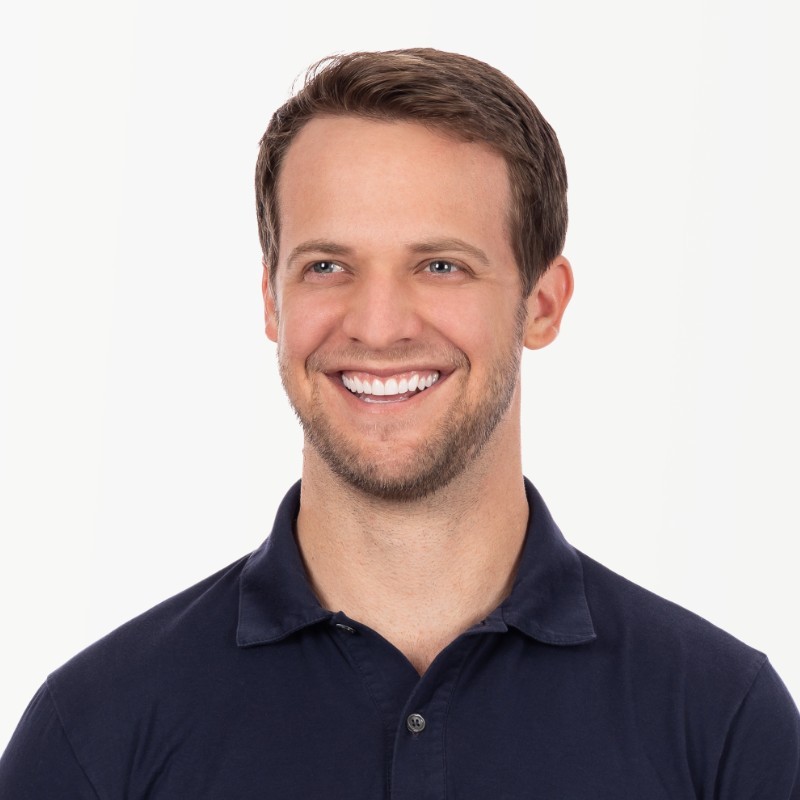
Riley Loftus
Harpoon Ventures
Riley brings a perspective shaped by volume. Between Harpoon's deal flow and the hundreds of applications coming through Black Flag, he's reviewing more pitch decks than most early-stage investors, which gives his feedback on what actually stands out real weight. His advice on decks is refreshingly practical: stop overbuilding TAM slides (VCs will do their own market sizing anyway), make sure someone can understand what your product actually does within the first few pages, and don't waste money on a fancy design agency. He points to MatX's deck, which was literally black text on white slides, as proof that substance wins. For technical founders, his rule of thumb is to explain your product like you're talking to your middle school cousin, then go deeper in subsequent slides.
On the meeting and diligence side, Riley emphasizes something founders often underestimate: the personal and conversational dimension. He actually prefers no-deck intro calls where the conversation flows naturally, and he's a fan of founders who spend the first five or ten minutes on personal connection rather than diving straight into the pitch. The energy and passion a founder brings in the first few minutes tells him more than most slides ever could. His biggest red flag? Founders who seem frustrated when asked to simplify their explanation, or who talk over your head rather than meeting you where you are. He also shares a smart tactical tip: ask the VC upfront whether they're actually deploying capital right now, and how long their diligence process typically takes, so you don't waste a month only to learn the fund is between vehicles.
Perhaps the most distinctive advice comes around post-close discipline and the broader fundraising mindset. Riley warns against the classic early-stage trap of over-hiring and over-spending right after closing, and he stresses treating your next ten hires almost like co-founders. On valuation, he pushes back on the temptation to take the highest number offered at the seed stage, arguing that an inflated early valuation can set you up for a painful Series A if you can't justify the step-up. And his closing advice ties it all together: the best founders are the ones willing to adapt, whether that means pivoting the business, adjusting the raise size, or accepting a lower valuation to get the right investors around the table.
On VCs being human and making mistakes
On what he's really looking for in pitch decks
On how passion shows up in an intro call
On the danger of inflated early valuations
On the importance of adaptability
Mat Vogels (00:10)
Hey everybody, welcome to another episode of Fundraising a Podcast where we interview top early stage investors and get you the first time fundraising founder all the tips and tricks that you need to close out your very first round. And today I have a very special guest, a colleague of mine here at Harpoon Ventures.
Riley Loftus (00:28)
He
Mat Vogels (00:28)
Riley, today you're gonna give some feedback, I think that's unique, similar to Matias, another episode that we recorded because you can provide an insight as it relates to Harpoon Ventures, but then you are also the front lines for Black Flag, in which we get hundreds of applications. We've gone through over thousands now, so you can give a little bit of feedback, I think, on both. So this is gonna be a very special episode. Let's start really quickly for the folks that don't know, a quick introduction of yourself and then a quick intro of Harpoon.
what we invest in, average check size and the stages we invest in.
Riley Loftus (01:02)
Yeah, excited. Excited to chat today, Matt. So this will be fun. Yeah. So as Matt said, I'm Riley, an investor on the Harpoon team here. so, yeah, Harpoon, we're a fund based out of San Diego, invest broadly in what we like to call critical technologies to America and the West. That can be everything from AI and compute to cybersecurity, software infrastructure, and then a lot in the broad deep tech umbrella with everything from
Mat Vogels (01:05)
Yeah.
Riley Loftus (01:29)
biotech to energy and materials to defense, aerospace. And so, you know, a lot of exciting things we've done there. We, know, at our core, you know, we're seed investors writing about, you know, a typical $3 million check is where we like to invest there. But then with Black Flag, as Matt mentioned, we're doing a lot more exciting things at the earliest stages, you know, even sometimes pre-incorporation with founders who are still at their current company, just with an idea.
And those checks are typically coming in the 250k to a million range and then coming with some pro rather than follow along on those later rounds to support those exciting founders there.
Mat Vogels (02:04)
That was perfect. So some of these questions we're going to do next are a little bit more about you first being, how did you get into VC? What were you doing before VC to give people a little context and maybe why you made the decision to jump into VC.
Riley Loftus (02:17)
Yeah,
yeah, absolutely. So, you know, I started my career doing investment banking for about five years and then went into private equity doing middle market buyouts of software and infrastructure companies. And so, you know, I had a little bit of investing experience under my feet from that. But really, you know, back in my investment banking days, we
I worked at an interesting bank where we had a model where we would actually engage with clients a bit earlier than when you typically get a bank involved. even at like the Series A stage there, we would actually work as their exclusive banker for each transaction up until an exit. And so this actually gave us the unique opportunity to pitch and source some companies that were way earlier stage than most bankers are seeing.
and then kind of live alongside them as they raise their series B, series C, and then eventually did a sale or an IPO or something like that. And so really wanted to get back to doing some of that more early exciting stuff and, you know, not to harp on the private equity industry too much, but it's not as exciting when you're looking at some, you know, software companies where you're getting some EBITDA multiple expansion and maybe doing some headcount reductions and more operational things.
much later stage company and so really wanted to see those truly exciting early stage ideas that I was seeing back in the day and so I was very happy to join the Harpoon team to get back to that.
Mat Vogels (03:40)
Yeah. We're a little biased. We say often that we love our job. We have the best job in the world. It's not always easy, which is why one of the next questions that founders wanted to know was, what is your favorite part about being a VC? And then what is your least favorite part about being a VC?
Riley Loftus (03:46)
Yep.
Yeah, I mean, think the favorite, both these answers are going to kind of be an extension of what I was just talking about before that. But my favorite part is probably that no day is the same, right? You almost get to be a kind of a perpetual student where you're learning something new every single day, given the vast majority of our job is meeting with new founders, learning new ideas, seeing new technologies, things like that. so.
I think that is what makes me so excited to wake up to do this job every single day. And then on the flip side, I think the least favorite is kind of what I was talking about in the private equity world, which is some of those hard conversations and whether that's passing on a founder for whatever reason that is, or making a tough call in a board meeting where it's company, things aren't going according to plan, things aren't going as well as they thought they were, and you've got to pivot or you've got to get rid of some of the staff or whatever that is.
That's a part of the journey, that's a part of the job, that's a part of the founder life, but that's not the most fun thing. That's probably the least favorite part of it.
Mat Vogels (04:57)
Yeah, for sure. It sucks. ⁓ What is another question that's similar, but this was another popular question founders wanted, which was what is something that you wish founders maybe had a deeper understanding of as it relates to being a VC, a little peek behind the curtain, maybe.
Riley Loftus (05:00)
Hahaha.
Yeah, I'd probably say it's that, you we make mistakes. I'd say that's probably the biggest piece. Like, you know, our job, as I said earlier, is meeting as many founders and seeing as many new ideas as we can. just unfortunately with that vast amount of volume, sometimes, you know, whether the intro call didn't go well or something came up in diligence, you know, we're going to miss some exciting opportunities. That's just the way it works in venture. We're going to pick some good ones. We're going to pick some, some.
ones that don't go well and then we're going to miss some great ones too. And so I don't think that, you know, in every case should mean that the founder takes it back. It's like, you know, I have a terrible idea. This isn't going to work. That's just the way it goes as a VC. And so I think particularly one of the hardest things about being an early stage, you know, pre-seed and seed investor is just, you know, if you don't have a growth or, know, a later stage fund focus, you're going to miss some things and you're not going to get the opportunity to look at it again. And so
Yeah, think that sometimes founders can take it personally if you're passing on the opportunity. And I think it's just, that's the way it goes. Unfortunately, we see so many things that we're gonna make some mistakes as the humans we are.
Mat Vogels (06:18)
No, that's a great answer, honestly. that's one of my favorite ones I've had. I've had dozens of these and I haven't had a VC mentioned that, but that's a good way to look at it is we do make mistakes. We're not always right. And I think sometimes founders may be miscontrued as being, you we're not a fan of theirs and we're not supporting them. That's not always the case. And a lot of times we make, we make the mistakes.
Riley Loftus (06:23)
Yeah.
Yeah. Yeah.
And I've had a lot of calls, you know, six, 12, 24 months down the line with folks. I'm like, you know what, man? I'm sorry. You were, you were right. I was not right at the time. And I, you know, I wish I gave you the check back then and I can't give you one now. But I think a fun thing at Harpoon too, if you talk to kind of anyone across the team or founders that we work with is I think we help with a lot of companies we actually don't end up investing in, or we just kind of, you know, keep up with them.
Mat Vogels (07:00)
So true.
Riley Loftus (07:03)
go swing by the office anyways, or we'll post on X or on LinkedIn about their fundraisers even when we're not on the cap table. And so it's another fun thing of Harpoon is just being able to stick along some of the people, because we want the critical technologies to win, whether we're, it's better if we're on the cap table, but even if not, we want them to win too.
Mat Vogels (07:21)
It's funny, I've heard founders mention that we are in some cases more helpful than any VC on their cap table and we didn't even invest. So wish it was the case more often, but all right, last couple of questions on your side here. What are some of the industry's problems or spaces that you're personally most excited about? You mentioned some of the spaces we are at Harpoon, but anything in particular for you that's most exciting over the next few years.
Riley Loftus (07:26)
Yeah.
Yeah, I think what I've been the most excited about and what we've been digging into a lot recently is more things kind of on the picks and shovels side, right? The technologies that facilitate the end product that really ingrain themselves kind of become the infrastructure of an industry. I think a great example of a company that we invested in a couple years ago was MadEx, right?
so many different end use cases for AI right now that sometimes it can be hard to differentiate who's going to be the winner. And so, you we looked at what's really going to go in the infrastructure on that side. And so we found MadX, is actually enabling, you know, building the chips to enable and power the LLMs. And then going even earlier in the stack, someone like Aloe Atomics, right, who's doing small modular nuclear reactors to actually power the data centers. And then looking at, you know,
on the deep tech or the defense side, one I was super excited about recently was material hybrid manufacturing often gets a little confusing because we've got Maddox and MaterialX, but and also both in the infrastructure kind of enabling set of things, but they're actually 3D printing batteries and non-conformal shapes. And so, you know, there's 500 drone companies out there right now and, you know, a hundred UUV companies out there right now. So.
How do you go earlier in the stack? You look at who is building the batteries to power these things. And so that was a super interesting one there. Or someone like an Aerodrive, which is doing the autonomy software for satellites. Or someone like a General Galactic, who's actually doing a new water-based propulsion to move those satellites, rather than picking the end actual satellite manufacturer. And so I think that's where I've been really excited to invest recently is
you know, ingraining yourself in the infrastructure of these end products that are going to be around for a long time, but where there's often a lot of competition.
Mat Vogels (09:30)
Yeah, I love that. That's a good answer. Our last question here. This is a little bit of a time for you to prop Harpoon up a little bit. Why should founders pick Harpoon to be on their cap table?
Riley Loftus (09:36)
Yeah.
Yeah, you know, I think probably the biggest thing is we do a lot of support. so, you know, we've got government go to market guys in house who split their time between, you know, investment diligence and actually supporting the companies. And so, you know, they've actually earned up to I think it's about one point three billion dollars and earned contracts across the portfolio. You know, everything from helping out with small Sivers to a fifty million dollar contract with the army all the way up to a very large multi hundred million dollar.
programs of record and then helping with congressional ads. And we've got a guy Clint out in DC who does all the things in DC that I don't know how to do. He wears a suit and tie every single day and has his foot in the door and knows all the people that, quite frankly, most people have no idea how to get in contact with and don't know how to play the game. And it's very important today just given how much the government, this administration is investing in critical technologies. And so I think that's one of the big things.
Secondly, I think if you asked a lot of people, they'd say we're probably not like your typical VC and whether that's just, we're different people, we're maybe sometimes more casual and easier to get along with. And so I think it is important, VCs are with you for a long time. And so you do want to have a good personality fit with you. And so I think everyone at Harpoon passes the airport test where if you got stuck in a...
You know, in a delay or a canceled flight for five or six hours, you wouldn't want to, you know, go absolutely insane and sit at the bar by yourself. You'd be happy hanging out with us.
Mat Vogels (11:10)
Yeah,
I love that. Or maybe a VC that you don't really like that much. So ⁓ I agree. All right, let's get into what people are here for. The fundraising process itself. We break it up into three different parts. The first being, how do they get into the room? How do they get a meeting with Riley? Second is, now they're in the meeting, how do they knock it out of the park and hopefully earn additional meetings and go through the diligence process? And then the third step is,
Riley Loftus (11:16)
Yeah.
Mat Vogels (11:36)
What does that actually look like to push a fundraising round over the finish line, building up a cap table, choosing the right VCs and everything there. But going back to the first bit, lot of folks listening, they haven't fundraised before, they maybe don't have a Rolodex, they maybe have a deck and they're thinking about fundraising. A lot of times we see them building up a list of VCs that they want to include or put on their cap table. Any advice or feedback you'd give to founders on what characteristics or traits or things they should look for in those VCs?
Riley Loftus (12:03)
Yeah, you know, I'd say, you know, maybe goes a little bit back to what I was talking about with Harpoon is, you know, I think, you know, as I said, they're the VC is going to be with you for a long time. So good fit is really important. And sometimes that even goes down to, the partner, the principal or the VP level of who you want to actually do the diligence process with and who potentially is going to take a board seat or a board observer seat. Or, you know, a lot of cases with Harpoon, we don't have a board seat, but.
Mat Vogels (12:18)
Mm-hmm.
Riley Loftus (12:31)
I catch up with my founders at least every other week. And so I think that's something really important to figure out there. And then, yeah, I'd say too, especially at the early stage, it's probably important to look at what the fund's focus is. I think sometimes it can be nice to have a fund that actually specializes in your space rather than going with a generalist fund.
which may be a little bit more okay at the kind of series A, series B, where you're looking for a good name and a bigger check, and maybe don't need as much kind of ongoing support there. And then, yeah, I think it's important to just going along with the fit and everything like that, is someone who's going to give you ongoing support and can write you a pro rata check in those subsequent rounds and continue showing support.
Mat Vogels (13:20)
That's a good response. Next question was kind of more around how do they actually know they have a list? What is the best way maybe for you when you receive a pitch deck or an email? What are some of the best ways that founders can start on the outreach process to get it in front of you?
Riley Loftus (13:34)
Yeah, I mean, I think the absolute best way is if you can get a warm referral from another founder. I mean, I think that speaks absolute volumes if someone else I respect is referring you and saying that I should take a look at it seriously. And then additionally, like if you've raised a pre-seed round or something like that, getting an intro from one of those investors on your cap table is great. And I think the flip side is where it can get tricky is maybe you have some friends in VC and
Maybe they're connected with Harpoon and you ask them to make the introduction to us, but you get this little weird space where it's like, why are you introducing this company to me, but you're not investing? And so I think that's a trap some folks fall into because, I think a lot of people have friends in the VC industry, but it turns into this weird game of, why would you introduce the best founder you've ever seen to me if you're not backing them? And then maybe just on the flip side, you know, some things maybe not to do is,
you know, if you're a founder getting reached out to by 50 VCs and it's just a blanket copy and pasted email, you're not going to respond. And so think about that the same way as if you're just sending something that clearly was copy and pasted to a list of 150 VCs and sometimes we even get the brackets with TBD fill in name ⁓ at the top of it. You know, that's just that's not going to catch your eye. And yeah, maybe going back to the the question at the beginning of
Mat Vogels (14:49)
A lot. Yeah.
Riley Loftus (14:56)
you know, we just get so much volume of inbound and things like that that sometimes that'll just slip through the crack even if it is a great idea.
Mat Vogels (15:03)
Yeah, exactly. You probably more than maybe certainly more than most VCs see probably more pitch decks on a monthly basis than most, especially because of Black Flag, we get hundreds and then we have tons of investors and people that send us pitch decks all the time. So let's go into the pitch deck phase. Usually it's kind of the homepage of what these companies are trying to do. Any feedback on what founders can do to make their pitch deck.
stand out. I know it's kind of a high question, kind of go in any direction you want with it, but again, you see way more pitch decks than most people. Which are the ones that maybe stand out the most?
Riley Loftus (15:33)
Yeah.
Yeah, I mean, particularly through Black Flag, just given the amount of applications, we certainly do see a lot of pitch decks. Yeah, you know, I think particularly with like the pre-seed and the seed stage, I think it's important to be concise, short, and, you know, really be able to explain what your product is and things like that. I'd say when I'm going through a pitch deck, typically what I'm, you know, gravitating towards and I think is the most important is
a very clear overview page of what the product is. Like can't tell you the amount of decks where you get kind of 10 to 12 pages in and just like, I don't even know what the product is. I now understand there's 10 problems in this industry, but I don't know what you're solving or how you're solving it. Or you you see a deck where it's just so tech heavy that you're still kind of looking at yourself like, so what is this actually doing? And then I also think with the pre-seed and the seed it's...
Mat Vogels (16:16)
So true.
Riley Loftus (16:31)
we're probably spending a lot of time looking at the team page and then looking you up and seeing what your credentials are and then actually doing references on you with probably some people that know you that we have in our network. And then I'd say too, maybe a trap people fall into is spending a lot of time trying to build out the TAM and going really deep into that. Everyone exaggerates what their market size is and their pitch deck.
On the flip side of my banking days, I had to build out slides that exaggerated it as well. And so, you know, we're going to do our own independent diligence there and figure out what the market size is in our mind. And so probably spending a little bit less time, you know, looking at that slide and really, really want to understand what you're doing so that we can level set on what to ask you during that intro call.
Mat Vogels (17:17)
Another question that we had folks ask was how important is design of their pitch decks? We get a lot of founders that are asking about should they hire a pitch deck agency? Obviously there's a lot of good AI tools out there now that can do make your deck look really good, but how important is the aesthetic part of a pitch deck for you?
Riley Loftus (17:36)
You know, it's funny, I think if you've got a really great idea, as long as it looks good enough, I think that's fine. I think one of the greatest examples of a VC website that speaks for itself is if you go to benchmark.com, there's literally nothing but a logo. Or a great example that I talked about earlier, our company, MatX.
when we got that pitch deck, was black text on a white slide and the website is, I think, still black text on a white page. And then you flipped to the team slide and you just looked up who they had hired and how ambitious the vision was, which was, we're going to compete with NVIDIA and we have the people to do it. That was all we needed to see. So I'd say probably at this stage, don't fall in the hole of paying someone to do it. As you mentioned, there's a lot of good tools out there to do it for you.
Mat Vogels (18:00)
Mm-hmm.
Riley Loftus (18:19)
So I think the content and what you're doing and who you are is more important, at least for me.
Mat Vogels (18:25)
We see a lot of technical decks. How can founders explain or present hyper technical ideas in a way you mentioned, obviously simplicity, clarity and understanding the problem in the market and all those things is so important. A lot of times you see pitch decks where the technology can kind of get in the way almost. Any feedback for how super technical founders can kind of cover both grounds, show how impressive their technology is, but also make it clear.
Riley Loftus (18:52)
Yeah, I always like to say it, especially on a call, if we have a really technical deck, but we get on the intro call, I always like to say, either treat me like I'm really stupid or treat me like I'm your middle school cousin and explain it in terms that they could understand. You're going in for your kids, what does your dad do for work day or something like that and explaining it to them.
And so yeah, I think it's great to have some of those technical slides in the deck, but you really do need to have a slide that lays it out as here is at a high level what we're solving. And I think a lot we've seen recently, it's like, here's the problem, here's how we solve it, slide that really lays it out in basic terms and then digs into what they're doing specifically on the subsequent slides there.
Mat Vogels (19:34)
Yep, I like that. Maybe last question on the phase of everything before the meeting, any mistakes or additional advice that you would give founders that are trying to get in front of ECs, creating pitch decks or cold outreach, anything there?
Riley Loftus (19:48)
Yeah, I mean, I'd say it's hard to find the balance. But you do want to be targeted, I think. So it does go back to some of your questions about, who should we look for? How should we put that list together? I think it's, you know, it's a tough balance because you are going to get a lot of no's. You're going to get a lot of people who don't even answer. But I don't think you want to be reaching out to 300 or 400 people on a list. That's just.
going to be a waste of your time. And quite frankly, you might end up with, you know, 75 intro calls out of that where it was never a good fit with the fund. And so I think you do need to be smart about pulling together that list, making sure it is in their focus, making sure that fund has capital to deploy, making sure you're going to be able to actually get them on the phone. So I'd say probably finding that right balance of reaching out to just enough where you're going to find some that'll actually join the syndicate.
not too many that you're going to burn yourself out and waste a lot of time on.
Mat Vogels (20:42)
Yep, I like that. All right, let's say that they've done all these things. Their pitch deck is great. Everything is great. They're now going into the meeting with you. What are you looking for from your side as a VC and maybe even specifically for Harpoon ⁓ in these intro calls? What are you trying to get out of them from the founder?
Riley Loftus (20:56)
Mm-hmm.
Yeah, I think the biggest thing that you can usually tell within the first five to 10 minutes, honestly, is passion, quite frankly. You can tell that this founder, this is everything to them, this is gonna be their life's work. A lot of times I like to ask the question, at the end of the call, what do you see this turning into in seven, eight, nine, 10, 15 years? And maybe this is shocking to some people, but some founders will say, I see this as being kind of a
an acquisition by Google or something like that. And that's great. That could be a good outcome. But I think the answer that really excites me is if we got an acquisition offer in five years, I'd say no. I want this thing to go public. I want this to be a long standing company. This is what I'm going to do for the rest of my life. And so I think you can usually tell when that energy and excitement and passion comes through the founder, especially with, I mean,
Going back to my answer and kind of building the infrastructure of the picks and shovels, maybe it doesn't sound like it's the most exciting idea in the world, but they bring out that energy, they bring out that passion and get you as excited about something like advanced manufacturing, which maybe doesn't scream as like the $10 billion super exciting, sexy idea to do, but those founders can bring that out in the call and get you excited on that call as well.
Mat Vogels (22:13)
Yeah. On the opposite of that, are there any red flags? it when they don't bring that energy? Are there any other red flags or things that founders do wrong on those initial calls?
Riley Loftus (22:22)
Yeah, you know, I'd almost say it's like, you know, being pretentious and maybe don't show that energy in the call and not even, you maybe not having the willingness to answer some of those questions. You know, I'm not a technologist by background. And so back to one of your other questions, like I am going to ask that question of explain it, you know, super basic terms. What are you doing? And help me get to the bottom of your technology. And I have had calls where you can tell that the founder seems frustrated or doesn't want to explain it.
and easier to understand terms really is just going like super deep in the tech jargon and talking over your head and things like that. And so I think when you can have that early energy and that early conversation about what you're doing, it leads to a much more fruitful and fun conversation that then opens up the kind of deeper diligence questions after that.
Mat Vogels (23:12)
Yep, that's a good way to put it. think that we see and have so many of these meetings, they all kind of blend together. So if you can stand out and be respectful, all those things, just any normal conversation ⁓ are a huge help to us.
Riley Loftus (23:24)
Yeah, I'd say, yeah,
and a green flag too is, you know, I think sometimes people make the mistake of wanting to get right into the pitch. Like, I like to just kind of, you know, talk about personal things for the first, five, 10 minutes is fun. And if we go five, 10 minutes over because of that, that's great. And so, yeah, particularly when you start meeting in person after the kind of intro call, I think it's great to level set on that personal side too.
Mat Vogels (23:32)
Yeah
Yeah, that's so true. Similar to that, one of the questions we had from founders here was, pitch deck or no pitch deck? Do you have a preference? Is there a balance? What does that look like? As on the call specifically for founders to walk through.
Riley Loftus (23:59)
Yeah, yeah.
I actually love the conversational no pitch deck. And then if some of the questions lead to something a little deeper, pull up that specific slide. Or if you have something that goes over the tech, or if you have something that goes over your go to market, or any of the kind of contract wins or customers you already have, you could pull that up in the moment. And then I like when people actually then close it again.
I love in-person meetings, not with a pitch deck, whether it's over a coffee or just sitting in the conference room or something like that. And so I think a little bit when you're going slide by slide, I don't know, it gets you back to that kind of doing your middle school and high school presentations where you end up reading off the slide inevitably. And I think it leads to a better conversation if you're just having a no slides chat over Zoom or something like that.
Mat Vogels (24:37)
Yes.
Another one of the questions that founders wanted to know is whether there's a preference on having all the founders on the call. This is the initial call. Keep in mind, just the CEO. Any thoughts or feedback there?
Riley Loftus (24:56)
I think it's probably dependent company by company. Yeah, I think sometimes the intro call just like the founder CEO works perfectly unless your co-founder is going to talk a lot about the product or you have another co-founder is going to talk a lot about the go-to-market and the commercial motion. I think sometimes it's funny when you have like three co-founders on and two of them are on mute and don't say anything the whole time.
But yeah, I'd say maybe it's the intro call can be the main founder, CEO, and then those subsequent calls you kind of tap people in to answer some of those diligence questions, you go into the product tech or other things.
Mat Vogels (25:29)
Yep, yep, that's great. Last question here, are there any questions that you would recommend founders ask of the VCs during this first process? Not questions that are for you to get excited about or to be like, I'm glad they asked that question, but just for founders to take control of the process themselves.
Riley Loftus (25:48)
Yeah, maybe a more like kind of basic one is, you know, as silly as it sounds, I think it is important to ask, you know, whoever you're talking to from the VC, if the fund is actually deploying capital right now. You know, for whatever reason, you know, people could be in between funds, like we pause on new investments, only doing follow-ons and pro rata, all sorts of scenarios. And, you know, I think you could end up talking to a VC for a month and then they tell you at the end, like, hey, actually, we don't have the capital, we could
Mat Vogels (26:01)
Yeah.
Riley Loftus (26:17)
you know, we're going to start deploying out of our new fund over the summer or something like that. And that's just a waste of your time, unfortunately. And then kind of maybe another silly process wise one at the end is I think it's important to ask like how long does your diligence process take? You know, they'll tell you what they need, but you don't want to get stuck in this like, you know, two month loop of them continuing to ask for random, you know, diligence requests and things like that. And so think that's an important one. And then on the more kind of fun and personal side,
Mat Vogels (26:24)
That sucks.
Riley Loftus (26:44)
I love when a founder at the end or even I've sometimes had at the beginning where it sort of feels like a test to see if I went through the pitch deck or not as they asked what gets you excited about my idea. And I think that's super fun to chat through where I get to talk a little bit about why I liked the deck and why I wanted to take the intro call.
Mat Vogels (27:04)
Perhaps it'd be another kind of similar to this question. What do you think about for scheduling the next meeting? Is it something where founders should try to schedule that next meeting on the call? Do you kind of leave separate ways and then figure it out later? What's the right way there? And it's probably hard because there's not really one right answer. It always depends.
Riley Loftus (27:22)
Yeah, I do get why a lot of founders do that at the end and they're like, hey, let's book something right now, or I've even had someone at a happy hour come up to me and hold out their calendar and ask me to put my email and a time in. Yeah, I prefer to do it after the fact. I actually love, I think the best case scenario is at the end of the intro calls, exchange phone numbers. I think texting just gets things done way quicker.
I'm also a big fan of just calling people out of the blue and ambushing them with some questions. And so I think that's the best way to do it. And I'll be super responsive that way too, as it sifts through the noise of the inbox going right to the phone sometimes. But yeah, I think it can just feel a little strange to book something at the end of a call and kind of waste time with that awkward going back and forth.
And schedules change so much for us and last minute travel comes up all the time. And I'd rather schedule something that I can make rather than booking something at the end of the call and having to reschedule on you.
Mat Vogels (28:17)
The other thing too is that oftentimes it might just be one of us on these intro calls. It's hard for us to book a time. We don't know the rest of the team's schedule. It's hard for us to kind of coordinate that right then and there. We probably want to get more people involved in that second call. So yeah, don't take it the wrong way when we have to say, hey, we can't schedule something right now. All right.
Riley Loftus (28:25)
Yeah.
Exactly. Yeah.
Mat Vogels (28:36)
Let's say that they've done all these things, they've crushed some initial meetings and now they're kind of in the meat of the process, which is typically, diligence-ing, a little bit of herding cats. But maybe we start with on the harpoon side, could you shed some light on what the harpoon diligence process might look like, at least at a high level?
Riley Loftus (28:52)
Yeah, I think at a high level, which probably isn't too dissimilar from other funds, is you'll have the intro call with either one or two of us. And then that next call will typically bring in two or three or four more folks. And particularly, if you either have a defense or a dual use focus, we'll bring in two to three of those government go to market guys we have on the team. And so that call will look like...
you know, another overview at a high level of what you're doing and then, you know, a much deeper dive into what the product is and, you know, how you're going to open up those government and commercial opportunities to sell into on that front. And so then after that, it would look like another call like that, probably a bit longer. And in between all these, we are independently doing our reference checks on you, the founding team, whether that's other VCs, with, you know, past companies you've worked with where we have friendly relationships.
with other founders who maybe you know, all those things like that, and then doing our independent diligence, talking to potential end customers and things like that as well. And then kind of just confirmatory final calls as some questions come up. as I said, I think a lot of us on the team like to do random phone calls and texting over questions, which some founders I think love doing that. I know sometimes it can be annoying if we're just texting you one-off questions.
But I think that's a big part of our diligence process, quite frankly. And whenever it's possible too, we like to squeeze in an in-person meeting. And if you've got an office or some actual physical tech or hardware, that's always a fun way to do things. And always great to do a coffee, a lunch, or a dinner, or a beer, or something like that as well, to just connect on a personal level. So yeah, I'd say our process can take anywhere from...
one week to four weeks depending on kind of the situation and the stage. You sometimes those earlier stage ones like Black Flag just moved so quickly. But yeah, I'd say that's kind of typically what we're doing.
Mat Vogels (30:49)
Yep, I like that. Although it's a nice problem to have, a lot of times founders will get to a phase where the round's getting hot, things are moving quickly, they have a lot of VCs that maybe VCs that said no three weeks ago are now coming back and wanting to get in. It's really stressful. It's one of the most stressful parts about the fundraising process is this period where you kind of have to start saying yes and no to certain VCs and you have to push people down to get people in.
Riley Loftus (31:08)
Yep.
Mat Vogels (31:11)
What are some advice you give to founders on making the, as best as you can, the right decision here on what funds to allow in. You already kind of mentioned earlier in the funds you're looking for, but any additional advice on kind of building your cap table for this very first round?
Riley Loftus (31:26)
Yeah, I mean, think it's, a lot of the things we talked about earlier is what those funds focuses are, if they're going to be able to help you and assist you. And I think you've also got to do your independent diligence as a founder on those funds. And so a lot of people ask us for references of past founders. So I think that's a great way to kind of sift through if you've got a bunch of offers is.
figure out what the other founders like about that fund and be very upfront with them and you can tell them I have offers from these XYZ funds and I think a lot of at least our founders will be very honest about what they've enjoyed working with us, enjoyed about working with us, what they haven't enjoyed about working with other funds. And yeah, even ask those founders if they didn't like something about Harpoon or didn't like someone about whichever fund.
And so I think that's important just as we're doing references on you to do references on your end. And then, yeah, I think sometimes people also these days talk about, we want a big, you know, flashy multi-stage logo to set us up for the, you know, the seed or the Series A. I do think it's good to have, you good logos on the cap table, but...
you know, sometimes I don't think it's as important at the pre seed or seed these days to get a big multi-stage fund because then if they don't come in and immediately lead the seed or the series A, then that looks, you know, interesting and that happens a lot. Maybe you want to bring on another big logo at the A, but then folks are like, you know, why isn't your, you know, your lead seed investor who has, you know, series A, series B, series C capabilities not investing in this round. So yeah, no, no right way to do it in a lot of different ways to think about it.
Mat Vogels (33:04)
Yeah, yeah, and it's one of those things, especially if it's your first time going through it. It's almost the second or third time where you finally, it's so much to handle. It's so much. And it's kind of an impossible decision. You're almost like making, you know, a 10 year life decision based on what could be only a couple of weeks worth of, of information. So it's kind of an impossible piece. Are there any other common mistakes that you see founders make in kind of the later stage of their fundraising process or things that they should know as they're navigating these?
Riley Loftus (33:08)
It's a lot to handle.
Yeah.
Yeah, I mean, I'd say particularly in the situation you're talking about where you have a lot of offers, you're going to get people offering bigger checks, know, higher valuations. And I think that can be a trap to fall on, particularly at the early stage if you don't deserve that valuation. And I think it always makes me think of that classic scene in the Silicon Valley TV show where the founder is yelling at the bar about how he could have taken less money. And, you know, yeah, it's unfortunate. We're going to go through cycles and
2021 and now where they're just getting some crazy entry round valuations for deep tech companies and you want to make sure in a year or two years from now that you're going to be able to justify a bump up and if you're raising it 65 out the gate, are you going to be able to raise it 150 in a year from now when you need it? So just I think that's probably one of the biggest traps to fall into and I know that can
probably sound funny to some founders given we're trying to get lower valuations as a VC and get some ownership. I think it truly is important to think about that phasing of valuations, sizing, everything like that.
Mat Vogels (34:31)
No, it's been a common response that VCs, and again, it's because it sounds like we're giving them bad advice, because it's like, yeah, raise it a lower valuation. Of course, that's what you should do. But a lot of VCs, there's some resources out there where you try to find that show how raising your Series A and beyond certainly is when you almost, especially as a hard tech company.
Riley Loftus (34:39)
Yeah.
Mat Vogels (34:50)
is when you really need that capital too. ⁓ And if you end up setting yourself too high at that seed, which is typically still very exploratory, it's gonna be even harder to raise your most critical round later on. So it's definitely good advice. All right, let's say that they've closed the round out. Everybody's celebrating, you get five minutes to celebrate and then it's back to work and the real work begins. But what are some of the things that founders should be aware of? Any mistakes that you see founders make?
Riley Loftus (34:52)
Exactly.
Exactly.
Mat Vogels (35:17)
right after they close the round, maybe for the first three to six months after. A lot of these folks, it's the first time they've seen money like this. It's hard to know how to spend it in many ways, but any advice for them?
Riley Loftus (35:25)
Yeah.
Yeah, I mean, I'd say it's all a part of the lead up to and how you're thinking about the company, but you got to be diligent about your burn and how much you're going to start spending. And it's much better to have 18 to 24 months of runway than six to 12 months of runway, obviously. And so I think one of the biggest mistakes we've seen is
getting a big new office and hiring a bunch of people. I think some of my favorite pre-seed and seed founders have been the ones who are incredibly diligent about those first hires and almost treating like the next 10 hires across engineering and when they eventually get the kind of go to market or commercialization person, they're treating those next 10 hires almost as co-founders, taking multiple months to hire them, making them work in person.
making sure it's both a cultural and a technology engineering type fit versus going out and way over hiring or sometimes counting on getting a big contract or being able to raise that next round and then hiring and doing a bunch of things to support that and the contract ultimately falls through or that next round gets pushed out six to eight months. So I think it's probably not a unique answer, but I think it really is just important to.
really manage that burn and run away and you never know when know VCs are going to start tightening their wallets or we're going to go through you know a downturn and your customers are going to start drying up if you're signed to the government there's going to be a shutdown and your contract gets delayed four to five months so I think that's probably the biggest biggest mistake we've seen with folks and most important thing to think about.
Mat Vogels (37:10)
Yeah. Are there any other, I actually maybe a different way of looking at it is the relationship you have with your VCs going forward, any expectation setting or feedback you'd give to founders is what they can expect from their VCs once that round is closed. Cause sometimes founders get a little either confused or they don't really know how that relationship kind of pans out after.
Riley Loftus (37:30)
Yeah, mean, think it goes, you know, this is a lot to say with what we talking about with choosing the right syndicate. We have heard from a lot where, you know, a lot of VCs write a check and kind of disappear, stop answering, maybe dial into the board meeting rather than coming in person once a quarter or stop showing up to the board meetings if they're a board observer or anything like that. But if you're choosing the right ones and you get the good people around the table,
I think it just looks like a lot of random ongoing communication. As I said earlier, I'm a big fan of random calls, random texts about questions, things like that. And so I feel like that's the relationship I have with a lot of founders. was texting one of ours about our dogs this weekend and then talking about making some introductions to him across our portfolio with potential customers and partners and things like that. And then going to see him up in LA later this week to grab a beer.
If you choose the good ones, I think it can look a lot like a friendship, quite frankly, where there's a mix of personal chat, but also a lot of work chat. then particularly with Harpoon, we are helping a lot on the government, federal, go-to-market motions. And so I think we have much more regular catch-ups with our companies than a lot of other VCs, particularly at the early stages, where we're helping them out with those.
You know, Matt, you do a lot with website design and helping them with their pitch deck design and things like that. So I think you're catching up with them a bunch. We also help a lot with kind of fundraising strategy for those subsequent rounds. And so we're helping craft the story, you know, actually make sure that they don't fall into those traps of the pitch deck that we talked about at the beginning of this. And we actually help with thinking through the investor list and helping make those warm introductions. So.
I think if you pick the right VCs, you're going to have a very good back and forth relationship where hopefully they're answering the phone call in the first or second ring or at least texting you back, setting up time.
Mat Vogels (39:21)
Last question is just around kind of open for you. Last minute feedback, advice, things you'd give to founders that are just going into this fundraising process as a whole, help maybe set the standard for them.
Riley Loftus (39:35)
Yeah, I'd say it's a broad piece of advice both for that and for building a company, which is, and I mean, this is such a tough thing, but I think it's a giant problem where people fail, whether it's the actual company fails or the fundraise fails, which is refusing to be flexible and refusing to adapt. And we've seen some great companies where they had an initial idea, which we love the idea. We back the founders based on that, but we truly, you we're backing the founders and not necessarily always just the idea. We're backing that.
you will be able to do something, you'll be able to get something done. they made a technological discovery along the way, completely pivoted the business, brand new end product, now doing better than we ever could have expected. And we're thrilled for them. I think that happens with the fundraise process too, is maybe you in your head thought that you could raise a $10 million seed round, but the market has taught you that you should go for three to four and then go out for that big round once you have.
maybe a contractor, once you make that kind of, you know, hit that tech milestone. And I think that's important to be able to go for that and back to the valuation thing. You know, maybe you had expectations in your mind for much higher valuation, but that's not what the market says. It's more important to go for that good investor, that good syndicate, rather than continuing to fight and getting stuck trying to get, you know, double the valuation that the market's giving you. And so I think those are the best founders where we can really believe that.
they're going to do whatever it takes to get this business off the ground and to continue winning. And we always like to say too is that we'd rather back a founder that goes down with the sinking ship and puts everything into it rather than one that kind of just half asses it along the way. And so I think that's probably my biggest piece of advice.
Mat Vogels (41:18)
Yeah, I love it. Riley, thank you so much. This was a lot of information packed into just under 45 minutes. Any place where folks can continue along, follow you and Harpoon Black Flag, any of the news there.
Riley Loftus (41:22)
Yeah, thank you Matt.
Yeah, mean, we continuously update our website with news and, you know, write down some things on there. And then always feel free to reach out to me on LinkedIn or on X or email or anything like that. I'm always happy to chat with folks and get up to, you know, L.A. I'm from the South Bay, from Manhattan Beach, and so spend a ton of time up in El Segundo, Torrance, Redondo, Hawthorne, all of that, and spending a lot of time in the Bay Area as well. And so hopefully, to anyone listening, get to hang out with you in person sometime soon.
Mat Vogels (42:01)
Yep. Awesome. We'll appreciate it again. Like I mentioned earlier, I have the pleasure of working with you every day. So I'm sure that we will talk again soon.
Riley Loftus (42:08)
He
Yeah, we'll get to see you in person soon.
Mat Vogels (42:12)
Yeah, sounds good. All right, bye Riley.
Riley Loftus (42:14)
All right, thanks Matt.




.jpeg)














.jpeg)




.svg)














.jpeg)