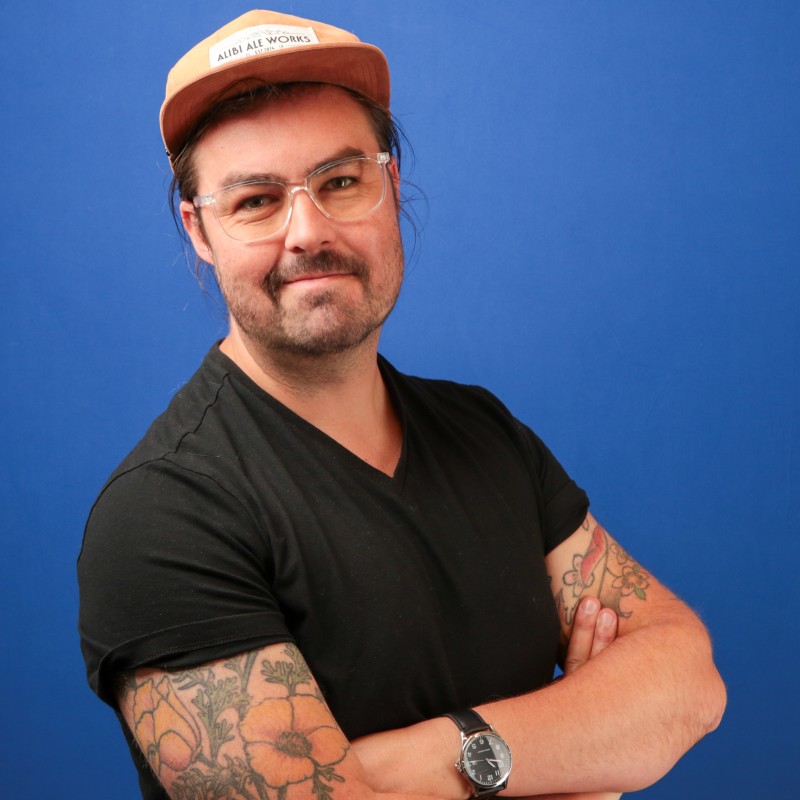
Alex Roetter
Moxxie Ventures
Alex Roetter brings a rare operator's DNA to venture. Before co-leading Moxxie Ventures with his partner Katie, he ran engineering at Twitter and led an eVTOL (electric flying car) company. Moxxie writes $500K to $2M checks at the pre-seed and seed stage, and Alex's background shapes how the firm shows up for founders: concrete, in-the-trenches conversations about customer problems and go-to-market strategy rather than board decks and process theater.
The through-line of the episode is Alex's full rejection of what he calls "finance bro culture" — the posturing, the middle-school-dating negotiation tactics, the manufactured urgency. He has strong, contrarian takes on how founders should approach their outreach list, what actually matters in a first meeting, and why a lot of the "strategy" founders obsess over is a waste of the one resource they can't get back. His advice on evaluating VCs, in particular, reframes the decision in a way most founders don't think about until it's too late.
The most valuable segments, and the ones most likely to be uncomfortable, are on fund dynamics, tier-one dynamics, and dilution. Alex draws a hard line between "great companies" and "great venture investments," and is blunt about the traps founders fall into when they raise more than they need at terms the market will reward in the short term but punish later. He closes with what might be the most honest framing of the whole conversation: a successful fundraise isn't success. It's just the bar being raised.
On why founders should send outreach in small batches
On the uncomfortable reality of warm intros
On picking the right VC by simulating a bad day
On confusing fundraising with success
On what founders should do after the check clears
Mat Vogels (00:10)
everybody. Welcome to another episode of fun raising a podcast where we interview top early stage investors to give you a peek behind the curtain on the not so fun fundraising process, especially if you are a first time fundraising founder. And today I have a very special guest, another
Colorado investor, which I always say because I think that Colorado investors are a little bit spicier than your average investor. So I think this is going to go very well. But Alex, very, very happy to have you on. You are a managing director and general partner at Moxie Ventures based here out of Colorado. Before we jump into the fundraising process, could you give the founders listening a quick overview of yourself, Moxie?
specifically what you're investing in, stages that you invest in, then average check size-ish.
Alex Roetter (01:01)
Sure. Well, thanks, Matt, for having me. Happy to be here. I'll try to be spicy. So Moxie Ventures is a pre-seed and seed stage firm. We're investing. We write half a million dollar to one and a half, two million dollar checks. We like to come in early pre-seed seed stage. So complete founding team, something built. Maybe it's in market and people are using it. That's nice. Maybe there's revenue. Of course, that's nice. Doesn't always have to be. Try to buy 10 % of a company that were flexible on that.
My background is in software engineering. I used to run engineering at Twitter, worked at a bunch of startups. I used to run an EVTOL company, an electric flying car company. My partner Katie and the founder of Moxie, her background is in marketing, PR, branding. She ran the VIT, very important Twitter, onboarding team at Twitter and has done a bunch of amazing things.
Mat Vogels (01:50)
I love that. Yeah, you guys are, think, a perfect dynamic duo. So that's always exciting. For anybody that has the opportunity to work with Moxie, I highly recommend it. All right, let's go into some more questions about you. These were questions that founders actually wanted us to ask the VCs that we were talking with. The very first one, you mentioned having a background as an operator at a small startup called Twitter, formerly Twitter, now X.
Why did you choose to get into VC? We see this commonly folks are operators, they're founders, they're doing well, and then they choose to go into this dark side of VC. Why did you choose to do that?
Alex Roetter (02:22)
Yeah.
was like half accident, half on purpose. So accidentally I started angel investing a little bit. I then had the opportunity to be a scout. So I was able to invest a little more. And so I sort of never with an eye to it being one day a full-time thing, but it ended up that way. What I liked about it is I was fortunate at Twitter to be able to hire thousands of engineers, work with lots of people on different things, but there are a set of problems that Twitter.
hires for and a set that they don't. Just makes no sense, of course, for Twitter to work on. And my interests are much broader than that. And what I really liked is talking about talking to founders who are really smart and passionate doing totally different things that I would never otherwise think about. know, world models for health care, metal as a fuel companies, all kinds of cool different things. So I got to dabble in a lot of different areas, which I find very interesting.
Mat Vogels (03:08)
like that. Maybe you highlighted some of these, but what is your favorite part about the job and then what's your least favorite part about the job and being a VC?
Alex Roetter (03:15)
Yeah. Favorite part
is easy. There are so many awesome founders who are really driven, accomplished in what they did previously. They have deep like marriage to their specific problem. They're not going to quit when it gets hard. The first day gets hard because they're deeply passionate about something and they're working on awesome things and they're little small ways where I can help and that gives me tons of joy. My least favorite part is it's like too close to finance bro culture than I would like.
There's a lot of garbage posturing on both sides, on VC sides, on founder sides. I hate, I have no interest in any of that stuff. I hate all that stuff. It's the minority, but anything that you hate, the little thing that happens occasionally drives you crazy. The one blister you get every 10th day hiking drives you crazy. So it's the minority, but I hate it.
Mat Vogels (04:02)
Yeah, no, that's good one. I feel like especially over the last decade or so where starting a company and being a VC has become very cool, it's only gotten maybe a little bit worse across that as well.
Alex Roetter (04:11)
Yeah, there's
also like this weird thing. I don't know. There are these horrible books, like from the 2010s around like how to date. And the summary is basically like, if you're a real jerk, people will like you more, which I think is insane. That, I think some of that culture has been infused into the fundraising process. Like founders get taught like, oh, if you're a jerk and like you neg VCs, they'll, they'll, they'll chase after you and vice versa. And I just find that completely uninteresting and I want nothing to do with it.
Mat Vogels (04:23)
Hmm.
It's true.
And I would argue is probably not true. And it actually kind of goes to this next question. Is there something that you wish founders maybe better understood about being a VC? I mentioned before the call, it feels kind of like a black box. Most founders have no idea what it means to be a VC. Any light that you can shed on what that world looks like?
Alex Roetter (04:43)
Yeah.
Mm-hmm.
Mm-hmm.
I
don't know if I know what it means to VC, but for us it's very simple. We are looking for excellent, strong founders who are married to a specific problem for a specific reason and a real reason that the world wants your solution, or not building a solution in search of a problem. I think a thing that people need to understand, a little more maybe about how fun models work, there are all kinds of great companies that are not great venture investments.
And so what is the difference? how do we think about how to deploy our capital in a way that helps the fund? It's not exactly the same as you are building a good business and if the business is good, we'll want to invest in you.
Mat Vogels (05:34)
Yep, I think that's absolutely true. What are some of the areas or industries that you are personally excited about right now?
Alex Roetter (05:40)
Yeah.
So obviously everyone and his brother is looking into AI. That's great. AI is an insanely powerful new tool that's only just getting started. Like any powerful new tool, it's going to have great large impact use cases and horrible large impact use cases. I think one of the biggest potential futures where AI is a huge like force for advancement in society is world models and physical models for healthcare in particular.
because there's so much data in healthcare that is not used at all. mean, think about everything that the sum of all hospital knows about all patient interactions ever. Or think about that if GE knew the results of every single scan a GE CT scanner had ever made since they were invented and that was used to benefit future patient care, they're such insane, like hidden latent.
pools of data that are not used to help real people who are sick. And I think when we unlock that through training a variety of different models, not LLMs for the most part, but different other models, I think that could like materially improve human health.
Mat Vogels (06:46)
I love that, that's a really good one. I'm excited about the combination of healthcare and AI as well. ⁓ Last question here, this is almost for you to have a minute or so time to shine. Why should founders pick you and or Moxie to be on their cap table?
Alex Roetter (06:51)
Mm-hmm.
Yeah. Well, the first thing I would do is say is every VC will tell you why they're God's grift to being a VC. You should talk to other founders on.
on the investment, in the statement, know, in the investments of the firm. Like, you can talk to our founders, they will tell you areas where we've been insanely helpful, they will tell you areas where we've been in the pain in the butt, they will tell you areas where we've told you exactly what we thought and we ended up being right and it was helpful and we ended up being wrong and it was misguided and maybe it was a rabbit hole. But that is the gold standard, first of all. But both of us and our whole team, we have another investor named Pratik who's a former, he's a founder in AI and then worked for Nvidia.
We're all former operators. So we like to talk to you about specific concrete things that you would talk about if we were in the same office working on a thing one day and stuck on some customer problem or some go-to-market thing or some financial model or some engineering thing or we can't get the product to work with this test work. We like being really concrete with real things that founders actually struggle.
Mat Vogels (08:02)
like that. All right, let's hop into the fundraising process itself. We break it up into three parts. Typically, I kind of see founders go through these three phases. The first, a lot of folks listening.
They don't have a Rolodex, they don't know a lot of VCs, so they're just kind of getting started in that early part of the journey. How do they go from not really knowing anybody to having a Rolodex of VCs and then ultimately getting their pitch deck or pitch in front of them to get them excited? So that's kind of the first big wave there. Second is all focused around that first initial meeting. How do they actually knock it out of the park? First impressions matter. How do they then lead by example to go and do a second meeting and then through the fundraising process? The third bit is kind of the rest of it.
You've had a lot of initial meetings. You're now in the hurting cats phase of trying to build momentum and get VCs interested and then ultimately write that check. So we kind of break those up into three different parts. The first in getting in the room. We see founders oftentimes create a list of investors that they want to reach out to. I find a lot of times they make a lot of mistakes during that process. Do you have any feedback on what founders should be indexing on the characteristics when making that initial list of investors or funds to reach out to?
Alex Roetter (09:11)
Yeah, I would first do some basic pre-filtering. do they invest in the sector and the stage that you are, right? If you're some consumer pre-seed company, don't go to a growth stage fund that only does enterprise software. I think that's probably the main one. And then secondly, if you can find, maybe related, if you can find a specific investment that resonates with you, this firm did this investment. And because I think that, I think we'd be a good fit. But it has to be real. I get so many cold emails.
where it's like, because you invested in X, I think you would like my company Y. And it's a Mad Libs thing. X and Y have nothing to do with each other. So as long as it's not a contrived reason, I think those are the main lists. And also, you know, practice. Don't reach out to 100 of them at once because you're going to make the initial, the beginner mistake 100 times. Reach out to three of them, make those mistakes and learn. So then you can do a second batch where you're, you know, one round a little bit more seasoned and you've learned from the mistakes in the previous few.
Mat Vogels (09:45)
Very different, yeah.
That's excellent advice because it is a process that will be iterative and it needs to be on both sides. So that's really good advice. What is the best way that you've seen founders get their pitch in front of VCs? And maybe that's even more specifically for you or for Moxie. What are the best ways for them to get their pitch in front of you?
Alex Roetter (10:27)
So I hate saying this because it has a bunch of biased, unequal consequences as a result. But I'm going to say it because it's actually true. Find a way to get some warm intro. And I know it has a bunch of negative consequences. But the fact is, the cold intro channel is so noisy that we have done a couple things from it. But it's very, very hard. And so your time is much better. Rather than.
auto-blasting 500 cold emails, it's much better spending the time getting the warm intro to us. Just that channel is so much higher value. And it's a bummer that that's true, but it is true. And if I pretend it's not true, I think it's doing founders a disservice.
Mat Vogels (11:07)
Any feedback on how founders can start building some of those relationships? I think it's a negative to just all of a sudden start reaching out to a bunch of founders that you don't know and just say, hey, can you introduce me to Alex at Moxie? It looks like you invested there.
Alex Roetter (11:19)
Yeah. Yeah.
I mean, we do live in a world, you know, we live in a world where there's a ton of software online posted on GitHub for free that you can read. People blog about a lot of different topics for variety of reasons on different platforms. So maybe get in touch about general interest topics, like show genuine interest in companies. Maybe you're reaching out to other founders because you're building something complimentary and maybe you want a partner or that sort of thing. So without making up fake contrived things that are a waste of your time in their time.
try to build networks that will be useful for other reasons. And then a consequence of talking to a bunch of people generally in the startup ecosystem will be that, excuse me, those founders all have investors and then that will help you with your investor network.
Mat Vogels (12:04)
Yeah, we always tell founders that your fundraising journey begins almost three to three months, six months, a year before you actually start the fundraising process. So if you're even thinking about starting a company or an idea, start at least building some of those relationships now in an authentic way.
Alex Roetter (12:19)
Yeah, and there's there's so much online where just random things end up being useful down the road. Like so random connect as long as there are authentic real connections, make a connection to someone about something. Maybe it'll help you one day with a VC intro. Maybe it won't, but if it were still valuable in the first place, you should still do it.
Mat Vogels (12:36)
Yep, I like that. Is there anything from those warm intros specifically that you are looking for? Is it just the warm intro or is there a metric, a stat? Maybe it's the slide if we go that far in there. What are the things that make some of those introductions stand out more than others?
Alex Roetter (12:54)
Yeah,
I mean the main limiting factor is how if the person doesn't know you that well, there's nothing they can do in the intro. That sort of is what it is. But I want to hear something that's unique. I'm, you know, let's say I get entrepreneur Alice is being introduced to me by mutual connection Bob. Like in that email that Bob forwards me, I want to see like I'm Alice, I'm working on the specific thing and here's why I know a thing no one knows about this area. This is an insight that I have something that
Mat Vogels (13:00)
Yeah.
Alex Roetter (13:20)
like hooks us about like why Alice in this industry. And then of course the industry has to be a big deal because like I said, we do need a venture scale outcome, but something like not the usual blah, blah that all we get a lot of the usual blah, blah by definition, something really unique to why this founder and this problem, why they have a unique insight and why it's a big deal.
Mat Vogels (13:41)
I like that. The other ways that, you know, as VCs we get excited about something is with either a pitch deck or a memo. Is there any particular slide or piece within a pitch deck or memo that you need to see or get excited about that gets you into that first meeting?
Alex Roetter (13:57)
there's any particular slide I need to see but again it does relate to our criteria is pretty simple it's it's really founder and market so founder is about do these people have a track record of excellence at things prior in their life and a real reason they're married to this specific problem in this company right now and then the market is is just is this a big market that is both growing and has room for new future very large companies
So we're looking for that error, that insight, that market, that founder problem tie somewhere that can come out. That said, memos or deck, either is fine. Usually shorter is better.
Mat Vogels (14:33)
Yeah, I agree. Is there any mistakes that you see founders kind of make in this? I would call it, know, pre-meeting phase of the fundraising process that you see common enough that founders should avoid.
Alex Roetter (14:44)
Some of the things in the decks I think are pretty, I mean, slides of advisors, I don't care because it doesn't really mean anything. The competitive matrix slides where every company's garbage except your company has green checks all across the row. ⁓ Or no, yeah, there almost is certainly competition. And if there isn't, there's probably a reason there's no competition that's not good for you. But like seeing a matrix where everyone else is terrible and you have all green check marks doesn't really do much for me.
Mat Vogels (14:56)
or no competition. There's no competition.
Alex Roetter (15:12)
So I would maybe leave that out. We will talk about competition mostly as a way to understand your understanding of the space. Like we need to believe you are a true expert in this space. We don't need to believe that either there's no competition or everyone else is terrible and you're genius because those are usually not the case.
Mat Vogels (15:29)
Another question that we sometimes slide in here is whether design actually matters in a pitch deck. It was one of the questions founders get. they're told that hire a designer or to hire an expert to create a pitch deck in there. Does it matter to have a really well-designed pitch deck, maybe aesthetically designed?
Alex Roetter (15:48)
For me,
I think that's a colossal waste of time. I think also the hardest thing in life is focus. And focus doesn't mean discarding bad ideas. That's easy. It's discarding pretty good ideas, but that are low ROI when you look at the opportunity cost of something you could do instead. And I think making your slide deck shiny is one of those. That's probably a good idea, but also almost certainly you could be doing something better. I mean, don't.
Don't make bone, like run a spell checker. Don't make boneheaded mistakes. But like, I, to me that doesn't matter at all.
Mat Vogels (16:16)
Yeah.
Yeah, all right, I like that. That's good advice. All right, let's say that they've done all these right things. They've got the warm introduction. They've told a good story. They got you excited. They're going into this initial meeting with you. What are you looking for as a VC during that initial meeting with the founder? What do you need to get from that meeting in order to get excited and move on to the rest of the process?
Alex Roetter (16:42)
Yeah, so one is clear and concise communication. Like, I would like to think that I'm a high CPU but naive person. I mean, I know I'm naive. I would also like to think I'm like a high clock rate sort of person. So like, model me as a high clock rate but naive person. So I want to learn a lot from you very quickly. Assume no background unless it's maybe an area where I've invested before. So clear and concise communication. There should be some unique insight that's different
from what I would learn about a space if I just searched online for 10 minutes. What is the thing you know that no one else knows, basically? And be efficient and high bandwidth. We all have a limited, we're all going to be dead soon, unfortunately. We have a limited amount of time. Let's get on with it and very high learning rate, mutually on both sides.
Mat Vogels (17:29)
Yeah. Are there any green flag founder traits? I mean, you mentioned some of those and being able to show energy and excitement, be precise. Any other green flag founder traits that you're kind of looking for in those initial meetings?
Alex Roetter (17:42)
think the main thing is similar to what I just said. The amount of new things I learn per unit time should be high. And they should be unique differentiated things, not background things. I mean, you do need to learn background things, obviously, as context. But we should come away thinking, this person really knows this space better than the average bear. And as a result of that, they know that we should zig when everyone else should zag. And this is a company about zigging.
Mat Vogels (18:06)
I like that. Is the opposite of that a red flag or where's some of the other red flags that you might see in that initial meeting that founders should avoid?
Alex Roetter (18:13)
Yeah, mean, general answers, low bandwidth, low clock speed, or red flags. Also what we talked about before, any of this arrogance over posturing, over playing your hand, this like, I'm going to do the middle school dating thing and act like I don't like you and then hopefully you'll like me more. That's all garbage. It might work sometimes. I think it mostly doesn't. But.
Mat Vogels (18:31)
Yeah, it truly is. Yeah, don't do that.
Alex Roetter (18:36)
The nice thing about being a VC is you have very broad latitude to figure out how you spend your time. And it's just not an area where I have any interest in spending time with people like that. So it's like an immediate no for us.
Mat Vogels (18:46)
Yeah. A couple more rapid fire questions. were kind of recent additions here. One was founders want to know, should they bring their entire founding team to these initial meetings or what does that look like for you?
Alex Roetter (18:57)
No, usually it's just one founder, the CEO, maybe it's two founders, like the CEO and then the lead technical person, no more than that.
Mat Vogels (19:06)
Yep, I agree. The other one was whether or not they should have a deck, walk through a deck. What is your thought on a deck during that initial meeting?
Alex Roetter (19:14)
So I like having something I can read in advance. It can be a deck, it can be a memo. I don't want to walk through a deck live because I could have read the deck in advance and I would rather have a conversation. Also, a big part of this, we're going to work together for long period of time. The better part, if not more than a decade. So we want to get to know each other. And generally, you and I can get to know each other a lot better by sharing our stories, talking about specific things we have in mind, maybe going down some rabbit holes to see what happens and see how high bandwidth they are. That's better than like walking through a presentation.
you've practiced.
Mat Vogels (19:45)
Yeah, I agree. What is a question or questions that you think founders should ask VCs during this process? And these aren't questions that you think like, they asked that question. That's a check mark. More that founders should equally take control of this process too. And sometimes that initial meeting is where they can do it. What are some of those questions that maybe they should ask VCs?
Alex Roetter (20:06)
So
fundraising is a lot like interviewing. one, it's a bidirectional process. And two, you're trying to do a thing to predict whether a future thing will be successful. And so in interviewing, one of the best things you can do is not contrived problems. mean, there are these silly old examples that no one does anymore, like reverse a link list on a whiteboard. But
That obviously no one does anymore. But there are other contrived things. What you actually want to do in interviewing and fundraising is exactly simulate the future world should the relationship continue and see if it's good, mutually valuable. So I think what you should do is just come be like, here's our company, here's where we are. A thing I'm stuck on right now is X. advice would you give me?
Pretend that we've already invested and you're calling me as someone on your cap table to try to think through a future fundraise strategy or a go to market plan or how to find engineers to hire or whatever it is. Let's just talk about it because at the very least, so I might say something useful in which case you solved a real problem that you have to deal with after you get on the phone with me. And even if I don't, it will more closely simulate, do you want to work with me in the future?
Mat Vogels (21:14)
Yep, I like that kind of a similar question that we see founders ask is at the end of the call, like what is the best way to schedule the next one or not even schedule but like to maintain momentum without being too pushy? How should founders end the call by doing that?
Alex Roetter (21:21)
Yeah.
So I
would usually in these conversations, we'll have some set of action. Maybe I offer to make some introductions even before we know we need to invest or I mentioned that the things we care about are signal on the founders and signal on the customers. So summarize what the action items are, which will be there'll be some on both sides and then very quickly burn through all of them after the call.
Mat Vogels (21:48)
Yep, I like that. Speed is so important during this process. Speed kills all deals in a lot of ways. Yep, yep. Are there any other common mistakes or advice that you'd give founders during that kind of initial meeting phase, whether it's just with that particular meeting or as they're lining up a bunch of them?
Alex Roetter (21:53)
Time kills all deals, that's right. We say that all the time internally.
Yeah,
just be yourself. we're either it's a two way street. We obviously you want the money, but like I'm either the right investor for you or I'm not. So just be yourself. Don't posture. It's like dating. Like just be yourself on your first date. If the other person doesn't like you, like probably you should know that because pretending to be someone different for the entire course of a multi-decade marriage will be exhausting. So like just get it out there at the beginning.
Also don't overplay some of these like silly finance bro stupid things. Don't overplay your hand. Don't tell me you have term sheets where really what you meant is you had a call with the VC who used the phrase term sheet at one point. Like I don't we'll figure it out eventually. It's stupid. It's a waste of your time. It's a waste of my time. Don't do any of this hand over playing nonsense.
Mat Vogels (22:51)
Yeah, I completely agree. All right, let's say they've lined up all these meetings, they had a bunch of them, they're now in the meat of the process where they are genuinely trying to herd cats, build momentum, maintain these relationships. But maybe we take a step back. Can you tell us a little bit of what the diligence process looks like for you at Moxie from that initial call to writing that check?
Alex Roetter (23:12)
Yeah, I think there are two things to know about us. One, we will try to be as parsimonious with your time as possible. You have better things to do, namely running and building your company, than talking to VCs, 98 % of which will not invest in you. So we're going to be very efficient. To us, it's really two things. It's the attributes of the founders we talked about and the attributes of the market.
So usually that's founder references, custom references, and a bunch of other conversation. That's 80 % of our work. So one is we're not going to tax you with an infinite list of things. The other thing is we're going to do our best to be very clear on where you are and what's really happening. Like think of this like the airline model. It's maddening.
When the, like everyone knows planes get delayed because flying is complicated. But when it's like, we're delayed, we'll tell you later what's up. And they put like some fake departure time, which is already in the past. That is maddening. It's not that you think planes should never get delayed. You just want to be leveled with. The issue is the pressurization system's broken. An hour from now, I will either tell you it's fixed and we can go, or I will tell you the flight is canceled and I'll help you rebook. Like, we'll try to be honest with you about where you are in the process.
and then keep the process small.
Mat Vogels (24:22)
Yep, I like that.
You kind of mentioned earlier, you this is a long journey process. You're making decisions typically within days or weeks with people that you will be spending a year or years with. In fact, Nadi Zola, another Colorado investor mentioned just earlier that the average marriage is actually less time than the average time that you will be spending with the investors that could be on your cap table. So making these decisions is important. Do you have any advice for founders? Is there kind of in a position where maybe they can pick
Alex Roetter (24:29)
Cough
Mat Vogels (24:52)
choose a little bit on the investors that they have on their cap table. Any high level advice on what they should really index on when making this decision. And again, this is kind of the first check first stage from their fundraising.
Alex Roetter (25:04)
I think there are two. One is more, I don't know, clear-eyed or intellectual. Figure out what capabilities you need from the people around your table. VCs all work for the founder. who do you want on, like you think about your executive team, who do you want on your team? What capabilities do you want them to have? And are there gaps?
Maybe it's customer interest in the construction industry or experience scaling product and engineering from zero to one or one to 10 or whatever it is. Like try to fill those rough gap. Maybe it's strategic alignment with customers from an investor who's also a customer, whatever. Try to think about that. And the other thing is more emotional. Like I, like most people, am a person whom some people really like working with. I would like to say most people and maybe, and some people don't.
So which of those are you? if you don't want to work, like when you're stuck on something and simulate a bad day, don't simulate an easy day. It's easy to talk to anybody when everything's amazing. Pretend that there's a day when something is going, a key customer churned, something crashed, you just got an insane legal bill, whatever it is, do you want to call me and talk through it with me? Or am I the last person on the planet you want to talk to because I'm like not helpful or a jerk?
or you just don't like me. Just think about that and then pick people that you want to work with. It's a long road.
Mat Vogels (26:20)
Is this kind of where it's acceptable or encouraged for these founders to start reaching out to your own portfolio or maybe ask for introductions to your portfolio?
Alex Roetter (26:29)
100%. Yeah,
you absolutely should. I can tell you everything about how amazing I think I am. Go talk to the founders who work with us and we can make those intros. You should absolutely do that.
Mat Vogels (26:41)
Is there any red flag if a VC chooses not to? Because I've seen oftentimes where founders, or sorry, VCs are very protective of their founders in a way, and they say like, nah, you know, we're not gonna do that. Is that a red flag that founders should take as like, this VC is not seriously interested in us?
Alex Roetter (26:57)
I definitely
think that's a red flag. I have that real struggle. I I work for founders. So because of that, I can't have them doing reference checks for me all the time. I work for them. However, their solution, we've thought about, you know, maybe some of our founders, next time they do a call, they can record it. And next time I'll share the email link or something. I think it is a very reasonable expectation for...
Mat Vogels (27:02)
Totally.
Alex Roetter (27:18)
founders to be able to get some signal from existing portfolio companies on this VC. I have to then manage the tax on those, you know, recording or notes or whatever, but like that's on me logistically to solve. It's not a reason to say like, sorry, you can't talk to anybody. I think that's weird.
Mat Vogels (27:33)
Yeah,
yeah. A couple of rapid fire questions in here. What are your thoughts on tier ones versus non-tier ones, tier fours? How should founders be thinking about this? A lot of times they get maybe an offer from a tier one and now all of a sudden they're the best thing in the world and that they're gonna do everything that that tier one maybe says. Any advice for founders on kind of making the decisions on maybe what stage of investors they should think about in that first round?
Alex Roetter (27:58)
Yeah, I mean, it's great to get an offer from a tier one. I'm not going to say you shouldn't, of course. Sequoia calls you up and wants to throw money at you. I get it. That makes sense. I would think, however, they're like, how much does this matter to them? Right. There are a lot of no, no, none of these tier one firms with mega funds make their money off their initial pre-seed checks. This is just a seed planting exercise or an optionality check for the ones that work so they can deploy way more money.
in a position at a later stage which is material enough to make a multiple.
on their fund. This is why understanding fund dynamics a little bit more is actually very valuable. That thing we talked about before, there plenty of good companies but don't make sense as VC investments. If it's just an optionality check for someone at a tier one firm but isn't one of the main partners there, you have to ask yourself, other than the halo effect, which is real, am I actually going to get any useful help? That may be fine if all you want is the halo effect and you don't need useful help, but if you actually want someone in the trenches that really matters to them, whether you
or not, I would think differently. That typically is not the mega funds.
Mat Vogels (29:04)
Yep, Any, I guess another question that we get a lot is this is where there's a lot of pressure for founders. Oftentimes it's things like maybe extending or raising more than they wanted to or anything like that. Any feedback for founders that are maybe being pressured in a variety of different ways to increase their round, make room for people, anything like that.
Alex Roetter (29:25)
I think people have a lot of angst about this and if you can zoom out a little bit, you can make it a lot simpler. Basically, the amount you raise should be a function not of what you can raise, but of how much money you need to achieve the next milestone plus a slop factor because everything is harder than you think. The valuation should be not the highest possible than you can get, like an appropriate level of dilution so that you minimized below some unknown.
the likelihood of a down or flat round in the future. But if you build a great company and you have an appropriate level of dilution at every round and it sets a hurdle up to which you then clear on the next round, you will be fantastically wealthy. There are no...
The flying car company I used to work at was funded by Larry Page. I never detected an ounce of sadness that he only owns 3 % of Google. The guy's just fine. Don't worry about these crazy things because you get so far over your skis and then you think you'll just do a down round and deal with it. And actually people just walk away. Like, we pass all the time. You raise too much money. The previous terms are too crazy. I don't want to deal with the hassle of a pay to play or a down road. I'm just going to walk away.
So grounded in like what is appropriate for your company, not what the world is telling you, what the market will potentially support in the short term. It's like a sugar high thing.
Mat Vogels (30:41)
I like it.
Yeah. Any other last bits of information, maybe across the entire fundraising process that you wish founders going into this journey should know?
Alex Roetter (30:51)
I think we're pretty straightforward. Be authentic, be yourself. If you're gonna do something where it's an action item afterwards, just do it. Or tell me why it was wrong and you're not gonna do it. Don't go dark. Think about, do you wanna work with us over long period of time? When things are hard. Don't worry about when things are good because it's easy to work with lot of people and everything's amazing.
That's it. And don't ever think, get out of these silly psychological games. People spend too much time. if I play the game exactly optimally this way in this weird psychology thing or this way, I'll do better. It's probably not true. You either have a fundable company or you don't. And so just get on with it. And then is be honest with yourself and quickly as possible, get back to building your company.
Mat Vogels (31:26)
Be honest with yourself too.
Yeah. Speaking of getting back to building your company, the process is over. say founder raises. Everything's great. Can you shed some light of maybe how you or Moxie work with your companies after the round is closed?
Alex Roetter (31:44)
You know, so we work for our founders and we want to fit in the way that works for them. So we have founders that like to do scheduled standing meetings every two weeks or every week. Every week is pretty rare to be honest. They just want to text us or send us a WhatsApp whenever that I typically tend to prefer that because then we talk when it's the most important thing and you're not just talking to me because you saw it on your calendar and you passively showed up. But the main thing is we want to help you on what the most important things are. So let's have real conversations about that sort of like design.
a deck, formal things, board slides, approving minutes, none of that moves the needle for early stage companies. So let's talk about what the main things are. And honestly, it's usually just, building the product, the go-to-market and distribution, getting attention and growing revenue. Like those are the early things. So put us to work and let us know what your problems are on those things and do that in any format that fits in for how you work.
Mat Vogels (32:38)
What are your thoughts on founder updates? What are the best cadence format that you see founders do from keeping their investors in the loop?
Alex Roetter (32:46)
At the seed stage, it's once a month, once a quarter is too long. Keep it a fixed format every time. We have a template that we give people and short is better. The founder update that you do regularly is better than the more interesting template that you never send because it's too overwhelming. It's like, remind us what you do, some recent wins, some recent losses, metrics, what the metrics are. The metrics need to stay the same month over month. You don't just cherry pick ones that happen to look good every month.
And they can be zero for if revenue is the most important metric and it's still zero, just put it zero. And the most important thing is like current challenges and requests for help. Like we're not here to be told how amazing everything is. We're here to help you in the messy long world of building a company. So put us to work for you.
Mat Vogels (33:28)
What are some of the common mistakes that you see founders make in like the first three to six months? A lot of times this is the first money that they've seen certainly at that scale. What mistakes do you see founders make right after they close?
Alex Roetter (33:38)
One, they go dark. So a common thing is they send updates when things are good and they go dark when they're not. like, I only want the update when things are bad because then we can help. If things are amazing, I'm happy to get no email and one day just cash the check. That would be amazing. That's not how it works. So like bring the bad news right away. The good news can be as slow as you want. I mean, I like hearing it. Don't get me wrong. I'm on your team. I'm a fan, but the bad news is where we can help. So that's one, I think.
Mat Vogels (33:50)
Yeah. ⁓
Alex Roetter (34:04)
people getting people confusing a successful fundraise with success. That's not all a successful fundraise is just raising the bar like you're a pole vaulter and they raised the bar like no one applauds for you at the Olympics until after you clear the bar. So that's what success is building a profitable company is success. So don't do that. Don't get distracted. And you know there's like the Pareto principle around you know a small number of things 20 percent of things that got through 80 percent of the outcome. So
keep stay focused on the small number of things that are going to get you where you need to be, whether that's next revenue milestone or partnership or technical progress demonstration or something like that. Don't do anything else.
Mat Vogels (34:43)
It's a long game. And the other thing that we always like to say is we kind of normalize failure a little bit because the majority of companies will not make it to those VC outcomes. Certainly. What are some of the reasons that you see in the long run startups fail or founders not make it all the way through?
Alex Roetter (35:00)
I
think one is you build the thing that the world doesn't want, either because it's not solving a problem or someone else solves it better so there isn't room for you. Another thing is just you can't survive long enough to win. There are plenty of great ideas. I mean, we talked about healthcare earlier. One of the pitfalls of healthcare is selling into health systems. Farmer companies takes a very long time. You might be onto a great idea that ultimately will work, but if you go bankrupt before that massive enterprise sales cycle closes, none of that matters.
So don't die.
Mat Vogels (35:28)
Alex,
yeah, don't die. That was incredible. That was, think, one of the more jam-packed, info-dense ones that we have done. Thank you so much for hopping on. Where can folks continue to follow along with you and Moxie and the rest of the team?
Alex Roetter (35:42)
So, uh, despite what I said about no cold pitches, if you, if you listen to this podcast and something that we said resonates, do you think maybe we could be interesting partner? Feel free to send me an email. It's alex.moxie.vc with two X's M O X X I E dot V C. Um, just so I know it's not just spam thing. Tell me something interesting that resonated either from this podcast or something else I've written online and what you're doing. And that would be a way to, way to catch up. Also follow us on LinkedIn.
Mat Vogels (35:47)
Hahaha
Alex Roetter (36:11)
We post there with some frequency. Yeah.
Mat Vogels (36:14)
Awesome. Thank you again. I really appreciate it. think you lived up to the standard of Colorado, VC spice. So I appreciate that. I'm sure that we'll see each other here here soon, but thanks again for being on.
Alex Roetter (36:25)
I'm very happy to hear that. Thank you so much for having me. This was a lot of fun. Appreciate it. You too.
Mat Vogels (36:28)
Love it. Have a good one.