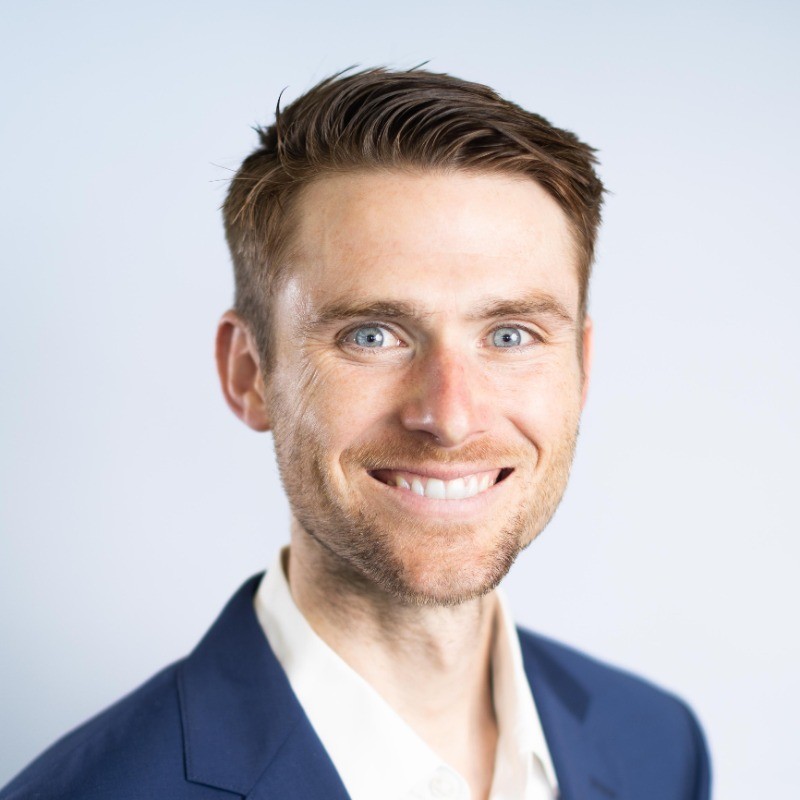
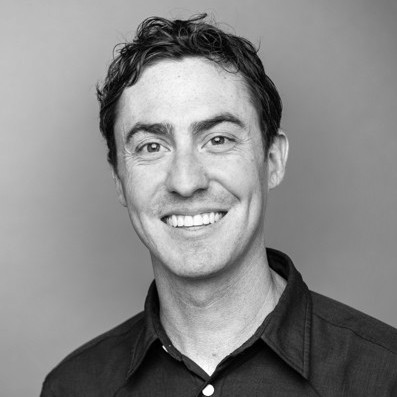
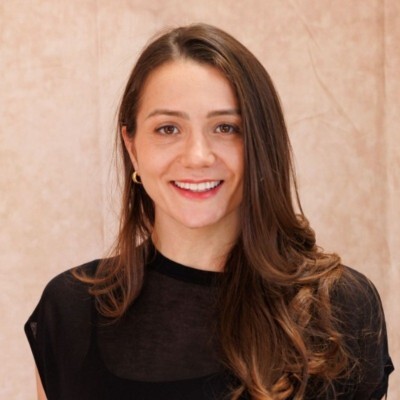
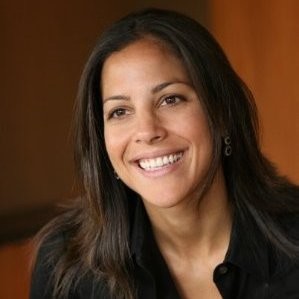
Caie Kelley
Lowercarbon Capital
Caie's path is late-stage finance into hardware growth. Econ undergrad, JP Morgan tech investment banking in the DTC-goes-public era (including WeWork), then private equity, then a move west when talent started clustering around hard tech builders. A couple of years concentrating on companies ready to commercialize and scale manufacturing, then Lowercarbon Capital for the last few years on the same beat: Series B and C checks, typically $10 to $30 million, one step past team-and-dream and one step earlier than mega growth funds, right as commercial proof points and unit economics start to change. Favorite part of the job is learning from founders tackling problems that feel like a calling. Least favorite is ripping a BOM or techno-economic analysis after the gut already said yes. The integrity line is you cannot fake science.
The tactical spine is authenticity over narrative noise. By the time a theme is loud on Twitter or LinkedIn, many investors already underwrote it 12 to 24 months earlier. Pitch the story that is true to you for a ten-year partnership, not the consensus slot of the week. Growth is also a different process map: more nebulous definitions of "growth," less regular 12 to 24 month cadence, and a readiness test of whether you can say if I put $10 million in I know how to push that into $100 million of sales. Growth investors try to know founders before a formal raise and watch for that inflection. Signal matters. Press, writing, conference presence, and hyperscaler-style announcements are how they find you; blasting every growth name on a list is not the play. Materials still matter: a pitch deck (or memo or monthly updates) for narrative clarity, and an Excel model as proof you can think in numbers even though models are always wrong. Do not use Claude to build the deck. In the room, look for equal-caliber talent around the founder, in-person energy, and a vision bigger than the investor's. You never want to dream a dream bigger than your founder. The Elon and Gwen point: growth underwrites that you can hire many operators, not only that you are the visionary.
On fit and after close, Lowercarbon wants founders who can say in two sentences why if this goes well the world is a better place. Caie's specialty is capital allocation: non-dilutive financing, grants, management teams at Series B, and how late-stage and infrastructure money think about DevCo, project co, and top co. Self-awareness beats perfection. Name what you need to hire. After close, prep the first growth board so the investor is inside the tent, do not immediately hire randomly, recalibrate to final terms, celebrate with the team, and get back to the work that energizes you before re-engaging the market. Closing advice: every great company has had at least one tough round, you only need one believer, and fundraising feedback is a market check you can take on the chin and keep going.
On why pitching into the consensus narrative can hurt more than it helps
On the two-sentence test for whether Lowercarbon is a fit
On why growth fundraising is less blast-the-list and more generate signal
On why an Excel model still matters even when it is always wrong
On why every great company has had at least one tough round
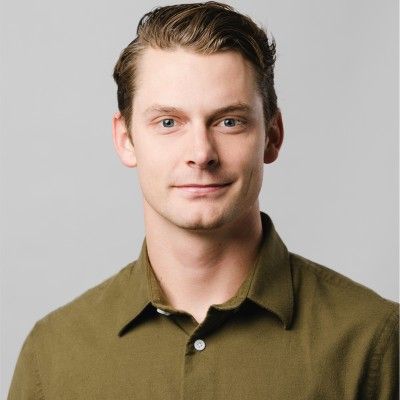
Mat Vogels (00:10)
Hey everybody, welcome to another episode of Fun Raising, a podcast where we interview typically early stage investors, but we have a treat today. Kay Kelly, partner at or general partner at Lower Carbon Capital.
Her expertise is on the growth side. And for any founders that are listening to this that have already raised capital, maybe early stage capital, they can tell you firsthand that it is not an easy translation from raising early stage capital to gross stage capital. Sometimes it can be easy. I'm sure that we're gonna hear today that it oftentimes can be just as hard, maybe harder, than than raising early stage capital. But
Thank you for being on today. This is gonna be a a pretty special episode. We were talking before this that we've talked about doing this episode for almost a couple of years now. It's crazy how fast time flies.
Caie Kelley (01:03)
Yeah, totally. Thanks so much for having me.
Mat Vogels (01:06)
Absolutely. Could you start a little bit with a little bit on your background, maybe from the the companies that you're investing in, the stages you mentioned great growth stage a little bit later, maybe the check sizes that you're looking at, and then we'll dive more into your personal background later, but just from a high level fund overview, what are some of the things that you're looking to invest in right now?
Caie Kelley (01:28)
Yeah, definitely.
Lower Curb and as you mentioned is an early stage and a growth stage fund and I spend all of my time as you talked about on the growth stage, but the themes across our funds are all very similar. we look at a lot of the world through looking at energy companies, advanced manufacturing companies, and a category we call resilience. I'll start with resilience first because it's a little bit more complicated and now today people sometimes think of that as defense. For us, as we look at it, we think that the world is facing more
extreme weather events every day, the world is getting hotter, there's more heat waves in Europe, there's wildfires in California, but also in Canada. And so in this more unstable environment, there are some companies that rise and help to mitigate the effect of those extreme weather events. A really simple example of this in our portfolio is a company like Rainmaker, which does cloud seeding. Another example would be a company like Stand, which marries wildfire mitigation with insurance. Another company is Bright Harbor, which does private market replacement for government
So a bunch of different companies in the resilience space. In energy, it's not just baseload generation of power where investors in companies like Zanskar are on the geothermal side. Panthalassa makes a node that turns vertical, bobs up and down in the middle of the ocean and generates power that way.
We invest in energy all the way to the point of consumer. So we look at companies like Base Power in the US here, but Fuse Energy is also another new utility in the UK. And then outside of energy, we also invest in other different types of advanced manufacturing that broadly fit in this category of hard tech, deep tech, climate sustainability. We're investors in companies like Framework, which is a textile manufacturer. They made the reindustrialized sweaters is probably what they're most known for.
companies like Solugen on the industrial chemical side. So super broad remit, but really looking at every industrial sector of the economy and trying to find solutions that if adopted are a genuine step change breakthrough in the way that we consume energy, the way that we produce material goods, the way that we, generally exist, but we're very focused on hardware, generally speaking, and, and lean and lean US focused in terms of check size. We write 10 to $30 million growth checks typically.
at the series B and C. Sometimes what I'll clarify is that we are one step beyond when you're early stage investors. So it's not just team and dream, but we also try to be a step earlier than a
you know, major growth stage, $100 million, $300 million growth stage fund because we're investing at that inflection right as you're hitting those initial commercial proof points, you're starting to prove out your unit
Mat Vogels (04:06)
Yeah.
Caie Kelley (04:06)
economics, you're starting to really scale. And so that's a weird wonky middle area, but it really is the special sauce of lower carbon of getting excited about you when those business metrics start to change and you're adding water to the growth path from there.
Mat Vogels (04:22)
Yeah, I love that. And quick call out to to Lower Carbon 'cause we we share some companies that we've invested in. I hear nothing but great things about lower carbon and what you guys are doing over there. You're also, I think, early to this hardware, you know, deep tech, hard tech wave, certainly. And I think that that it helps when you kinda have the track record now of of doing it before it was cool. And then also the expertise on your side of identifying the right partnerships and the context and the ability to help founders
navigate these places because I think a lot of funds are struggling with that because, you know, two years ago they were investing in B2B SAS and it's a very different company to build after two years, five years.
Caie Kelley (05:02)
Yeah.
Mat Vogels (05:04)
so props to to what you and the team are building over there.
Caie Kelley (05:07)
I think something that's also...
Interesting about this and really important from an ethos perspective of lower carbon is that all of our investors are very much technical engineers in the weeds, caring a lot about the fact that we're backing real companies that have real science behind them and are genuinely committed to in energy, adding gigawatts to the grid or delivering the resilience solution to customers. so we try to be very technical in our early stage underwriting. then that translates to how do you make a financial
product at the Series B onward that sort of actually
Mat Vogels (05:41)
Yeah.
Caie Kelley (05:41)
meets the specs of commercial demand and otherwise.
Mat Vogels (05:44)
Yep. Yep. Love that. Alright, we're gonna dive in to some quick questions on you first, and then we'll dive into the fundraising process. The first is what were you doing before you jumped in the world of of VC?
Caie Kelley (05:59)
My story is a little bit more of the typical generic finance story. So I studied econ in undergrad. I moved to New York after undergrad and I was working at JP Morgan in tech investment banking in the heyday of what I would consider like direct to consumer businesses going public as tech companies. I raised that now just to say that one of the core learnings then was
almost anything could be technology. One of the big transactions I worked on was WeWork and that, you know, obviously had its own interesting outcome. But the idea was that real estate with technology, with software could actually create a very different type of business than what we see today. After JP Morgan, I worked in private equity. And so the short answer to your question is that I was coming from the world of late stage finance before I moved into venture. like a lot of people in the 2020 era, I would say, saw that a lot of very smart
people were beginning to move and at that point not a very consensus idea of moving to an El Segundo and working at a SpaceX or a Palantir and Anderil and building in Harddeck but a lot of the smartest engineers that I had gone to school with were really moving to the west coast but not moving to San Francisco they were moving and trying to build hardware and at the same time in private equity I sort of had this moment of sometimes in private equity you can bet that the world is going to be exactly the
the five years from now, you're investing in an industrial roll up or an insurance brokerage and you're saying we're going to sell this in five years to our friends down the street and in Park Avenue. And at the same time, it felt like the world was totally changing and where talent and tech was going was also beginning to change. And so I wanted to get closer to that. A lot of people get attracted to venture for that reason. so I moved to LA and had no amazing foresight that it was going to be the ecosystem that it's now become.
spent a couple of years at Salon Ventures before I moved to lower carbon and really ended up concentrating in this subspecialty of a company that is ready to commercialize, has delivered its initial products, but now needs to build their second manufacturing facility or scale from 10 units to 100 units. then in that weird, crazy stage where you start to no longer know everyone you work with and you're hiring 30 or 40 people, that was the real environment that I
a lot of time in and then I've been at lower carbon for the last couple of years doing the same thing really focusing on that that stage of growth.
Mat Vogels (08:23)
Yeah, I love it. W what is your favorite part about the job and then what is your least favorite part about the job?
Caie Kelley (08:30)
I think a lot of people will say my favorite part of the job is working with really amazing founders who teach you something every day. I think I learn a lot about relationships and building and management from the people that we get to work with. And I think something that distinguishes hard tech from even software is that
It's easier to imagine that it's many of these founders last job, which is maybe a weird way to say it, that this is truly their calling or purpose and the market that they're tackling is such a big problem. It's all of the energy space or it's trying to make it rain in every drought-stricken area of the world. so it attracts a different sort of intensity and grid. so working with them is an amazing and unbelievable privilege. then least favorite part?
I think my team would strongly disagree with this because I come from the finance world and I love a clean Excel, but perhaps maybe it's sort of the part where you have the strong gut feeling and then now you need to go back and rip through a bomb or a techno economic analysis and make sure everything checks out. Sometimes that can be less fun than the thrill of going after a deal
Mat Vogels (09:39)
Yeah.
Caie Kelley (09:39)
or otherwise.
Mat Vogels (09:41)
Yeah, I think especially in the later stage growth stage areas, you do have to do there's a lot more due diligence in in many cases. That
Caie Kelley (09:47)
Yes.
Mat Vogels (09:48)
you know, sometimes early stage investors we get spoiled because there's not really much to diligence. You just gotta meet the founder and go with your your gut a lot of the times. Not only you have to do that too, but you also probably have a lot more to diligence than than certainly like an early stage company. Yeah.
Caie Kelley (10:01)
Yes, try to do both. Yeah,
at the end of the day, it's a lot of instinct, but then it's still important, especially in these markets, you can't fake science. we care a lot about keeping integrity in that underwriting too.
Mat Vogels (10:15)
Yep, yep, I agree. What is something that you wish more founders maybe understood about what it is to be a VC? And maybe something that could be helpful as they're going into the process, certainly on the growth state stage side in in helping them fundraise. So almost like a peek behind the curtain in the day in the life type of thing.
Caie Kelley (10:35)
I think if you read only Twitter or LinkedIn, there are certain consensus things or themes that seem to be sort of talked about ad nauseum. And there's some tendency, I think, sometimes to try to pitch into the consensus. Everyone's talking about AI and data centers. So I need to pitch a story that's about AI and data centers. Or everyone cares about American reindustrialization. So I'm going to say something too.
truth is that most of the time, by the time it becomes a narrative noise that you can hear about, the moment to invest in that has probably already passed. Most of the investors who are looking in this space will have invested in that heavily 12 to 24 months ago. That's one potential pitfall of that. The second is that
That is a really good story as long as it's authentic to you. If it is truly the case that the reason that you want to build this is because you believe from the bottom of your heart that we need some type of sovereignty and there's an amazing story there, I think that authentic story can resonate very well. But I think you can on the flip side tell when a founder has pivoted their initial dream or team or vision into something to fit the consensus of the moment. And I think
that lack of authenticity can hurt you more than trying to meet the consensus narrative of the time. That said, like you're too far away from where people are interested in spending time. It's going to be tough for you, but you're investing with your investors for a 10 year period. And so
The momentum waves are going to change. really do, it matters to find the mutual fit. so telling the story that's authentic to you of why you're doing this and what you're building and how that's attracting talent doesn't, I think, always need to match.
whatever VC slot piece that we've come up with that week. And I think that would probably be my word to the wise, which is tell a story that's true to you. And hopefully then you can find the investor who actually understands that versus trying to pin yourself to a moment in time.
Mat Vogels (12:35)
That is excellent advice. and I think that it's really hard sometimes, especially probably more so for early stage founders or or folks that have never fundraised before. but as you go on in this journey, you mentioned it's a ten year plus journey. It's like dating or marriage or finding a partner. It's like you have to kind of be yourself. And the earlier that you do that, the better you're gonna be at hopefully finding that long term partner that is there for the same reasons that you are.
Caie Kelley (13:01)
Yeah, yeah,
exactly.
Mat Vogels (13:02)
All right, last question before we jump into the fundraising process. Why should founders pick you and or lower carbon to be on their cap table?
Caie Kelley (13:11)
Lower carbon? Answer is is
Fairly straightforward to me, we have 120 companies in this portfolio of hardware. We 90 or so are in the US, 30 are in the rest of the world. And I think when you join the lower carbon family, you join founders across almost every industrial sector who are also at this point, because we've been investing for the last five years into genuine growth stages. So you're an early stage company building a transformer. You can look to Crusoe and our cap table. You can think about them as a sort of
people to look for and learn from from the later stages. And so I think we benefit from being multi-stage investors in this space, but also longtime hardware investors and joining that ecosystem. Second, think sometimes I will simplify our thesis and say we invest in the real world for real good. The thing that I want to
draw out there is the real good part. And sometimes in calls with founders, I'll say, I would love if you could explain to me in two sentences why if this company goes really well, the world is a better place. And if it takes you more than two sentences, it's probably not a great fit for lower carbon, which is no derision towards building anything else. But we really want to invest in companies and founders who are building for the future that we want, not just like some techno, whatever forward AI robot future is the future.
for humans. This is a really important ethos for the investors and for the fund itself. A good human future. So that's one. For me specifically, I would say the real specialty is being alongside you and working with you as you think about really interesting problems around non-dilutive financing or grants or what should your management team look like as you hit that series B and what do late stage boring private equity
infrastructure investors want to see and how should I think about financing your devco with your project co with your top co and so you start to ask like different financial questions around capital allocation somebody once said to me You can't be building a capex intensive business if you don't understand capital allocation and I think the real specialty for me is
very deep understanding of the capital allocation and financial market space that then hopefully translates to support for you as you continue to grow. I'm not your team and dream investor, but I am the investor
Mat Vogels (15:35)
Ha ha ha.
Caie Kelley (15:35)
when it starts to get pretty real on the manufacturing and factory floor and that's the real specialty.
Mat Vogels (15:42)
And honestly, especially at the stage that you're investing in, that is the best asset that you can have as a founder. You still want somebody that's gonna be in your corner and be able to pump you up and say the right things, but truly when you get to a growth stage, you really need the investors that can actually give you good advice to help get you to the next round and and move forward. So the finance background certainly helps with that as well.
Caie Kelley (16:07)
Yeah,
and milestones and otherwise just setting
Mat Vogels (16:10)
Yeah.
Caie Kelley (16:11)
real estate goals and buffers around your cash spend and otherwise. So it's a lot on the on the finance side, but I find it very fun. And that's the asset for that I try to bring to the table for the board at that
Mat Vogels (16:22)
Yeah.
Caie Kelley (16:22)
stage.
Mat Vogels (16:23)
That's great. So like I mentioned earlier, we typically interview early stage investors. On the growth side, I think there's there's a very different process, perhaps. Could you maybe at a high level explain what are some of the differences that an early stage founder might have versus a growth stage Series B, Series C stage founder might have during the fundraising process, kind of at a high level.
Caie Kelley (16:48)
So.
One is that growth ends up being a way more nebulous world in terms of what people consider to be growth in terms of their check size and what they consider maturity. so one dynamic is just on the very simple level, bifurcating between growth investors who mean greater than a hundred million dollar run rate and investors who mean you've proven out your first 10 million dollars. I think that's one simple pitfall that some founders will will sometimes fall into. The second big thing is that when you're first raising your rounds,
may come in more, this is very different in this current ecosystem, but in theory they come in regular cadences. You raise, you hit a certain milestone, you raise again in 12 to 24 months. I think growth can happen at whatever the point.
it becomes where you can say, if I took $10 million of cash into this business, I know how to push that into a hundred million dollars worth of sales. When you understand your business with the kind of clarity where you can really tell me, I take this capital, I translate it to this return, that's when you're in the true ad water stage. You understand your sales, you have control of your metrics and your delivery, your own supply chain. And so,
that can happen in a much more nebulous time zone. And so you build relationship with your growth investors slightly differently, which is to say, from an investor perspective, we try to get to know our founders well before they go out to a formal fundraise. And we're watching for that inflection point so that we can then be there and target a particular round. so one would just be process wise. Yes, you can go through a formal fundraise and raise on a regular cadence, but it's more about
learning to tell that story because a growth investor is really looking for how can I give you capital to grow? I don't want to give you capital to de-risk core science. I don't want
Mat Vogels (18:36)
Yeah.
Caie Kelley (18:37)
to give you capital to de-risk your go-to-market. But when you're ready to do this equation that I've mapped out, then that's when you're ready to chat. then being flexible and creative around that process is super important.
Mat Vogels (18:51)
A are you seeing a lot of hardware companies that are kind of at that series B, Series C stage that are thinking about revenue? So many of the companies that you are listening to this typically, they're in the prototyping phase and they're and they're building the the product maybe for the first time. They're not even thinking about markets yet, although maybe they should be. What are you seeing on the hardware side as it relates to really developing revenue and kind of what stage are you seeing that happen?
Caie Kelley (19:16)
I think that typically does happen around the series B and C. And it doesn't need to be the case that you've delivered against hundreds of millions of dollars worth of contracts by the time you go out to raise your series B round. But I do think that we're seeing in the growth market more and more expectations of at least showing signs of product market fit and understanding of go-to-market. A lot of these contracting cycles for incumbent customers can be really long. And
Mat Vogels (19:42)
Yeah.
Caie Kelley (19:43)
so proving that you're
you're really coming to understand what it means to build trust and what it means to unlock those types of relationships and move beyond pilot is a very big milestone and expectation. Sometimes that means that the R &D technical founder brings on a commercial partner who, managing person on their team who has that kind of instinct and that's the first indication that they're beginning to think about it. Sometimes it's that the founder themselves evolves, but I think we're seeing
increasing expectations that there's some delivery, not necessarily of revenue, but at the very least of contracts that can be underwritten by the time you're going out for your growth round.
Mat Vogels (20:22)
Yeah. One of the questions that we typically ask are if I'm an early stage founder, typically I'm reaching out, I'm sending my deck to hundreds of of investors and it's you know, how do you stand out? How much of it on the growth phase is it the opposite? Is it are you going out to try and find companies versus companies that are showing up in your inbox cold? How d how does that work out in growth stage?
Caie Kelley (20:46)
I think to your point, growth is a lot more about the investor tracking you down. And the
Mat Vogels (20:51)
Yeah.
Caie Kelley (20:51)
job of an early stage founder is to start to generate some narrative and noise and ecosystem building that allows for that outreach. Cause we're using a lot of the similar channels that everyone else does. are on Twitter. We're scanning LinkedIn.
looking at who's speaking at conferences. I think now articulating writing and the way that you think about company building is a big way to add a sense of differentiation. And many times if it comes up enough in investor conversations and people keep mentioning this team is doing something interesting or it's getting real press, that will drive like some urgency in terms of trying to get in front of that founder. And so there's a lot of outreach on that side.
I think therefore it means the way you then go out to raise is not emailing every growth investor on the list, but it is a little bit about press and marketing and outreach and how do you generate a signal that we're scanning for.
every hyperscaler agreement that gets struck with every single energy company. So a press release like that will flag in our internal systems and it will be a metric with which we use to say, we should fly to San Francisco or Colorado and try to make sure that we see that founder and get in front of them. And so I think that marketing engine and narrative and
sense that the founder himself or herself really understands the storytelling dynamic of going out to Rays is a very big indicator and then you'll get the inbound and the drive that way.
Mat Vogels (22:18)
Yeah. How much of the pitch deck is involved still in in growth? 'Cause obviously very important in early stage, in some cases it's the only thing you can kind of show. you don't really have financials. Sometimes you don't have product, you can't you don't have photos or anything. How much does the pitch deck play in in kind of your diligence process? Or what is that what does that diligence process kind of look like if not a pitch deck?
Caie Kelley (22:41)
I still think the pitch deck is a nice way to show that the founder's story and vision is there. My only two cents there is to, you can use Claude to refine your narrative and story, but don't use Claude to make your deck because there's still many obvious tells, maybe in three months time that will be antiquated advice, but for now it seems
Mat Vogels (23:01)
Yeah.
Caie Kelley (23:05)
relevant. I still care about the pitch deck and...
I know some founders have an allergy to the idea that an Excel model matters, but Excel is just another way to translate clarity of thought, but from a numerical perspective and
I think both matter. Can you translate what you're building from a narrative storytelling into good cogent writing? can be a pitch deck. also be a memo. Sometimes people will write the five page manifesto or update. Sometimes it can come in the form of here are my monthly updates to investors that show how I think about this business and how it's evolved over time. So writing is a really big component and pitch deck is just one option for that. And then the second I think is, is I do care about seeing some clarity and effort.
in the model. Everything else I think it comes after and it's more confirmatory. But to me, that's I can translate it into writing and words and I can translate it into numbers and both of those things matter. And so I wouldn't ever invest on the basis of an Excel model because they're 100 % of the time they're wrong. But I do like to see that effort because it shows to me that they're thinking about this in a capital aligned way and they're not resistant to what you inevitably need to become as you become.
later stage because it's part of the game and in some ways you just want to know that a founder is able and willing to play the game at multiple stages.
Mat Vogels (24:29)
Yeah, no, absolutely. how does that translate into the initial meeting, the first meeting that you have with some of these founders? Because you'll get materials and and hopefully some Excel spreadsheets and they'll send some things your way. But meeting with them, what are some of the characteristics? You hinted at some before, the storytelling and the narrative building, but what are some of the other characteristics that you think are uniquely important for later stage founders versus earlier stage founders?
Caie Kelley (24:54)
I think beginning to show that you've been able to attract talent that is of equal caliber to you. So...
I still think at the end of the day, even gross stage investing is about the founder and it's about what they have done and grittiness and what they're working to build and their vision and otherwise. But you can start to see the proof points of their excellence in other people who they're able to bring to the team, what they've been able to do in a short period of time, what kind of customers they've been able to bring to the table, how they've evolved from maybe mechanical engineering person from Waterloo into absolute commercial powerhouse, that kind of.
evolution in story I think starts to matter more and who they're putting around the table as equals to them matters. Sometimes I will pay attention to how much the co-founder talks or the COO who's not a co-founder speaks on the meeting, the sort of respect. I care a lot about doing in-person meetings.
We talked about this even before for this call, think going to the office and seeing somebody in their ecosystem and how people work and the energy. There's way more proof points there. And so the first meeting is not normally very metrics focused. It's still again, what is the company? What are you able to build? But the big thing I look for also is
You never want to dream a dream bigger than your founder. So you always, as the investor, to be the one dreaming the smaller dream. And so I do look for a founder, the story at your series A, maybe we're going to land this initial wedge market. It probably can't be that story by the time you go out to raise a series B and C. And so what I'm curious about is like, where is the next platform that you're going to go attack? Is it a horizontal expansion? Are you vertically integrating? What's the next big thing that we're going after?
that vision bigger than what I could come up with just sitting across the table from you because you're at the end of the day the one who's building this company.
Mat Vogels (26:47)
Yeah, yeah, you definitely especially I think it's such an interesting thing that especially as I'm hearing you talk about this where it's almost harder for the founder as they're raising this round than any other round because earlier stage you can kind of get away with with more because you haven't done any yet and there's so much more of a of a leash of I I have to guess I I believe you and you say that you can do these things, but what you're looking
Caie Kelley (27:10)
Yeah.
Mat Vogels (27:10)
for is a little bit of both. You still have to come in with these very big ideas and ambitions, but you also had to
shown over the last two, three, five years that you've done some of those things. So you still have to be a big dreamer, but you also still have to show that you've done enough so far that it's gonna continue forward.
Caie Kelley (27:30)
Yeah, and that you're
beginning to graduate from you yourself
Mat Vogels (27:34)
so true.
Caie Kelley (27:35)
being the one who needs to do all the things to get it across the table. I think sometimes one pitfall of an amazing early stage founder will be they themselves are the true masters of the business, but they haven't yet recruited or trained or given equal power to anyone around them to sort of de-bottleneck them. And that can be a real...
constrain as you continue to grow. Sometimes I will use the very classic example of an Elon versus a Gwen and you need Elon and you need the big dreamer and the visionary and he's the one who pitches the story in many ways, the face of SpaceX, but you also need the day-to-day operator who's a trusted, equal force leader and growth is about not just Elon, it really is an underwrite on that you can hire many Gwen's and so that's probably my small
pitch there.
Mat Vogels (28:25)
Yeah.
How common is it? It's might it might be harsh feedback for a lot, but my guess is that a lot of founders can't graduate into that next phase. I see this all the time where you can be like, nah, you'd be you're gonna be really good at this zero to one phase, but you know, the one to five, one to ten almost requires a completely different personality, to your point right there. In and training other folks, getting stuff off off your plate.
How often or how common is it that you meet a founder where you're going, I love all of this, but I don't know if you are the one that is gonna graduate as the company needs to graduate?
Caie Kelley (29:01)
It doesn't actually happen too often, but I think the important
Mat Vogels (29:04)
Nice.
Caie Kelley (29:04)
thing I look for there is...
is self-awareness more than anything else. You don't need to be perfect at every part of the business. I don't
Mat Vogels (29:09)
Hm. Yeah. For sure.
Caie Kelley (29:13)
expect your most technical engineer to also be the finance whiz, to also be the commercial whiz. And so I think it's actually a reasonable pitch to go into a growth stage company and say, you know, I started this company with this vision. I am a very operational person. I really want to get back to the manufacturing factory floor. My co-founder is obsessed with tech.
And he is the right person to do this sort of sub strategy, but he's actually not, he doesn't love managing people and we learn this about ourselves. And so we're going to need to hire a C-suite level tech person. We're going to need to hire a C-suite level finance person. I think if you can articulate where you need to go and who you need to build and what kind of talent you need to attract, it's actually okay. Even if you don't have those around the cap table, the thing that would be concerning to me is if you lack that own self-awareness of these are my
Mat Vogels (30:03)
Yeah.
Caie Kelley (30:03)
limitations and
I think that I can be the one to 100 and I don't think anyone else needs to be around the table for me. That's more worrying, but being perfect is not the ask by any means.
Mat Vogels (30:15)
Yeah. No that that's well said.
What are some of the things as founders go off in raising these rounds? obviously lower carbon's a good example of of of what to look for in many ways. But what is the difference between what you're gonna find in a growth stage investor as far as the support you hinted earlier on the finance side, maybe some customers or certainly some relationship building? But what are some of the biggest differences between what founders will find with a growth stage investor versus maybe some of their earliest stage investors as it relates to the value?
So they can look for some of these things.
Caie Kelley (30:48)
think it's always a personal question for the founder in terms of what would be most useful. Is it that you're looking for platform resources that are beginning to scale with you? you looking for talent hiring is capital commodity and you're just looking for the biggest future balance sheet? And so some of those will change. I think when you're in a seed stage investor at a smaller shop and you're sitting alongside the founder, that's very like day to day almost co-founder like dynamics. I do think it changes slightly as
you become a growth stage investor, but in
Mat Vogels (31:19)
Yeah.
Caie Kelley (31:20)
the best scenarios, we're still a sounding board for you as you before you send out your board tag, making sure that we've talked through all of it and that you're answering your big questions and you're thinking about how to position yourself for those milestones. so some of the inset I think is similar, but but it's a little bit less of a co-founder founder seat that you take at that stage. And
And I will say transparently, I look for companies who I feel I hope to learn from as much as they learn from me, but I don't pretend to know more than them. And so if it feels like I'll need to be the one holding their hand through every stage, that's probably also not a company ready for growth capital either.
Mat Vogels (31:59)
Yeah. What are some of the common mistakes that you see founders make maybe after they close their growth rounds? And I kind of look at this as like a transitional phase where they do have to start real you mentioned that inflection point. So the expectation is they kind of hit this inflection point shortly after, at least during that stage. What are some of the mistakes or if you want to go the opposite way, what are some of the things that some of the best founders do during that that phase of growth?
Caie Kelley (32:26)
I think one is...
The first board meeting after your first round is always a really interesting one because you were getting sold something and this is no bad thing. This is the founder doing their job, selling the vision of the company, selling everything it could be. And then the first growth board meeting is like, okay, what did we actually invest in? What's this business really look like? I think it's really useful for the founder to pre that meeting, spend real time going through. Okay. We talked about these were the kind of milestones. These are the core focuses of the business.
business.
This is what the next board meeting is going to look like. Here's how I generally lay this out. This is my overall expectation. So doing some real relationship management and bringing them inside to the same time side of the table, you need to assume at this point your growth investor is now
inside the tent and bringing them up to speed and spending real time together and that immediate aftermath, I think can lay the foundation for a more productive board meeting. In the best case scenario, you have a company doing super, super well and it's your job of your growth investors and your investors on the table in general to know enough about the business to push you to be more aggressive, to dream bigger, to compliment your resources, but they need to be armed with enough information to say anything you
And so I think that's one basic mistake. The second is just to like immediately start spending money and hiring a bunch of random people ahead of knowing necessarily what you really need. The round may have closed way bigger than you thought it was going to or smaller. And so take a moment to recalibrate.
see how the final terms actually may have changed expectations along the way. And then I think you will have always naturally stepped away from the business for some period of time for the fundraise and taking the time to celebrate with your team and lean
Mat Vogels (34:12)
Yeah.
Caie Kelley (34:12)
back into the stuff that probably energizes you, I think is just actually important from a mental health perspective too, for the founders to get back to what they like before they immediately start re-engaging with other investors.
Mat Vogels (34:25)
Yeah. That's awesome. I I'd love that I could go for another hour, I think, talking we'll have to do maybe a phase two on later stage investing fundraising. because it is quite a different game. And I didn't think about it until talking with you. How I guess how different, but then why it's so different and the the different characteristics that founders have to bring to this. Maybe we end with like one we do this on on the podcast typically, but it'll be maybe a slight twist here.
What would be your lasting words of advice for a founder that's trying to raise capital right now? In this c in this case, maybe growth stage capital. I like to say
Caie Kelley (35:02)
Mm-hmm.
Mat Vogels (35:02)
this is kind of like that halftime speech, you know, they're struggling, they're down, and and you're coming in to give them some wisdom to maybe keep going. What would that wisdom be?
Caie Kelley (35:12)
The simplest thing is that all great companies have had at least one tough round. That's the truth. Like it's not always perfect, smooth sailing. And so even our best companies have had rounds where they accepted
terms that they didn't like or it wasn't the valuation they liked or it wasn't the perfect investor that they wanted across the table and that isn't the end of the world so one is just all you need is one person to believe in you and two even the most vaunted stories that you are reading about in any media press had blips where you never know the inside of a particular round in terms and growth rounds can be super hairy and so
don't overly benchmark against all of that. then three is that I think that in the best case scenario, fundraising can just be a nice market check of what people are thinking. And it's just another version of feedback, which doesn't mean you have to take it or take it on the chin or totally change what you're doing. But people caring enough to listen to what you're working on building and giving you a sense of why they...
aren't excited or otherwise is its own way a gift. And I think it can be a very important inflection for great companies when they take that on the chin and keep going. And normally then the best is after that.
Mat Vogels (36:30)
Incredible. That was perfect. That was exactly
Caie Kelley (36:32)
Okay.
Mat Vogels (36:33)
that was exactly the advice that somebody needed to hear. okay, last last question. Where can folks continue to follow along with you? I know that lower carbon you guys are doing events and resources. Where can folks continue to to follow along and learn from you?
Caie Kelley (36:48)
I actually put my email on my LinkedIn, so it's kaii. You actually can't email me. I won't guarantee I respond, but I do get to inbox zero. So that's the curse of my
Mat Vogels (36:59)
wow. That's impressive.
Caie Kelley (37:01)
personality. And then I'm a baby on Twitter, but I'm also on Twitter, which is my first name, last name. So I'll do a shameless plug since I'm two months old on that platform at the moment.
Mat Vogels (37:09)
Yeah. There you go.
Kylie, thank you so so much. This was amazing. I can't wait for folks to to listen to this. Like I said, you'll be the first growth investor that we've had on here. And and like I said, I learned a lot listening to you. I'm hoping that a lot of founders here will as well.
Caie Kelley (37:26)
Amazing, thanks for having me.
Mat Vogels (37:28)
Absolutely. Have a good one.
Caie Kelley (37:29)
Thank you.















.png)

.svg)








.jpeg)