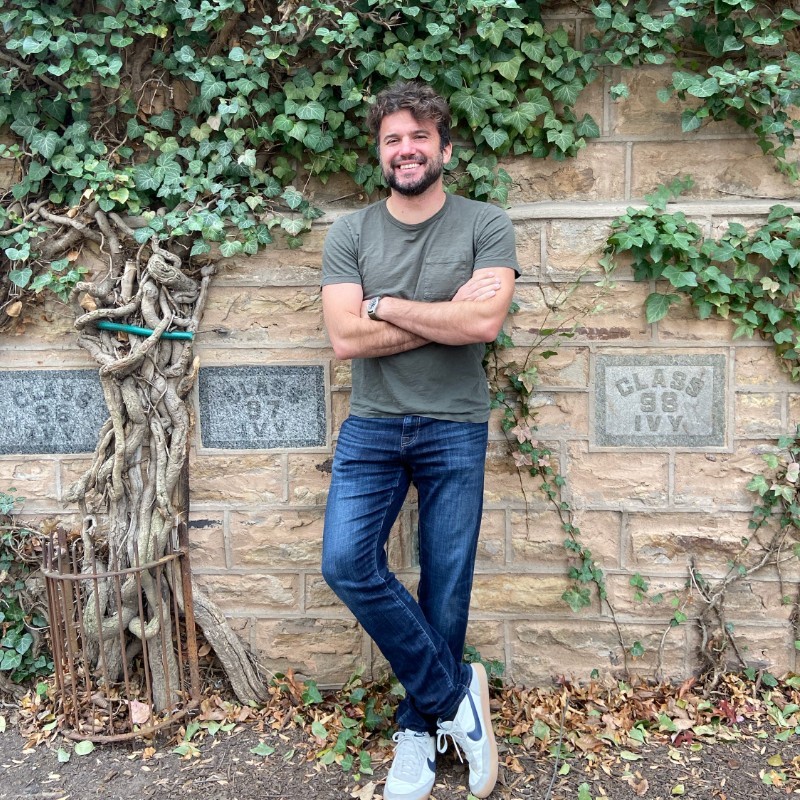
David Goldman
Celesta Capital
David Goldman came to venture from the other side of the table. He started as a semiconductor investment banker, then worked at a multifamily office that was an LP in Celesta, evaluating co-investments alongside the firm before joining it about six years ago. That vantage point shapes his advice: he thinks about funds as institutions with incentives and internal politics, not as monoliths that either say yes or no. Celesta is an early stage deep tech fund (seed to Series B, first checks of $3M to $12M) investing in semiconductors, intelligent systems, infrastructure software, AI, and what the firm calls bioconvergence.
His most useful advice is mechanical rather than inspirational. He tells founders not to over-index on focus when building a target list, because a firm that already backed a company doing exactly your thing may feel over-allocated to it, so you should map adjacencies instead. On outreach, he says the bar now is simply proving a human wrote the email, and he recommends against any ChatGPT assistance. The sharpest point, and the one Mat flagged as new to him, concerns diligence timing: founders should ask directly whether a firm completes its business diligence before issuing a term sheet. Some firms hand out a term sheet to lock or win a deal and only then decide whether they actually want it, and if they walk, the founder is left with a stigma and unanswered questions. He also dismisses the inflated market slide, arguing that a hundreds-of-billions TAM number is usually not the founder's real market and does more harm than good.
For deep tech specifically, he names the single biggest reason companies stall: losing the pulse on what the next round's investors will want. Milestones that were valid two years ago may not clear the bar today, and founders who plan against stale targets can hit every intermediate goal and still find themselves short of what a Series B actually requires. He pairs this with a warning about the individual investor, not just the firm. If your champion leaves and no one else at the firm cares about your category, you can end up stranded, so it's worth asking a prospective partner about their own career plans before you take the check.
On why founders should ask whether a firm finishes business diligence before the term sheet
On choosing the individual investor, not just the firm
On why an inflated market slide backfires
On routing outreach to build an internal champion
On the most common reason deep tech companies stall between rounds
Mat Vogels (00:10)
Hey everybody, welcome to another episode of Fundraising, a podcast where we interview early stage investors to get all the tips and tricks that you, as a fundraising founder, need to know about the fundraising process so that hopefully it makes the process that much easier. Cause as we like to say on this show, it is called fundraising, but it is not fun at all. so hopefully after this episode it'll be maybe just slightly more fun or at least easier.
And today I have a very special guest, David Goldman, partner at Celesta Capital. Thank you for being on today, David. Could you start a little bit with your background, what the fund is investing in, average check size, anything meaningful that you think found or founders should know about the fund itself?
David (00:57)
Yeah, thanks for having me on, Matt. So I'm a partner at Celeste Capital. We're an early stage deep tech fund, offices here in the Valley, and then also in Bangalore and in Montreal. And we invest at seed series A and some series B, but mostly seed and series A, in companies built around a technology innovation.
So usually that means semiconductors, intelligent systems, infrastructure software, and AI, and then what we call bioconvergence, which is where those technologies touch the world of biology. Our typical first check is anywhere from 3 to 12 million. We like to lead rounds and take board seats and be pretty involved with our portfolio companies. And we invest primarily in the US, India, and Canada, as you can guess from where we have offices.
Mat Vogels (01:41)
I love that. And deep tech I feel like nowadays is such a such a broad spectrum of things. I remember like two years ago you could say deep tech and there'd be no additional questions. And now it's like deep tech, but there's so many different verticals that you kinda have to to specify and you name some some great ones there. What were you doing before you got into VC?
David (01:41)
Mm-hmm.
I had a couple of different jobs. I started my career as a semiconductor investment banker and then went to go work at a multifamily office where we were an LP of Celeste. So I originally got to know this team from the other side of the table and looking at co-investments with them. I went to work at a startup in the building construction space and then joined Celesta about six years ago.
Mat Vogels (02:21)
That's great. So you still have kind of the the finance background and what a cool experience to be able to to be the investor for an investor and then switch the table on onto that side. You see a lot of founders that become investors and you get a little bit of a of an empathy there. But you almost get to switch the table even even further, where a lot of founders don't realize how much time and effort it takes on the fundraising side for us as VCs. You probably have a really cool, unique insight on what the the chain of command, so to speak, or what LPs are wanting from their funds.
Which certainly then applies into the types of things that you're investing in and those types of things.
David (02:57)
Yeah, I actually think a family office is a really good sort of testing ground to become an investor, particularly if you invest outside of software. Like within the VC and startup community, it can be a little insular in the types of companies you look at if you just do e commerce or software stuff like that. when you have a little bit more of a broad lens at different types of investing, can be helpful in understanding companies and particularly deep tech where you're gonna be stepping outside into more traditional industries, where maybe your acquirers are not just like Google or
Mat Vogels (03:01)
Yeah.
David (03:26)
Microsoft.
Mat Vogels (03:27)
Yeah, yep, so true. So true. one of our favorite questions that founders want to know is what is your favorite part about the job and being a VC and then what is your least favorite part about the job?
David (03:37)
I'd say my favorite is the built-in optimism. Like by my nature, I'm a relatively cynical person outside of my day job. but I get by virtue of this job to sort of peek around corners into the future and see all of the cool things people are building and what the future might look like if they're successful. And that's a really incredible way to just have optimism that you wouldn't otherwise have access to. Least favorite, I think that there's
not great understanding of the variety of VC. Like not all VC and not all fundraising is like this big homogeneous group. And so I'll talk to founders who are like, well, you know, this company that does something similar got this valuation from this group. And you have to sort of like they have different incentives here. Maybe they're strategic and they don't care as much about valuation. So that's like an artificial mark, or maybe someone wrote them a check for a reason that was not necessarily returns driven. And so
Mat Vogels (04:32)
Yeah.
David (04:34)
Or you know, maybe they're an early stage fund that writes 500 checks in a year and you know they're not doing deep diligence and we're gonna write just a few and so we're gonna have to say no to a lot more people and it's just not the same job everywhere, even though it has the same sort of title.
Mat Vogels (04:46)
Yeah.
Yeah.
Yeah, it's there are different flavors to V C. you mentioned obviously with family offices and LPs, depending on how their investors operate, all those things can be can be different. so obviously as a founder, understanding that I think will give you certainly maybe a a small leg up as well. Is there anything else that you wish that founders maybe better understood in the day in the life of a V C you've hinted at a couple of them so far, but anything else that you think would give founders a a deeper look behind the curtain that could then help them
David (04:52)
yeah.
I think it's helpful for founders. I mean s s advice I always give my founders when they're fundraising is like be thoughtful about potential group dynamics in the fund that you're looking at. so if it's a fund that has, you know, for example, like one really famous partner and you just go directly to that partner first.
They're presumably, unless they know you already, going to pass it off to someone who's more junior, who now doesn't get any ownership or credit for that deal. Whereas if you were to go to that person first and then they're able to bring it and shepherd it through, and maybe you go to the more famous investor after, you can help them get credit, you can help them build their reputation, and you can still get the deal done. So, like just be thoughtful about the fact that these are like people, not just like machines that are taking input in and generating things out, and the dynamics with
within the firm can help drive deals as well.
Mat Vogels (06:09)
You mentioned a few of the industries that you guys are investing in. Any industry personally for you that you're really excited about? It could be personally from your own personal standpoint and maybe what you're excited to experience from a consumer standpoint, or from a VC standpoint, some of the areas that you're excited to invest or continue to invest in.
David (06:27)
I'm personally very excited in sort of what I think of as these like second order effects of AI.
So you've got industries where it's like super obvious to everyone that AI is going to disrupt them. I mean, you can take something like, for example, customer service, where there's big, well-funded companies. Probably from the day ChatGPT came out, everyone sort of had an idea that these are things that might be able to be disrupted. And you're going to need a lot of capital to compete in those space and potentially a differentiated view. I'm a little bit more interested in these areas where it's not obvious at first blush why AI is a
Important, but as you dig in deeper, and in particular if you talk to someone with domain expertise, they'll tell you there's a major unsolved problem here as it relates to ability to understand a huge amount of data. And AI gives us that capability, which can then enable something that creates a ton of value.
Mat Vogels (07:19)
that. and I think that we're seeing those on th there's so many layers that AI is unlocking. And I think that we're probably don't even know which ones are gonna exist a year from now, two years from now, five years from now. So it's just gonna continue, I think, to unravel and show some of those things, which is great.
David (07:36)
Yeah, I mean those are the areas also where founders with domain expertise can shine because it's not super obvious to an outsider that like, if I just applied AI here, I could make a good company. it's the people who are inside that industry who are like, I have this huge unsolved problem and it's unsolved because we don't have the tools to deal with interpreting this data in the right way, and now we do.
Mat Vogels (07:56)
Yep, I like that. All right, last question here before we go into the fundraising process. Why should founders pick you andor Celesta to be on their cap table?
David (08:05)
I think it's actually slightly different answers. You should pick the individual investor based on the relationship that you make with them. So in California, it's a lot easier to get a divorce than it is to remove a board member. So make sure this is someone that you want to spend potentially a decade working with and building a relationship with. But then why you should choose Celeste is that we bring more than just capital, we bring what we think is like intellectual capital. And we do it with a whole firm approach.
Mat Vogels (08:18)
Ha ha ha.
David (08:34)
So what you'll find when you talk to founders or when we do our diligence process is that they don't just know the partner who led the deal, the partner who sits on their board. They often know two, three, four partners within the firm. They've met a lot of people within the firm. And that's because we have diverse skill sets and we treat every investment as a Celeste investment, not a personal investment for that
investor. And so depending on what you're going through, you might be talking to someone else in the firm just as often as the person on your board because they have expertise in manufacturing or they can help you think through your IP strategy, or they've got really good connections in how you should be trying to break into the hyperscalers. Like it's not just about that one person, it's about the whole firm.
Mat Vogels (09:14)
Yeah. Do you see founders as you talk to them that not that they make that mistake, but it's common advice that we hear on here all the time is how important not just the fund is, but finding that right investor and or partner. And I think founders, especially if they haven't fundraised before, don't think that way. They think fund first and then they kind of are like, well, I'm picking the fund and my assumption is that this this f investor is gonna be good too.
Is that I mean what advice can you give founders there, maybe a step further in just how important it is to pick that right VC, maybe over the fund itself or trying to keep keep those things separate?
David (09:52)
Yeah, I mean it can be a really big problem and
I'd recommend even trying to talk to the VC about their career plans, which can feel like very intrusive, but I've seen it happen where you have a partner lead a deal at a firm and then leave to go join another firm. And maybe that new firm, it's off thesis for them or it's the wrong stage or whatever. And so now your company has become stranded because your champion left and maybe no one else at the firm was really at as into the deal as that deal champion. Or that was the one guy who does hardware at the firm and now no one is interested in it because none of them are hardware guys.
And so being thoughtful about who am I working with, are they likely to stay? And if they leave, which you know, people in VC leave firms, are there going to be other people who take it up and champion it or am I going to get stranded?
Mat Vogels (10:37)
Yeah, that is great advice. And it happens more commonly than you might think, especially at larger funds or firms, less so obviously if you're in a fund where you're you're dealing with, you know, one or two partners total and you're one of those partners is talking to you. But otherwise it's it's fairly common that partners will shift funds at some of the larger, especially tier one funds.
David (10:57)
Yeah. I mean that that's one of the advantages of working with a smaller fund where you can have a little bit more knowledge that this person is very bought into that fund.
Mat Vogels (11:01)
Absolutely.
Yep, yep, agreed. All right, let's jump into the fundraising process itself. We break it up into three different parts. The first is just getting in the room. So many of the founders listening, they don't have the network. Maybe they're not living in some of these these areas like LA or San Francisco or New York. So building the network and helping them get in front of VCs is still a challenge for them. So going into this process, what a lot of founders do is they they make a list. They make a list of funds or investors that they want to reach out to.
We kind of talked a little bit about finding the right ones. Any advice that you would give founders on how they start making those lists or thinking about what funds to reach out to, the characteristics that they might look for?
David (11:47)
I would say ballpark on stage and focus and look for whether or not there are any obvious reasons, no. so try and figure out if you're a hardware company, do they do hardware, if you're a semis company, do they do semis? If you're just like a software company, you know, are have they invested in anything in the general area that I am in.
I wouldn't over-index on focus. So I think a mistake that a lot of founders make is they'll say, you know, I'm a robotic gripper company, and I want to go find all the investors who have made investments in robotic grippers. And that's probably not the best way to approach it because they've already got an investment in that space. They maybe even might feel that they're over-indexed to it depending on how their previous one is doing. And so just look at what are the adjacencies, like what are conceptually similar but different things.
and see people who have invested in those things.
Mat Vogels (12:41)
Yeah, yeah, I like that. When you're thinking about, you know, the founders when they're when they're maybe doing the first initial outreach, is there anything that you're looking for in those initial cold intros or warm intros? What information do you need to see quickly to get you excited about kind of taking in those next steps?
David (13:01)
You're doing a quick scan for is this on theme? Is this the right stage? And does this person seem credible? And then nowadays, like I'm basically just looking like, does it look like a human wrote this versus AI? and so don't don't use a template. Like write it as if you met me in person and you were going to just quickly describe what you were doing to me. and don't have ChatGPT help you at all.
Mat Vogels (13:28)
Is there I guess what are some of the ways that they can do that? You mentioned like if they if they haven't met you, if obviously if they've met you, that's a really easy one. What are some of the things that they can do to make that feel a little bit more personal? 'Cause I see that too, but then sometimes it's I saw you on the podcast and you talked about this. Very interesting. It still feels like it's not quite there. Have you seen anything work well for folks that maybe haven't met you to to add that little personal touch to it successfully?
David (13:54)
I mean, I think that there's one level of like, if if it's not just I saw you were on X podcast, which just indicates to me that you like Googled my name, versus, hey, I saw you on this podcast, I heard you say this, that really resonated with me. Even if that's not the most personal, it at least demonstrates to me that like you've done a little bit of homework, and so the least I can do is read your email in return.
Mat Vogels (14:02)
Exactly.
David (14:18)
Like that's just common decency. but the I saw you invested in X and it's just a random portfolio company off of our website, it doesn't indicate to me anything, just that maybe you've clicked on our website and you haven't really given it any thought. So just like sh some clear demonstration that a human wrote it, that you gave it some thought, that you put a little bit of effort in goes a long way. But really, warm intro is I mean, I'm this is not like new information, but warm intro is the easiest thing, and it doesn't even have to be that.
Mat Vogels (14:42)
Yeah, of course.
David (14:47)
Find anyone I've ever met that you can get to introduce you and I'll probably take the meeting.
Mat Vogels (14:51)
Yeah. Yep. Is there anything that you found work well to try and do that? 'Cause there's obviously we see a lot of the we hear they hear warm intro and they think, Great, I'm gonna go and I'm gonna find David's LinkedIn and I'm gonna email everybody that he has to say, Hey
you know David? I'm looking to talk to him. Would you mind making an introduction to him? That I would say is a is a wrong way, but a lot of founders, again, they don't have the access, they may not know anybody in your network. Any advice that you give founders on maybe how they can start building out that network so that these real warm intros can kind of start to surface?
David (15:28)
Yeah, I mean I think when founders do that, it's like very obvious at the second level too, because it's the person I know will say, This person contacted me. I don't actually know them. They asked me to pass this along. And that's slightly better than a cold email, because it's at least gonna land in my inbox. Like I don't know how many, there's probably some huge number of cold emails that don't land that I don't even know about. But
Mat Vogels (15:39)
Yeah, yeah. Might as well be cold, yeah.
David (15:51)
It's not much better. So finding someone in my network who you think that you could potentially get to respond to a cold email better than me. So you have some shared affinity, you have the shared background, you went to the same college, you're both fans of Arsenal, I don't know what it is, and you're able to like figure out how to get them on the phone, tell them what you're building, get them interested, and then get them to contact me.
is probably the only way to get a warm intro if you can't find anyone that I've ever met that you have met or can find.
Mat Vogels (16:22)
Yeah, yeah, agreed. The pitch deck is another thing that founders that they spend a lot of time on. It it can be maybe the only thing that a VC might take a look at, take a scan at before getting excited enough to reply to that email or schedule that meeting. Are there any slides in a pitch deck that you're particularly excited about and and want to see, maybe even navigate to before going deeper into the rest of the pages?
David (16:46)
This is gonna sound very basic, but if at the end of reading your pitch deck I don't know what your company does, that's a problem. It's pretty common. ⁓ like there are far too often people who jump to the like, we are the blank of blank set of analogies, like, we're building the Uber for something. Where I'm like, I haven't I don't understand what that means whatsoever.
Mat Vogels (16:53)
But how common is that? Just so people understand. Very common. Yeah. Especially in deep tech, yeah.
Especially especially now because Uber does so many different things.
David (17:15)
Yeah, exactly.
or they try and describe themselves in a way that's not aware of the fact that we are investors in this area. So they abstract it to so many levels because they're used to pitching to generalists that I'm like, okay, you're an AI compute company. That's great. I look at those all day. Like, what do you actually do? Like, go like two levels deeper for me because I invest in this area all the time instead of, you know, I'm normally a software investor. So, like, have some awareness of what they do and make it very clear what your company actually does and where you're doing.
differentiation comes from. So I'm like flipping through to the text slide so that if someone says, why are you interested in this company, I can at least start with like, okay, here's what they do and here's why I think that's interesting.
Mat Vogels (17:57)
one of the for for folks listening, a very thing that I think that I like to do that I actually do with pitch decks that I get that fall into this trap of I just have no idea what they're doing is just go to like ChatGGP or something or Claude
And just ask it to, you know, explain to me like I'm five or explain to me like I'm ten. It does a pretty good job of surfacing the most important things, because you know, five and ten-year-olds, it's like they don't understand some of these complexities. Do that to your own stuff before submitting it, and you'll find that you'll get to the root of what you're doing that much easier.
David (18:27)
Yeah, I think that's great advice. I mean, it's similar to I I'll sometimes tell a founder I'm like, if you met your kid's friend's parent and they said, What does your company do? How would you describe it to them?
Mat Vogels (18:35)
yeah.
Yeah, that's really good advice. For any yeah, parents out there just being in the pickup line and answering the question of what you do, you probably get that that pitch a lot. So yeah, practice that and then just convert that into here because VCs, a lot of us, are just, you know, pickup dads too. So if you can just if you can nail that down, you'll be in a you'll be in a good spot.
Are there any slides that you think founders maybe spend too much time on or over-index on? I mean, you mentioned a couple already, but we see founders spending a lot of time on things that ultimately never get seen or read because they read somewhere or seen somewhere that that's the most important slide.
David (19:17)
I think the market slide is like almost never helpful. It's either that the market is entirely obvious to me, like if you're
making a new type of semiconductor for a specific area where I know the existing solutions. I know what the market is, I know it's big, like I don't want to spend any time talking to you about that. But too often what we'll also see is people get this advice. They listen to podcasts that like VCs only like big markets. Like they only want to see trillion dollar markets. And so you'll talk to them and they'll show you this like hundreds of billion dollar market. I'm like, that's not your market. Like can we actually talk about like who you would sell to and how much they spend on the thing that you buy, not like
Mat Vogels (19:49)
Yeah.
David (19:54)
You know, how much is spent globally on the entire industry that you're in, even though ninety-five percent of that has nothing to do with you?
Mat Vogels (20:01)
Yeah, it's tough. You mentioned it. It's you know the markets are typically obvious and then you don't really need to go deep on it. In fact, you'd kind of shoot yourself in the foot if you started making up numbers to articulate how important it is. And then the opposite way, which is tough, is sometimes there are markets that are not obvious but are very rich. And that is an opportunity to educate us on it, but you need to make sure you do it in a way that yeah, it doesn't feel like you are just inflating a bunch of random numbers that you know don't make any sense at all.
David (20:30)
Yeah, and it's tough for founders. Like I recognize that because you'll get completely opposite advice from two different VCs about your market side.
Mat Vogels (20:32)
It is. Yeah.
Yeah.
Totally. Absolutely. All right, so let's say that they've done some of these things, they're in a meeting with you, they they have it scheduled later this week. What should they start thinking about and preparing for? Or maybe said differently, what is it that you like to see as the VC in these 30-minute introductory meetings, the first time you're meeting with these founders? What are you hoping to get out of that as a VC?
David (20:59)
I think you're really just trying to land to the next meeting. So I'm looking for fund alignment. Like do you do basically something that's within our thesis? Are you the right stage for us? And then is your tech innovative? So are you doing something differentiated in a way that other people haven't? And do you as a founder seem like you understand the market?
And as long as you sort of pass those gates, then it's like, okay, I want to go deeper on the technology, I want to understand all of the important bits about it. I want to go deeper on the market, I want to go deeper on you, et cetera, et cetera, et cetera. but you're just sort of like almost going through this mental checklist of does this stuff seem close enough that it's worth going further? Or is there some obvious issue like this is too late stage, it's too early, it's completely off theme, it's in a part of the world we don't invest, or something like that.
Mat Vogels (21:44)
Yeah. Do you ever find that
d I mean, maybe said differently. Do you like to control the meetings? Do you like the founders to control the meetings? do you find that it's better one way or another? The reason I ask is a lot of founders go into these and they're kind of told or pulled in different directions. How do you or Celeste like to handle these meetings? Do you come in prepared and then essentially start asking those questions that you just said in hopes that you'll get those answers? Or do you bring it to the company and kind of let them go through the whole process and then your
almost hoping that they touch on those things. Where's the the control and the poll coming from?
David (22:20)
I personally like there to be some structure that the founder feels familiar with. So I'll start with their pitch deck and then I'll just say like,
Let's skip this bit, I get this, or like let's move on to this. And then at the end, if we haven't hit on all the things I need, I'll just rapid fire questions like how much are you raising? What was your last valuation, et cetera, et cetera? But giving them a little bit of familiarity in terms of the form so that they have the capability to pitch it in a way that makes sense to them, I think is a helpful starting point to get a higher hit rate on them explaining it in a way I can understand. but then it is important to be able to move on, like
If we get to the market and I say, yeah, I understand your market. I I know this space very well. Let's move on. And you still want to spend time on it in a 30-minute pitch, it's like we don't have that much time. Let's keep going.
Mat Vogels (23:00)
Next slide.
Yeah,
yep, agreed. It there's the signals kind of going both ways. It's a dance for sure. do you like founders coming in with a pitch deck and going through it? Is it again, does it just maybe depend on the market? One of the questions we get all the time is, you know, to pitch deck or not to pitch deck, and even then is it's to pitch said pitch deck or present the deck or not. Do you have a preference or what what of the best pitches you've been in have?
David (23:29)
I think that a pitch deck and a conversation is helpful. Like most of the areas we invest in, at some point I might need a visual representation of the thing that you are building. A picture of it, a diagram, something along those lines, just so I can like mentally place what it is. And so you're eventually going to need to put something up on a screen or show me something in order to for me to very grok it. And so that just gives us like a little bit of structure, a little bit of
scaffolding for the conversation. And we don't have to read every slide and we don't have to use every slide. But that way you can quickly flip to it and be like, no, no, no, this is what it looks like.
Mat Vogels (24:05)
Yeah. How often if you know maybe just say yeah, how often are you seeing the deck before the meeting? Are you reading it every time? Are founders sending it every time? Obviously is there a preference and wanting to receive it ahead of time so that you have some some better understanding before going into the meeting?
David (24:21)
It can go either way. If you send it ahead of time and I review it and I don't understand it, I might come in with bad questions and then I'm incorrectly set up to understand your business. So I think having like a little bit of a teaser deck ahead of time and then using the meeting for the full deck is helpful. So like teaser decks so I can mentally prepare like these are the things I'm going to care about. but not so much that I'm looking through your slides and misunderstanding because I'm not getting imp important verbal overlay.
Mat Vogels (24:50)
Yeah, no. Another question we have founders ask is whether they should bring their entire founding team. Let's say that there's eve two or even three plus founders. Do you like just the one founder on there for this first initial call? Do you have a preference?
David (25:03)
If you are local or frequently in the Bay Area, which is where I am personally, don't bring your full founding team. It's just going to be difficult to have too many people in the room. You want to have one person who can tell the story really well and who nails it, and that should usually be the founder. If you are coming in from somewhere very far away and your entire founding team is with you, then bring them because this might be my only top opportunity to meet them. And before I invest, I am going to want to meet them.
Mat Vogels (25:31)
That's good point. That's a really good point. Yeah, especially the in real life goes such a long way. And if you are traveling, you might as well take advantage of that. So that's that's some good advice. Are there any questions that you think founders should ask VCs during this meeting? I think a lot of times founders go into this assuming that you know they need to be the ones that are presenting, but it is a two-way street and and VCs need to present to them as well and even just answer some questions. Is there anything that founders should take ownership of in this meeting and try to get from the VC?
David (26:01)
If it's not been shared by the VC, you should try and figure out, I mean, kind of the stuff that we talked about at the beginning of this conversation. Like what stage do you guys invest? What is your typical first check? Are you founders or are you followers? If you are a follow, are you like looking to know who the lead is before you would give us a indication?
I don't think it's usually that helpful to ask people their diligence process, but it's still a good question to ask in case they tell you something that's like completely off base, like we take six months, or we're gonna have McKinsey come in and do a full analysis of you or something. Those are things that you should know ahead of time. And then asking them, I think the the most important thing that people don't ask is whether or not they do all of their diligence on the business prior to the term sheet. I think like this is a differentiator in some VCs that can.
be misunderstood where, at least for Celeste, if we're giving someone a term sheet, post-term sheet diligence is just sort of like legal diligence and corporate organization and stuff like that, which you have to do when you go from a term sheet to legal documentation. But we've made up our mind on the business side before the term sheet.
Some firms will give a term sheet and then decide after the term sheet whether or not they actually want to do the investment. And the term sheet's more about like trying to hold or win the deal before other people. And that can be really negative because if you have a term sheet and then the investor walks away, now you've got lots of unanswered questions about what did they see that I didn't. You kind of have a stigma attached to you. So making sure that that's not the case is important.
Mat Vogels (27:30)
That is really important. I haven't heard that before, but you're exactly right. I have seen that a few times and it was exactly that outcome where the fund really wanted to hold their spot. They said yes, here's the term sheet and then backed out.
couple weeks later for no reason other than you know they had they had missed something and their own if they just spent maybe an hour or two reading on it they probably could have gotten to it but it did hurt that deal. So you are right. My hope is that that happens that's gotta be pretty rare because it hurts the reputation of the fund I think by doing that. But you're exactly right it can happen and you should be aware of that beforehand for sure.
Any other mistakes that you see founders make or walk into during this phase of the process, which maybe doesn't have to be your meeting alone, but as they are stacking up these meetings and having these introduction meetings, any either advice or common mistakes that you see founders make kind of in that phase of the process?
David (28:22)
I don't know if it's a common mistake, but just understanding that a lot of VCs know each other and talk to each other.
And so if you have inconsistencies in what you're pitching to one versus the other, or if your story changes massively, or if you tell one person, we absolutely must have this valuation, and then six months later you're talking to a different VC and now you've got a different number, they're gonna possibly swap notes and then you're gonna have questions in their mind about what changed between those two or you know, why is it taking so long or s something like that.
Mat Vogels (28:53)
We we definitely talk a lot into each other. It's a very small circle, especially in deep tech, even though it's it's grown in the last few years. It's still a relatively small group of folks and we all talk to each other. So I I agree with that. All right. Going into the last phase, we just kind of call this closing the round. It's it's typically a lot of herding cats. You're building momentum and FOMO kind of at the same time. Usually this is when the hardcore diligence is happening. Could you talk a little bit about what the Celeste diligence process looks like? So maybe the moment from
you've had the initial meeting, you're excited to dig in to closing and and getting in the term sheet.
David (29:29)
It can vary deal by deal and we invest in lots of different areas, so there's some differences between them. What's going to be in every deal is like we're gonna have time to go very deep on your technology, on your IP, we're gonna have time to go through your go-to-market motion. We're gonna wanna spend time in sort of like an unstructured setting with the founder. So maybe it's like a walk or a dinner or something where we can kind of get to know you as a person outside of the like very strict confines of a meeting.
Mat Vogels (29:32)
Course, you know.
David (29:57)
We're going to do whatever kind of references we can. So that'll include references on the founder, but also we're going to try and bring it for Celeste. We've been investing for a long time, 110 portfolio companies across the first four funds. So chances are at one of those companies, there is an expert on the thing that we are now looking at. So we might try and pull that person in to share their views on the technology or on the company or on what they're building, or someone else from the careers of the people around the table. And then we're going to try and talk to your customers and partners.
understand is what we're hearing from the company consistent with what the customer might say that they are going to do. So it's all relatively standard. At least I think it is.
Mat Vogels (30:33)
Yep. Yeah.
Yeah. And like you said, it's gonna different or vary by deal and then as a founder perspective, it'll vary from from VC to VC as well. There really isn't a clear path that you're gonna have, which is why the process can feel so overwhelming during this phase, because you're you're juggling the needs and demands of a of a bunch of different funds at the same time. and again, they're all talking to each other and they've all done this a hundred times. You may have only done this one time. So it feels like a weird time to to be juggling these things.
This is also a time where founders are making decisions for the first time that could affect their their lifetime of their companies, these 10 plus year journeys. You mentioned earlier how important it is in picking the right VC or or partner at a fund, not necessarily the fund itself.
Although it's a nice problem to have founders will maybe come to a point where they have to make a decision. Could be because they're oversubscribed. It could be because maybe they have, you know, to pick a lead, they can only have one of these leads because the only one of them wants to be in it. it could also be that they have a VC that's wanting to be on the cap table and they just don't want them to be on the cap table.
What are some of the things that founders can can think about as they're going through the process and actually picking the right VCs? We we talked on some of these points earlier, but any other advice that you'd give founders in a position where they are picking some of these funds or investors to be on their cap table and how they make the right choice.
David (31:55)
It's a tough choice because there's many things that can create value from an investor th perspective.
But some of them can be in conflict with each other or sort of like not always encompassed all in the same f person or same firm. So my view is like number one is who's going to be the most valuable person to your company, person or firm. So do they have expertise in the area? Can they make customer introductions? Can they help you avoid common problems? Do they have other companies in their portfolio that have gone through similar challenges, that have succeeded, where they can share how it is that they got through those issues?
Or can they help you when there's one really critical issue that affects you? So, you know, if your packaging house decides to kick you out because your competitor put pressure on them, can they help you find a new one on a short timeline so you don't lose your customer? Or are you going to be scrambling around and they have no idea what you're talking about? So that in my opinion is the most important thing. Other things that you can consider that are important as well is capability to do follow-on. So talk to them.
About how they support their companies and not just follow on when you're doing well, which everyone says that they'll do. You know, if you're raising continuous up-rounds, they're gonna find ways to put more money in if everything is up and to the right. But how do they support founders when things are flat or down? Do they continue stepping up for them? Go talk to some other founders who have worked with them in the past and see how they've treated them. And then the last one, which is depending on what you're aiming for, can be valuable or not, is like signaling value. So
Are they a well-known fund that's going to help you recruit employees or give you some capability to win with enterprise customers because maybe they don't know the name of your startup, but they know the name of that fund? And do they have a good reputation investing in the area that you are? So will other investors see that they invested and think, those guys are sharp? Like if they put money in, I should probably take a second look at this thing.
Mat Vogels (33:50)
Yeah, that's all really, really good advice. is there any other mistakes that you see founders make in in picking the VCs, not just the opposite of what you said, so they they pick a V C that maybe isn't as helpful. Any other mistakes that you see founders make with in in picking the right V C for their cap table?
David (34:06)
I think picking a VC at the term seat term sheet stage without thinking about how the whole round will come together can be a mistake. So if you have maybe a couple of competing term sheets and you need to fill out two-thirds of the round, like the investors the lead investor's only putting in one third of the round, and they're a fund that has no capability to help you with that, then you are
in just as bad a problem post term sheet as you were in pre-term sheet, because now you have to go find all of the follow-on investors on your own. So being able to talk to them about who might fill out this round. Here are the people I've got. Who are some people that you think would be helpful that you guys know. How will we approach this together before you sign on the dotted line, I think can be helpful.
Mat Vogels (34:51)
Yeah, that's really helpful. Any other advice you give founders on how they can handle this part of the process from a momentum standpoint? Have you seen any any founders do any sort of tactics that helped them close the round that much faster that actually worked?
David (35:06)
We're very hesitant when we feel that there is pressure or tactics being applied. that's just sort of the way that's sort of the way we operate as a fund. Like if a founder tells us you have two weeks to make it make a decision in the first meeting, probably the meeting ends with us saying, Sorry, that's not enough time for us to run a full diligence process. Like good luck. I hope you guys, you know, move forward with whatever we know.
Mat Vogels (35:13)
I think a lot of ECs are, yeah.
Nothing personal too either.
It's just yeah, it can't be done. Yeah.
David (35:31)
Yeah. Nothing personal to you. Like
that's not enough time for us. If you have someone who's got a term sheet in your hand, I recommend you go take that. and if you're lying about there being a term sheet in your hand and only two weeks left, that's also really bad. ⁓
Mat Vogels (35:43)
Yeah, 'cause how
o how often do you think a tactic like that is used where it's like, We have a term sheet, we're closing on Friday, are you in or you out? But then the next Monday you'll get an email saying like, Hey David, we actually have a little bit more time, we're extending it another week or two weeks. If you can put a percentage on it, and not just that tactic, but similar ones, how often do you think those tactics are being used and then ultimately kind of fall through?
David (36:05)
I don't know, it's very hard to estimate. ⁓
Mat Vogels (36:06)
Yeah.
I was gonna say half. I was gonna say half the like ish, half the time ish. When a tactic like that is being used, half the time, if not more than half the time, I get an another email from the founder again a week later, two weeks later, that is coming back where it didn't go the way that they thought, kind of thing. And I guess the i the maybe I should say that doesn't always mean that it's the founder stretching the truth or doing something. It could also be that legitimately, you know, to your point earlier,
a lead had backed out because they they wrote the term sheet too quickly and they found something in diligence or there there's other reasons why, but I would say more than fifty percent would be would be my gut.
David (36:47)
It's tough to say because I mean, to my point at the beginning of the pod, like this is very not monolithic industry. And I know there are lots of funding rounds out there that happen at crazy valuations or that happen on super quick timelines. We don't
personally participate in those rounds. So it's hard for me to know how many of those happen because of pressure tactics that may or may not have had real substance behind them. I know I have founder friends who get advice from people like you need to create pressure. You need to tell people the X, Y, Z thing. And I tell them this wouldn't work on us, but I maybe it would on other people. I don't know.
Mat Vogels (37:23)
Yeah, that's true. Alright, let's say they've closed the round. They could celebrate for, you know, five seconds and then the real work begins. So it's worth celebrating, but maybe not holding on to for too long.
What are some of the things that you see founders do right after they close their round that have either been good decisions and bad decisions? So either some mistakes that you've seen in the first, you know, zero to six months, but maybe some positive things that you've seen some portfolio companies do that you would recommend other founders follow in their footsteps with.
David (37:54)
I think a mistake is treating it as sort of like the end of investor communications. Like we've done all this fundraising, you're really sick of talking to me most likely because I've been all up in your business for a month. And now you're like, I wanna go heads down, execute, you're not gonna hear from me for two months.
And the most important thing I think in being able to maintain that relationship such that if you do not execute perfectly and you have that flat or down situation, it's not coming as a total surprise to everyone who's been involved. So aligning quickly right after close on what are our goals for you know the next couple of quarters, and then what are our goals for this fundraise and being able to update against
Those goals as time goes on and keeping people in the loop about what's happening good and even more important is keeping what people in the loop about what's happening that's bad. Like if you tell me I think I'm gonna win this customer during our fundraise process, and you don't win that customer, I will have a lot different feeling if we've been talking for the last two months about, hey, we've got these challenges. You know, have you seen anything that like can move people off of this position or this thing happened and there are
person left, you know, my champion, you know, how do we go after the new place that's where they're going? Are you just honestly just keeping people in the loop such that they don't say, hey, you told me this during fundraise and then you didn't do it and I have no idea why. And now you're asking me for more money. Like I don't
Mat Vogels (39:24)
Yeah, I we hear this a lot where founders forget that as soon as we've made the investment and we're in this now, we're we're a part of the team. We're on your side, like through thick and thin, like all these things, it's but it's still I think treated as this relationship of I can only really share information when I want to impress them, you know, always be raising, all these types of things. But
more than ever we actually want to help or or be a part of this and be a true partner in this. and founders I think forget that or still don't treat that relationship quite like that yet.
David (39:55)
There's also a flip side to it, which is so personally I'll try and set up a call with my founder like every other week or something. And the flip side to that is don't treat that like a board meeting. Like don't prepare lots of slides and use your team's time up on it and waste a bunch of cycles and like stress yourself out about it. It's mostly just meant to be an update. Like keep us in the loop, what's on your mind, et cetera, et cetera. Your focus should be on executing. This should not be a huge burden to you.
Mat Vogels (40:20)
Yeah.
I thought you were gonna say on the flip side, which I think is also true, and you'll see this a lot where VCs are very in touch, helpful, excited, and then when the check is written and everything is closed, all of a sudden they also kind of disappear as well. You'll see this often times on the VC side where you know they've they put all their cards forward, but as soon as the deal's closed, sometimes VCs will also kind of have this mentality of, All right, well, I gotta go get the next one. I'm in diligence with five other deals and and they're gonna walk away. so there's a little
bit of you know two sides of the street on on this as well. No. Any other
David (40:54)
Yeah, absolutely.
Mat Vogels (40:56)
advice do you give founders and in switching kind of context switching on the transition between fundraising mode and and company building mode? Is it taking a week off to just kinda like get all that that get out of that audit out of you and then and then kind of transition back into business founder mode or any advice you give founders in that kind of weird transitional period? Because they have spent weeks, months in this very specific fundraising reality. And sometimes that has to continue a little bit.
But it's oftentimes very different than you know company building founder day to day reality. Any way that you've seen founders handle that well?
David (41:32)
The advice I'll give is usually just you're done. Like, money is in the bank. You don't need to keep meeting investors. If someone reaches out to you or if I make an introduction, just say, sorry, we're h really heads down focus on executing. I'd love to talk to you in six months or a year or whatever it is, or you know, I can talk to you, but not until some point distantly in the future where I happen to have some free time.
Mat Vogels (41:58)
Yep. And it's funny 'cause it's as soon as you do close that round, you will get a lot of investors that start reaching out and it can feel very distracting. I know that when I did fundraising when I was starting companies, the
Most VC interest I had was right after we announced our fund raise being done. so it can be a distraction in those first, you know, zero to six months after the fact. And sometimes they're doing it because you know they don't participate in pre-seed, but they do seed and you just closed your pre-seed and now they're just you know they're just starting to get interested from from that level. But it can be a real distraction as you are trying to transition into into heads-down company building mode for sure.
David (42:36)
Yeah, I mean keep a list. Those are people who are interested. You can touch base with them at some point in the future. But unless you are planning to do two fundraises quick in succession or you waited a really long time to announce your funding round for some reason and now you're actually about to do a new funding, you're not gonna gain anything incremental from talking to those investors. You're gonna get in their CRM and then they're probably gonna forget.
Mat Vogels (42:38)
Yeah.
Yeah. Yeah, it's true. Sad reality for sure.
Lot of the another reality that we see as investors is a lot of companies do not make it, certainly don't make it to maybe the venture scalable outcomes that that we would hope from an investment standpoint. And the founders would would hope as well. They obviously want to build very big businesses. In your experience, what are some of those common reasons that you've seen companies fail or founders not make it to that that level? If only so founders as they're they're going into this can start thinking about it and embracing some of the things that could help them avoid it.
David (43:30)
So avoiding a venture of avoiding missing a venture scale outcome or just why why do companies fail?
Mat Vogels (43:34)
Yeah, maybe and avoiding a venture scale outcome, which I still
think is a success for a lot of businesses. So I don't want them to say I don't want to treat this as if that is a failure. So maybe it's more that the company shuts down being the failure. and and what are some of the reasons why you've seen that be the case.
David (43:48)
I think particularly in deep tech, not having a good pulse on what investors are looking for for your next round is the biggest problem that I see. And keeping in mind that that can change. So you might be going out to raise a seed or series A, and you'll talk to investors and you'll ask them.
Okay, you said I'm too early, what would you be looking for at Series B? And then two years passes and you go out to raise Series B and you're still using two-year-old information, that may or may not still be true. So having some touch point with investors. I mean, I know I just said like don't talk to everyone right after your close. Do have some touch point with investors over that time period, even if it's just casual.
Mat Vogels (44:29)
Especially your own investors, yeah.
David (44:30)
Yeah, next round investors, people who can give you sort of advice about what they're looking for so that you can make sure that you have enough runway to get to that point. Because if you set a plan at the close of your fundraise and you say, I need to get these milestones in order to raise my next round, you better be sure that those are the right milestones. Else you need to either get more money, spend your money differently, plan differently, make some different decisions.
And so that gap, which in deep tech it's not as obvious it is, you know, it's in software, there's like these formulas that people say if you get to X ARR, then we'll be interested as long as you have these metrics. Maybe that stuff's breaking down because of AI as well. but knowing what people are going to be looking for so that you can deliver to it is the number one most important thing.
Mat Vogels (45:16)
That is excellent advice. Cause I think you're you're so right in that the the goalpost is changing very frequently, especially now as deep tech becomes so hot and there's so many companies that are in it. I have this kind of theory that over the next twelve months that as more of these startups that have been funded over the last 18 months and deep tech as it heated up start coming to market to the same customers, they're gonna be hit with this reality that there's not as many customers available as as they once thought.
Because of the opportunity, there's so many other companies building for the same thing that you should always have your finger on the pulse on what those expectations are going to be and then what the reality of the market is going to be as well. Because I've seen this time and time again in Series A where we hit the milestone and then it's like, wow, the milestone is twice that now. And if you know you go into fundraising and you have eight months left in the bank, then then you're in you're in real trouble. and you're right, software is very different. Cause at the end of the I always feel like software.
the goal is profitability is kind of the goal always because if you control your own destiny. Paul Graham and when I was in YC they used to say, you know, default alive is like the only real metric that you should be focused on in the early days. Obviously growth is great, all those things are great. But if you're default alive at least, you can continue to operate and find and make mistakes. where hardware, you know, a lot of times you are not going to be profitable for many, many years, certainly many rounds. so it's it's important. You're exactly right to
To have your finger on the pulse there.
David (46:44)
Yeah, and and people can sometimes mistake intermediate goals for final final goals. Like
You can be updating your board and saying, hey, by next quarter I want to have done X, Y, Z thing, and achieve each of those intermediate goals, but then look up at the end and realize that you haven't actually done the thing that you needed to raise your next round. And so it'll feel like the company is succeeding for the entire period, and then suddenly there's a big gap. So being able to take that step back about what really matters to the next round investors, and then working backwards from there to what the intermediate goal should be instead of starting with the intermediate goals.
Mat Vogels (47:19)
Yep. David, this was great. We covered a lot of information in a in a little bit of time here. Any last pieces of advice, words of encouragement for for founders that are going out there right now to start this process?
David (47:33)
It sucks to raise money. but hopefully at the end of it you can build a relationship with someone who you actually like. I mean, s some of the founders that I work with are some of my favorite people in the world. And had they not gone through that process of talking to lots of other people to eventually find Celeste and find me, we wouldn't know each other. I view that as a positive. Maybe they don't like me as much as I like them. Hard to say. But you know, there there can be benefit to it as well.
Mat Vogels (47:34)
Ha ha.
I'm sure they do. Yeah,
yeah, yeah. That's great. And where can folks continue to follow along with you and and Celeste and and follow that journey?
David (48:04)
you can find our website Celesta.vc. you can find me on LinkedIn. I also occasionally post on Substack on a substack called Close to the Metal. and in general, Celesta puts out a lot of marketing content, so go follow them.
Mat Vogels (48:10)
Yeah.
Awesome.
Great. Well, David, again, thank you for being on today. A lot of good advice and good nuggets in here. Thank you. And we'll we'll hopefully chat again here soon. Bye.
David (48:27)
Thanks so much.