

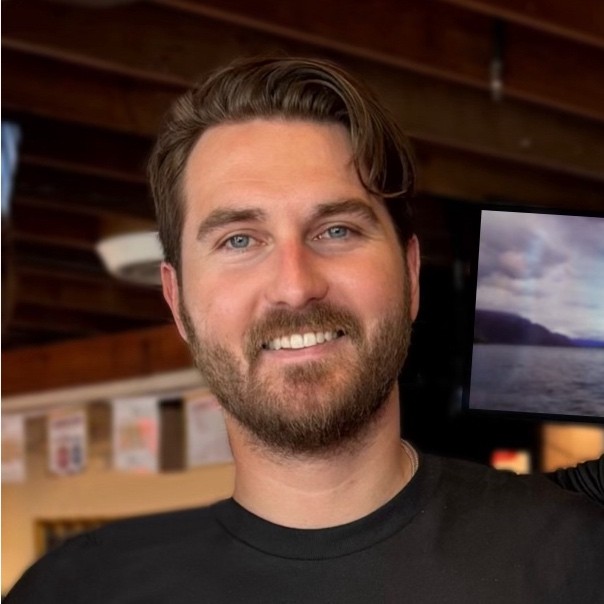
Jason Chapman
Konvoy Ventures
Jason Chapman brings a distinctly technical lens to early-stage investing. Before launching Convoy in 2018, he was an engineer at IBM's artificial intelligence division, writing code 12 to 18 hours a day. That background shapes how he evaluates deals: he wants to be the most knowledgeable investor on a founder's cap table, going deeper than the typical mile-wide-inch-deep approach. Convoy writes concentrated $3-5M checks, doing only six to eight investments per year, and Jason has led follow-on rounds up to five times into the same company. His pitch to founders is straightforward: his personal net worth is tied up in the fund, so every check carries real weight and aligned incentives.
The tactical fundraising advice throughout the episode is where founders will get the most value. Jason lays out a specific cold outreach formula: find 50+ funds by looking at who backed tangential, non-competitive companies, then craft a two-to-three sentence email with a provocative opening line. His hot take is that LinkedIn actually outperforms email because most investors have heavy spam filters that catch attachments and unknown senders. He also recommends linking to a DocSend deck rather than attaching a PDF, and shares a pre-call tactic a founder used on him that he loved: sending a prep email two days before with five key takeaways and the top two reasons other investors were passing. That kind of transparency, front-running the bad news, softened the blow and built trust immediately.
Jason is also candid about the red flags that kill deals fast. Co-founder tension on a call is an instant pass, fabricating term sheets or timelines will get exposed because VCs talk to each other, and having all four co-founders on an intro call reads as a yellow flag rather than a show of strength. On the post-raise side, he warns against overhiring in engineering before revenue catches up, and encourages founders to think seriously about whether they even need more than one or two equity rounds. His closing advice gets personal: make sure your spouse is fully aligned before you start, and build a support system because building a company is incredibly lonely.
On why LinkedIn beats email for reaching some investors
On what he really looks for in a first meeting
On co-founder tension being an instant deal-killer
On why founders should consider smaller funds on their cap table
Mat Vogels (00:10)
Hey everybody, welcome to another episode of Fundraising where we interview top early stage investors and ask them all the questions that you need to know as a first time fundraising founder on the fundraising process. Many of the questions here today were actually posted and upvoted by founders in this exact position. And today,
I have an amazing investor for you. I'm gonna prop them up a little bit and maybe it's because it's Colorado. I love propping up all of our Colorado investors here right down the road from me, Jason, founding partner and GP at Convoy today that's gonna go through the fireside Q &A. Jason, how you feeling today about the questions?
Jason Chapman (00:52)
I'm feeling good. I feel like I should have probably prepared more for this test than I did, but Matt, thanks for having me on and yeah, I appreciate you putting this together.
Mat Vogels (00:56)
Mm-mm, no. I thought
about even starting to send the questions ahead of time like I did, but then also throw them out the window and then do a whole new set of questions just to keep VCs on their toes.
Jason Chapman (01:09)
man.
Honestly, we ask everyone else questions. It's fair that you flip the script a little bit and ask us some questions. I think it's fair. Yeah.
Mat Vogels (01:15)
Mm-hmm, yeah, right? We'll
throw in maybe a few curve balls today, but not many, not many. There's not many curve balls, I think, to be had, because again, many of the questions that we're gonna ask today were voted on and asked by founders. These are the questions that they wanted to know about the fundraising process. So we're gonna give them what they want and give them all the answers to that. But let's start first with a quick introduction of Convoy. Can you tell us what you're investing in, average check size, and stage that you're looking for?
Jason Chapman (01:43)
Yeah, so just really quick.
personal history, kind of what led to this firm and what we created. Personally, grew up outside of the US. Parents actually worked for the US government, moved every two years as a result all over the world, came back to States for college, did a few different things, but most recently before this, I was actually an engineer at IBM in their artificial intelligence division. So I got to do a lot of really fun stuff with ML, NLP for government clients, for enterprise. And so that was kind of my DNA before this. And so I actually was banging on a keyboard, you know,
12 to 18 hours a day before this, that's what I did. Launched Convoy in 2018, we had a thesis, myself, Josh, and then Jackson, who are the three partners that started this firm, that we thought that there was an interesting...
technology set that could be repurposed that was being built around the gaming ecosystem for the enterprise and for other critical areas of critical industries. And so we started with this thesis of how do we get into gaming tech? Gaming has been a, you know, industry that's accelerated really well over the last couple of decades. we thought, wherever people spend time, innovation typically chases thereafter. And so that's where we decided to focus the firm that has expanded as a firm over the last five years. And so.
We essentially look at deep technology across a lot of different ecosystems. We still have a core thesis around gaming. We think there's a lot there that's really interesting. And we typically like to write checks between three to five million. So that's us. We invest globally. Most of that activity is here in the United States. And so I would just describe it as deep tech around critical industries. And if you have something in gaming, we do care about it for a lot of reasons. And not just because I'm an avid gamer myself.
Mat Vogels (03:19)
I love it. What's interesting is I have some of the folks from speed run on in the next couple of weeks in future episodes. They had a similar kind of thesis and landed in a very similar spot where they realized that gaming from a broad sense applied into so many different areas and realized that while lot of the companies that we kind of thought were gaming are actually kind of
critical deep tech companies that are almost using gaming as a way and gaming not in the sense of video games necessarily, but just in the broader sense of how they were thinking about some of these areas. So it's kind of interesting that two incredible funds like yours and Speedrun kind of came to the same conclusion in a way.
Jason Chapman (04:02)
Yeah, I think on this, really comes down to, I mean, I'll speak for myself, like I never worked in the games industry before this. I purely went into this because I said, hey, wherever people spend their time and increasingly gaming grabbed more and more of that time.
That's got be where technology is pushed to the limits and also where innovation chases. And so to me, I looked at that. I also saw a lot of great colleagues of mine that would actually go work in the games industry and said, this is a magnet for good talent. so think very highly of the speed run folks. We've done a ton of deals together. And I think we kind of, the melding of the minds here is, you know, at the end of the day, there is just a point of where people spend their time. That's where the best technology is created. And, you know, as technology investors largely, and that's what we focus on, we got to pay attention to
this industry otherwise we're not doing it just we're you know we're not I think taking care of what we should as investors and we should we should pursue it. Yeah.
Mat Vogels (04:52)
I love it. ⁓
You mentioned a little bit on what you were doing before Convoy. Is there any more history that you want to add to the of the founding story of maybe why you chose in Colorado, why you kind of chose this thesis and decided to start Convoy?
Jason Chapman (05:07)
Yeah.
Yeah. So I think, I think for, I'll, I'll start with, you know, why Colorado.
Pretty simple, my wife is from a small town in Colorado and I love my wife and I wanted her to be happy and she wanted to be here. And so that, yes, that is the truth of it. I could come up with some other fake answer but that's the real answer and that's important to me. I've moved all over the world pretty much my whole life. This is the longest I've lived anywhere by a factor of two X actually now. I've lived here for eight years. And so this is home. So we have planted the flag here in Colorado.
Mat Vogels (05:21)
It's a very Colorado answer, by the way. It's just like, yep.
Jason Chapman (05:40)
So that's why the location. The second thing I think I'd say about why Colorado is
Before I moved here, actually, I was unaware of a couple of hubs that were very interesting. One is the Quantum Hub here. There's also a deep focus around critical minerals that's really interesting here. There's the space and aerospace environment as well, and obviously, naturally, defense with a lot of the activity we've got going on in the springs. For me, I like a lot of those different areas. I have worked in a lot of those different areas that interest me, and so this is a natural location to be. I always joke with my friends.
El Segundo. It's like a lot of the same industries are here except we don't have to pay California taxes so you know why on the heck would I be based there? And also the weather is better here. I know they're gonna say it's better there but I think it's better here. We make winter fun so I'm gonna go with that. And then run the Genesis for convoy. I mean the honest truth of it is that I was writing a newsletter with my partners for fun when we were all
city and we started kicking around this idea around hey if we were going to approach an investment firm like how would we approach it and we all kind of melded around we thought there was something interesting going on in gaming tech and we started writing about it and the truth of it is we had a lot of people subscribe to that that probably should never have subscribed to my thoughts but they did nonetheless and those were our first LPs.
people asked us and you know I still remember one of them wrote like I've never thought about watching a fund and I just responded no that's not of interest to me and and you know one of my other partners was a little more wise and was like hey like let's let's talk about that right and intellectually knew what a fund was but you know to me I didn't you know wasn't interested I was an engineer right that's what I did and I learned pretty quickly that I view investing like research just with dollars you know that's how I view investing it's such a
it's such a fun industry to be in because you get to research stuff and then when you have strong convictions you don't just write a white paper and then shelve it on the shelf you actually get to go find a company deploy dollars against it and back a really great team and so that's that's why I got hooked into it. Yeah.
Mat Vogels (07:39)
Yeah. Yeah, I love that. I think some of the best investors
make, you know, never really sought to be an investor in a way, or at least that wasn't what their original career path was. Although in some cases, when you look at performance, it kind of says the opposite. It's a whole tangent there, but maybe you can, you'll prove the exception there that I operators end up making, I think some of the best investors in the long run, but.
Jason Chapman (07:57)
Yeah.
Mat Vogels (08:04)
Let's go into some of the questions that were nominated or voted on from founders here. The first one, was the number one question was, what is your favorite part about being a VC? And then what is your least favorite part about being a VC?
Jason Chapman (08:19)
I mean, I think the favorite part of that is what kind of what I just said is I get paid to research, right? And so that is where I feel at home. That's what I love to do. I love to get deep understanding about different topics. And so when I really think about my seat, that is one of my favorite things that I get to do on a day day basis. The second part that's my favorite is I get to talk to people that are astronomically more informed and more intelligent than I am on a wide variety of topics, right? And every single day, you know, it's a very humbling experience. You get to show up to a computer
and you talk to people all around the world and you walk away being like, man, I understood about 10 % of what that guy said, but that was a fascinating conversation and I have to go learn more. And I love doing that, right? I love that kind of, so it scratches the itch for knowledge. The hardest part about this job, I think, is context switching. And I think if, you know, I think that is one of the most difficult things you gotta manage where in one sense you're going from, I'm evaluating a...
you know, company in aerospace, I'm evaluating a company in battery technology, I'm evaluating something in ad tech. Those are all completely different ecosystems. It takes a lot of time to switch. And I think that is one of the things that is hardest about this job and always makes me do less than I wish I could do, right? And that's the truth of it, right? And so I often fall behind on great deals, great operators pitching us, and I wish that wasn't the case.
Mat Vogels (09:29)
Yeah.
Yeah, the common phrase that we say on the spot is that we get to go a mile wide and an inch deep and how sometimes that is a blessing and a curse for sure. Because you never get to go as deep as you'd like to in some cases. So that's absolutely true. Another question, what are some of the industries or problems that you're specifically excited about right now? could be you specifically, it could be from the funds perspective, but are there any particular problems maybe that you're looking at right now and are excited about over the next five years or so?
Jason Chapman (09:47)
Absolutely.
Yeah, I mean, I have been very, you know, and this isn't new for a lot of the market, but I have loved all the work that has happened in ASVs. This is on USVs. think this is something that fascinates me, stuff I got to work on in my career before this as well. And so for me, I look at both maritime, air, land. I think there's a lot there that's very interesting. I've also seen a lot of the simulation technology that we, you know, honestly, there's a lot of DNA in the games industry that we've drawn from.
Mat Vogels (10:12)
Mm-hmm.
Jason Chapman (10:30)
You know some investments we've made into that industry and the pairing of those two things is really fascinating So what does next-generational simulation software look like with next-generational us fees and the SVs? That is a thing that fascinates me for a lot of reasons both logistics combat And yeah, I've spent a lot of time there. We've made a lot of investments around that ecosystem
Mat Vogels (10:49)
And it's still growing. There's so many companies we see air even underground now. There's every level. Exactly right. Exactly right. And it's very timely, obviously, because we're seeing even with the conflict currently is recording this conflict in Iran and just overseas, it's going to continue to be something that is needing of investment. Last question here, kind of in the introduction piece, one that you can get to be a little bit braggadocious about why should founders pick
Jason Chapman (10:54)
Yep. Tunneling away. Yeah.
Yeah.
Mat Vogels (11:15)
you and or convoy to be on their cap table? What makes you unique to these founders?
Jason Chapman (11:21)
Yeah, I think it's a thing that I always tell people and we're getting pitched to say you should always make the VC pitch you back. And I think there's a lot of really smart people in the market that you can take money from. Right. And so if you're looking for just intelligent, smart, that there's a long Rolodex that Matt can show you, that I can show you of people that kind of fit that bill. When it comes to me, I typically say this, look, we are a venture fund that likes to
back up the hilt and back to the hilt a company and you know we do not do a ton of investments every year we do six to eight so we're very concentrated when we make an investment i will lead the next five rounds into a company we've done that before i take that approach and so if that type of you know i'd say like buy-in is interesting to you i think that's a good match the second thing i think i'd say is look i do not like to invest in things i don't understand and there's a
of different investment perspectives on this. I take the approach of I like to, you know, hopefully go a couple inches more deep than one inch, right? I like to be very narrowly focused on you and obsessed with you for quite a while before I make an investment. I don't
Mat Vogels (12:25)
Hmm.
Jason Chapman (12:28)
to make investment decisions overnight. I have and those are usually not worked out well for me. And so that's my perspective. So if you want somebody who is very focused and hopefully knowledgeable at your business, my objective is always to be the most knowledgeable investor in your cap table and whatever you're doing. That's my objective. Yeah.
Mat Vogels (12:43)
And I think
that goes back, that's where you get with an operator turned investor is you do get to have kind of that friend that you can almost rely on in a way or colleague more so than just capital investment. So that's great.
Jason Chapman (12:54)
The other thing I tell you, I say Matt and I think that, you know, this applies to Harpoon as well, but you know, there is a difference with smaller firms versus bigger firms where, you know, my net worth is tied up in this business. This is my company and every time we write a check out the door, the success or, you know, lack of success affects me and my family. You know, this is where my net worth is. I think it should be that way. So I always say that.
Mat Vogels (13:08)
So true.
Jason Chapman (13:20)
there's a lot of alignment. When we write a check into a company, I say, look, I'm on you to make me successful too, right? I don't have the luxury of hitting the eject button and just quitting next year. Like that's not what we do. And so there is sometimes alignment, I think on like the ownership level between smaller firms versus bigger firms.
Mat Vogels (13:38)
That's exactly what one of our friends and colleagues here in Colorado, Adam Burrow said, where if every investment that they make is tied so strongly to their own outcomes, where if you're a large fund and you're just writing checks all over the place, it's not that those checks don't have matter or care, but it's certainly not gonna carry as much weight for that fund and then therefore the investor's writing them.
Jason Chapman (14:02)
Completely, I think that we say this all the time, we don't do placeholder checks. We don't believe in them. And I think for me, we make a decision where you're in your corner to the fullest extent we can be, or we're not, right? And so if in your corner, it matters. And that's what we try to exemplify and try to live as a firm.
Mat Vogels (14:06)
Hmm.
Yep.
Love it. All right, let's go into the exact fundraising process. As a reminder for anybody that hasn't listed these episodes before, we split it up and do three different waves. The first is how can these founders typically listening that don't have a Rolodex, they've never even fundraised before, how can they go from, I have an idea, maybe I have a pitch deck, how do I get it in front of somebody like Convoy to get into phase two?
which is the actual first meeting, initial meeting, how do you not get out of the park to then continue that fundraising process, which is step three, going from a lot of initial meetings to pushing it over the finish line and closing the round. We'll break up the fundraising process into those three sections with questions in each, starting with getting in the room. Typically when we talk to founders, a lot of them, they're building this initial Rolodex, a list of funds that they want to include in their fundraising process, almost like a mini CRM.
What advice would you give to some of those founders on maybe what characteristics or things they should index on when building up that list of investors for them to reach out to?
Jason Chapman (15:25)
Yeah, and I would say, fundraising is a beast. It is a lot of work. I fundraise myself, so I have lot of empathy on the other side of this table. I always joke with our founders and say, I asked for bigger checks with a less clear product, and so it can get worse than you pitching a defined product. I have a lot of empathy on this side of the table for fundraising, the amount of no's you get. When I think about building your pipeline,
The way I would do it off the bat, if I had a pre-seed or seed stage company that I was building for, I would say, look, what are the most tangential companies that I think are in market that are not competitive with me? Who is back to those companies? I would build a list of the top, you know, let's call it 50 investors that play in this space. I would then programmatically scrape all their emails. Do not just do a programmatic outreach that I can tell you when I receive it. know it. Everyone knows it. Research a little bit about me and try to make it a little personal.
and do a quick two to three sentence email. Catch my inbox, right? Something I love that always catches my inbox is a defining sentence in the entry of like, Jason, do you want to change the way X is happening? Like that has worked on me. I will click and open that email. What doesn't work for me is intro call requested where it looks like some super suit buttoned up like iBankers sent this to me. Like do not do that. You're supposed to be radical. You're supposed to be kind of a mover.
Mat Vogels (16:40)
Yeah.
Jason Chapman (16:49)
and
shaker like shake me with your email get aggressive with the title right like that's what I would do and that that's the tactical way I build that first list that I go out for.
Mat Vogels (16:59)
like a fund size or anything there? there any feedback you give to founders? Should they have a mix of all of them? Should they focus on smaller funds or just larger funds? And then what does that kind of look like from your perspective?
Jason Chapman (17:11)
I mean for me, I think it more is topic related where if you see, you know, it's not hard if you go look to my LinkedIn or Matt's LinkedIn, be like, what's Matt thinking about? What's Jason thinking about right now?
That is who you should target. So think one of the few things that people do really, really wrong is they look at big firms and they're like, well, I reached out to Andreessen, but they didn't respond. And I'm like, well, maybe you reached out to the wrong person at Andreessen. Do a little of your homework. Just do a little DD. It's not that hard. So that's the first thing I'd say at big firms. At small firms, I would say look for the partners that are focused on the things that you're interested in.
Mat Vogels (17:35)
Mm-hmm.
Jason Chapman (17:44)
If there's not a one for one, then sure, take a shot and who the heck knows, maybe someone will come off the bench. So I would say get a mix of both. Go for it. This is a numbers game. I hate to say it, but it is. If you're not reaching out to at least 50 funds for your pre-seed, you're doing it wrong.
Mat Vogels (18:01)
Yep. Agreed. Agreed. So let's say that they have the list of found or funds they want to reach out to the investors of maybe some of those funds. You mentioned maybe some of the emails. Are there other ways like LinkedIn, Pigeon? What are some of the other ways that you've seen founders actually reach out successfully to some of these funds? Pigeon. Yeah. No.
Jason Chapman (18:18)
Pigeon, pigeon for sure. Yes, pigeons for sure. ⁓
would say definitely do not, one thing, I know this is probably me stealing a later question, but I do have people that send me physical mail of their pitches. I will say that does not work with me. I would encourage you not to do that. It does not come off the right way, especially when it is received at your house. So I would encourage you guys, please do not do that. The office is one thing. So if you have a hardware product, especially like a consumer hardware product,
Mat Vogels (18:37)
Yeah. Yeah.
Jason Chapman (18:45)
Like that is an interesting kind of angle of like send something to the office and give some instruction video or something like that that's interesting. I would say LinkedIn is the most successful. I would say that is the core platform I would reach out. I would say LinkedIn is most successful. It is amazing. You have a platform where you can reach anyone in the world.
Mat Vogels (18:55)
That's kind of a hot take. That's a hot take.
Jason Chapman (19:04)
There are so many guards on my email to prevent issues from coming in. There's a good chance you get caught in that, right? So I would say LinkedIn over email personally. Obviously, if you can get someone's phone number, that is the most accessible and best way to reach people. But I think usually, if they're like me, they try to guard that. Unless Matt tweets it out later, please don't do that, Matt. But you know.
Mat Vogels (19:24)
I won't do it. I won't do it.
Yeah, the personal stuff, sometimes founders get overly creative on going to your house or those types of things. And that's, it kind of goes over the line a little bit.
Jason Chapman (19:31)
Yeah.
Yeah, no one wants to be walking with their kids and then getting pitched a company, which has happened to me a few times, and that's not of interest,
Mat Vogels (19:44)
I'm not as famous as you. don't have the facial recognition piece yet of people
like stalking me and asking me. ⁓ But I can see how that could be. That could definitely be an issue for sure. So the other question that we have here on, so you mentioned the LinkedIn being a good model, the email, what should be included? Is it, you like pitch decks? Is it pitch deck? Is it memo? Is there a combination of all of them? Other mistakes that you see, maybe one that I can toss out there is the like,
Jason Chapman (19:49)
Huh?
Mat Vogels (20:12)
Reply back if you want to see a pitch deck or some of those things. What is the format in which some of these folks are like trying to give you the information that you need that you most prefer to receive?
Jason Chapman (20:23)
I mean if I was designing my perfect cold outreach it would be a good title catch, something like Jason De... you know, or...
you know, I'm trying to do this, like changing, changing aviation, changing mining, something, know, something just catch my eye in there. would then say, Jason, I'm reaching out to you because of this. being like showing some sort of intent and thought of why you came out to me. Second point, I would be like, this is what we're doing. This is the problem. This is the solution. And I would hyperlink here is the deck. If you want to click on it, here it is. I would send it to the docs and I would not do attachments again.
A lot of, like just structurally, a lot of investors have protections around their email, I do, and a lot of those attachments will never make it to me anyways. But a link always will, right? A link will, and so I would encourage you to do that. And also if it's DocSend, it's like very approachable. So that's how I would structure the email. I think it's very tactical, and I think, as to be for myself and my team, there's a pretty good hit rate that we're gonna open that email and look at it and potentially click on your deck, and then you're gonna get our email then again.
I know Jason looked at me. This is great.
Mat Vogels (21:22)
Yeah.
Yeah, I can't tell you how many times I look through spam and I see a bunch of spam because of having big attachments. Like it's a 30 megabyte pitch deck. even Google, think, will just send that to spam. So they don't want to do that from unknown email. So that's good advice, even just using a link or some of these other ones. And plus, it's better for founders anyway, because you get to track and see clicks and open. So yeah, don't send a massive PDF to people. not the way to do it.
Jason Chapman (21:36)
Yeah.
Yep.
Yeah, it's 2026 guys. There's other ways to do this. Pigeon's better. You know, pigeon's better. Yeah, yeah. Yeah. Yeah.
Mat Vogels (21:55)
Pigeon is better for sure with a physical copy of your deck. ⁓ Speaking
of pitch deck, what are the slides or slide that you particularly look through? A lot of VCs I talk to, they tend to, in some cases, go directly to this slide and they want to look at that first before even going through the rest of them. Do you have that kind of slide or is there a different approach that you take?
Jason Chapman (22:16)
Yeah, I think you're coming to this, I was like, what do I honestly do, right? I'm not gonna give you my like, what do I honestly do is you send me the deck, I look quickly to be like, what the heck are you doing? What's the problem? I then go to the solution slide, and then if you're pitching me something beyond or seed plus, I then try to go find the traction slide, right? If it's pre-seed, I obviously don't look for that. I'm like, you got no traction, let's just call it what it
and then I look at the team and I'm like, okay, what's the problem?
How are you guys solving it? What have you done? And then are you qualified to do it? That's how I quickly go through the deck. look for those like four slides. I probably don't even read the rest, to be honest with you. Right? Like, I'm like, okay, I'm interested in this. I think these people are qualified. Let's do a call and then I will spend time looking through the materials. But I find that the rest of the stuff doesn't usually actually inform my decision, which is gate, call, or email to follow up with questions or no call, no email.
Mat Vogels (22:50)
Hm. Hm.
What on those slides particularly do you want to see? What can make like a really good team slide, for example, what do you need to see on those to better capture your attention?
Jason Chapman (23:20)
Yeah, I mean for...
for like the problem, the shorter the better. If you can just distill it. I mean, that's the art of, think you're obsessed with this one thing. I'm not thinking like you should assume the VC is not thinking about you at all and your problem before they open this deck. Can I get it really quickly? Can I get it in five to 10 seconds? And if I can't, you it's probably you guys, you messed up on your side because you got to think, you know, Matt, myself and all the other investors and we're processing thousands and thousands
of deals a year, right? And so like how do you quickly communicate what you're trying to do? Very simply, almost to a layman, right? And that's really hard with deep tech, like I get it, like you know if you're talking about like a high performance computing company, if you're talking about like a chip company, it's really difficult, I get it. But I'd say like I'd spend a ton of your time on that one sentence. This is the problem, this is how we're solving it. Like that wakes me up at least.
Mat Vogels (24:10)
Are there any slides that you think founders maybe spend too much time on? You mentioned like maybe some of the highly technical ones are going really deep, be one of those. Are there any other slides that you think maybe you see too many of and you're like, I just wish founders maybe not take them out, but spend less time on them.
Jason Chapman (24:24)
Yeah, honestly, of a product, unless it's a hardware thing. If it's a software, I'm looking at a dashboard. This means nothing to me. Let's just skip all this stuff. I always love it when I get a slide deck that's 10 walkthrough, a persona use case. I'm like, no one's gleaning from this what you're hoping for. So I'd say remove that. And then industry research, feel like, isn't usually great on a slide.
Um, you know, I always tell people more graphs, less, less text. Like I understand a graph in five seconds. I understand text at a lot slower pace. So.
Mat Vogels (24:59)
Honestly, it's similar feedback I give to lot of people on websites was when they like put it, try to put really small screenshots of dashboards that end up being too fuzzy. The other thing too is that unfortunately most designs are not very good. Like most product design is not very good. So the fact that you want to put it like plastered in your pitch deck is also not as attractive as you think. So it can kind of hurt you both ways.
Jason Chapman (25:07)
Yeah, yeah.
Yeah, I completely
agree with that. ⁓
Mat Vogels (25:22)
Yeah.
Let's say that they've done all these things right though. And maybe actually before we go to the next phase, are there any other mistakes that founders make consistently in this kind of pre-meeting phase? Whether it's in their pitch deck, the setting of the pitch deck, you mentioned a few already. Any other mistakes that you see founders make that you want to touch on before we get into the initial meeting phase?
Jason Chapman (25:44)
Not off the top of my head, I think those are the mistakes I typically notice.
Mat Vogels (25:46)
So now we're into the meeting. You've scheduled it. They've scheduled it. It's on the books leading up to that meeting. Is there anything that you think founders should be doing? So it's almost pre-call. What should founders be doing going into a call? They know they already have it. What's some advice you give founders for the information leading up?
Jason Chapman (26:06)
Someone just did this for me, which I loved. and I was like, my gosh, I wish everyone did what you did. And I gave him this feedback and you know, was this call got scheduled and they said, okay, two days before the call, they sent me a pre-scheduled email. said, here's the, here's the full deck, right? Here's five points I would want you to walk away with. And here are the two top reasons why people are typically passing on us. This is what you should be aware of. Right? Like I thought that was really interesting. It was kind
like front running the bad news right and he front run front ran some of the news that I didn't like and I was like but he softened the blow so I loved that move I would highly recommend a pre-email being like hey just getting ready for a call tomorrow it shows it shows intense shows excitement also it helps kind of get your brain working being like right I am talking about you know high performance computing on Tuesday right like let me get ready for that call right that's I know I find that helpful
Mat Vogels (26:55)
Yeah, I like that.
That's a really good one. Are there any things that you from a VC side want to see in this initial meeting? Is it more on the product? Is it more on the founder? What do you need to walk away from in that initial meeting that gets you excited to continue the process?
Jason Chapman (27:13)
To be honest with you, at that stage, if I think there's a problem and there's a good solution, then it comes quickly to be just all about the person, right? In our business, we're hunting for exceptional people who are hell-bent on building in whatever industry they're in. And that has to come through in the first call where...
It is so painfully obvious to me that this person has to do this thing because building a company is really hard, right? And so to me, my encouragement to founders is always demonstrate the excitement. Don't err on professionalism, err on excitement, err on...
just communicate the enthusiasm and why you are doing what you're doing. If I'm ever asking, that kind of makes sense, that's a good idea, but I don't know if Matt's really gonna, he could do nine other things. If that's the takeaway, I'm probably not gonna back you, even if it's a great idea, because when the going gets tough, you're gonna leave. So that's what I spend a lot of time thinking through, and we spend a lot of time with founder frameworks and personas.
and try to understand. Yes. And it doesn't have to be just experience too. That's the thing, we've had some amazing founders build amazing things. And honestly, areas that are probably not qualified to do it. But they were so passionate about it and that was so clear to us. I will take passion over professional accreditation any day.
Mat Vogels (28:12)
So it's almost like a founder market fit in a way there.
Yeah, that's a really good point. And think that a lot of times founders maybe forget that and then they talk too much about the professional accolades and why they're there, which is could be important, especially if it's highly technical. But if you do not include the reasons why, then a lot of that can be lost for sure.
Jason Chapman (28:54)
Yep. Yep.
Mat Vogels (28:55)
Are there any questions that you think founders should ask of VCs? You mentioned this earlier, you kind of encouraged that in a way. What are some of the questions that founders should ask in that initial meeting? Not because you want them to, like you look at it as a check mark or like, I'm glad they asked that. But again, more as the founder taking ownership and control of the fundraising process, what should they be asking those VCs?
Jason Chapman (29:18)
I mean, I think you should ask questions like, what about what we presented to you made you want to take this call? Try to understand what is bringing me to the room. And I think not as...
A challenge maybe I would say to founders is like assume just for a second that maybe some investors are also, you know, everyone's there to obviously hopefully do a very good job for their fund, which is to have an exceptional outcome financially. But also on the other side of the table, there's things that get me going and get my gears moving that might be slightly different than Matt. Right. And so like Matt might be in the room for a different reason than me. Right. And I think understanding why I'm in that room, what is motivating, what is getting me so intellectually curious, I think is
pivotal and paramount, right? And it's kind of like know your customer, you know, it's like know what brought me to the room. We're like I'm passionate about this thing versus you know also probably tell you if I don't have a good answer that you'll be like it's probably odds low odds that Jason's gonna issue me a term sheet. It's like qualifying, you know, like who's real who isn't.
Mat Vogels (30:17)
Should they ask that question at
the beginning then of the meeting almost to steer the conversation?
Jason Chapman (30:23)
I would, I've had two or three guys do that recently to me and they're like, okay, understood, that's really great to know, this is what's bringing you here. And I'm like, yeah, that's what's interesting to me and you can tailor your pitch accordingly.
Mat Vogels (30:35)
and probably
a red flag if the VCs are kind of stumped and are like, I don't know why I'm talking to you.
Jason Chapman (30:38)
I actually don't know why I'm on this call.
I mean, and I think like we've all done that. We've all gotten in the room and like I think had that and we were like, actually, I'm probably not a great fit for you. I'm sorry I wasted your time. Right? Like, ⁓ and if you're being honest, I've said that once or twice, not too long ago where I'm like, I'm not the right guy for you. I'm sorry. Let me think of some people. Let me try to make it up for you with some people I think that might be the right people for you.
Mat Vogels (30:49)
Yeah, good point.
Yeah.
So you mentioned some of the green flags, the traits that you're looking for with some of the founders. You mentioned maybe being in a call and having to kind of pull the parachute early. I've done that a lot of times. Sometimes it is related to the founder. And sometimes it's because of the red flags that you might see them kind of presenting. Are there any sort of red flags? it just that, is it the opposite of what you mentioned earlier and that lack of energy, lack of excitement around the problem, but are there other red flags that a founder should be sure to?
to not show during the meeting.
Jason Chapman (31:32)
Yeah, mean, look, one of the things I'll tell you straight away that I look for is if, especially if it's a first call and there's two or more people on this call, right? And if there is founder tension on the call of any kind, we're out.
like immediately. So I will tell you, we have pulled a parachute on so many of those where if I start to see, you if I'm on a call with Matt and we're co-founders together and Matt says something, I'm like, well, actually, you know, like what Matt said isn't really right. It's like, it's like naturally you're like, you know, start a company is so hard if your own troops aren't unified together. It's over. Right. And so I think that's something I look for. So I'd say like, be sure that you present a united front and hopefully you
Mat Vogels (32:00)
boy.
Mm-hmm.
Jason Chapman (32:16)
do have one or you probably shouldn't be founders together. Other things I would say like you know generally speaking for me when I'm looking at teams is I like it when people can answer my question quickly and then be like I can dive into that further if you want but that's the answer. Just like call it out and it's like you know instead of baring at the end really talented communicators do that really well.
Mat Vogels (32:30)
Hmm.
Jason Chapman (32:36)
And I wish I'm still trying to do that myself, but that's an art that think founders would do really well in pitch sessions.
Mat Vogels (32:42)
I like that you mentioned multiple founders earlier. Do you prefer to have all the founders on the call? Does it not really matter if it's just like the CEO? Where does that lie with you?
Jason Chapman (32:52)
A psychology on this is look, if a round is moving really fast, sometimes I'm like, hey, please get your whole team on there. I want to meet them. If it's not, let's say it's called a normal process where you don't have a gun to your head and you're like, can actually run a normal process, I would kind of say don't bring all your founders on the first call. It should just be one-on-one because...
You're still qualifying me too. And what if you just wasted three people's time to qualify that I'm a terrible fit for you? That's not a good use of time. I kind of view that as a slight yellow flag where I'm like, when I show up to the call, there's four founders there. I'm like, guys, this is an intro call. I wouldn't do this. So that's a negative signal to me.
Mat Vogels (33:32)
Yeah.
Hmm, I like that. I agree. Sometimes it does feel weird when there's like the whole team on that side, especially if no one else is talking. Sometimes that can also be a little bit, not a yellow flag, but it's just weird when you just have a bunch of people staring. It's like, should you guys be doing something else maybe? So I agree. Yeah. Sometimes that can be a, a negative for the intro call for sure. Are there any other mistakes or pitfalls during the initial meeting process that founders should be weary of or, or avoid?
Jason Chapman (33:47)
You
Mat Vogels (34:06)
A lot of times it's 30 minutes. It's very important 30 minutes. Sometimes it's less, usually not more. What other mistakes have you seen founders make during that initial call process?
Jason Chapman (34:16)
really small thing, this might be a pet peeve thing, but, and I try to do this myself on calls and this is, we have every AI note taking capability possible now. Do not have your hands on the keyboard for any reason. Just keep them away, because naturally what, you know, I think the other side assumes is like, I'm emailing, I'm slacking someone, I'm letting someone know. And it's like, I'm trying really hard myself to stay away from all that when I'm talking to founders, just to be like, hey, I'm here. Like, I'm here, you've got my full attention, I've got no other tabs open.
I'm just looking at you, right? And I would encourage founders to always do the same. And it never feels good when you're like, sort of feel like they're emailing and, you know, it could be really important, but like, I just wouldn't do it. Not a signal.
Mat Vogels (34:52)
Yeah, does send a negative signal because it is important for if it's in. I talked to VCs about this and let them know that they should not be doing that because a lot of times these founders have this sense of this is the most important meaning of my life. And then all of sudden, VC is like texting or on their computer and it's such a bad. It's such a bad view. Yeah.
Jason Chapman (35:09)
Yes.
And we've all done it, and we all do, and so there's grace in this process.
I hope I have had grace extended to me in this process, but I would say it's the same way as you feel when you're out getting beers with your friends and they're on their phone the whole time. It's like, why are we here? Why are we here?
Mat Vogels (35:27)
Yeah, agreed. All
right, let's say that they've crushed the initial meeting. They're now going into kind of the meat of the fundraising process. This is typically the part that's the hardest. You can schedule a lot of initial meetings, get a lot of perspective, but until the round is closed, you're going to have days where you think like, we're good. And then other days where you're like, we're never going to close this thing. So it can be really, really difficult. What advice
Jason Chapman (35:33)
Yep.
Mat Vogels (35:52)
would you give founders just as a whole as they pursue the closing of the fundraising process itself? What should they be prepared for? What can they do to make it easier? Anything like that.
Jason Chapman (36:03)
Yeah, I mean, the truth is it's...
I think there's a couple things you're solving for here. One is making sure you show your best face to a person that's leaned in being like, actually want to pursue forward. I'm not just like, send me a follow up email, like, and we'll figure it out. You know, you got to figure out like, Hey, I'm responding to poll here, but you're also trying to manufacture momentum, right? Especially if you don't have a lead yet. And maybe going, you know, a question I would ask founders to ask, you know, I asked this question. I'm like,
I use this as a fundraising tool for myself, or sorry, a closing tool for myself with prospective companies, they say, you need to lead, there's a lot of followers out there, you need to lead. Ask people, one, do they lead? And then ask them, the last 10 deals they've done, how many of those were lead checks? Right? And if someone says, yeah, I lead, and then nine of the 10 were lead checks, that's a great candidate for you to sort of form round around. If the answer is,
Mat Vogels (36:47)
Hmm.
Jason Chapman (36:58)
Well, know, was 2024, the last time we led a round. It's like, well, that's not a good fit, guys. Like, that's probably not a good fit. So that's a qualifying, I think, thing I would do in this process. I love it when I ask the question, hey, especially if it's a seed round, do you have a data room of some kind that you put together? And they say, absolutely. Here's our financial projections. Here's more on our product. Here's some research that I would encourage you read. You know, a question I always ask is I say, what?
If you could design the perfect investor, what articles or things would you have had them read ahead of our next call to know what you're doing better? I ask that question all the time. I love when founders light up and they say, my goodness, I've got three things I would love for you to read. And I come from a more research technical background. I love to read. A lot of investors actually love to read. So I would say have that stuff ready. Just be ready.
Mat Vogels (37:45)
Yeah,
be prepared. you kind of the reason this process is so hard is that every fund has their own unique diligence process. Could you talk a little bit about maybe specifically what that diligence process looks like at Convoy from that initial meeting to we're going to continue going. What does that look like?
Jason Chapman (38:03)
Yeah, I mean, for us, we take the approach of everyone on the investment team is kind of like a portfolio manager. It is your job to get your deal and your entire team up to speed on an opportunity. actually at the finish, before we make an investment, we have the full investment team join every single kind of final stage deal. And we do a very long call with the team. And typically, the deal leads relatively quiet in that call.
And so we like it because we want you to get touch point with everyone on our investment team. We want everyone to be informed. And so we take approach of tons and tons of volume. then when it comes down to, know, Matt, if you and I are a team together, Matt, you're like, man, I'm banging the table on this deal. I'm like, that is going to demand my time as your teammate. And I'm going to spend all afternoon on Monday getting up to speed on your deal. Right? Like that's how we that's how we think about it.
And I always say, feel very informed on the deals we do when we do them. A couple years in on a few, I feel like I can't give you more than the cocktail answer on what an actual company I'm not point on is doing in some spaces. But at least at the time, I knew what they were doing. And I always want to be held accountable for that. I want to know how our companies are doing and who they are when we make the entry.
Mat Vogels (39:14)
How many meetings typically do you see from the initial meeting being one? How many additional meetings on top of that should the founders kind of expect for you guys?
Jason Chapman (39:23)
It really depends on the deal. I I have done probably, you know, the smallest is probably four or five.
But sometimes we compress it where it's, you we've done 12 meetings in a week where I'm just like, this is it. We're doing everything here together and we're just gonna, you you're spending the next three days with me and that's what we're doing. So it's a pretty wide range. I don't have an equation for you of like six meetings with convoy equals check. I don't have that one yet.
But I would say probably, I think most VCs in our space are probably looking at least four to six meetings before you get something serious.
Mat Vogels (39:57)
And
sometimes those meetings to your point are like, can we just hop on really quickly to talk about like this particular thing? It's not like you're going to hop on for an hour long zoom and go through the same stuff.
Jason Chapman (40:06)
Yeah, no like I you know I think I think for us when we do like a third call with someone we are very leaned in right that's a Okay, I'm spending a ton of time now on this outside of our calls And I'm usually texting people being like what the heck is this term. I really can't understand this. Can you just help me out right like
I do a lot of that and just try to make it more collaborative. And sometimes I just share with them, like, this is what I'm writing about you guys. Do you disagree with any of this? And they're like, let me red line it, you know? And that's a healthy thing for me to do too.
Mat Vogels (40:35)
How often do you guys do customer interviews, background checks, check stuff like that? What does that process look like? Yeah.
Jason Chapman (40:43)
If you have existing customers, we're talking to them. We always do background checks on people. It's amazing what you discover on some people. Both hilarious and also not hilarious. So I think for every fund out there, you have to do this. I think this is just a part of the business we're in.
I also love just talking to, you know, we do a ton of like backdoor referrals on people too where we don't ask for you to refer us to someone we try to find. It's pretty easy to find people that know you in this day and age and your reputation carries far and wide.
Mat Vogels (41:10)
It is.
Could you shed some light on VCs are also talking to each other during this process? Is that something commonly like that founders should be aware of as they kind of get into this where we know who else is circling? You're probably talking to them. Is that right?
Jason Chapman (41:29)
Yeah, you better believe, you know, if like Matt sends me a deal and then, you know.
I'm talking to the deal, I'm talking to Matt about the deal, right? Like that's the way it works. And you it's just like any industry, you have friends and you have people that you like to work with. And I think another thing, a good signal to remember is, know, on our side, we do a lot of repeat business with our, you know, the funds that we like to work with the best, right? And so there's a lot of mutual assured to kind of like act the well, act well together. least that's what I hope for. And hopefully we deliver on our side too.
And so I think it's a good thing to ask too, is like, hey, if Harpoon introduced me to Adia, I'll be like, Jason, have you worked with Matt before? How do you know Matt? Ask those questions. It's good to know and kind of know the connectivity and how well you know each other.
Mat Vogels (42:12)
Yeah.
What are some of the biggest mistakes that you see founders make during this phase of the process where maybe they're trying to build a little FOMO. They're certainly trying to herd cats as far as the investors on their cap table go. What are some of the biggest mistakes that you see founders make here?
Jason Chapman (42:27)
Don't make stuff up. Don't make up timelines that aren't real. Often. Yeah, really often, unfortunately. it's that it's like, get it. Like you have this issue. You're like, how do I create the timeline? I have a company I had to run. I got to create a timeline. I got to close this out. I got to go back to the business. But if you say something like, I've got term sheets and you actually don't.
Mat Vogels (42:31)
big one. How often is that? How often do you see that? Often. Agreed. Yeah.
Jason Chapman (42:57)
That's a problem, right? Because that's not truth, right? That's not true.
Mat Vogels (43:02)
And like we just said, we'll find out, because we're already talking to the other funds.
Jason Chapman (43:05)
Most of them, most of this is illuminated, like it happens, right? And so I would say it's painful, like, you know, I would say always just do, you know, say what is true, never make stuff up. You know, can use the lines that were for me as, I was just like, when do you need to close this round by? And they're like, this is our runway, this is our date. A lot of the pressure will be taken off if you raise your round.
Appropriately to your runway by the way you should never be raising with like three months of runway left like you know I always tell people if you got sub 12 months you should be out there in the market right like because otherwise Always you should always be raising like it's just it is what it is
Mat Vogels (43:38)
Yep. Always be raising.
Yeah,
unfortunately your job as a CEO is like hiring and fundraising. And that's kind of, that's kind of it, which is not usually what we signed up for when we start companies, but unfortunately it ends up being, ends up being the reality. What is, when you kind of think about, or actually let me take a step back. A nice problem to have that founders will more often than not, I think run into is they might be a little bit oversubscribed. And I say a little bit because it's, it's more rare. You see on the news all the time.
Jason Chapman (43:56)
Yep. Yep.
Yeah.
Mat Vogels (44:12)
they're vastly oversubscribed and the founder is like, there's no room in this round, da da da. That's more rare. What I find to be quite common though, is that the founder has like one or two investors that they kind of have to turn away because they're just a little bit oversubscribed. They have to kind of make one last choice, maybe two, on who they can either keep or even turn away. So it's a good problem to have, but I think it's more common than founders might think. What is some advice that you would give some founders that are in this situation where they kind of have to start?
picking and choosing what funds they want on their cap table. And this is usually deep enough in the process where they know the funds pretty well, they know the investors pretty well, what's some advice that maybe you'd give founders in that picking selection.
Jason Chapman (44:53)
Man, that's tough. I would tell you, generally speaking, I say, look, it's better to have one really happy party on your cap table than to have two not pretty unhappy parties on your cap table. And I say that to my own potential future detriment where, you know, if you're looking at the two funds and you're like...
man, they could each get a million, but they'd both be kind of pissed about it. Or I could just give Harpoon two million, give Harpoon two million. Like, that's what I would do and just be like, these people are gonna help me the most. And then, to be honest with communicate that to the one that you're rewarding the bigger, it'd be like, I'm having to a really hard call here, guys. I'm doing this in faith. Please, please, you know, honor.
that decision, right? And I think that's like a little bit of a bond too with, you know, who you do end up selecting. So that's what I would do if I was in your shoes, is make one person really happy.
Mat Vogels (45:42)
I like
that. It kind of similar. What if there's like you mentioned small funds advantages there and large funds maybe having some advantages there. A lot of times you see founders that are like, you know, they have a big VC fund. That's like, want to take, you know, to your point of like a 2 million for one, or maybe they take a million and then they spread the other three or four with smaller VCs. What advice would you give a founder that's coming to you and being like, Hey, this big VC wants to take the whole thing. Any advice that you would give that founder?
Jason Chapman (45:49)
Yeah.
Mat Vogels (46:10)
there.
Jason Chapman (46:10)
Yeah, I think there's a couple thoughts here, right? One is, look, you gotta know everyone's got their bias. I've got my bias, Matt's got his bias. We kind of live in the same, I think, capital stack of the ecosystem. You know, we're not writing $500 million checks. Like, that's not what we do. So I think the thing I would say to you is this. You want to matter to your cap table. And so...
If I manage $25 billion and I give you a $2.5 million check, it doesn't matter. It just doesn't move the needle. You could 100x that investment and it still doesn't fully move the machine forward, right? I'm being a little bit dramatic here, but it doesn't matter at its core. If I lose $2.5 million at the firm or
is two and a half million bucks, that matters to us. Like we feel that hit. And I think that there's a good thing of aligned incentives there.
I would say the risky run with smaller funds there is obviously they're probably not the people that are going to lead your series B. Right? Like, you know, I'm not going to write you a $50 million check. That's not what I'm going to do. That's where you have to bank on them being a feeder into those groups. Right? And so I typically advise people just take money from people that you're going to matter to them the whole way up. And there's usually good alignment then on your board, your biggest shareholders. I would counsel that.
Mat Vogels (47:23)
Maybe one of the questions that you can ask of the convoys of the world, of harpoons that aren't these tier one, multi-billion dollar funds, is asking them what relationships they already have with those funds that can maybe help them in a series B or beyond. Because you're exactly right, you're gonna need those relationships too, eventually.
Jason Chapman (47:42)
And this is like our job is hopefully to build up those relationships and have good ones, right? And like you have, you constant relationships. You know, we talked about the speedrun guys. We've done so much stuff with them. We've had a great relationship with them, right? And I think knowing where you are in the capital stack is important, right? You can't be everything to everyone.
Mat Vogels (48:00)
I love you. All right, let's say they close the round. Everybody's celebrating. You get a little bit of champagne problems for like five minutes. And then you go back to work and you kind of restart the process again every six to 12 months. But what is some of the mistakes that you see founders make immediately after the fundraise? They have capital maybe for the first time ever. What are some of the big mistakes that they should watch out for?
Jason Chapman (48:22)
over hiring and engineering in particular. I think that's a huge thing that people do is they get.
Mat Vogels (48:23)
Mmm.
Too many people or paying people
too much or both?
Jason Chapman (48:31)
Well, I think actually both. I mean, I tell this to all my CEOs is look, there's excellent data on what you should pay people. Pave is a a great resource for this. If you don't pay for it, I think it's, I think it's sub $5,000 a year. You will make that up and you know, your offers within about, yeah, one, one higher $5,000, right? Not, Pave does not sponsor me or this podcast, but I would say use it, right? Maybe, maybe Pave does sponsor me. We'll get them as a sponsor for you,
Mat Vogels (48:50)
One higher, maybe, yeah.
We'll
to do that, yeah.
Jason Chapman (49:02)
Yeah, I'm just teeing you up. I would tell you that is an excellent resource. Like go use it. Be like, hey, look, I want to pay my individuals within the 60th percentile, 75th percentile, and in this market. Know what you should pay them. That's the first thing. But the second thing is on engineering, Like typically that's not revenue. That's not tied to revenue as much, right? And so I would say go hire excellent people. Pay them slightly more. Hire less of them.
You know, just go pick up two or three engineers when you think you might need four. I just see time and time again people just, you know, they over hire in engineering, revenue doesn't catch up, then they're stuck with this bloated engineering team, and it's like, obviously it's different if you've got customer demand, you've landed this huge contract, and you're backfilling, that's a different thing, but if the revenue generation isn't there, don't over hire on product and engineering.
Mat Vogels (49:53)
What are some of the, what's the advice you would give founders on what expectations they should have of the VCs on their cap table right after they close and like in that first round.
Jason Chapman (50:03)
Look, I think people say all kinds of stuff to win deals, right? Like, and that's the truth of it. I think what I try to do, and this is something I've tried to evolve as someone who's been professionally investing now for seven or eight years.
What do I actually do versus what I wish I could do? What do I wish I could do? I wish I could hire for you perfectly. I wish I could tell you exactly what your product roadmap is. I wish I could tell you and do deep technical overviews with you on every single thing you do. Realistically, I can't do that. And so what do I think VCs should do for you? They should help you with your corporate governance. They should help you with your financial planning. And they should always be helping you with capital raising.
That's what we're good at. If you're looking to me to source your CTO, I think we're in trouble. And I'm a technical person and I'll do interviews with you, but I'm not gonna be your lead gen engine for that. I'm an investor, I'm not the right person to source the CTO for a picker.
Mat Vogels (50:40)
That's great.
And that's where, mean, some VCs specialize in some of those very specific value add things, but unless they have that specific thing and then maybe you can rely on them for that, I agree. Sometimes there's too much pressure put on VCs after the fact to be quote unquote helpful when sometimes that's just not the name of the game. And you wouldn't want them to be maybe.
Jason Chapman (51:16)
And I think it's just that's expectation management. I think part of that is sits very much in the fault on this side of the horse, right? Where are they? I'm sorry, the house. That's not a phrase. Side of the house. It sits on the side of the house where people, yeah, this side of the horse, have problems. We got Colorado, we got horses around here. ⁓ And I think like that is a problem with us, right? And we say stuff that we can't back up and...
Mat Vogels (51:25)
Yeah.
We're gonna make it a phrase. I'm gonna put on a t-shirt now on this side of the horse. We do.
Jason Chapman (51:43)
I think I've been trying with my team to be like, let's be very, very thoughtful about what we say we're going to do and try to follow through with it. If we can't follow through with it, let's just err on the side of, let's not say something to win a deal and not follow through with our word. I think that's kind of...
Mat Vogels (51:57)
The last question here, although slightly doom and gloom a little bit, but most startups fail. 99 % of even the founders that are raising capital and successfully do will not make it. You've probably seen a lot of those. I know I've seen a lot of those. What are some of the main reasons that you've seen the companies, whether it's ones you've invested in or just nearby, what is the biggest reason why you've seen them fail so that some of the founders can start to early prepare for that?
Jason Chapman (52:03)
Yes.
Yeah, I think this is one of questions I did get a little bit of a jump on ahead
you this is the one I think I spent the most time thinking about honestly is what's the pattern recognition of failure. And I think one is shiny object syndrome where something comes in that's new and flashy. You haven't quite found your success with, you know, idea A, you get drawn and die at the idea B. And I think there's a natural inclination. There's this like point in the building, the company where you haven't really gotten like true validation feedback yet back from your customer set. And you're like, do people
even want this thing? Is this real? And I find that most notable in the pre-seed to like seed stage. And so I'd say have conviction around what you're supposed to be doing and stick it out. And if you think this is still the right thing, don't get distracted from some like random idea. You know, I saying you should ever not change your product or pivot, but I think people pivot way too quickly.
That's the thing I think I see. The other thing I think I see is people raise money and they get out there and spend it like it's infinite. I mean, in this era, especially with how fast contracts can move, especially if on consumer side, I mean, there's a case you should only raise one equity round ever. I think we're entering a world where, yeah.
Mat Vogels (53:32)
At least you should think that way. should plan on
that.
Jason Chapman (53:35)
I think we gotta get to a spot where it's like maybe one to two rounds and then your plan should be I have the option to raise money, but I don't have to raise money. And we have not lived in that world for a long time and I think people are getting more and more there, especially in the B2B world, which is exciting to see where they're like, no, no, we're gonna be good. Like I got two or three contracts, we're gonna be fine. We can make a decision at that point, do we want growth capital or not?
versus like, am, you all the Silicon Valley episodes are like haunting me in the back of my head of like, I've got coconut water in my waiting room with my assistant bringing it like, we just hit a million dollars in ARR. It's like, this is terrible. This is a terrible decision. So I think that's, those are the two things I'd say is like, watch your budgets, don't get distracted, have conviction around your idea and see it through.
Mat Vogels (54:23)
Love it. Jason, that was a jam packed hour. We went through a lot. I really, really appreciate you. You hop it on here. Any last pieces of advice that you would give founders in the fundraising or pre-fundraising process before we cap off?
Jason Chapman (54:38)
a couple thoughts. One, if you're married,
make sure your spouse is fully aligned with what you're about to pursue. think that's one. Do not underestimate how powerful that partnership can be in your lows and your highs. That's like one thought for you. When I launched this firm, I paid myself nothing for a very long time and I had a wife who was incredibly supportive. So Convoy would not exist without her. So that's my shout out to my wife. The second thing I would say to you is, look, starting a company is incredibly lonely. Even if you got startup,
Mat Vogels (54:46)
Wow, yeah, so true.
Jason Chapman (55:08)
know, other co-founders, find a couple of people that can resonate with you. It's a journey. Do not underestimate that. You're not a machine. You're a human being. So I would say more on the relational side, focus on your in-house and then also focus on making sure you got some support systems.
Mat Vogels (55:22)
Excellent advice. Both those are excellent. All right, Jason, let us know where can people follow you, Convoy, and keep the journey going.
Jason Chapman (55:30)
Man, got, you know, what is it? On every major social media platform, I am findable. You can find me. LinkedIn is a great place to track what I'm doing. That's probably where I'm most active. And we do publish a weekly newsletter that's always signaling what we're thinking about. go like, you know, you can't like my newsletter, but you can subscribe to it. So go subscribe. And yeah, thank you for having me on, Matt. This is great. I love the initiative. This is awesome. And if you're in Colorado, Mat and I will take you to lunch.
Mat Vogels (55:55)
Yes. Yes.
Jason Chapman (55:56)
on let us know let us know yes
Mat Vogels (55:57)
Let us know. I love that. We need to start doing more here in Colorado for sure. Cool. All right, Jason. Appreciate it. We'll chat here again soon.
Jason Chapman (56:02)
Absolutely, absolutely.
Thanks, Matt.





































.jpeg)