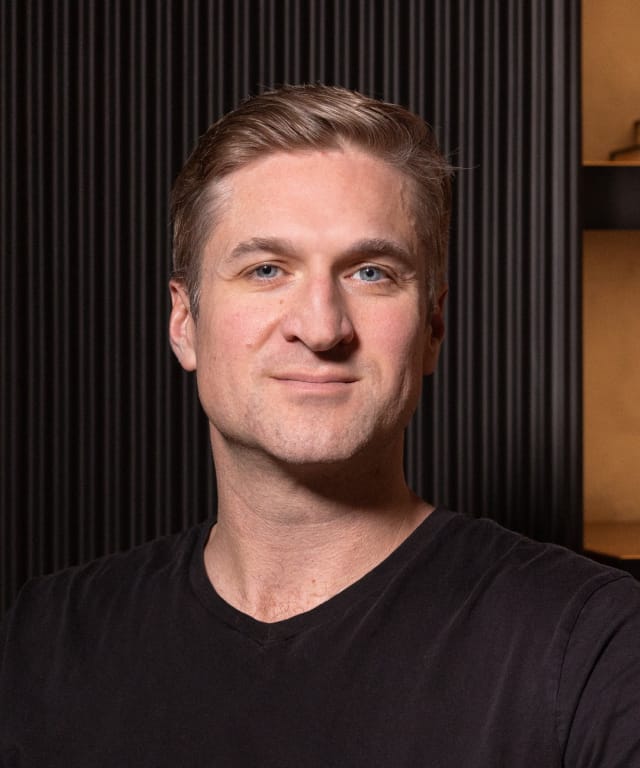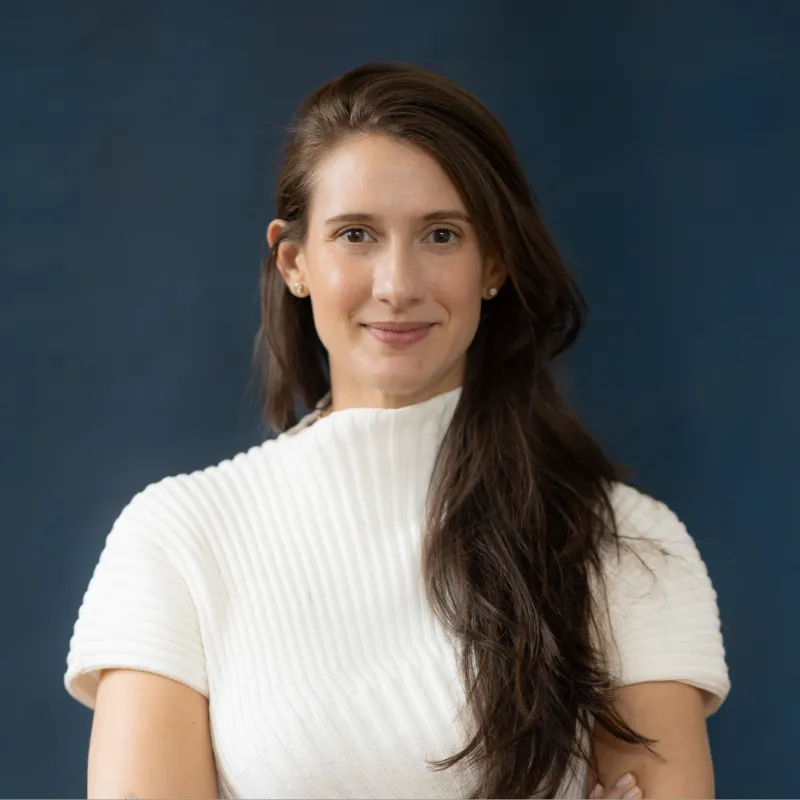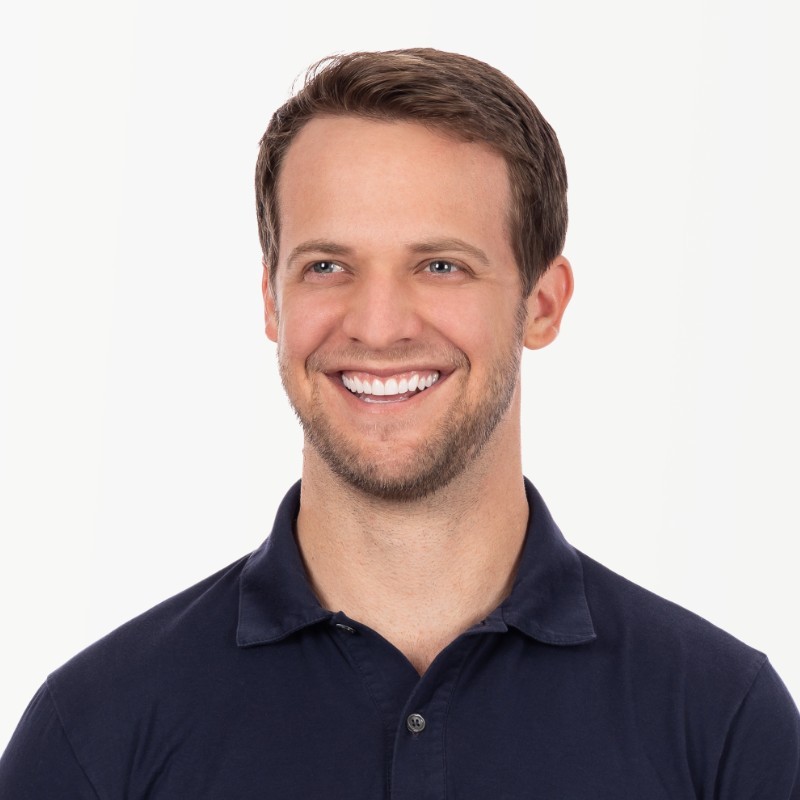
Michael Gibson
1517
Michael Gibson likes to say he has no business being in this business. He was working on a doctorate at Oxford in moral and ancient philosophy, following a T.S. Eliot-shaped plan to be a professor who wrote on the side, then dropped out, took a job at MIT's Technology Review, and on his first day working with Peter Thiel got pulled into announcing the Thiel Fellowship. He and co-founder Danielle Strachman ran that program for nearly five years: apply at 19 and under, and drop out of college if you were enrolled. Ethereum, Figma, and later Anthropic co-founder Chris Olah came out of those years. They named 1517 after the Protestant Reformation because they think the diploma is the modern indulgence — Yale or fail — and something like 90% of their investments have at least one founder without a degree. They are a pre-seed firm that likes being first money in, writing about a $100K check when a short experiment will prove a concept and about a million when there is a team and a plan.
The part founders can actually use is how he runs a first meeting. It is not a yes or no on the check. It is whether they want to go deeper. What he is listening for is a trait he calls hyperfluency: speaking forwards and backwards about the industry, why past efforts failed, why this attempt will work, then scaffolding the same explanation up to an expert and down to "the dumb Labradors." Danielle calls the other tell dog-fighting-to-get-off-a-leash energy; they want to feel urgency, and they want to be the ones who snap the leash. Do the homework. He asked a founder last week if anyone on the team had a degree, heard that everyone was getting one and thought that mattered, and asked whether the kid had even seen 1517's website. Keep the deck to company, problem, solution, and team, 15 to 20 slides, and skip the AI-polished fake-personal email. If they go deeper, more of the team plus a subject-matter expert joins, they use SAFEs, and the process is supposed to take two weeks with a clear answer. He thinks founders should ask other investors the same questions — what is your process, what is your timeline — because too many firms stay secretive while they kick the can or wait for someone else to lead.
The warning is that you cannot fake the first yes. The first commitment is always the hardest, and psychological FOMO will not manufacture it; if the tell that you are manipulating someone is too strong, it is a turnoff. One team told him they were using Robert Greene's laws of power on another investor. His reaction: are you stupid? Send weekly or biweekly updates instead, including who is actually in, and only get more direct with people who are leaning yes as a real close approaches. After the round, treat check-ins like mock board meetings and do not hide what is not working. Startups, he says, are the great revealer. You will have hard conversations every day, you will be wrong every day, and the one thing you cannot do is ignore the weaknesses they expose — shore them up or delegate, or you fail.
On doing homework before you hit send
On hyperfluency
On manufacturing FOMO for the first check
On asking a VC what their process actually is
On startups as the great revealer
Mat Vogels (00:10)
Hey everybody, welcome to another episode of Fundraising, a podcast where we interview early stage investors and ask them all the questions that you, as a fundraising founder, want to know about the fundraising process. And today I have a very special guest, Michael Gibson, the general partner and co-founder of 1517. And we're excited to dive into the thesis and what you are doing very uniquely at the early stage on the investing side. Part of that
coming from as you were one of the co-founders of the Teal Fellowship with Peter Teal back in that must have been over a decade a 2010 that was like in the early 2010. It's amazing that that program has been on that long.
Michael Gibson (00:45)
Yeah, twenty ten. Yeah. I know, I can't believe.
Mat Vogels (00:50)
Ugh, incredible, incredible. But like I said, I don't like to ramble too much about it. I'd love to pitch it over to you. Could you give a brief overview of what you are building at 1517, the types of companies you're looking for, your strategy, check size, anything like that.
Michael Gibson (01:06)
Okay, well yeah, it starts coming out of the Teal Fellowship. Ran that program for nearly five years with co-founder of my current fund. We saw amazing things come out of the fellowship for those who need their memory jogged. there were two conditions for the Teal Fellowship. You had to be 19 and under to apply, and you had to drop out of college if you were enrolled in order to receive the grant. so we worked with 20 people a year.
and now in retrospect it it's pretty wild what came out of those years. We we ran the program, we helped launch Ethereum in twenty fourteen, Figma twenty twelve, Chris Ola, one of our twenty twelve fellows, not during his fellowship, but afterwards became a founder, a co co-founder of Anthropic. So we Danielle and I, my Danielle Streckman, my co-founder, we worked on the Teal Fellowship. So we thought, geez, we could be making investments. We have a thesis here, we have developed a sort of sense of
what the play looks like on campus and among younger people that turns into startups, that turns into really big things. And so we started our fund fifteen seventeen. We're named after the year of the Protestant Reformation, because we think the modern university is the equivalent of the church of the 16th century that was selling these pieces of paper called an indulgence. You could save
Mat Vogels (02:21)
Hmm.
Michael Gibson (02:22)
your soul from hell by buying an indulgence. And so likewise we think
Mat Vogels (02:25)
Wow.
Michael Gibson (02:26)
we think the diploma is the modern
indulgence it's yale or fail you go to hell if you don't have a ba we think that's BS and so yeah we launched our fund to to back you know people without credentials. I will just add we do from time to time because the whole point is to accelerate progress. We think there's been stagnation outside of computers and IT and so you know one of one of the bottlenecks in stagnation I think is getting people to the frontier as fast as possible.
and so from time to time though, we will we will break our thesis, we will invest in some mad scientists, but it's gotta be like sci-fi way out there. But you know, something like 90% of our investments are in, you know, at least one founder doesn't have a degree. We are a pre-seed fund, angel pre seed, so happy to be the first money in. sometimes we'll do a hundred K check if you know someone has, you know, some short-term milestones they think they can hit, an experiment they need to run.
that'll prove a concept out. But the main event for us is a about a million dollar check. you know, just a solid precede round. By that point, there's usually a team. there's usually, you know, some kind of work if it's like in Enterprise SaaS or something like that, you know, maybe some initial pilot customers or users, if it's more on the RD heavy, deep tech, at least some kind of rational plan for hitting tech milestones.
that that we can get on board with. But yeah, as I s mentioned, I we love being the first money in and helping people get started. I think that's where we're the best at what we do.
Mat Vogels (03:54)
I love that. I I love, love that thesis. I've also been kind of an advocate of or maybe an disadvocate of folks attending university if they truly do want to build stuff like this. But I'm curious
Michael Gibson (04:03)
Mm.
Mat Vogels (04:05)
over the last decade or even since you know 2010, have you noticed any changes from the university side in maybe they're getting better at supporting some of these founders? Have they gotten worse? Is it just kind of the same? And then maybe a second part to that is as
It seems as though on the venture side, so many of of the dollars are shifting into hardware, be it you know, deep tech, certainly robotics, AI
Michael Gibson (04:30)
Mm.
Mat Vogels (04:31)
kinda being a category of that, if it's not just pure SaaS. We talked about atom computing kind of before this as well, which falls roughly into that quantum AI side. Are colleges getting better or or worse? How how much better is that problem right now?
Michael Gibson (04:46)
Yeah, in some ways they've gotten better, in some ways they've gotten worse. when we started the fellowship in twenty ten, God, it was a heresy that we said don't, you know, you might not want to go to school. We were lampooned, we were criticized. Now I would say it's pretty mainstream. So, you
Mat Vogels (04:59)
It is.
Michael Gibson (04:59)
know, I guess we were part of that, you know, l giving legitimacy to that path. and more and more people have taken it. I think colleges also I mean, they were starting their own programs, but I think over the 2010s they really kicked in the high gear.
devoting more resources at business schools or undergraduate studies to create, you know, entrepreneurship centers, clubs and so on. I I think all that stuff can be helpful. you know, most of the time though, if it's run by administrators, it tends to be pretty lame. I find the best programs on campus are really the student run organizations. They just have more soul in the game, sometimes skin. you know, and and there are more of them. I think so it's it's some blend of the schools doing more.
and then also the students themselves just using the resources they can at the school, which is great. where where the schools have not done well are just the the basics where it's like, okay, tuition is up, people are spending more money than ever. So each year it gets more expensive if if you know there's an opportunity cost to staying in school as opposed to, you know, moving on an idea. so so that in some in a bad sense is worse.
You know, so I I I don't know, you know, it's schools it's the other piece I find, especially with engineers and people who build, is they they
Mat Vogels (06:10)
Yep.
Michael Gibson (06:11)
arrive on campus with pretty hardcore skills. and then, you know, these universities will make them take classes. they don't let you test out of things. It's like you gotta pay to take if you're a C S major at MIT, you have to take certain required courses no matter how
gifted or skilled you are. so that that that I find, you know, a a lot of younger people have expressed frustration to me about that. And then the other thing is just like the development of AI, for instance, is like the cutting edge stuff is not didn't come out of universities, not really in the last, you know, decade really. and so I think younger people also want to be closer to where the action is and and just as in private companies. so yeah, so it's a it's a mix.
Mat Vogels (06:48)
We see that oftentimes on the on the defense side and and certainly with the primes. Historically, you would think of going to NASA or going to work at a Boeing if you were an exceptional engineer that wanted to work on the most cutting edge pieces of technology. Labs in certain universities were that way as well, but you're right, over the last couple of decades it seems like that's gone more on the private side. So if you are a top one percent, even top ten percent engineer, you're less likely to probably go to some of those companies and/or
Michael Gibson (07:18)
Yeah. I mean there's only one organization capable
of creating starship, you know, and that level of advanced
Mat Vogels (07:25)
Yeah.
Michael Gibson (07:26)
rocketry. So where are you gonna get that education? You can't get it at Purdue. You can't you know, which is one of the best aerospace programs out there. So I th I think that's certainly the trend we're seeing. You know, part of this is like the pinnacle I would say is like Demis Asabas was a I think he has a PhD in neuroscience, but nevertheless won the Nobel Prize in chemistry for Alpha Fold. He and one of his teammates
I think it's unusual that a venture backed startup won a Nobel Prize, basically. That that I think I can't you know, maybe in bio, maybe a pharma
Mat Vogels (08:00)
Yeah.
Michael Gibson (08:00)
I'd have to I'd have to look it up. But it's pretty unusual. Maybe William Shockley, I guess, Shockley semiconductors. I don't know.
Mat Vogels (08:07)
Yeah.
Michael Gibson (08:07)
But I think we're gonna start to see more of this in the years to come in other areas.
Mat Vogels (08:12)
That's exciting.
Michael Gibson (08:12)
Bec because of
what we're talking about, which is like these these private companies now are able to use a few million dollars and you know and then scaffold it out series A B where it's almost good enough to do that basic science research. They have enough resources and they can move fast enough where maybe I th you know, we'll start to see some advances on the frontier of hardcore science. No. Well that too, yeah.
Mat Vogels (08:33)
gonna be exciting. We're gonna see some AIs that are breaking. Like who wins
who wins the the Nobel if it's an AI? It's probably yeah. Yep. Yep.
Michael Gibson (08:39)
I mean, I know, right. We're seeing that with math, right? The AI is solving these theorems or proofs.
you know, what I see among younger people especially is the autodidacts are accelerating their learning. They come to us, yeah, ready to talk, some cutting edge. And th and this isn't in
AI or, you know, software engineering. This is in chemistry, hardware, n fusion, whatever. It's just so clear that they're advancing much quicker than people, you know, a decade ago.
Mat Vogels (09:08)
Yep, and it'll continue to accelerate. All right, before we get into the fundraising process, a few more questions
Michael Gibson (09:11)
Mm.
Mat Vogels (09:12)
that founders have submitted to get to know you and the fund a little bit
Michael Gibson (09:15)
Mm-hmm.
Mat Vogels (09:16)
more. What were you doing before maybe even the the the teal fellowship? So obviously the teal fellowship going into the fund makes sense.
Michael Gibson (09:23)
Yeah.
Mat Vogels (09:23)
What were you doing before that? What got you into into this line of work?
Michael Gibson (09:27)
Man, I always say I have no business being in this business.
Mat Vogels (09:31)
Ha
ha ha, I love it.
Michael Gibson (09:31)
I
yeah, I thought I was gonna be a professor of philosophy. I was working on a doctorate at Oxford studying moral and ancient philosophy. I you know, it was a subject matter, you know, deep questions about what is justice and how should we live. yeah, very stimulating and exciting to this day to to talk about these things. If if if being a professor was just like talking about free will in a pub at Oxford, I'd probably still be there. but no, I I I wanted to be a writer always.
I thought it'd be a great day job to be a professor in the meantime. I was very there was mimicry involved. My favorite poet is T. S. Elliott.
on the on the back of the book, you know, the little author bio that they have under a picture. When I was like eighteen I saw Elliot had a PhD in philosophy from Harvard. So, you know, my younger self was like, you know, if Elliot did it, you know, maybe there's I I I could follow that path. So not not the brightest choice, but that's what I did.
Mat Vogels (10:25)
Yeah. Yeah.
Michael Gibson (10:28)
so I I I well into into the studies I dropped out, finally hitting the point where I was like, look, I don't want to be a professor. And I, you know, it just so happened my girlfriend
was in school at Harvard and Boston and I so I moved there from England and got a job at MIT. There was a magazine they put out called Tech Technology Review, Tech Tech Review for short and
You know, I just got a I had some experience as a writer at different newspapers and magazines and got this job as editorial assistant to begin and then writing and it was just like baptism by fire into science and tech journalism. did that for a couple of years and and learned a lot. So it was like through that where I I met Peter Teal and you know, that is so it's like a lot of luck in these things. Like just you know, he was teaching a class at Stanford Law School.
And we got along philosophically, so he asked me, he said, Hey, you wanna come on and be basically, you know, glorified TA for the course. Meantime help out on the research team at the hedge fund and I thought, geez, okay, you know, this is interesting, I'll do it.
Mat Vogels (11:28)
What an inc
that's incredible. Yeah.
Michael Gibson (11:30)
and then the
first day of work I showed up and you know the night before Peter had come up with this idea behind the fellowship. So it's my first day of work, get pulled in, we have to make an announcement, Tech Crunch craziness. big carnival. So yeah, like this like hey, I'm
in grad school, I'm writing for tech review and now all of a sudden I'm in the deep into the heart of Silicon Valley. Like that couldn't I could not have planned that. I mean th the through line through it all though is is I guess I am, you know, philosophically very interested in in, you know, you know, ideas about freedom and autonomy and, you know, that can apply to things like you know the government and
And the laws, but it can also apply to, you know, the way we live our lives, the pressures we face, the the choices people make, and what you know, the the sorts of obstacles that get in their way. And so if I think of the fellowship, it really is a liberation project, you know, to free people up to pursue their their passions and their projects instead of, you know, getting s it's not like a coercive government program, but nevertheless there is this sort of monolithic view about what success looks like in America, and that it was like only through the college track.
So, you know, I do see it as a little bit of culture jamming, you know, liberation project as well.
Mat Vogels (12:42)
Yeah. And fifteen seventeen obviously carries that forward in
Michael Gibson (12:45)
Yeah.
Mat Vogels (12:46)
in the exact same way as well, which is great. next question, what is your favorite part about the job and being a V C and what is your least favorite part about the job?
Michael Gibson (12:54)
man, I mean the the most exciting thing is just to we are at the the h the what the the spark, the explosion, the the the beginning, the heartbeat of cowboy American capitalism. You meet people who have ideas, a prototype, maybe. I mean it's literally a garage. And then we get to see that company turn into something real, a product people use, employees hired with healthcare plans, and then eventually, you know
millions if not billions in sales. That is so surreal. It is so wild. It's like seeing the Beatles in the bar in Germany and then like, you know, five years later they're at the top of the charts. so that that I just find so thrilling. and to feel that you play you know, it's not a a decisive, but certainly an instrumental, central role in helping them achieve that is is really fulfilling.
And inspiring. So so that's number one for me. and and part of that would be also like, how do we help advance society? How do we move to the next level? and and if we have a hand in that, you know, thrilling as well. so then the hardest part is just the amount of work it takes. you know, we we there's something where I think I saw this in journalism actually, where you know.
Very few reporters left the building. They just like sitting in their chair, taking phone calls, get a quote or two.
But like, you the hardcore journalists would go out there and do some reporting. And I feel like VC is very similar where you gotta get out, you gotta meet people. We do a ton of recruiting on campuses or in cities across America. That involves coffee meetings, campus appearances, talks with students, and it just it it takes time and you gotta hit the road. It's it's you know, I've done I I've met so over the years I've met some scouts in in sports, in in basketball and baseball.
And you know, it it very much is the life of the scout in in those games where you gotta you hear about a linebacker in West Texas, you gotta go out there and see the game. So to me, that can be hard as I get older. you know, traveling all the time gets gets more and more effortful, it feels like, but
Mat Vogels (14:57)
yeah.
Michael Gibson (14:57)
but then it's worth it because of those highs that we get to see.
Mat Vogels (15:01)
It's yeah, it's not always easy, especially the earlier you are, the amount of time you know, it's one in a thousand, you know, type of odds that you have to play through to find that spark, as you mentioned. so it's not all it's not all easy.
Michael Gibson (15:15)
Yeah.
Mat Vogels (15:15)
What are some of the the areas right now, if there are sectors, problems or things that get you the most excited? Do you have anything right now that that kinda stands out?
Michael Gibson (15:25)
I'm super excited about yeah, hardware, robotics, aerial technology, drones of different kinds. I think we're gonna see new forms of energy. I'm excited about space, the the lunar economy, you know, even orbital economy or or defense in space is kinda interesting. I mean, we're approaching sci-fi territory here.
And then we're starting to see advances in in bio that you know, bio is just such a long road. There's so many obstacles, regulatory hurdles or whatever. But we are starting to see solid shots on goal for big diseases like cancer or trying to repair the brain. So, you know, if you can read about it in a sci fi novel, that's the things type thing that gets me going.
Mat Vogels (16:05)
Yep, I love it. Last question here before we jump into the fundraising process. Why should founders pick you andor fifteen seventeen to be on their cap table?
Michael Gibson (16:14)
We've accumulated a little bit of wisdom over the years. It's funny. I can't the joke is like given the track record of the Teal Fellowship, it's like maybe I was a better investor then than I am now. I don't know. You know, I gotta be. It's like I've read all
Mat Vogels (16:24)
Yeah. Huh. Yeah.
Michael Gibson (16:26)
the books, I've re I've listened to the podcasts, I've worked with a lot of founders, but we did a great job when I knew less. So that's kind of weird. So you gotta admit there's just a lot of luck to it.
Mat Vogels (16:35)
Interesting. Yeah. Yeah.
Michael Gibson (16:37)
you know, but what I do think we have picked up some
some know-how in terms of like helping you start a company. But by far what I wanted to say, by far the most valuable thing we have to add as a fund is just our community of founders and
experts we know and other, you know, investors. You know, just over the years we've just made lots of connections. And so it's a joke, is like we say a lot of our job is we just know a guy. You come to us, you know, you have some issue and we're like, we know a guy. And it turns out, you know, in our network we do. So, you know, I think we're a very welcoming community because we're so early and and we're approachable and, you know, hopefully fun to work with. I find that as companies grow and mature, they tend to like to come back to us as a sound
Board for higher stakes, later stage decisions. As the company grows, a board is going to be formed, different governance structures in place, that and the stakes are much higher. Okay, you're gonna come back to your angel pre seed investors to talk through the board psychology and how you want the next meeting to go because one, we know what's you know, the history of the company, but two, it's like, hey, you worked with us in the past and and you trust us. So I think you know, those relationships are really strong. I think our companies enjoy that. and then
And the other thing is we're willing to move fast and early. you know, a lot of investors take a lot of time to make their decisions. And what's worse sometimes is they're opaque about that or or slow, you know, the long slow maybe. We pride
Mat Vogels (18:02)
Yeah.
Michael Gibson (18:02)
ourselves on moving fast and being clear. You might not get the answer you want, but at least you have one. so working with us is yeah, hopefully a good experience in terms of speed.
Mat Vogels (18:11)
Yeah. I always tell founders, remind them that especially if you're very early, one of the most valuable things that a fund like yourselves can can offer is conviction and support when no one else is is giving it.
Michael Gibson (18:22)
Mm.
Mat Vogels (18:23)
And it's one of the strongest value ads that I think gets the least amount of credit for
Michael Gibson (18:27)
Yeah.
Mat Vogels (18:28)
early stage funds. You feel like you have to do even more than that. But honestly, the fact that you can support and and have conviction in a founder before anybody else does is going to
Michael Gibson (18:37)
Yeah.
Mat Vogels (18:38)
be the most valuable thing that
So
Michael Gibson (18:43)
It goes a long way. If we meet someone who is a
you know, without a college degree, you know, undergrad degree,
Mat Vogels (18:49)
Yeah.
Michael Gibson (18:50)
and they're working on a really, you know, hard problem, you know, come to us and we back you. It's a huge source of of
spirit lift. It's a boost to to the morale for sure. And and the fact that we will be open and take the meeting or whatever, I think it goes a long way. So, you know, the door's always open. we do make invest I don't want to rule out enterprise SAS you know, come come to us. but on the other hand, if if you know, there are very few early investors, I think, in in those really hard ideas.
Mat Vogels (19:18)
Yep. Nope. Absolutely right. All right, let's jump into the fundraising process. I mentioned earlier
Michael Gibson (19:23)
Yeah.
Mat Vogels (19:23)
we split it into three parts. The first is getting in the room. A lot of people listening, they've
Michael Gibson (19:27)
Well
Mat Vogels (19:28)
never raised capital before, they've never started a company before. What should they do at the very beginning of this process? Any feedback or advice and w
What should
they do on the CRM, the index? Should they just create a list of funds that they should reach out to? How should they make that list? What is the very first thing that they should do when they go, I want to raise capital. How do I get in front of the right VCs?
Michael Gibson (19:48)
Yep.
I guess you gotta figure out what you are as a company. So that you know, that's like don't just like look up VCs in general. Yeah. Yeah.
Mat Vogels (19:55)
Top pre seed funds, yeah, exactly.
Michael Gibson (19:57)
really try to segment the funds you wanna focus on. because you know, if you are a space tech company, there are a lot of space tech funds out there and it's it's so funny to me. I mentioned our, you know, teal fellowship background, the
You know, we want to back people without credentials. It was so funny. I just had an email exchange last week where this young man, I said, Hey, do you have a college degree in your team? And he's Yeah, I'm getting my degree and I think it's important. Everyone gets their degree and my teammates have a degree. I was like, dude, have you seen our website? Like, why do some homework.
Mat Vogels (20:28)
Yeah. Yeah.
Michael Gibson (20:31)
so just do some basic homework on the types of funds you should target. think about what stage you're at. I think that's really important.
you know, focus on that precede angel level. Even before then, you can't leave out the accelerator programs. I think they're worth looking at, applying for, just because it is, it can be an infusion of money early before you really have any big milestones. you know, th those all have fairly
clear and legible points of entry. There are some funds like us that we have a contact form. you know, we do read it. I think this is pretty rare among funds, because they tend to be you know just inaccessible, tough to get to. But you know, there are some some front doors out there. You want to find them.
Let's see what else in the early I mean Boost VC. There are others out there, I think, where it might be easier than others to approach. and I
Mat Vogels (21:23)
Yeah.
Michael Gibson (21:23)
think you should be able to turn them up. What I would say is geography matters. you know, you do want to spend time in ecosystem of one kind or another, whether it's Silicon Valley, the Gundo, Austin, you wanna be near the companies.
That are building the future or the sector you're in. You want to be near the investors. You want to be a part of these conversations. And then the reason I say that is you just, it's like a lot of know-how is passed around. And then on top of that, a lot of intros. you might meet people who know people. this happens much more easily at a coffee shop than it does, let's say, over X in DMs.
Mat Vogels (22:02)
Yeah.
Michael Gibson (22:03)
It's like just not as friendly. It's just a colder approach. There are also events, there are on-ramps into the
startup world in these tech hubs. And by that I mean there are meetups, there are parties, there are places you know where there aren't gatekeepers, where you can find people who are working in startups or at investment funds. You gotta you gotta put in this work. It's just part of the business.
Another part of this that I would add is that I think is not a hack, but something people should think about is like, you know, a lot of investors like like us, we have a point of view, we have a philosophy. that tends to take us to other types of events where it may not be a startup event. It may be something like, you know, what is the you know we hosted events once where, you know, this woman was trying to persuade us all, and she was very controversial because we it's like
She was trying to convince us that it is better to have never existed at all, right? This philosopher. So we we had we had this woman come talk. The room was full of like some investors and startup founders and other engineers, but we're there to like argue with a philosopher. You want to find events like this because it creates a situation where you know, it brings together people from the industry, but they're not there to talk about the industry. And I think it's
Mat Vogels (23:17)
Yeah.
Michael Gibson (23:18)
a way to you know, quickly develop relationships and and find interesting people.
So for me in the early days, I was a f you know part of the early seasteading movement. In a sense, this is how I met Peter Thiel. This was the crazy idea to build towns on the ocean. you know, the tech never was never there, but the vision was. And and it brought together like really weird people who also happen to all you know build tech companies and make investments. you know, I think I think one of the weird things about SBF.
Is that he was such a successful investor because he
Mat Vogels (23:51)
Yeah.
Michael Gibson (23:52)
tapped into this. Like he was terrible at what he was deliberately consciously doing. But his his like side hustle of just investing in effective altruists and people concerned about the existential threat of AI turned out to be a tremendous investment portfolio. And so I think you could have gotten investments, and there are other investors, not him, and that.
Okay, if you have this Venn diagram of interests of like effective altruism, you know, fear of existential AI, and then you also happen to be building something, it's like those investors will support you. So that's one of those things I think people should pay more attention to that doesn't get talked about is like find common interests that aren't in the tech industry, but draw the tech industry in. so th those are like the early on ramps of like before you've raised a dollar from anyone.
The last the la like you wanna get warm intros. it's really hard to meet investors with with cold intros. You know, give it a shot, but the the hit percentage is gonna be pretty low.
Mat Vogels (24:51)
And everything that you just mentioned, all those on ramps, are how you ultimately build those warm introductions that you can that you can get.
Michael Gibson (24:56)
Yeah, right. That's right.
I think that's the best way to go about it. Or, you know, maybe you have friends of friends too, like hit up your LinkedIn. You just you gotta that's what we did. We raised a fund. You know, we're in the same situation and when we first started, we hit our our network of friends and just kept asking around.
Mat Vogels (25:14)
What about the the pitch deck memos, even if you have these warm introductions or it's going to you?
Michael Gibson (25:19)
Mm-hmm.
Mat Vogels (25:20)
Is there anything in those early materials that you're gravitating towards? So for founders that are reaching out to early stage pre-seed, we see pitch decks all the time, and I half the time they're focusing on what I think is all the wrong things. So I'm asking you, what are the
Michael Gibson (25:33)
Mm-hmm.
Mat Vogels (25:34)
right things? What are the things that you are looking for in those early materials before you've even met with them?
Michael Gibson (25:40)
I I you know, that th I guess this speaks to the in-person. I love meeting people first and getting to know them a little bit,
Mat Vogels (25:47)
Yeah.
Michael Gibson (25:48)
just getting their vibe, hearing how passionate they are about something. it's just way more compelling to me and useful as an investor because what what's gonna turn our minds, what where we our our evaluation is gonna be in large part based on the team and who you are as a founder and the things we're looking for.
Are things like social emotional intelligence. you know, we have a trait we look for we call hyperfluency, which is someone's ability to speak forwards and backwards about their industry, where their business sits within that, why past efforts have failed, why theirs are gonna succeed. You know, when it comes to explaining really technical things using concise, clear language that can be understood.
scaling, you know, scaffolding it up to be able to talk to an industry expert, but then coming back down to talk to us, the dumb Labradors. you know, these these communication skills are something we really look for. There's an energy. We, you know, Danielle calls it dog fighting to get off a leash energy. We wanna we wanna be the person who snaps your leash off. So it's like we got to feel that urgency in you. and all of this can't is is very difficult, if not impossible, to communicate over email, pitch deck.
memo and so on. So ideally, you know, that's why it is important to get to meet people in person. When it comes to the pitch deck itself, I would say, you know, we we don't put a lot of weight on the professional appearance of the deck. I you know good design is good, but it's not gonna be decisive. I just always think of you know, Peter Thiel used to talk about how terrible Mark Zuckerberg's pitch was for Facebook. you know, he
I guess the in the you know the movie, if you've seen the social network, I guess has some of it wrong, some of it right. But you know, there were other people in the room. It was Reed Hoffman who introduced Mark to Peter and and Sean Parker came and so on. But apparently like Zuckerberg is like not even talking in this pitch. He's like staring at the ground. halfway through the pitch, Zuckerberg suddenly wakes up and starts pitching a different idea called Wirehog file sharing service. So it's
Mat Vogels (27:50)
Ha ha
Michael Gibson (27:51)
like you know, Peter's like, you know, sometimes the
Mat Vogels (27:53)
That's a red flag
usually, yeah.
Michael Gibson (27:54)
Yeah,
the bad pitch is like the it's you wanna you know there you don't want like appearances to hide substance and sometimes you see that with professional material. in and you don't want a a bad presentation to get in the way of substance. But the the point is like you wanna lead with what's important and and and that's what matters to us as investors. but when it comes to the pitch deck itself, I think, you know, there are a lot of books out there
we have a blog post called the anti-pitch playbook. You can search for it. 1517. We say we
Mat Vogels (28:24)
I love that. Yeah, it's one of my favorites, yeah.
Michael Gibson (28:27)
say anti-pitch because it's like, yeah, you don't want to be too slick. You don't want to just rely on this like Shark Tank 30-minute meeting to to convin incept someone. but the, you know, I I do find pitch decks useful and it's a good exercise to go through them. You know, there's fairly standard outlines out there. I would say really think about.
using those outlines, like stick to the beats that matter. We need to know the company. We need to know the problem. We need to know how you solve it. We need to know the team. You know, these are pretty straightforward. you know, don't get too clever in trying to like re you know, innovate with some literary form. Like, you know, we need a sonnet. We're asking for a sonnet. There are ten thousand different ways Shakespeare could write a sonnet. So all of them are good. Don't worry. We want it. so yeah, so I think I think they're
pretty fairly standard outlines out there. You don't want to, you know, I'm an old man about some of the stuff. You don't want it to be too long. I think, you know, 15, 20 slides, tops. and then in terms of the emails, I think I would hesitate. What I've noticed lately is a trend of using AI to make it overly, it's like a fake personal email.
Mat Vogels (29:36)
Yep.
Michael Gibson (29:37)
so really focus on that homework you did about who these funds are.
If you're getting that warm intro, know the person, you know, that you the the affordable material that you're sending to your friend. Make sure you're like, Hey, you know, Jimmy, I'm excited to meet you, talk about the company, but keep it short, simple and and sweet. Let's see what else. I th I think that's pretty good.
Mat Vogels (30:00)
Yeah, that's inc that's incredible. That was a lot of good feedback. I love kind of what you hinted at and I'm kinda curious. The next phase of the fundraising process we typically get into is that initial meeting and what you're looking for, you put you put it perfectly with you know letting that leash off the dog and you want to feel that you know, in this case the dog is pulling and it it's it's the energy is there and you feel that pull and so you're letting it loose, so to speak. How often from the investments is it you know, from a high level, is that the order that you're going in, that you're meeting the founders in one way, shape or form before
For really diving into something maybe equivalent to a pitch deck. Maybe you still get it, but you briefly look through it. But going into that meeting, yeah. Yeah.
Michael Gibson (30:35)
I would say that's the yeah, that's the ideal situation. Somehow I've known
this person in some way for
Mat Vogels (30:41)
Yeah.
Michael Gibson (30:41)
a month or two. And yeah, we've got some vibes from different meetings, not even related to a pitch necessarily. that would be great, because then I just have more information, they have more information about me. sometimes you're stuck in a situation where you don't know them. where what we do, we yeah, we have a process.
I think it's what I will say is this. There used to be a adage in the industry that, like, if you want advice, ask for money. But if you want money, ask for advice. I would say that's toast. Like everyone knows you're asking for money. So just, you know, be clear. Like,
Mat Vogels (31:13)
Ha ha ha.
Michael Gibson (31:14)
I would love to pitch you. You know, it's okay. You could say that. for us, it's clear, it's like, hey, we want to set up a pitch meeting. the first pass could be just like a call with me or a meeting with me.
What I'm gonna go over is the ideas basically that are in the outline of that deck. I wanna learn more about the person behind the idea. And what I'm asking during that meeting or after that meeting to myself is do we wanna go deeper? The question is not yes or no on investments. Do we want to go deeper?
Mat Vogels (31:44)
Hmm.
Michael Gibson (31:45)
so coming out of that meeting, I'm gonna take it to my team. we have a couple meetings a week. And sometimes I'll say, Hey, I wanna set up a
you know, a a deeper pitch call, next let next next step in the process. Sometimes we talk it over as a team. you know, should we take the call? Should we go deeper? hopefully we have an answer quick on this. If it's a no, we and I and I think it's I wish our industry was better at this, but you know, we'll we'll say no and we'll try to give some reasons. I mean, they're not always like the best, but we're just trying to make a judgment call.
Mat Vogels (32:17)
Yeah.
Michael Gibson (32:17)
based
on very little information, but we want to be clear like, hey, you should focus your time on other investors, not on us. If it's a yes, okay, now in the next meeting we might have, well, more of my team will probably have a subject matter expert if it's technical. That would be someone who's probably a founder in our network in a in a similar space or just someone else we know over the years. and then at the you know, all told we might ask follow-up questions after that meeting.
But all told that process shouldn't take more than two weeks. And at the end of that, you'll have an answer. If it's no, again, we'll let you know. If it's a yes, okay, great. we'll, you know, we'll start, we'll make an offer. There could be some negotiation on terms. we we just use safes like everyone else in the industry at this stage. but if we work together, then yeah, sort of the things we mentioned before about what we can do to help you out, we'll will start kicking into effect. But for us, I think.
It's okay. We're deliberately transparent because we think it's helpful. I think it's okay for founders in these situations with other investors to ask investors, hey, what's your process on this? You know, what kind of timeline do you have? I think
Mat Vogels (33:22)
Yeah. Yep.
Michael Gibson (33:25)
all too often investors are just totally secretive about their process. They don't want to admit that, you know, maybe they're kicking the can because, you know, they're waiting for some piece of information that they
think will change their mind, or maybe they don't want to lead and they're waiting for someone else to make the move. I'd like hate all this shit. You know, it's just great
Mat Vogels (33:41)
Yeah. Yeah.
Michael Gibson (33:43)
if if you can ask, hey, what's your process on this? And they should be able to say something similar to what I said. Hey, it takes two weeks, you'll have an answer. You know, we can't say yes to everything. So I'm sorry if it doesn't work out. But you know, here's here's the terms of how we're gonna move forward. That I think that would help the industry a lot.
Mat Vogels (34:00)
Nope. I think that founders forget sometimes that they are in many ways like it doesn't work without them. They have a lot of the
Michael Gibson (34:07)
Yeah.
Mat Vogels (34:07)
leverage and a lot of the power and they should ask those questions. And not because it's not rude. But it's
Michael Gibson (34:15)
Hm.
Mat Vogels (34:15)
not rude to take control of your fundraising process. And and I think VCs good VCs
Michael Gibson (34:19)
Yeah.
Mat Vogels (34:20)
are understanding of that and want to work with you and make sure that it's it's fluent on both sides.
Michael Gibson (34:26)
Yep. One thing I one question I feel like founders sometimes ask, that I'm not sure it helps is, you know, they will ask like, Hey, what doubts do you have about this at the end of the meeting? Or what are your concerns off the top of your head? And sort of what I found over the years is I just really haven't, you know, it's like I'll s y 'cause you're just you haven't dug in yet. So, you know, you're put on the spot and you just might, you know, say something.
And it's not even material. So I you know, I that question I'm not sure is helpful. I I feel like process questions are good. And then down the road you can get into the nitty-gritty. Like we'll ask the question, like, hey, what did you mean when you said you could trap an atom or you know whatever?
Mat Vogels (35:05)
Yeah. Yeah.
Michael Gibson (35:06)
you know, I th I I think, you know, that question, you know, maybe maybe find a different way to or just wait for the response when when you get it.
Mat Vogels (35:15)
Yeah. We're we're kind of bleeding into the third phase a little bit with somewhat of the diligence process. I love that
Michael Gibson (35:20)
Mm.
Mat Vogels (35:21)
you have a very clear diligence process. A lot of funds don't, and you mentioned it can be a long maybe or it goes into ghosting territory kind of at that point.
Michael Gibson (35:29)
Yeah.
Mat Vogels (35:30)
What should founders do as they're in this kind of final phase where it feels like you're hurting cats, you're trying to build momentum, you're trying to add a little bit of FOMO, you want investors to treat you with
the respect and prioritization that you feel like you deserve, but it's a fine line. Any
Michael Gibson (35:44)
Hmm. Yep.
Mat Vogels (35:46)
feedback you give to founders as they're kind of navigating that territory?
Michael Gibson (35:51)
you know, what I like to see are just updates. So and and you know, don't even ask, like, yeah,
Mat Vogels (35:54)
Yeah. Updates are great. Yeah.
Michael Gibson (35:56)
so it's like at the end of the next let's say you're hitting a fundraising period, it's gonna be a six week process. You know, at the end of every week, if you're sending an email with some updates, I think that's fine. I mean maybe it's less frequent, it could be two weeks. If it's like just updates on the business, I mean that can be good too.
Mat Vogels (36:12)
Absolutely.
Michael Gibson (36:13)
and those little updates and they may include like, hey, this investor's in, that investor's in.
I think that for the investors who are on the fence that might be leaning a little bit towards yes, I think though that can go a long way. I think when it comes to the final end, you've got to I think you just gotta develop a intuitive fingertips feel for who's on the fence. Are they leaning no? Are they leaning yes? For the people on the fence who are like leaning towards yes, I think as you approach that like final close.
you can start to, yeah, start to use like more direct language, direct asks. you know, yeah, and I don't like don't hype up the FOMO, but just say who's in the round and and what the, you know, the timeline is that you're working on. If you want to use sort of alpha, you know, take action language, great. I've seen that work. It's worked in our case. You know, I told this big time investor, Ari Emanuel, because he's known to be vulgar and to be brusque. I said, Ari, it's fuck or walk, are you in or out?
Mat Vogels (37:11)
Ha
ha ha.
Michael Gibson (37:11)
And
and he was like, send me the docs, I'm in. So it's like
Mat Vogels (37:14)
I love that. Yeah.
Michael Gibson (37:15)
you gotta get a feel for for that. what I what I think is like can be hard is like you know, especially for generating that first lead, you know, the first person investor to make a commitment is always the hardest. And it's gonna be really hard to use psychological FOMO tactics to to make that happen.
you know, try to if you're gonna learn about sales and persuasion, you gotta internalize those principles so deep that people don't know you're using them. Because if you are too if the tell is too strong that you're trying to manipulate someone, it's just a real turnoff. you know, I had I had a startup team tell me that they were using Robert Green's 50 Laws of Power or something on this other investor. I was like, Are you stupid?
Mat Vogels (38:00)
Yeah.
Michael Gibson (38:00)
Did you
just tell me, your investor, that you're learning how
Mat Vogels (38:03)
Yeah.
Michael Gibson (38:03)
to manipulate other investors? It's like you gotta be a little better than that. you
Mat Vogels (38:06)
Yeah. Yeah.
Michael Gibson (38:08)
know, so do not yeah, it's like if you're gonna there are tactics out there, right? They work, but you gotta be good at them. you gotta internalize them. so I don't know how you get that practice, but just think about that.
Mat Vogels (38:20)
Yeah. Sometimes I feel like it's just the it has to be authentic. Like if you have FOMO, the FOMO has to be authentic. I love your your thought
Michael Gibson (38:28)
Yeah.
Mat Vogels (38:28)
of writing updates. I've seen founders do this. Like keep writing those updates without an ask until a VC will tell you, like, you know what? Hey, sorry, we're done, like we're we're not interested anymore. But
Michael Gibson (38:37)
Yeah, exactly.
Mat Vogels (38:38)
then also eventually if you keep sending those updates, hopefully one of those updates does have a legitimate, Hey, we've officially gotten to that last phase, we're planning on
Michael Gibson (38:47)
Mm.
Mat Vogels (38:47)
closing in a couple of weeks.
We'd love to get some final answers. Sorry to to come off that. Whatever it might be. But you know, just keep top of mind and then you do eventually, hopefully, have
Michael Gibson (38:58)
Yeah.
Mat Vogels (38:58)
real FOMO where you can say, Yeah, you have the interest, you are closing. It works when you actually have it. It can backfire when you don't.
Michael Gibson (39:04)
That yeah, that's really well said. That's really
well said. Well and the maybe one layer I'll add on top now that we're in this age of like AI, especially in the inbox or people are using Claude, is you just have to assume too that you know, those those updates are actually better now because Claude
Mat Vogels (39:21)
Yeah.
Michael Gibson (39:22)
is sort of ingesting them. And when your investor asks Claude what what's happening with this company, it'll have, you know, the information to tell this person.
I think as a piece of warning too, we've sort of been debating this as a fund. I think when it comes to us and when it comes to, you know, startups is like, I guess everyone should just assume that, you know, partners are uploading your deck or emails into some AI system. I assume everything I send is now being uploaded into that. so just yeah, think about that. I mean, if you do have a molecule you've invented and you're worried about the IP, maybe just, you know, ask about.
you know, th these things are sensitive. So, you know, just user beware. But I I do think it is helpful to create this timeline and AI is gonna help people now even more with that. They'll say, wow, look at this, you know, substantial progress.
Mat Vogels (40:11)
I want to talk a little bit about after the round is closed, because you've invested in some incredible companies and have learned probably a
Michael Gibson (40:16)
Yeah.
Mat Vogels (40:16)
lot from these founders that have broken through. So let's say that they've they've closed the round, everybody's celebrating, they're now in this kind of first real company phase. What advice would you give the founders in the first three to six months after they close their round? What have you seen work well with some of these other amazing companies? I know, I mean, Loom, we talked about Adam Computing. You have different sectors and industries, and you've seen what works.
What have some of those founders done well in the early stages after they've closed their rounds?
Michael Gibson (40:44)
For the pre-seed round, what I like to see, we'll we'll set up meetings every about two months or so just to check in. I think, you know, the for the more successful founders, treat those meetings as like mock board meetings, because it's gonna start to prepare you for the more formal meetings that you'll have after seed, but certainly Series A. and and what those meetings are about is just checking in over the last quarter, what didn't work.
What were the milestones we wanted to hit? Did we hit them? What's next? I think it's just bringing organization and direction to the company. so you know, there are gonna be dark nights of the soul, they're gonna be really hard times. I think the best founders have to get used to being exposed or being vulnerable in the in I guess an emotional way, but also in the sense of like you've gotta see this company as a set, a group.
working to solve a pr a set of problems. And sometimes I think founders get trapped into thinking like, you know, if they don't share this information, maybe they'll solve it themselves first or you know, it's not something they're proud of or whatever. But like if we all have the information, then, you know, then we can we can find solutions. I really do like I can be more life coachy here than anywhere else I think in this in and working with companies, which is like startups are the great revealer.
you know, in a nine to five job with a you know tidy job description and a little cubicle, you you can hide behind your small set of responsibilities. You get those done, you know, you're in good shape. With a with a startup, you've got to do everything. and it's gonna expose all your weaknesses and vulnerabilities in totality. So it's like, let's say you hate conflict and having difficult conversations. Well, guess what? You're gonna have them every day.
Let's say you hate being wrong. Well, guess what? You will be wrong every day and the world will not care. Let's say you hate dealing with the media or making hires, or it's like you have nowhere to hide with this startup. Now that is going to be a lot of self knowledge that you'll gain in running a company than you would get in that nine to five. But the next step is the challenging piece in the life coach, which is like you have to take that self knowledge and turn it into self transformation. Either you have to shore up those weaknesses.
Or find someone else to bear the weight of them and delegate. But if what the one thing you can't do is ignore them, otherwise you will fail. So what I will say is yeah, the the best founders in the early stages are like, you gotta face the ugly. You gotta be willing to talk to your investors about things. and and be honest with yourself. you gotta track reality. And if reality is going a different way, don't be don't be afraid of that. And who you become through this process, you know, win or lose.
succeed or fail will be worth more than gold. you know, it's just incredible what I've seen independently of financial outcomes.
Mat Vogels (43:30)
That seems like that was an incredible kind of tear to end on, I think, 'cause that was that was a great piece of feedback and advice, not only for
Michael Gibson (43:33)
Yeah.
Mat Vogels (43:36)
founders that are building something later in in the stage of their companies, but even in the fundraising process. Everything that you just mentioned
Michael Gibson (43:43)
Yeah.
Mat Vogels (43:44)
is is important as you're going through the the dark time of the soul for fundraising, which can feel like that oftentimes too.
Michael Gibson (43:49)
Yeah. man. Totally.
Mat Vogels (43:52)
So I I agree. The the person that you will become through all of those trials in every phase of it, what you come out on the other end is is incredible. And it's goes back to the
Michael Gibson (44:01)
No.
Mat Vogels (44:01)
earlier phase of what you were saying. We have the best job in the world because we get to witness those transformations firsthand. And then as those transformations obviously go on to change the world, which is great. Yeah.
Michael Gibson (44:10)
Yeah, it's it's it's really inspiring. It really is.
Mat Vogels (44:13)
Yeah. Well, Michael, this was great.
Thank you so much for
Michael Gibson (44:16)
Comment.
Mat Vogels (44:17)
for being on. incredible advice today, all packed into a a nice little package. Where can folks continue to follow you and fifteen seventeen and and yeah, keep on with that journey.
Michael Gibson (44:27)
Yeah, I mentioned we have a website if you want to reach out, really accessible. and then on Twitter I'm I'm William underscore Blake, the poet. So I mentioned I was a tech journalist. I I signed up for Twitter when it started. I thought it was for haikus. so my g my generic name, Michael Gibson, was you know, quickly taken. So I went with that one. But yeah, I'm on a X, Daniels Trackman's on X. You can find us there.
Mat Vogels (44:50)
Nice. Amazing. Well, thank you again for being on. I'm sure we will hopefully see each other in person sometime soon. We were just tracking that
Michael Gibson (44:56)
Yeah. Okay.
Mat Vogels (44:58)
you live in Colorado part of the time, I'm in Colorado. hopefully we'll see each other in person sometime soon.
Michael Gibson (45:03)
Okay, Matt, thanks for having me on.
Mat Vogels (45:04)
Appreciate it. Bye.