
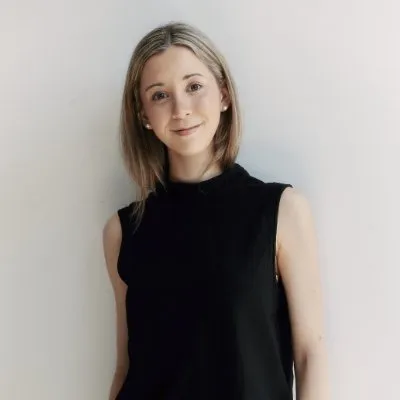
Brandes Woodall
Also Capital
Brandes brings a refreshingly candid perspective on what early-stage investors actually care about, and it might surprise you. When she opens a pitch deck, she scrolls straight to the team slide and almost nothing else. Not the market size, not the financials, not the roadmap. Just the team. For a fund like Also Capital that writes concentrated inception-stage checks, they are making a bet on a person before there is much else to bet on, and Brandes is clear that this is not just a cliche. She wants to be able to guess roughly what a company does just by reading the backgrounds on that slide.
On the fundraising process itself, Brandes drops one of the more honest reframes you will hear: you are never done fundraising. The mindset of "close this round so I can get back to building" is, in her view, a misunderstanding of how early-stage venture works entirely. Fundraising is a game of momentum, and if you stop, you start from scratch. The CEO's job, at its core, is to sell the vision, iterate, and sell it again. If that sounds exhausting to you, she says, it might be worth asking whether the founder path is the right one.
She also offers practical advice that does not get talked about enough: founders should be doing reference checks on investors too, not just the other way around. Talk to portfolio founders. Ask VCs how they pitch themselves to their own LPs. Find out who their LPs are. The investor-founder relationship is a 10-year commitment at minimum, and Brandes argues you owe it to yourself to vet that relationship just as rigorously as they are vetting you. That reciprocity, she says, is actually a green flag for funds like Also.
On what slide she actually looks at in your pitch deck
On why fundraising never really stops
On a question founders should be asking VCs but almost never do
On why all company failures trace back to the same root cause
Mat Vogels (00:11)
All right, everybody. Welcome to another episode of fundraising where we interview top early stage investors and funds to get all the information that you need as a fundraising founder to help raise your first round of capital. And today I am joined by the one and only I'm going to I'm going to sing your praises because they may not know your name today. But after this episode, hopefully more founders will.
Brandes from Also Capital is here with us today to give you the rundown on the entire fundraising process from start to finish. We'll cover both the introduction for the funds. You can get a better idea of what they are looking for and how to get your pitch deck in front of them. We'll also go through the three phases of the fundraising process, which again are getting in the room, crushing it once you're in the room and then closing the round.
and we'll cover all of those. All these questions were nominated and voted on by first time founders. We had hundreds of people go in and nominate these questions and then vote them up. So hopefully these are helpful to the founders in their fundraising journey. But let's start with a little bit of some introductions. I don't wanna take the wind out of your sails.
Brandes Woodall (01:20)
you
Awesome. Thanks, Matt, for the kind words. ⁓ This is going to be a fun one. So we're also capital. We're an early stage hard tech fund. write 500k to 2.5 million dollar inception checks, sectors like aerospace, defense, robotics, manufacturing, communications. But really, we're just backing talented people solving hard systems engineering problems, whatever form they take. We were founded in 2019 by Mike Enziata. He's a solo
Mat Vogels (01:24)
Mm-hmm.
Brandes Woodall (01:48)
GP
who sourced and seeded number of outliers including Radiant Nuclear, Varda, K2Space, Northwood and a few more that haven't been announced yet. And then I recently joined as the firm's first investment team hire and first full-time hire just a few months ago. So that's us.
Mat Vogels (02:08)
Yeah, let's jump in a little bit more about you. What were you doing before you became a VC or were you a VC before joining also Capital?
Brandes Woodall (02:17)
No, was not. Right before joining also, I worked on a really small research team where we wrote reports commissioned mostly by large hedge funds on companies that they were interested in. I would take calls with people who worked in the industry and ask them tons of questions, try to get up to speed from scratch. And then I would write up a report that tried to get at the core of what made the company or the market tick. And looking back, I learned a lot very quickly. I probably did.
25 or more of these over a year. And now I have some very niche knowledge about how certain corners of the world work. If you ask me about upstream oil and gas software or laundry route operators, environmental commodity trading platforms, I am your girl. So, and then before that in college, I interned at a growth equity fund in Dallas that did some really interesting deals across a.
Mat Vogels (02:53)
Hahaha
Brandes Woodall (03:06)
lot of different sectors. did Lovesac, the bean bag brand, Liquid Death, those waters that look like beer cans, but also a nuclear power plant outside of Atlanta and a bunch of other strategies. So yeah, that experience was an awesome one. Definitely helped me understand the people side of it and then also how later stage capital markets look and.
Mat Vogels (03:10)
yeah.
Of course.
Those all fit together. Yeah. Yeah.
Brandes Woodall (03:29)
So after both of those, I joined also as a scout and then officially full-time after the gauntlet of interviews in August.
Mat Vogels (03:36)
That's awesome. Well, congrats on that. You could say it's a niche road to get there, but I feel like a lot of VCs have very different roads to getting to where we are, which is what I think makes so many of us unique in the way that we will answer these questions and obviously work with founders.
A lot of times when we talk to founders, they don't feel like they have a good understanding of what it means to be a VC. So one of the questions that were voted on was, what is your favorite part about the job, about being a VC? And then what's your least favorite part about the job?
Brandes Woodall (04:07)
favorite part is probably talking to founders, sometimes in our portfolio, sometimes not during the early hiring. It's a really exciting moment when the culture starts to come together as you add a few to the team and they start to get off the ground.
My least favorite part, I mean, it has to be passing. It sucks. It's brutal to tell someone you can't help them on a vision they believe in deeply and it's part of the deal.
Mat Vogels (04:34)
It is, it's a, that'll be a very common answer that we get, it's like, yeah, you have to crush people's dreams for a living oftentimes, which isn't, which isn't fun. in a similar vein, what is something that founders don't and or should know about being a VC? So something about the job that you wish that more founders were aware of or understood.
Brandes Woodall (04:41)
awful.
Yeah, to some degree, part of the job is being a breakup artist. ⁓ When an investor says, it's not you, it's me, that is usually true. There's so many other layers to it. There's portfolio construction, timing, blah, blah, blah, but it does actually matter. Probably has a corollary to that.
Mat Vogels (04:58)
Hmm
Brandes Woodall (05:11)
the round size that investors might be suggesting for you is often based on their portfolio construction, not necessarily the amount of capital that will get you to the next milestone in six to 12 months. Those are probably just two things I didn't know until I started and didn't really know until I'd been through it a couple of times.
Mat Vogels (05:31)
Yeah. What are the areas or industries that you're personally excited about that you get excited when you see that pitch deck come through?
Brandes Woodall (05:39)
We've been spending a lot of time on robotics as have a lot of folks. And I think there's some new and exciting stuff around how that transformation plays out. There's just so many different approaches to building a company there. You can be an OEM, do you go full stack and you look like a tech enabled service provider.
The markets are really funny because there's no real end to how full stack you could go. At some point, it might make sense to just start buying up farms and then operate them entirely with a fleet of ag robots and the actual revenue generating product you put out is the crops. you're not even a robotics company anymore. You're just an orange farmer or something. And it's funny to have seen a couple people iterate through that loop.
To be more realistic, I do think the first places where robotics work is probably in the more acute labor shortage markets. Healthcare, probably one of the best examples right now. There's gonna be a huge physician shortage. There's a stat that says 75 % of it will be surgeons. And so if you're a rural hospital with one operating room and you know,
How do you attract a neurosurgeon? The answer is honestly probably that you don't. And so that's where things start to get interesting. One of our portfolio companies is 40 Surgical. They've built an actuator that can perform neurosurgery inside an MRI. And a surgeon can operate it remotely with total visibility. And that, think, is a big unlock. Whereas in most other parts of the labor market, humans are still pretty abundant, pretty cheap.
Mat Vogels (07:00)
my goodness.
Brandes Woodall (07:13)
higher performance than robots, those probably aren't your first initial markets for full stack robotics, at least not until we come way down the cost curve. That's probably more of an also capital answer. For me personally, if you've met me, you've probably heard this by now, I am very fascinated by railroads. I can talk a lot about the privatization of public goods, especially as it applies to rail.
Mat Vogels (07:36)
⁓ me too. ⁓ that's good. Yeah.
Yeah.
Brandes Woodall (07:42)
But it's an incredibly hard problem to solve with venture dollars. If someone out there has got something good though, I want to riff on it, so send it over. But that's definitely my personal interest.
Mat Vogels (07:54)
That's a good one. I have not heard that one. I'm also fascinated with rail and very often think.
What if we had earlier on invested more into that as an infrastructure? But those are great answers. Last one, kind of in the introduction phase, when folks or investors are thinking about, or sorry, founders are thinking about what type of investors they want to reach out to and talk about, what makes also capital unique and why should founders pick you is maybe the short way of saying that answer.
Brandes Woodall (08:21)
Hmm.
one of the main things founders should probably consider. It depends and I'm relatively new to this and most funds will tell you broadly the same things. If you really need a way to parse, I think you can look at it how much you matter to that investor somewhat quantitatively. For example, if...
We're asking why also is different. We only do about 15 companies per fund. So every check really matters to us. We're vetting the farm on you. The other part is that at inception, it's a 10 year relationship at least. So a lot of it comes down to trust and whether you genuinely like this investor as a person. And if you want them involved in your big vision, do you want them advocating for you? Do you think you'd want to call them when you have to make a tough decision?
I would say trust is the main thing. Do I think I can trust this person? And I think you find that out after a few conversations and getting to know each other.
Mat Vogels (09:17)
Yeah, think that it kind of goes into the next question of getting in the room. And if you are a founder that's just starting the fundraising process, you don't have the relationships, trying to find an investor that you feel you can trust because it is a long journey is certainly one of those metrics. If you're thinking of more of like somebody you'd find on like VC sheet or like a filtering database, is there some sort of a
a process that you would recommend for founders and pursuing and building their initial list of funds that they should reach out to? Is it geography? Should I be only reaching out to funds that are within my own city? Certainly stage and sector, all those things that are, are those things important or is there another layer that founders should be looking for in their, in their search?
Brandes Woodall (09:47)
you
Hmm.
I think stage and sector are important. If you have friends in your sort of founder community and they can recommend great investors to you, I think that's where I would go first. We're based in New York and most of our portfolio is out in LA, so I wouldn't say be too focused on geography. Ideally, you would get a warm intro or...
If that's not an easy path, send a very simple but thoughtful cold email that makes it clear why you're reaching out to that person in particular. See how much you can find out about them that's available without being a little crazy and see if you can go that route.
Fun fact, I actually got my job through a cold email. I sent one to Leo Polovetz at Humba Ventures who eventually introduced me to Mike. Leo's awesome. And then we invested in Northwood after Bridget sent Mike a cold Twitter DM. So cold absolutely works. You do have to do it really well and there's usually some element of serendipity. But if you can't find a warm route.
Mat Vogels (10:48)
Yeah, Leo's
Brandes Woodall (11:06)
Do your best to crush a cold outreach and try to be specific. Specific, clear, short.
Mat Vogels (11:12)
I that. I raised.
My first round of capital when I was a founder via a cold email, I think my guess is that a lot of founders would say that cold outreach was one of the biggest ways that if they didn't have the relationships was probably one of the biggest ways for them to do it. But it takes it's a volume game like any sales process. So don't send a handful and think you're good. It's probably quite a bit. Are there any things in particular during that phase or how can founders maybe stand out in that the initial outreach and the initial DMs?
Brandes Woodall (11:34)
Mm-hmm.
Mat Vogels (11:43)
mentioned short brief getting to the point. there other things that founders could do either in their pitch deck or in the email to stand out amongst the probably hundreds that you get it also?
Brandes Woodall (11:51)
you
Yeah, I think the goal is The goal of an email and of a pitch deck is to get on a call It's not to have me wanting to invest in the company ready to underwrite. I'm not underwriting your company based on a deck or an email The goal is to get on a call. So stay focused on getting on a call holding holding attention I think the best way to do that that would work for me Tell me the vision
I'm underwriting the terminal value, so make me excited about the big picture in the longer term. Ideally, it's something new, and it feels new. I think there's a very important distinction between different and new, and be new would be my advice.
Mat Vogels (12:34)
Yeah, I
like that. Yeah, you have to be unique without being almost overly so in a weird way. It's a kind of sometimes could be an awkward line to walk, but in a similar way, and we get hundreds of pitch decks a month. Is there a slide? You mentioned vision. That's going to be a common one. Is it the vision slide or what slide do you look for in the pitch deck itself that maybe stands out the most or that you look for?
Brandes Woodall (13:00)
There is only one, it's the team side. ⁓ I'm normally just scrolling through looking for that. I'm being completely honest. Don't pay attention to anything else until I've seen the team side.
Mat Vogels (13:01)
Wow, I love that, yeah.
Yeah.
Brandes Woodall (13:12)
Probably, yeah, I'd say almost 100 % team slide. I'm likely sending a screenshot of the team slide to Mike with no other context on anything else that we're doing. We make people bets.
Mat Vogels (13:17)
And why is that? Yeah.
Yeah, of course.
Brandes Woodall (13:25)
A lot can be changed, but the founding team can't. So ⁓ it's really the most important component.
Mat Vogels (13:29)
That's so true.
Is there anything on that slide in particular that you want founders to make sure that they articulate? Is it just a bunch of headshots or what are you looking for on that slide to make sure they stand out?
Brandes Woodall (13:41)
Some degree, I'd like to have some degree of clarity and see why this is what you want to work on. That should be somewhat obvious to me. I should be able to, without knowing the idea, guess at what it might be based solely on your background and the combined backgrounds of the team. Most of all, especially if you're slightly later, maybe seed. We don't see as many of those, but...
the caliber of people you've been able to bring around your vision and that's a pretty clear indicator that it's going to be something important, that people were willing to bet their careers, so I should probably pay attention. And finding a way to highlight that I think is pretty important.
Mat Vogels (14:19)
Yeah, and almost the faster that you can get to that as well. Although Bridget might break the mold a little bit on the Northwood side, ⁓ although obviously she had the education that would back everything up too. So similar, one of the questions, oddly enough, we got that was common, and I think founders probably get maybe some feedback in this area. On the pitch deck itself, how important is it that it is designed well, that it looks good? Is that actually something that VCs care about? Was a very common question that we got.
Brandes Woodall (14:25)
Hahaha
Hard one. ⁓ Being able to communicate your vision really well matters a lot, ideally in different mediums to different audiences. You're going to have to do it live in person. You're going to have to do it on a call to your team. Candidates you want to hire investors you want to fundraise from eventually to the press.
Mat Vogels (14:50)
Mm-hmm.
Brandes Woodall (15:09)
So yes, your ability to communicate as CEO is important and we're going to use every data point possible to get a read on that because the bet is that you can hire really well and raise a lot of money. So does the deck need to be pretty to show that? Maybe, maybe not. I think it depends pretty heavily on the company. If it's consumer, probably yes.
I think the general principle is effective communication is paramount. This is the first communication I'm receiving from you. Pretty and designed well are probably, there's probably a distinction between that. I'd like to have clarity. I'd like to know what the vision is. The formats that people are going to pay attention to probably varies a bit by sector, but.
Yeah, I think it's important to be an effective communicator and this is the first way you're going to be able to show that. So take the opportunity.
Mat Vogels (15:58)
That's a good answer. We look through pitches or decks that we invested in and there wasn't necessarily a correlation between, to your point, pretty versus designed well. Cause sometimes there's decks that are very, very pretty, but they're not designed well because the information transfers is not there. So you're exactly right. That's a great answer. So let's say that they, they knock it out of the park.
Brandes Woodall (16:12)
Yes.
Mat Vogels (16:18)
they get into the DMs and they're reaching out, they land the first meeting and they're going into it and they're about to meet with you. What are you looking for as you're stepping into that Zoom? What's a green flag trait that you're looking for in that initial meeting that gets you excited to invest?
Brandes Woodall (16:38)
Hmm, there's sort of two. The term hyperfluency has been thrown around a lot recently. I do really like it though. Being able to explain what you're doing in whatever terms will help me understand it. I understand I'm not an engineer, I'm not technical. I understand microgravity pharmaceutical manufacturing because of Will Brewe at Varta and I understand nuclear microreactors because of Doug Bernhauer at Radiant.
Mat Vogels (16:46)
and it's good.
Uh-huh.
Brandes Woodall (17:03)
At the same time, they can both speak to their engineers at a level that's 10 national odds higher. And I think the range really shows their clarity of vision. A few weeks ago, I actually read an old Arthur Rock interview that he did with the Computer Science Museum. I think he was getting a little older. It was towards the end of his career. And they asked him about his diligence process. And...
He said he would ask the same question in different ways over and over and see if the answer stayed consistent. I liked that one because if you really have an insight, the core is going to stay the same no matter what angle you take to poke at it. The answer, the core answer might not actually be a good answer in every context and in every angle that you take, but if there's a principle under it, it'll stay the same. And that's hard to judge and it's something I'm...
Mat Vogels (17:30)
Interesting.
Brandes Woodall (17:50)
working on. But and for that same reason, I really love a good metaphor. I think it's a similar ability to be able to extrapolate a principle across different contexts. Done right, obviously, I don't think like Palantir for X or Airbnb for X count. But those are probably some of my
Mat Vogels (18:06)
Yeah, no, it does help sometimes,
but yeah, I agree. What is the, is there a red flag that, that maybe pokes its head out during that initial conversation when you're just meeting a founder that gives you a little bit of uncertainty or even sends you completely running for the hills.
Brandes Woodall (18:22)
It's probably, for lack of a better word, hand waviness. There's a gray area around confidence and ego and then naivety and then there's like hand waviness. If you're pitching a really big vision.
Neither of us really knows how you're going to get there, and that's OK. But I think there's a line where answers stop being cooperative and exploratory, and they start being sort of evasive. I think it's great if you can treat every question as an opportunity to sort of think through the problem together and not as an attack on your credibility as the founder. think.
All of that kind of stems from the view of the investor founder relationship as a longer term partnership. And it's a repeat game, not a one shot game. Mike, our GP, also he has a few little one liners he throws around a lot that I try to keep in the back of my mind for some of these conversations when it gets a little rougher and it's have fun, play to win. And we're serious people who don't take ourselves too seriously. you know, it's about like, this is supposed to be a little bit fun. It's going to be hard. So you might as well.
Mat Vogels (19:20)
and all those are great.
Brandes Woodall (19:25)
have fun and it's okay to you know not take everything so seriously not take yourself so seriously.
Mat Vogels (19:31)
There was a quote that I remember hearing in high school. I think I might have been one of my basketball coaches and he used to say that life is too important to take seriously, which at the time I was like, that is ridiculous. It's like if it's important, you should take it seriously. But sometimes to your points there, you have to be a little fun with it or else it'll pass you by. So that's true. Oftentimes in that first meeting, I feel like as a VC, I'll end the call and I'll be like, I didn't get that piece of information or whatever it might be that I was maybe looking
Brandes Woodall (19:38)
Mm-hmm. ⁓
Mat Vogels (20:00)
for, is there something like that? mentioned the fluency or maybe the conviction from the founder. Is there anything that you feel like you kind of need proven by the end of that call so that the conversations could continue?
Brandes Woodall (20:12)
I think it depends so heavily on the, know, what it is they're building.
I, if I'm taking the call alone and I'm going to pass it to Mike and we'll take a second call together, I think the number one thing that's non-negotiable that would actually make him question my taste as an early hire on the investment team would be if I brought him someone who wasn't humble and kind. I think that would be one of the only things where it could be a real, he might look at me like, you know.
Mat Vogels (20:32)
Mm-hmm.
Brandes Woodall (20:43)
I think you've got it all wrong. Have I taught you nothing? So I need to know that.
Mat Vogels (20:45)
Ha ha.
So having that, that's a good one. Yeah,
that's good. Is there a question that you think founders should be asking in that first conversation? I think they get a lot of feedback to ask certain questions, almost like a job interview. Are there questions that you think founders should ask? Not even just personally that you wish they would ask, but that it's important in some cases for them to make sure they get before that meeting's over.
Brandes Woodall (21:02)
Mm-hmm.
Yeah, I think there's the basic list of what's your ticket size and sort of what do you do, but I do think that people forget that VCs fundraise too. And I think I would actually would love it if a founder asked how we pitch ourselves to LPs as just another angle into how we think.
Mat Vogels (21:29)
⁓ what a good one. Yeah, that's good.
Brandes Woodall (21:32)
What do you say when LPs ask why you're different from every other pre-seed or seed fund? Like turn it back on us and say like, why do you have a right to exist? Because, you know, I take our first founder calls, but I've also started taking some of our first calls with new LPs. And I think it's helped me have a lot of empathy for founders in the fundraising and the rejection process is tough. But also having to articulate what we do and what makes us different.
why people are giving us money. And I think we talk a lot about why people are taking it from the other founders' perspective. But there's actually someone on the other end of the equation. And especially with all the recent news, think maybe even asking who are your LPs could be a good question. But ours are all great.
Mat Vogels (22:12)
That's true. That's absolutely right. That's a good one. wish
I think it's a good question for founders to have a good understanding, especially if they have a hot deal and we'll cover that in the next round here. But it's important to get to know the VCs. So that way when you're making a selection, if you get to that point, it's good to know everything that you can.
So let's say that we're getting close to the end of this phase of crushing that initial meeting. Is there a common mistake that you see founders make during that phase? So it could be the first meeting. could be maybe the email chain after, is there a common mistake that you see founders make during the first phase? Essentially the phase before you as a fund have got the conviction and are moving forward with you know, check size and wiring and all that.
Brandes Woodall (22:49)
Mm-hmm.
Something I've heard people say a couple times is, I'm excited to get this raise closed so then I can be sort of done fundraising and start building. And I think that mindset is...
indicative of sort of a misunderstanding of how fundraising works in early stage venture, in early stage venture businesses. I think some founders believe you fundraise, then you pause and build, and then you fundraise again, but in reality, you're always fundraising. It's a game of momentum, so you can't really just stop and then start again. You'll start from scratch. So...
To some degree, the ultimate job of the CEO is to sell the vision, iterate on the vision, and then sell it again. So everyone hates rejection, me probably most of all. But if you really hate fundraising, I think this could be a difficult job for you. And I think that's something to consider.
Mat Vogels (23:52)
That is a great answer. I've done dozens of these and I haven't heard anyone articulate it that way because I think you're exactly right. I think if you look at the fundraising process as...
a negative, a thorn in your side, something you just have to do, which might be true. But if you don't treat it as something that is obviously vital to your existence and the relationships that you're going to build here, I a lot of founders don't realize you mentioned the 10 year relationship earlier. It's a long time. And I think that founders sometimes will just take the money for money's sake. And obviously money is important and that's why you're doing this. But if you treat it as just the unwanted thing that you just kind of have to do.
A lot of mistakes could probably happen there. So that's a, that's a great answer. So you've crushed the initial meeting. You have conviction also is ready to, to write a check. Can you explain a little bit of what maybe that diligence process looks like? It also where you're, you're excited to go, but obviously you need to get some questions answered. What does that process look like for a, for you and also.
Brandes Woodall (24:32)
Yeah, absolutely.
But yeah, I'll be honest, a lot of referencing, probably more than you expect, which is a little bit why it's helpful to come through a warm intro. Yeah, I'm not really sure you can prepare for that in the short term. If we're doing it right, it'll measure.
how you've conducted yourself over more of a longer term. So that's most of our process really, especially because we're so focused on the leadership qualities. if we can get a read on those, it's pretty good.
Mat Vogels (25:20)
Who are you typically getting references from? it customers? Is it the professors that they used to have or ex bosses, all the above?
Brandes Woodall (25:27)
Typically, it's not customers because they don't have them yet. We like to invest in inception, typically no customers. I'd say rarely professors. Mike's talked about this a couple of times. We rarely have done PhD founders or academics generally.
nothing against them, all wonderful people. We have done a few who we love very, very much. But just because of that, I think our sectors tend to be a little bit more systems engineering focused, which typically means that people have some sort of background in engineering a system, which typically occurs in a more of a corporate setting. we ideally like to talk to people who've worked both over, under.
adjacent to, next to, and the question we're really asking is would you come work for this person again? We'll often ask their boss, would you work for them? Which always elicits an interesting answer. Ideally these would be people in our network. Ideally you would be two to three nodes away from our network so that we can kind of get more of a high trust answer on those questions. Which is...
hints why the worm intro does make it just a bit easier. But, and I think that's true for a good number of firms, if that's the way they're going about it, especially.
Mat Vogels (26:41)
Is there a, are you typically the first investor in or are there oftentimes other investors and then do you work together during that process and like a co-diligence factor?
Brandes Woodall (26:50)
We are not afraid to be the only investor on the cap table. It's a good time. But yeah, we like to be cooperative. I'd say we like to come to conviction on our own and be pretty independent in that, especially if we are running so concentrated. I think it's pretty important that we establish that for each investment that we make. And then there are a few people who I think underwrite Mike's level of conviction.
Mat Vogels (26:53)
awesome.
Brandes Woodall (27:13)
as part of their diligence. And so we'll be collaborative and it's also useful in the later stages. I think we have some good relationships with later stage capital who will ask us who we talk to in our diligence process and it can sort of speed things up for them to just get a lot of that done upfront.
Mat Vogels (27:29)
I love it. What is a common mistake that you see founders make during the diligence process that they should be aware of and not do?
Brandes Woodall (27:37)
Hmm.
don't know. That's a harder one because I wouldn't say our diligence process is super interactive. Probably being unresponsive makes it harder. You know, be easy to work with.
Mat Vogels (27:48)
You know,
that's it's honestly, it's a common one. We see this all the time where there's a founder that we're excited about. They seem excited. And then for lack of a better term, they kind of ghost a little bit for like, even if it's a week or so, cause these move very quickly. And if you leave for a week and there's no response, then they come back and it's as if nothing happened. It's like, Hey, sorry, you know, and maybe that's true, but I agree and unresponsiveness can sometimes trigger a negative or a red flag. So being responsive is important.
Brandes Woodall (28:18)
You can almost always tell when founders have had, you know, have a relationship with someone who's had a bad experience with VCs or investors and they sort of are hesitant to build a relationship with you. And that's always hard for us too, because we are so trust-based and we need you to trust us as much as we need to trust you. so reference us back would be probably.
Mat Vogels (28:29)
Mm-hmm.
Brandes Woodall (28:39)
the advice I would give. Talk to founders in our portfolio and hear their experiences. Don't take our word for it. We actually also like this a lot when it comes back through the grapevine. It shows you're serious and thoughtful and you understand that this is a long-term partnership. so...
Mat Vogels (28:39)
Yeah.
Brandes Woodall (28:56)
I think that's a huge green flag. If you don't do it, it's not a red flag. But if you're asking those same people that we're asking about you about us and it gets back to us, we're happy about that.
Mat Vogels (29:11)
I like that. It's kind of the last question of this, this round where good deals, good founders will sometimes get to being oversubscribed, which sounds like a great problem to have. And founders go like, I wish that was a problem that I had, but when you do have it, it does suck. It sucks. Cause you do have to kind of now start to say no to VCs.
You mentioned reference checks that founders can make on behalf of the fund. Are there other things that they should be weighing as options if they have multiple options and not even just for also, but as they're thinking about who goes on their cap table, is there any advice that you would give founders in a position that are having to almost make decisions on who to leave in and who to leave out?
Brandes Woodall (29:50)
Yeah, I think it's important to be really thoughtful about who fits well into your vision and who you want behind you. Don't always take the highest bidder. Sometimes it's the right decision. Sometimes it might not be. But I think really going through and seeing what value you think those people bring and...
Verifying that that value is true. Don't take their word for it. Don't take our word for it. Go ask around. We're happy to have you trust but verify. ⁓ We'll do the same.
Mat Vogels (30:16)
Yeah. Yeah.
The common advice we hear experienced founders telling younger founders is don't logo chase or no chasing logos because the tier ones and big logos, it is great to have them on a cap table, but it shouldn't be the only reason that you are letting them on your cap table.
Brandes Woodall (30:32)
Well, it can depend. mean, some of them earned that logo and I wouldn't blanket say to turn people away because their brand is good. I think you might be shooting yourself in the foot. Yes, of course. Find out why they've earned their reputation and yeah.
Mat Vogels (30:42)
Absolutely, no, exactly not. Yep, but that can't be the only reason why you are accepting them. Although, yeah, I agree. There's some... Exactly. Exactly.
Perfect. All right, the round is closed. Congratulations founders. You've raised your first round of capital. What should founders think of the relationships? Let's start with also right after the raise. What does that relationship look like with you?
Brandes Woodall (31:00)
You
Yeah, we like to say we can write a check and get out of the way, or we can sit around the table and we're fine doing either one.
That said, I haven't really seen any one of our founders ask us to get out of the way. So the core promise that Mike makes is, and me too now, that if you call, we're picking up the phone and we're not gonna be the one that hangs up. So any hour of the night, you can give Mike a call and he's going to answer. It does sound pretty basic, but I think you would be surprised.
that that can be a little bit more rare. And we like to under-promise over-deliver, and that's what we can guarantee. So we will pick up the phone. I think the way our relationships have worked has come as a byproduct of investing in people that we trust and we genuinely like. So people who are humble and kind and who we hope like us back. And so...
with a concentrated portfolio also, we actually have time for them. And those two things combined, they end up being pretty positive and unique and often somewhat personal relationships. that's how ours have gone. Not sure about many others.
Mat Vogels (32:15)
Yeah, it can vary, but I think that's a common one of wanting to be the first call. I know that I feel like lot of founders would look at it as not just will they answer, but wanting to make the call. Like if you have somebody on your cap table that you feel comfortable calling them at any time of night, that shows that there's a strong relationship there, which is great.
Is there a mistake that you see founders make right after they close and like the earlier months after they get capital that not that there's always a right and wrong way, but is the and there's obviously a lot of middle ground. But is there any advice you would give to founders on after they've just closed their round on things they should be aware of mistakes they could fall into?
Brandes Woodall (32:34)
Absolutely.
I think it ties back into what we were saying earlier, but probably...
Either going totally dark, we're just investors and it's your company, so it does make it harder for us to help, especially in some of the more intangible ways that earlier first-time founders might not recognize, and I certainly did not recognize investors were helping. We can sort of buffer or blind you from the market a little bit, pick up references on a higher, gather some feedback on an idea, pressure test something quietly.
We're not afraid to look crazy on Twitter for you. Well, candidly, am afraid to look crazy on Twitter, but I'm getting over it slowly with some help. But that'd be the first one. Probably the second one is not having a clear idea of what the milestone is.
Mat Vogels (33:28)
That's a good t-shirt by the way. should put that. That's great.
Brandes Woodall (33:41)
that unlocks your next race and sort of the sequence of milestones towards that big vision. Generally, it doesn't have to be exact, but know, Elon at SpaceX has a, you know, 100 step plan or whatever it is to get to Mars. Doug Bernhauer at Radian, I don't know how much he's talked about it, but had a year by year plan culminating in testing the reactor in 2026.
That was in 2020, it's now 2026 and he's planning to test the reactor in June. So there's sort of, and he's hit every step along the way and they've been to some degree general, but it's having your milestones set. But more importantly than that even is setting up the actions that you do before that raise and the messaging that you send to your investors to point towards that milestone and show.
how you're progressing along towards achieving it. So whatever that is, often for us in these inception checks, what we really want to see is you hire a great team around your vision. And so sort of centering around that, it's just less useful to track progress based on traction that we can't fully understand or really underwrite yet. What I'd like to see is like, what's your hiring plan? Who are you talking to?
What are you looking for? What have you found? Who have you hired so far? And having that in the updates and the communication to point towards whatever that next milestone is can be really useful when you go back out to eventually raise and all of your investors, you when their friends who are doing the later stage rounds give them a call, really what they can say is they said that they were going to hire five incredible people by the time they raise the next round and here are five incredible people.
They said they were going to do it, they did it. I don't know what else you want. That's a very easy answer to be able to give. And so the more you can help do that and sort of set that up, the better. Just for people to be able to talk about you in the market and keep your momentum up.
Mat Vogels (35:28)
Agreed.
Do you have a cadence of what you see founders on on some of those updates? it monthly, quarterly? I've heard some folks say weekly, which sounds like a horrible idea, but is there a cadence that you feel works well that founders should maybe aim for?
Brandes Woodall (35:45)
We have one company that we have a group chat with them and they send us pictures all the time and just kind of text us and we just like know what's going on and it's yeah, it's like it's super fun. I don't think that they view it as updates. I don't know. I don't really view it as an update. I view it more as like a relationship and we really enjoy like so we kind of just know what's going on and they probably send an update like a formal update once every six months. We have other companies that
Mat Vogels (35:51)
That's cool. I love it. Yeah, the ongoing. Yeah.
you
Yeah. ⁓
Brandes Woodall (36:09)
don't do that and they send a monthly update and that's just as helpful and the relationship is very strong and we have some that send quarterly. I think it varies so much and it's about what's right for you. We wanna have the right relationship with the founder and so it's sort of on them to set and to determine what works for them. I don't think we really want you writing.
It shouldn't get in the way of doing, updating, but it's important.
Mat Vogels (36:39)
No, I like that. Hopefully you haven't necessarily seen firsthand a lot of companies not make it, but it's obviously the vast majority of companies will not make it. Even in the circles that you're in, and obviously you heard a lot of stories, is there any common reason that you've seen companies fail, not make it to the finish line that founders can start looking for in the early days?
Brandes Woodall (36:43)
Hahaha
I can't say I've seen a big failure. But from what I've heard, I think it still comes down to trust issues are sort of the common theme. Co-founder breakups, investor relationship problems, internal misalignment of some kind. Biggest lesson I've learned this year is all problems are relationship problems.
Mat Vogels (37:02)
Mm-hmm.
Brandes Woodall (37:22)
Mike actually sends out a book to our founders called The Courage to Be Disliked. He sent it to me when I joined the team. And I think it's an important one for them to read as they start out on the journey. We get a couple of texts occasionally.
Mat Vogels (37:27)
Hmm
Brandes Woodall (37:39)
from founders who read it a bit later, we'll give it to them at their pre-seed round and they'll read it around the series A. And they're like, if I'd read this book earlier, would have, I feel like it would have solved a lot of problems for me. It has some great advice in there. But it's really, I think all problems are relationship problems. And I think that's something that I'll live by. I think it's something Mike lives by. it just often ends up being true.
Mat Vogels (38:01)
That's a pretty good way to wrap it up. Thank you so much for giving all this advice. There was a lot of great nuggets in there that we will make sure that we surface and pull out. Is there any last thoughts on where founders can find you or interact with you and the team? How should they get in touch or follow along with what you're doing?
Brandes Woodall (38:20)
Yeah, we're pretty active on Twitter, LinkedIn. We have a weekly blog that we put out and then you can send me an email, brandice at also capital dot com.
Mat Vogels (38:30)
Awesome. Thank you so much and we'll be in touch soon. Yeah, have a good one.
Brandes Woodall (38:34)
Thank you, Matt, this was fun.
You too, bye.
Mat Vogels (38:39)
Bye.


























.jpeg)