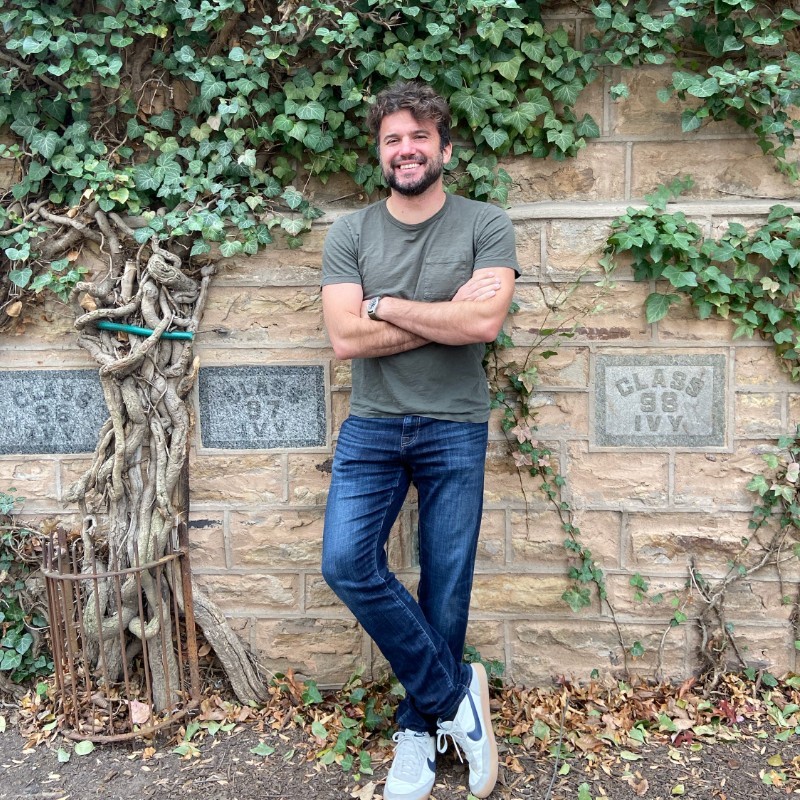
Jacob Jackson
Julian Capital
Jacob comes at fundraising from an unusually operator-heavy angle. Julian Capital is staffed entirely by ex-growth people (Julian himself ran growth at multiple billion-dollar companies), and they don't just write checks. They embed with portfolio companies on growth, design, branding, and storytelling. On top of that, Jacob runs DeepChecks, which the team describes as the world's largest fundraising platform for deep tech, built to match founders with the specific investors who actually fund their sub-sector and stage. That gives him a rare dual perspective: he sees both the supply side (thousands of founder pitches) and the demand side (the full universe of deep tech VCs) of the market.
The throughline of his advice is that fundraising should look more like a sprint than a marathon. He pushes founders to "measure twice, cut once" by building a full investor list, prioritizing it, getting practice reps with lower-priority funds first, and then running a tightly time-boxed process (2 to 3 weeks if you're experienced, a couple of months max for first-timers). He's blunt about why a six-month raise is a yellow flag, why every email and deck gets unconsciously graded as a proxy for how well you'll run the company, and why "velocity" (speed plus direction) matters more than raw effort. He also reframes the first investor call: by the time you're on the call, the idea has already passed. The investor is now evaluating whether you're the right founder for that idea.
The episode gets especially tactical in the back half. Jacob lays out a concrete tranching strategy where the first million comes in at a lower valuation, the next at a higher one, and so on, rewarding early conviction and avoiding the "land the plane" problem of trying to close everyone at one cap. He's refreshingly direct about why founders over-index on valuation, what to do with the cash the day it lands (pre-plan your hires, use grants and financing for equipment, don't burn equity dollars on things you could rent), and why monthly investor updates with a consistent template often turn into next-round preempts. It's a useful playbook for any deep tech founder thinking about how to prep, run, and survive after a round.
On tranching the round to build momentum and avoid stalling out
On why fundraising quality is a proxy for company quality
On why founders shouldn't optimize for the highest valuation
On why speed alone is not enough for founders
On why a six-month fundraise is a red flag
Mat Vogels (00:10)
Hey everybody, welcome to another episode of fundraising, podcast where we interview early stage investors and ask them all the questions that you as a fundraising founder need to know to raise a successful round. And today have a very special guest, Jacob Jackson, investor at Julian capital, principal of Julian capital, and then also the general manager at
Deep Checks, which is an incredible platform that we will certainly dive into today. Jacob, thank you for being on. Could you give us a high level background about both Julian Capital and Deep Checks before we get into it?
Jacob (00:50)
Absolutely. Well, hey Matt, super excited to be here. Julian Capital is a pre-seed and seed stage deep tech fund. We invest across all categories of deep tech, everything from bio to robotics, materials, aerospace, energy, all kinds of different things. When we invest, we get super involved with the companies that we invest in. So we help with growth and design.
We're all ex-growth people, so that's what we did before we became investors. And Julian ran growth for a couple of billion dollar companies. So he spends like a really good chunk of his time embedded in the teams of the companies that we invest in to help them grow. We also build beautiful websites, stories. We do copy. We do brands and logos, and we help our companies tell the best possible story that they can about what they're building and why it's important.
So that's Julian Capital. We invest around a million dollars in companies when we back them. yeah. And then on the DeepCheck side, it's one of the products that we build. we're not just investors. We build products at Julian Capital as well. And one of those is DeepChecks, which is now the world's largest fundraising platform for deep tech companies. So we connect founders who honestly have a pretty hard time in deep tech.
looking for and filtering through which investors are the ones that they should be reaching out to that would actually back them at their stage and in the technology sector that they're building in. And so that's what DeepCheck does is it like solves that matching problem, connects the founders with all of the investors that invest in their niche and stage at the same time so that they can accelerate their fundraisers and get back to building.
Mat Vogels (02:26)
I love that. You mentioned kind of two big pieces there, the drilling capital side.
with the marketing, branding, storytelling. It's one of the things that, you know, at Harpoon we see all the time as well. You have incredible founders. They're hyper technical and so smart. But when you're so into the weeds and building something that's so complicated, it can be very hard to tell the story, especially in the fundraising process. So having a fund that are experts in that can go such a long way. And then you mentioned on the on the deep check side, you're exactly right. I think the problem with deep tech still is that it's still so broad.
so
many specific sectors and industries. And a lot of times you'll have an investor that is a deep tech investor, but that may not mean that they are hyper focused on bio or energy. And if you can create a platform that can help those companies in those specific areas, find the right deep tech investor that can go a long way. bravo and everything you guys are doing there, obviously a huge fan on my side. Let's go into some.
Jacob (03:24)
And you're a huge part of helping us
build it, Matt. Don't sell yourself short.
Mat Vogels (03:27)
I appreciate that.
Let's go into some of the questions that we had from an individual level. So these are questions that founders wanted us to ask the VCs before going into the fundraising process itself. Could we talk a little bit about why you chose to be a VC? mentioned you were doing growth before, you have an operating experience before. Why go into VC?
Jacob (03:47)
Yeah, great question. I started in deep tech. I was actually working on MRI imaging. We were building new techniques to image different parts of the brain better. And then I got sucked into the software world in my second company and then became a revenue leader, a CRO at a software company, helping with the run the sales marketing and customer success teams.
But then in building that second company, I realized that, you know, my skillset is most in a finding and evaluating where great companies are going to come from and then helping incredible founders to build their dream. And so there was no better way to do that than to be an investor, to filter through, find the best companies and then support them in their vision.
And so I started angel investing and backed a whole bunch of founders, helped them really closely. And then I met Julian and, came full circle back to deep tech, which is just the perfect connection of everything I've loved in my life. And so, yeah, I've really, really enjoyed being an investor here at Julian capital.
Mat Vogels (04:50)
Yeah, it's one of the coolest jobs that we get to do for sure. What is your favorite part about the job and then what is your least favorite part about the job and being a VC?
Jacob (05:01)
The
best part is hands down, just spending my day with founders. They are the highest energy people in the world. They are building towards a future that they see that nobody else sees. And I get to share in those vision, in their vision, which is, yeah, just such a pleasure and a privilege. So hands down, best part, working closely with founders, getting a glimpse into the future. The worst part is,
There's not too many things that I dislike about the job, but obviously the worst is we look at thousands of companies every year and can only make, you know, on the order of 10 investments. And so there's a lot of companies that we can't invest in, even though we really, if we could do a lot more investments, there would be a lot more companies we'd love to back. But since we only have a few, we have to be really, really picky. And so, yeah, we don't get to work with a lot of companies and that's probably the worst part.
Mat Vogels (05:52)
You hinted at one of the biggest misunderstandings I think founders have with VCs is just how many companies we see versus how many companies we can invest in. Are there any other unique insights in like the life of a VC that maybe you wish founders had a better understanding of a relationship with?
Jacob (06:09)
Yeah. I there's, there's a, important thing about investing is that it has to be a fit with the fund structure as well. So sometimes we actually see really great founders, really great ideas. We know they're going to be successful. actually this happened to me just this week, but the size of the opportunity isn't necessarily big enough to fit into the broader portfolio of what we're trying to build as a fund. And so while they
Mat Vogels (06:18)
it should.
Jacob (06:37)
would return capital to us very, very likely. It could be a great investment on its own. It doesn't match the risk profile and outcome size that we're looking for to match everything else in the portfolio.
Mat Vogels (06:51)
Yeah, I think founders often take, you know, a no or a rejection almost more personally where it's like, well, I'm not good enough. Our company is not big enough, but you're right. There's so many times where it's just not a fit for that particular fund. Maybe they invested in something very similar in that industry and they need to diversify. There's so many reasons why we say we say no. Last question on this particular segment before we get into the fundraising process, you already mentioned some of these, but
What are some of the specific areas that you are excited about right now that you want more applications for, you wanna see more people spending time in?
Jacob (07:31)
It's interesting. The last time somebody asked me this question, I had an answer of a problem space that I've been really looking for a company to tackle. And that was the the maritime choke points in terms of shipping goods around the world. There are only a few ports on the West Coast that that process cargo and.
there's a few more on the East Coast, they're definitely choke points run by unions. And if goods can't get through these ports, then we just don't get goods. In addition to that, there's tremendous overpricing of that choke point such that we pay more for all of the goods that we get and we don't need to. So I've been for a couple of years now, that's been like my go-to answer for that question, but we actually found a company.
in the past couple of weeks and we backed them and we're super excited about it. So I don't know if that answers your question, but that is still a problem. There's not that not one company is going to solve. And we as a fund are not really thesis driven investors. We are agnostic and we're waiting for founders to bring us great ideas. And then we filter through volume of ideas for the best ones. We think the founders are going to be far better at
Mat Vogels (08:26)
Yeah.
Jacob (08:46)
coming up with the problems to solve than we are. And so we just wait and pay attention and listen to them so that we can back the right ones.
Mat Vogels (08:54)
Why should founders pick Julian capital to be on their cap table? You already mentioned a little bit on the growth side. You can double down on that, but any other reasons why founders should have Julian capital on their cap table.
Jacob (09:09)
Yeah. I mean, we actually are, uh, all founders, previous founders and love operating and building. Like we are still building in as a venture fund. And so we actually want to get involved and help on a daily basis. It's not, it's not that like, you know, we promise it and have to do it, but it's literally something we enjoy doing. And so we try not to ever get in the way of the founders, but we are there to help.
on literally a weekly basis. And we have, you know, an open Slack channel with every, with every company that we invest in. We help with fundraising every year or two when they go out, we help with growth and design. We have the largest network in deep tech because of deep checks for both investors. we literally know every deep tech investor because of deep checks. And so what we can make the introductions that a founder needs for current and future fundraising.
But we also know most founders in the space because they've come through deep checks at some point. And so if a company in our portfolio needs an introduction to another company or is looking to hire a very specialized type of technical talent or needs to uncover a specific supplier that they need or all kinds of different things, we can leverage the community that deep checks has built to get to that person or answer a question.
by talking to experts that most funds can't really do. these are the ways that we help companies and we love doing it.
Mat Vogels (10:37)
huge.
Yep, I love it. All right.
Now into the fundraising process, we break it up into three different parts. The first is how can folks, especially a lot of folks listening, they've never started a company. They don't have a big Rolodex. How do they actually get their pitch in front of the right investors? That's step one. Step two, after they've done that, typically the first step is that initial meeting with an investor or fund. We want to give them some advice on how they can actually crush that meeting and then continue into the fundraising process. The last phase of the fundraising process is kind of everything after that. You line up a bunch of initial meetings and then
there's the herding cats and everything that goes into closing out your round. So we'll go into each of those three phases, starting with how can founders get in front of the right investors and that kind of starts with their own doing their own homework. We see a lot of founders that make this list, they build up their CRM. You mentioned this is a superpower on the deep check side, but what should founders be looking for when picking the right investor stage focus, all these things? What's some advice?
give founders and picking the right investors before they even start the outreach process.
Jacob (11:44)
Yeah, I think that's super important that they do that because I think a lot of founders treat it more like it is a lot like sales in many ways. But the one way it's not like sales is that when you're selling for your startup, you just go out and try and talk to customers immediately and you slowly build on that. With fundraising, you actually have to measure twice cut once and you have to like prepare for the fundraise before you start fundraising.
And cause you can't, you have to do it all in a, in a, defined period of time to be most successful. So to answer your question, build a list of all of the investors that invest in your niche stage, whether that's using something like vc sheet.com at, or, or, or other crunch base or things like that to find all the companies, the funds that could be a match. then
Prioritize them in terms of who could lead who would follow who do you want to actually? fundraise from and then maybe start with people that You don't necessarily care to fundraise from because then you can get a few practice reps in right before you actually kick off your fundraise and don't want to blow those first important meetings, so Once you have all that then plan the time frame that you're going to aim to fundraise in and make that very clear to all of the investors that you're
that you're out to that you're planning to close by X date and give yourself a little bit of buffer, but go after everyone at the exact same time and just clear everything else. If you're the one fundraising on the team, clear everything else. Don't try to, you know, build product and sell and all this stuff at the same time. Just say for these three weeks or whatever the period is, I'm all in on fundraising and I'm going to fill my calendar morning to night with investor meetings.
And that's how you're gonna be most successful.
Mat Vogels (13:29)
Couple of quick follow-up questions on that. Is there a timeline that you think founders should kind of aim for? it 10 months, 10 weeks, two weeks? What is that kind of look? Obviously it'll differ from a lot of factors.
Jacob (13:39)
Yeah.
I think it differs on a few levels like have you done this before? If you've done it before, you could probably do it in two or three weeks. If this is your first time fundraising and you didn't work at SpaceX or Tesla and you don't already have a deep network of investors or friends that have raised that can help you or you're not coming out of Y Combinator or something like that that helps you accelerate the fundraise, then it probably is going to take more than a few weeks.
And so maybe a couple of months at most, but you definitely do not want this to be a six month process at the precedence seed stage or else you will never get enough momentum with enough investors at the same time to actually make it work. And you also don't want to start this process until you have some exciting milestone accomplished that you can then raise on the back of.
That's really important.
Mat Vogels (14:33)
Why is momentum so important? Why is six months from an investor's side, and I know the answer to this, but for a lot of founders that maybe don't understand that, why is momentum such a good indicator? Why is it a negative if you're a VC meeting a founder that's been raising for six months?
Jacob (14:50)
This is an annoying answer to founders, but it's the truth. If you take six months to fundraise, then investors are going to be concerned about how you're going to be able to raise the next round. If you're not good at fundraising, then their capital is at risk because in startup land, you need to keep raising successive rounds of funding. And if you can't raise the next one, then the dollars put in now go to zero.
And so that's just the most important reason that if you can't fundraise now, are you going to be able to fundraise later? And then that's the biggest risk that the investors are taking on.
Mat Vogels (15:28)
Yeah, and it kind of shows that, you know, there's maybe no demand there because we see rounds all the time that close in a week, sometimes days. And so when we see something that's been going for six months, it could be a red flag for the founder or the business or the market and all these things, which is, agree, it's unfair, but oftentimes is the truth.
Jacob (15:43)
And it's not always
guaranteed that it's a bad thing. Like sometimes you could be great at fundraising, but the whole space is being ignored for whatever reason. And you're just a little bit early or you're creating the new category and people haven't built their mental models around it yet. But more often than not, it's at least a yellow flag.
Mat Vogels (15:48)
Totally.
What are some of the better ways that you see founders getting their pitch in front of VCs? Obviously, deep checks is a big solution for that, for founders to be able to do it quickly. What are some of the other ways that you would recommend founders try to get their pitch deck or their memos in front of VCs?
Jacob (16:20)
You have to use your network as much as possible. If you're not going to go through an accelerator, you're not going to do a demo day or something like that, then to actually go directly to investors, you have to use your network. So create an Excel sheet or a Google sheet with all the investors that we, you that you've already decided are good fit and then ask everyone in your network who they know to put their name next to that, that investor.
And don't tell them to make the intro yet, but fill that list out, get it full. And then at the same time, ask everyone to make that warm intro and within a couple of day periods so that you can kick everything off. And then that's the reach outs. And then also, build your calendar booking. That's all in the same week or two as well for those first meetings. So that you're kind of starting all the horses at the same starting line.
Mat Vogels (17:09)
Yeah. Is there anything in those, those outreaches, like when you get them and maybe it's, the, the blurb in the email, maybe it's, just go right into the pitch deck itself. What are some of those things that you need as an investor that kind of gets that hook in that gets you excited very quickly? Cause you're, mentioned this earlier saying thousands of pitches a year. There has to be something that you get pulled in on really quickly. What is that thing? How can founders add that hook at the beginning for you?
Jacob (17:37)
We, because we see thousands of decks a year, we see the same ideas over and over again. and so the number one way to get people's attention is something new. If it's an idea that we've never seen before, then I'm, immediately perk up and want to go deep. So that's the first thing. even if it's something that other people are trying, something new could be the novel insight that you've had or the way that you're going to tackle it differently.
than everyone else. So put that right up at the top because something novel is super important. Then I would say, I think people underestimate how important quality is in these little interactions. And so, um, if an investor only has a couple of weeks to decide on a company, they're not going to be able to see a lot of longitudinal data on the founder. And so they have to take into account the little things. How well was their email written? Did they put?
details in that and communicate very clearly is the deck well done? Is the deck clear, well organized? Did they put a little bit of effort into making it nice? These things actually do matter more than they should because it's all investors have to go on. And so make sure every email you send is high quality. The deck is high quality and you move quickly through the process because if you let
something, if you respond to an email five days later, then that's evidence to the investor that you don't move quickly. and so you're not moving quickly in your email, you're probably not moving quickly in building the company and speed is the most important thing.
Mat Vogels (19:13)
Yeah, it really is. Are there any particular slides or pieces of a pitch deck that, I mean, maybe A, that you need to see and are upset or you won't move forward if you don't see it. And then if there are some of those slides, could you give some advice on how founders can really make those slides stand out? You already mentioned the differentiating factors for them. Any other slides or things that you look for when you're looking at those decks for the first time?
Jacob (19:37)
I think it's really important that the founder understands what are the important things for that business. So if your business is, you know, we're the only people in the world that can build this technology, then first slide should be the team, you know, because that's, that's the most important thing. And that's what we're investing in. If you're unknown and you have no relevant background, but you've
Despite that you've been able to get incredible traction with customers then put the traction first because that's the most important thing and that's what we'd be investing in. So there's no one one size fits all answer to this but the answer is what is it that makes you unique and plaster that up at the top of the deck and if next to the novel insight or the thing that you're doing differently or you know that hooks everybody then
you should then they should start reading the full deck.
Mat Vogels (20:30)
Any mistakes or pitfalls or even just high level advice that you want to give founders before we go into the initial meeting phase on everything before that on the research side, the pitch deck side, the outreach side, any big mistakes or things there.
Jacob (20:44)
Other than what I already mentioned on quality, I think another, and then also the slow roll fundraise, which is a huge mistake.
I think a mistake that people make is fundraising just because you need money at that time or, because you know, it's, it's what you think you should be doing and not fundraising because you actually need that money to accomplish something. VCs really actually care about that because they don't want to just fund payroll for another year.
They want to fund you to get to the next important milestone such that there's an increase in the valuation of the company and you've de-risked the business further such that it's more likely to succeed. And so don't say, oh, we're fundraising for another 18 months of runway. Say, we just accomplished this. We've now increased the value of our company. And now the next big swing we're taking is X, Y, Z. And we need
$3 million to do that. And if you guys help us get there, then we're going to be worth five times as much next year if we accomplish that. And that's what VCs want to see.
Mat Vogels (21:56)
I like that. And to paint the picture and lay it all out can be a really helpful thing as well. Okay, so let's say they've done all this advice. They've landed some good initial meetings. Can you explain what things you are looking for as an investor at Julian Capital? What are you looking for in that initial meeting with the founder?
Jacob (22:15)
The first call for us is to really understand if this is a really good founder, because we've already seen the idea in the deck. only taking the call because we like the idea, the insight, the traction, whatever got us interested. But now this first call is to really understand if this is the founder for this business. And so we spend a lot of time on that first call trying to understand if the founder has
gone through the idea maze fully on what this company is, what they need to do to make it successful, what are all the ways that it could fail, what are the ways that they're going to de-risk those failure modes, who they need to compliment them in order to make this business a success, where are their gaps. So yeah, we spend a lot of time just getting to know the founder and how well they've thought through the idea and the company that they're going after.
Mat Vogels (23:07)
That's interesting advice because I feel like a lot of founders still go into the initial meeting as still needing to convince the investor that the idea itself is great. And we've heard this a lot of times on this on the show where a lot of VCs, they're taking the meeting because they already like the idea and they actually just want to see if this is the right team to to do that.
Jacob (23:26)
100%. Yep,
100%.
Mat Vogels (23:27)
So I think
that's a lot of founders listening should take that into consideration as they go into this. What are some of the ways then that they can show that they are the right founders for this? You already mentioned, I mean, maybe the depth and understanding of what they're doing, unique insights, what other things or how else can founders come off as the right people to be doing this problem?
Jacob (23:50)
Honest passion for what they're going after is super important. you know, I think a lot of founders underestimate how long it's going to take to build the company. And we have seen it, you know, we have hundreds of reps of watching founders build companies and, it's a really long journey. And so you really actually need to care a lot about the company and the problem that you're going after. So that has to come through in a real way.
not a, not a fake, fake passion. can tell. And, and, and then, yeah, just like, you are that passionate about it, then you have probably thought through everything. And so if we're poking holes, trying to understand if this happens and that happens, you know, what might fail here and, what are the technical hurdles that could, could break the company. And if you've thought through the answers to all of that, because you're obsessed with this and thinking about it in the shower, then the
The call should go really well. It's, it's, it's yeah. All about that.
Mat Vogels (24:44)
Yeah,
I like that. Couple of the rapid fire questions that founders were curious about is should they have a pitch deck during the call or not?
Jacob (24:53)
No, I mean, have it ready in case you want to show some, some data or something important, but, um, definitely, I think most investors don't want to sit through, you know, 15 or 20 minute run through of the deck because they've already seen it. And if they haven't already seen it, cause, uh, you know, it was a introduction or something like that. Um, then, uh, make sure that, uh, they get the deck in advance of the call.
so that they can come prepared and you're not wasting 20 out of 30 minutes talking through.
Mat Vogels (25:29)
One of the other questions was, should founders bring multiple people in on that first meeting? They get kind of weird feedback sometimes where it should just be the CEO, should the whole team be there? And again, this is for that first initial meeting.
Jacob (25:42)
You definitely don't need to have a full team there. think just the CEO is bad. You know, a huge red flag is if the CEO doesn't come to the call. You know, it's a communications officer or something like that. Yeah, that's pretty much a non-starter, at least for us. It should be one of the core co-founders and likely the CEO.
Mat Vogels (25:53)
An advisor. Have you ever had a fundraising advisor show up? ⁓ my goodness.
Jacob (26:05)
and then the only reason to bring other people to the call is if, they add a tremendous amount of value to selling the company. so if your CTO is, you know, just super compelling, incredibly smart and charming, all this stuff, then yeah, bring them to the call because it's only going to help. But, if you are going to be doing a hundred calls, with different VC firms, and it's probably not that practical to have.
the CTO there on every call.
Mat Vogels (26:34)
Yeah, I agree and I think that the the feedback I've heard a couple times now is if you do bring multiple team members They have to have that same energy level where we see it a lot where you have like a founder and then a co-founder the founder the CEO maybe they're high energy and they're pitching it and then every time they pass the baton over to the other co-founder the energy level just drops and then it means the median energy level is like not above the bar that you need so
Jacob (26:58)
Yeah, or they're doing their email
in the background because they've heard the pitch of 50 times and yeah, yeah.
Mat Vogels (27:02)
Totally, which makes sense, yeah. So
I think, yeah, just having the CEO on there is sometimes the better move, unless to your point, they can add a tremendous amount of value maybe on that call. So what are some of the questions that maybe founders should be asking VCs during this initial call? Not necessarily because you want them to ask it because it feels impressive, but so they can continue to take ownership during the process.
Jacob (27:27)
If you are trying to run a really smooth process and have everyone start and finish their process at the same time so that you get term sheets at the same time, everyone can agree to invest at the same time, then probably the most useful thing to ask the investor is about their process so that you have a sense of, know, these five funds decide in a week or less and these five funds decided in four weeks. Well, let's slow roll the fast funds a little bit.
try to squeeze the slow funds in so that everyone kind of finishes along the same timeline. I think that's probably the most useful thing to ask. But then of course, like make sure that you know which funds are most useful. Cause if you do get to the finish line and you are in the great position of being able to choose who to work with or who to give allocation to in your fundraise, then you should know who's going to be the most helpful in helping you achieve your vision. So yeah, ask about that.
but, then, and then I guess like, course, if the VC is not telling you what their average check size is for a deal like this, then make sure you have that information as well so that you can piece together how you're going to fill out the round.
Mat Vogels (28:33)
Yeah, and that's good advice. You have to be proactive on the founder's side as well. And sometimes that initial meeting is the only time you can actually solidify or ask those questions. Any other mistakes that founders make during the initial call that you think? You mentioned already some of the things they should be doing. So the opposite of those could be mistakes, but anything else that you see founders stumble in on these initial calls?
Jacob (28:59)
Yeah, I think if you say you're going to follow up with something, like if you can't answer a question, that's fine. Like, you know, if you need to go dig up the data or ask someone else on your team or something like that, like it's okay to say I'll follow up after, but then actually do it. because that is, you know, the one or two questions that didn't get answered in the call. And if you say you're going to do something that do it, and then, that also just gives extra points. Cause it's, you know, you.
you do what you say you're going to do. And again, like there's not a lot that VCs have to go on in terms of quality of founders. So how well they answer questions, how fast they are in terms of responding, what is the quality of the materials that they send is all a proxy for how well they run and how fast they move in their business.
Mat Vogels (29:46)
One of the questions that founders had kind of the end of the call is what is the best way to end the call? How can they plant the seeds for next steps? Maybe they obviously don't want to be too pushy or come off desperate, but what are some of the best ways that you would recommend founders end these calls to continue to have momentum?
Jacob (30:05)
think it's a good thing to just gut check and say like, what are the areas you're excited about and what are the areas you're not excited about in the business? because it may be a little bit off putting for some VCs to have you ask them that at the end, but I think it allows you to know where they actually stand and gives you a temperature check. Maybe like in your funnel, you can put a percent likelihood for that fund.
But also it gives you the opportunity to address some of the concerns that they have if you didn't get a chance to, or whether even if you're out of time, you can follow up with those answers or make sure that you hit on them in the second call if it's going well otherwise. So yeah, I think the temperature check is always good.
Mat Vogels (30:46)
No, I like that. All right, so let's say that they've done a lot of these initial meetings and are kind of in the meat of the fundraising process. Like I said, it feels like herding cats, because you're just trying to put all of these people together and you're building momentum and FOMO kind of all at the same time. But maybe we take a step back, because you talk a little bit about what the diligence process looks like at Julian Capital. So everything from you just had a first meeting with the founder to writing that check.
Jacob (31:11)
Yeah. So first call is all about founder quality and company fit. and then, we would often do a round of follow-up questions for everything that didn't get asked in the call and then everything that the rest of the team wants to ask. then we would do a second call where we go deep on the technology, on market, on, you know, a bunch of areas that we have concern. go super deep.
And then we'd probably do another round of questions or, a third final conversation with founders where we just, you know, it's like, figure out if this is a group that we want to get married to. and for that, give them the opportunity to, to make that, that assessment as well. so we're, we're very fast. We decide in 14 days or less on every deal. and if we have to move we are very equipped to doing so. ⁓ we.
Yeah, we'll match the pace of the funders.
Mat Vogels (32:05)
When founders are kind of thinking at a high level the diligence process it varies obviously from fund to fund. Any high level expectations setting like at what point are VCs maybe asking too much for founders so you can say that you know that's maybe less normal but what should founders kind of expect as a normal during this diligence process across multiple funds?
Jacob (32:26)
Yeah, I think if, if the founder is going to put a pressure on the fundraisers to move quickly, we'll match that, but then they have to match that as well. Right. So if you're saying we're going to close by early next week, then when we send the questions and, you know, return them in the same day, uh, or early in the next that we can keep the process moving.
if you're thorough in your answers the first time, then we don't have to repeat questions. And that can help things move quicker as well. But we're super lightweight in what we're asking of founders. We know that they're talking to dozens of firms and we want to be.
working with the companies that are moving the fastest. So we'll be as efficient as we possibly can to answer all of the questions that we have, but we're not going to waste a founder's time. And we're not going to go through the full diligence process if we're not serious about potentially investing in the company, because we've got thousands of other companies to look at. And so we're not just going to string someone along. So if we're in the second or the third call, it's because we're seriously considering an investment and we're never going to waste their time.
Mat Vogels (33:32)
Although it's a nice problem to have, founders are often in a position where they do kind of have to pick and choose which investors to put on their cap table. Any high level advice on which funds they should index on?
Jacob (33:42)
Yes, this is a self-serving answer and I'm sure that everyone that you're interviewing is saying this, but it's also true. Founders spend way too much attention on the highest valuation offers, where it's far more important to pick the funds that you want to work with for the long-term. We've seen it so many times where founders...
take a check at a little bit higher valuation and never hear from that investor again. And so they've avoided a quarter of a point in dilution, but they're far less likely to succeed. And so it's irrelevant how much you saved in dilution. So with, if it's within roughly, you know, ⁓ 50 % of the valuation, then just focus on who's going to bring the most value to your company. And,
Yeah, think that's probably the most important thing when considering who to add to the round. And you can get creative. Like it doesn't, you you can do safes at different valuations to get the right people in. can, you know, give some people pro rat or some people not. Whatever you need to do, VCs have lots of tricks. So just work with the funds that you want to bring into the round to find a way forward.
Mat Vogels (34:57)
Are there any tips or tricks that you would give founders on maintaining momentum and building up some of that FOMO but maybe without?
pushing VCs or lying isn't the right word, but we see this is the phase where typically founders struggle to keep things level and not maybe over exaggerate certain progress or things like that. Any advice for founders at a high level on how they can increase FOMO, maintain momentum, but maybe without overextending that.
Jacob (35:27)
I've seen a lot of founders have tons of meetings at the beginning of their fundraise and even with top firms that think that there's no way that this isn't going to work out. And so they, you know, maybe don't treat every fund in the process, you know, with the right attention, the maximum attention. And then they get to the end and there's nobody left in the round. And so...
I think the best way to do a pre-seed and seed stage fundraise is to tranche your investments. If you wait for everyone to come around the table at five on 25, it's just way harder to like land the plane than if you're to say the first check in, the first million dollars is at 18, the second million dollars is at 22, the third and fourth million are at 25 and then the last.
people who come in at the end because they're waiting for everyone else to make a decision first, well then they're paying 30. So the funds that have the most conviction and move the fastest get a deal and you can just keep moving and you don't have to like hold on for weeks until you get everybody around the table at the same time and you might lose some people who are interested at the beginning.
Mat Vogels (36:40)
I think it's important if you do do that, which is common and I recommend that as a strategy as well, that you are vocal about it. Cause I also see the opposite way where founders maybe don't share that that's kind of how they're, they're, they're tranching it or doing it. And it comes off as disrespectful in some cases. So it's a great strategy. Just make sure that you're almost over communicating it at the beginning, especially.
Jacob (37:01)
And don't do any funny business like trying to
tuck some people in an hour before others. Like, yeah, as you say, be very, very clear and fair.
Mat Vogels (37:07)
Yeah, we all talk to each other. It's like one of those things that
people forget how you mentioned already, you already know all the Deep Tech VCs. You know when you're circling a deal and we are always in communication with each other when that happens.
Jacob (37:20)
Yep, 100%.
Mat Vogels (37:22)
So let's say they've closed the round, everyone's excited for five minutes. You mentioned if you can make it so that it's really tight process around a certain period of time, and then you're done with it, you can now get back to work.
What are some of the mistakes that you see founders make immediately after close with the capital that they've just raised? A lot of times, you know, they spent so much time imagining and dreaming about getting that $3 million in their bank account. And then now that it's there, sometimes it feels really strange. It's the most amount of money a lot of these founders have ever seen. What are some of the mistakes that you see founders make during that period? And then maybe for the next three to six months after.
Jacob (37:58)
I mean, the biggest mistakes that founders make in general is in hiring the wrong people. Well, maybe not the biggest, but a big mistake. So the best thing you can do from, a hiring standpoint is to put in the work ahead of the fundraise to know exactly who you want to bring on the moment you get the money in the bank. That helps two things. One investors love to know who you're going to hire.
when they give you the money so that the pieces of the business that you have gaps in will be filled quickly. So that's a great way to do it is ahead of time. The second is that you can hit the ground running as quickly as possible. So you're moving faster. Day one after the fundraise, those great people come on. And then you don't make the mistake of just hiring whoever's there because you have all this cash on hand and you hire your lab mate or your cousin or whatever.
And, and then it's not the right person for the job, cause there's going to have so many things to be thinking about once the capital comes to the door. So if you can preload who you want to hire, and then execute that on day one and they're the best people in the world for joining the company, then you're avoiding a huge mistake. and then think about what other capital you can get for things like equipment or big asset purchases or,
Just because you have a lot of money today, that money is gonna start dwindling fast. So don't spend equity capital on things that you could either get grants for or finance or rent or something like that because the money will go fast.
Mat Vogels (39:29)
and having that capital gives you additional leverage to go out and get some of those types of loans. That's really good advice. What are some of the ways that founders best keep you as a VC in the loop? How can founders think about that VC relationship? Quarterly updates, monthly updates, what's kind of a good format that you see for those? What are some ways that founders can maintain those solid relationships with their VCs?
Jacob (39:35)
Totally.
Yeah, we think monthly or bi-monthly, so once every two months, is the best cadence for updates. In terms of what should be in the update, make a template so it's super easy for you to fill in each month or every couple of months, but keep it consistent so that...
people who are following along the business, whether they're already investors or you're keeping them appraised because they may be investors in the next round. The consistency of those updates, not only in their form, but in their timing is super important because. First day of every month I'm getting the startup update and I can see the progress. What did they say they were going to do last month? Did they hit those things? Are they conscious of where they're falling short? Are they learning from their mistakes and
and adapting. This is far more useful information than a pitch meeting. And so if you are talking to a firm at the pre-seed, but they're actually just a seed investor, we'll get them on your updates. Maybe you have slightly different updates for people who've already invested in those that haven't, cut out a few sections, but keep them appraised because when the next fundraisers comes along, if they've been following you for a year and they're super impressed with all of the progress, they're going to be preempting that seed round.
Mat Vogels (41:07)
You mentioned it, we've seen a hundred reps of companies that go through the whole process. Hiring, you said, is obviously a big mistake. But in the long term, what are some of the biggest reasons why you see some of these startups fail? So it's obviously, you know, could be years ahead of the initial fundraising process, but something that founders can start to think about early in preparing for some of these big major pitfalls.
Jacob (41:29)
A big error. so if you have speed, that's super important, but you have to be moving in the right direction as well. So some founders, there's moving and they get up every day, they work really hard, but they're not necessarily taking the time to make sure that they're moving in the right direction. and so all of a sudden you get near to the end of your capital that you raised and you realize that you don't have enough time to move towards.
the direction that you actually should have been going all along. so equally important to speed is direction and that gives you your velocity. And that's actually super important.
Mat Vogels (42:07)
Well, Jacob, this was amazing. There's a lot of information packed down into not that much time. So I appreciate you coming on here, giving all the wisdom and advice. Where can folks continue to follow you, Julian Capital, Deep Checks, and the entire team?
Jacob (42:23)
Yeah. Well, think, following me is less important than maybe reading our, our writing on fundraising. So if you go to deep checks dot VC slash guides, or it's right there at the top of the website, you could see how we think about fundraising. And we've written all these guides, in terms of, know, how to fundraise, how to hire, what to put in your pitch deck for every sector of deep tech.
specifically check that stuff out. If you do want to follow me, I'm, you know, LinkedIn and, and X, but I'm not that interesting. And, and yeah, use deep checks for your next fundraisers, get all prepared. Everything else outside of deep checks and then submit your deck, like a week or two before you're kicking off your fundraise. And, that'll supercharge it. Cause you'll meet a whole bunch of thesis fit investors at the same time, which is the most important part.
Mat Vogels (43:15)
Love it. Jacob, it was a pleasure. Thank you so much for being on and we'll chat again here soon. Have a good one. Bye.
Jacob (43:21)
Awesome. Thanks, Matt. This is great. Thank you for having me.