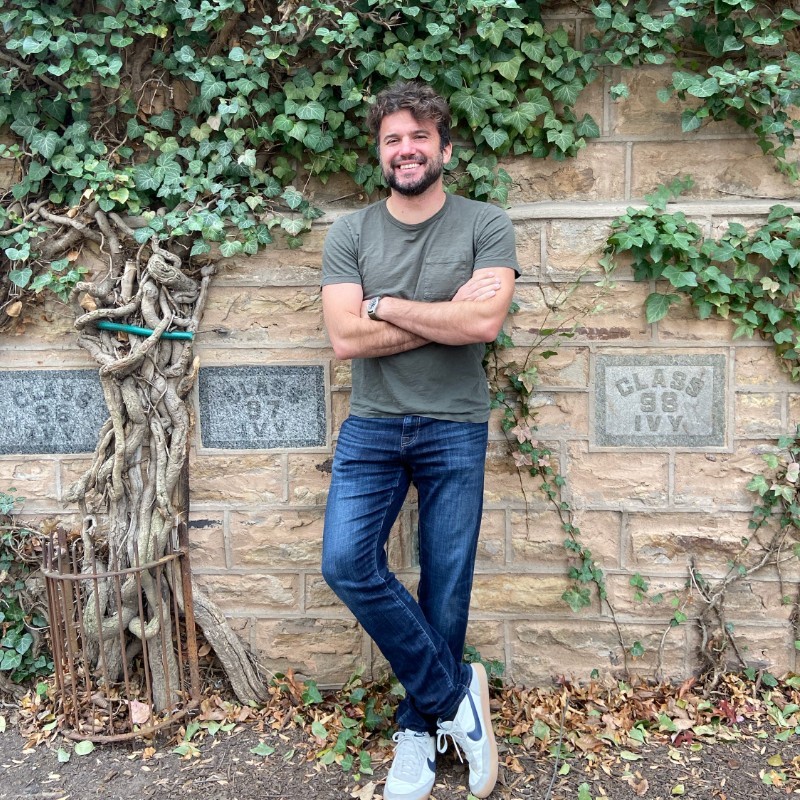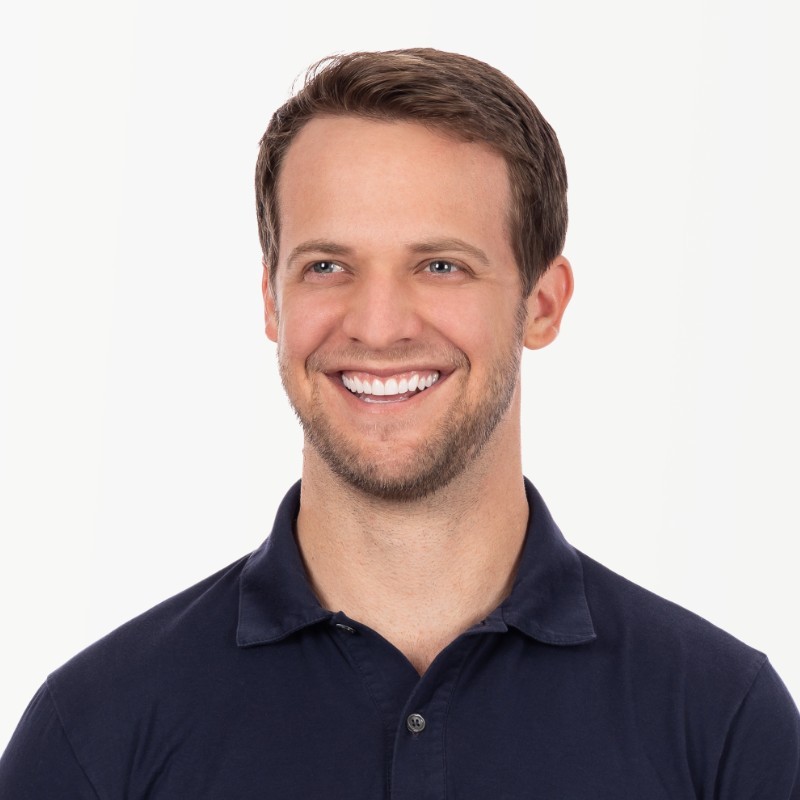
Ian Rountree
Cantos
Ian came up as an operator first. He joined SoFi at about 25 people, then became founding chief of staff at Invisible Technologies, where he and the CEO pitched roughly 100 investors, took 99 nos, and got one angel yes. Only four or five of those conversations felt useful. That knocked VCs off a pedestal and sent him into a year and a half of raising Cantos I. He started the firm when hardware and the real world were uncool, against a mentor who treated the idea like a slap. Now investing out of Fund IV with partner Grant as a first-check GP, he lets entrepreneurs tell him where the future is going. At idea stage he underwrites the people, not the industry, model, or go-to-market on the deck.
The tactical spine is that the warm network is the real inbound. Ian has only ever invested in one cold inbound, so a trusted founder calling someone special beats any deck. X is how you warm a cold DM: lurk, post, and show up already known. When a deck does land, he reads it backwards, Tom Perkins style, then tabs to the team page first and texts mutuals. First calls are booked at 30 minutes but they block 90. Internally they score founders on six attributes he will not name, then test for a gravity-well vision. If you want a $10 billion company in 10 years, you are creating something like $20 million of value a week, and the world has to warp around you. Intellectual answers are table stakes. After the call he wants to feel fired up enough to run through a brick wall.
The warnings are as specific as the screen. Do not pitch a second idea when they pass. It reads like a trinket salesman opening the coat. If the call is asymptoting to no, end it. Do not lie, fake FOMO, or write a tier-one name on the whiteboard and pretend you forgot the last meeting. Ask for portfolio references only after they have asked to invest, and include a company that failed. When you have a choice, pick the board you can live with for twenty years over the highest valuation. After close, hiring is the work. Use the 409A strike-price window sparingly for one key hire, then run an investor onboarding session so they get put to work. Fundraising is a numbers game. When Ian complained to an entrepreneur about 100 LP meetings, the reply was, my man, you're just getting warmed up.
On why a trusted founder calling someone special beats any deck
On why he reads decks backwards and goes to the team page first
On needing a gravity well that creates twenty million dollars of value a week
On why pitching a second idea after a pass makes you a trinket salesman
On the entrepreneur who told him a hundred LP meetings meant he was just getting warmed up
Mat Vogels (00:10)
Hey everybody, welcome to another episode of Fundraising, a podcast where we interview early stage investors and ask them all the questions that you, as a fundraising founder, want to know about the fundraising process, which, as we say, is actually no fun at all. And today I have a very special guest, Ian Roundtree, founder and general partner of Kantos. Just closed your fourth fund. Is that correct?
Ian Rountree (Cantos) (00:35)
That's right, yeah.
Mat Vogels (00:36)
Congratulations. that is gonna be a lot more capital going into some very, very lucky companies. We were just saying before we hit record, we are huge fans of of what you are building over there and talking to a lot of the founders. We share a lot of the same portfolio companies, say nothing but great things as well. So thank you for being on. Could we start with a little bit about yourself and and Kantos, what you're looking for and investing in, the types of checks that you write, and and we'll start from there.
Ian Rountree (Cantos) (01:02)
Yeah, awesome
Matt. Thanks for having me on. It's you know, Harpoon and Kantos have been close friends since since the early days.
Mat Vogels (01:08)
Yeah.
Ian Rountree (Cantos) (01:09)
we you know, it's funny to like look at the state of venture today and and that everybody is plowing into hardware and and think how unpopular it was when I started Kantos initially. I mean I I talked to one of my
Closest mentors, very successful venture capitalist. I told him I was only doing hardware from now on, and he looked at me like I had slapped him and was like, That's a terrible idea. It's
Mat Vogels (01:30)
And this was back in the AI
boom, like or not AI boom, software boom. So this was before it was cool. Yeah, yeah. Yeah, yeah.
Ian Rountree (Cantos) (01:33)
The the the the ML boom, we it was largely machine learning, AI was like, you
know, this future state that we hopefully would get to at some point. and it was like always so obvious to me that the the other ninety percent of the economy that Silicon Valley was largely turning a blind eye to needed technology too. And there were obviously big businesses to be built there. And the status quo thinking was that the venture model just doesn't apply to those industries, which seemed preposterous to me. not that it wasn't harder and sort of
I was like, well the the the the quote unquote generalist, there's a software specialist. I'm gonna go try and figure out the rest of the economy. I think there's a lot of opportunity there. Got billed, you know, a hardware investor, deep tech investor, and really went all all in on it in 2018. and had a lot to figure out.
Mat Vogels (02:20)
Definitely before it was cool, yeah.
Ian Rountree (Cantos) (02:22)
ar arguably too early, some would say.
Mat Vogels (02:24)
Yeah.
Ian Rountree (Cantos) (02:25)
but it's it's just crazy and and and encouraging to me that that it's more
popular to start things and fund things in the real world because it it was weird. Silicon Valley was living in flatland. Like why focus on two dimensions? We live in three. And so set out to invest more in every industry on the planet. Fast forward to today when we're we're investing out of our our fourth fund, 70 million. We like to be a a founding team's first check. Typically that's one and a half to four million and run a fairly concentrated portfolio.
it's myself, my partner Grant, my principal and me, and the three of us are having a blast.
Mat Vogels (02:59)
That's awesome. So we have the I mean deep techs, any particular sectors that you are excited about right now? Or is there it's almost it's kind of a hard question. I feel like there's so much excitement across the board right now. I know, yeah. And it's
Ian Rountree (Cantos) (03:11)
Yeah, I'm j I'm tempted to say everything, which is a bit of a cop out, but but
Mat Vogels (03:15)
a it's not a cop out. I think you're exactly right.
Ian Rountree (Cantos) (03:17)
It it
it you know, I I'll I will say there's kind of like in in the spectrum of you're you're so smart that you actually have high fidelity on on predicting the near and intermediate future and invest along the lines of some thesis that you come up with. There are certain people that are smart enough to pull that off. I don't know that that's me.
We we tend to let the entrepreneurs tell us where the future is going and so we really focus on on individuals, networks, and let the smartest builders in the world tell us where to focus. And and we might think that some industries are more interesting than others, and as relatively small investors we have to account somewhat for the direction of the of the capital markets. but we are very much investors in in people and ideas.
And the long-term vision, rather than pretending, you know, I've made a lot of mistakes looking at a pitch deck and turning my nose up because I didn't like the industry or the supposed business model or go to market motion or something, and missing the fact that at precede and seed, which is to say largely idea stage, those things are dynamic and might change. And the information that you have that's more concrete is who are the entrepreneurs behind this idea and supposed business, and underwrite them
not what they think the business looks like today.
Mat Vogels (04:34)
Yeah. Yeah.
We'll definitely get into more on some of those things that you do look for and and characteristics for some of those founders. But before we jump into the fundraising process, we have five questions that a lot of founders have nominated of what they would like us to ask the VCs that we talk to. And the first is what were you doing before you got into VC? Why did you choose to jump into this crazy world that we call venture capital?
Ian Rountree (Cantos) (04:59)
So I was early at a couple startups. i when I first moved to Silicon Valley I joined a fintech startup called SoFi when they were twenty four, twenty five people. surreal to me that it's, you know, now now an NFL stadium. But
It back then it was like novel to say that software could extend to finance. Just again just like nuts how the how the world has changed. and then I went on to a automation startup called Invisible Technologies. a little bit like think of it as a bootstrapped scale AI. and we pitched I was the founding chief of staff, the CEO and I pitched a hundred some odd VCs and angel investors, got you know, ninety-nine no's, the the the one
Yes was an angel check, basically. Like all the VCs told us no. And of those hundred conversations, I enjoyed four or five and found them helpful and friendly, constructive, even if they were no's ultimately. still still friends with a lot of those those five. And I was like, you know what, maybe I've put VCs up on a little bit of a pedestal. I feel like I could I could do this job. I could at least convince founders to take my money alongside some of these folks.
and I'd done a little bit of angel investing just to try and learn, you know, five grand here, ten grand there along the way. And so I spent about a year and a half trying to convince people to let me invest some of their money. and that turned into Cantos One, it was four and a half million and had a lot to learn back then. That was that was ten years ago, believe it or not.
Mat Vogels (06:20)
That's crazy. and then you've been off to the races ever since. You said right now, yeah, on fund on fund four. That doesn't happen unless you're doing the right things. Another secret that a lot of founders maybe don't realize is how many funds don't make it past fund one. And then every fund after that, it's like this drop-off performance piece. so when you've gone to to fund four, that that says a lot about what you are doing and that you're going in the right direction. another question: what is your favorite part about the job and what is your least favorite?
part about the job and founders like to hear a little almost a peek behind the curtain a little bit. This is an opportunity for you to maybe showcase some of the things that maybe founders don't know about the day in the life of a VC.
Ian Rountree (Cantos) (07:00)
Yeah,
absolutely. I mean I I I hold intention the end game, which is that you know, I I believe that people can
change the world. and that's why I do it. I I I believe they can do that, though I know that I'm not one of them. The closest I get is writing them a check and supporting them along the way. And and to make a dent in the universe, you have to build a really big company and we produce some returns along the way. But those are sort of an emergent property of a more fundamentally important mission that you're on. And I love talking to entrepreneurs about what drives them and and and their vision for the future. Like what do you
see in your mind's eye, what can we unlock in terms of creating value for people in the world, and then you know we'll we'll figure, if we're smart enough, we'll figure out some way to capture some of that value along the way. And I love that. That's really the essence of it. And then at the same time, to be able to do that, and as a competitive person, we need to put up above market returns to our limited partners for the type of risks we take, which is a lot. Not just that the underlying assets are risky, but the term
the the fact that we are locking our investors' money up that it's going to be illiquid for if we're being realistic, probably 12-15 years. Some of the assets might go longer than that, even though people talk about funds being 10 years. Realistically, probably closer to 15. And
Mat Vogels (08:16)
Especially in hardware. Yeah.
Ian Rountree (Cantos) (08:19)
we need to put up some pretty good returns to incentivize people to keep investing in in asset classes that matter, because ultimately from a high level
capital allocators perspective, money rolls downhill. It goes to the highest risk-adjusted return. And if venture capital is underperforming other asset classes, well guess what? Less money is going to go into venture capital. It doesn't matter that it's popular today. That can change. And I'm always paranoid that like we we as an asset class are screwing something up and something important in the future is not going to get funded because we're getting drunk on, you know, whatever the current thing is or management fees or whatever. And so
So we have to do both. And I think they go hand in hand. But along those lines, I I love the part of the job that's talking to the entrepreneur about why they are doing what they're doing, why is this important to spend your limited time on. And on the other hand, I like sending updates and financials to RLPs that have big numbers on them.
Mat Vogels (09:14)
Yeah, I think that there's this
like on one hand you are highly competitive and you're trying to change the world. On the other hand, you know, there's the heavy is one that wears the crown type of thing. You've kind of signed up for this, but the expectations are are just as high. so it's not all easy. I think there's this paint you know, painting or picture painted of VCs where we vacation a lot and we're on the beach a lot and for the r for the best funds, at least I don't know those types of funds. maybe we should be joining them. But at the end of the day
we tend to seek the same type of ambitions that some of our founders do, which is which is awesome.
Ian Rountree (Cantos) (09:49)
Absolutely.
I get so bored with that.
Mat Vogels (09:51)
yeah, yeah there's no way. all right, last question. Little time for you to shine here. Why should founders pick you and Orkantos to be on their cap table?
Ian Rountree (Cantos) (10:00)
You know, is it's always hard to convince someone of this and the easiest thing to do is just with any V C not just with us, go talk to entrepreneurs that they've backed before. Both those that are doing well, 'cause everybody tends to be friends when things are going up, and find a company that a VC has invested in that ha that died, that hasn't gone well, and ask how they were in the hard times. 'cause that's when people's true colors come out. And
You will find I I I think a lot of Cantos's advantages come down to what the entrepreneurs we've backed and some who we've come close to backing and ultimately said no to, what they say about us. And
We find that even as a company goes on and raises more money and they raise money from flashier investors and all that, even if we're not on the board, we are oftentimes their first call. even as they grow. Not for all of but for a lot of them. And that really is what entrepreneurs want. They're looking for partnership. They're looking for someone who's allied. One of the reasons I love writing the first check is that
Compared to the other investors who tag along along the way, we are more aligned to that entrepreneur than than anyone else. Now we don't take it so far as like, you know, only investing in common stock. We we're we're
Typically we typically own preferred stock. But aside from that, we are more aligned than the other investors. And sometimes having someone that you trust who's been there from the early days but is not on your board is a more real conversation. and it's hard to slight you know, we do the typical branding and and marketing and thought pieces and everything, but that is really what we're about at the end of the day, is deep partnership with the entrepreneurs, and there's no way to get that other than talk to someone who we've backed.
Mat Vogels (11:32)
Yeah.
And like I said, we share a lot of portfolio companies and they would echo some of those same things. And it's something that you can't fake either. It's something that as a VC it's rolling up your sleeves and and getting in the hard work. So love the answer. It's hard to replicate and props to you and the and the team for continuing to do it so well. All right.
Let's jump into the fundraising process here. We break it up into three different segments. The first is getting in the room. A lot of folks listening have never raised capital before. It's a black box to them. They're unsure about how to even get started. So let's dive in there. What are some of the best ways that maybe from from your side, how many deals are sent to you, how they're sent to you?
What are the best ways for a founder to get their pitch deck either in front of Kantos or just in general and to some of the VCs that you've spoken with?
Ian Rountree (Cantos) (12:22)
Yeah, this is tough 'cause I I like a as as we've honed our craft, I I have admittedly gotten a little less democratic about things. and I always sort of turned my nose up a little bit at that like
you know, a as much respect as I have for Mark Andrees and o on this subject he he he once said that like i if you can't find a way to get a warm intro to me, that in and of itself is a signal that I should probably listen to. I wouldn't take it quite that far, but I'm I'm more in that camp than I am I'm gonna read every cold inbound and and treat it on its it its perceived merits. 'cause we're we're fortunate enough to have backed a lot of entrepreneurs, a lot of capable people have come through our network.
and a lot of our best investments came through that network. It was an entrepreneur that we backed who used to work with or you know is friendly with another entrepreneur and thinks very highly of them and we know that that entrepreneur's bar is very high. So if they call us up and they say this person's special
that's a way higher signal than anything you could put on a pitch deck to us. and and sometimes it's an entrepreneur that we really like and we didn't invest with, but they're sending someone to us. And so this is this is selfishly part of the reason why even if we say no, we're gonna try and do it as thoughtfully a as as we can. and going outside of that second degree network,
Both means a lot more
work for us and it's harder to get signals that matter to us. Because you could have, you know, the most interesting technology and the flashiest pitch deck in the world, and that's still not it's like pales in comparison to someone that we know and trust, we know how high caliber they are, and they're like they like rag on most people. And if, you know, this person who who built radiant nuclear or or or Solugen or Neuros or
you know, was like in charge of standing up the Starlink manufacturing line at SpaceX or something like that. If they're like, hey, you need to talk to this person and they've got a kit cat litter business, and I know that sounds weird, but you need to talk to this person, we will take that meeting.
And and so that that's that's been a little bit of an evolution for us, admittedly, because that wasn't always the case. I think I've only ever invested in one cold inbound. and and it that company's still alive and it's you know, do doing well for us, but it's not one of our outliers. And so just the cold hard facts are I I should delete every single cold inbound that I get. And it doesn't always sit well with me, but you know
I'm a numbers guy at the end of the day.
Mat Vogels (14:43)
Yeah. Yeah.
No that's a very common answer. We hear that a lot on this show that a warm introduction is great. Any advice on
How they can do that, because you know, I, for example, I was a a founder, you know, this was about a decade ago now, too. I still get dozens of emails every month from founders that are reaching out to me to try to gain a warm intro into one of the VCs that backed me when I was raising venture capital. And I talked to even our own founders, and they mention this all the time, where they just get inbound, inundated from these people trying to create these fast of relationships.
Any advice on how they can do that the right way? It's obviously a long game, but what would you recommend founders do to start getting those warm introductions?
Ian Rountree (Cantos) (15:27)
I mean I you like go go like really get to know that person. It it's I always find it weird when like s someone that I know and trust and they're like, you know, an entrepreneur in our portfolio, at one of our limited partners, and they're like, Hey, my friend's kid wants to get a job at one of your portfolio companies And I'm like, Okay, they have a jobs page. Like what I never met this person, what am I gonna do? Like
Mat Vogels (15:49)
Yeah, exactly.
Ian Rountree (Cantos) (15:50)
th third degree
Mat Vogels (15:51)
Yeah.
Ian Rountree (Cantos) (15:51)
say I think they're pretty good, like, you know, th th that's not gonna fly with them. they're gonna say, Thanks, Ian, here's the here's the job link. Have have apply. and so like barring a pre existing relationship with someone or or or generally investing in your network so that one day, y you can sort of harvest it. I I think this is where
social media and and especially in our world X is just magical because you can start to build your own credibility and persona and you know there's a lot of people that overdo it and they'll like vague posts and like hype videos which, you know, it at at times we utilize to be clear. sometimes start running together. But some of the most
some of my biggest misses were actually someone that I kinda got to know, at least know of through Twitter. And I could tell that they were thinking about an area and they hadn't started a company yet, but you're like, okay, well, you know, this Augustus guy at Rainmaker or or or whoever it is is like, you know, clearly getting into weather modification, like, huh. And then you get a cold DM from
And you're you have this pre-existing context where you know I'd never met Augustus before, but he DM'd me on Twitter, and unfortunately I didn't I didn't invest in the company. and that is like that would work. That's technically cold, but like you've been kind of warming it up because I've been lurking on your feed for a while. and and I think that's really cool. I tell people all the time, if they're young and they want to get into venture, they're like
Go go on Twitter and start following people and engaging in conversations and posting thoughts and and writing things. because that's way better than like, hey Matt, I know we met at this a happy hour three years ago. Could I please get an intro to so and so? There's not much to go on there.
Mat Vogels (17:32)
Yeah. No.
And and to that point, doing the in real life ones too, finding where things are happening in your area and it's the same as going on X and chiming in on conversations. There's plenty of opportunities to rub shoulders with people in your communities where I I always say you shouldn't go out to seek a single introduction. You're just putting yourself in positions to hopefully impress enough people to where
You're just gonna start getting some of these introductions into VCs or people that matter just by being there. Where it gets hard, and I think where a lot of founders do is like, I want Ian and Kantos to invest into me. I'm gonna reverse engineer all the people that Ian knows, and I'm gonna show up at their house
Ian Rountree (Cantos) (18:14)
Thank you.
Mat Vogels (18:16)
and get to know them over three months.
And then when you know three months go by and we're going to each other's birthday parties, I'm gonna drop that I really just want an intro to Ian. And it's like that's not really the right approach. You just kinda have to keep putting yourself in positions to where you're gonna meet maybe not Ian directly, but people that might know N Ian or a similar type of fund.
Ian Rountree (Cantos) (18:38)
Definitely.
I mean th there's like yeah, we see entrepreneurs do this all the time. They're like they they put a bead on one investor and they're like, I really want this person to invest. how how do I get an intro to them as quickly as possible, get on their calendar and
I I like to always remind people that your life is a multi-round game. Don't optimize for the next round or the current round. Keep in mind like what can you do in this round that will make
Mat Vogels (19:00)
Yeah.
Ian Rountree (Cantos) (19:00)
your will make next round more optimal. and and so in the fundraising vein, if you want, you know, so and so at such and such firm at series A and you're raising your pre-seed now, go figure out what other companies has a pre seed fund invested in that that
investor did at Series A and for seed or maybe even two degrees like okay I really want you know let's pick on Thrive and I've noticed that Thrive's done you know a a number of deals with the seed fund and that seed fund seems to be really close to this pre-seed fund and so if I can do this thing now maybe that's over optimizing for one investor but like you know you could go find that that that those branches work in both directions and I think there are there are some pre seed
pre
seed funds that might not have as big a brand as the quote unquote tier ones, but the tier ones sometimes do look too for for deal flow. And so rather than trying to get a big a big fund to go out of its remit and invest in your pre seed, you can look to a fund like a Harpoon or Cantos or some guitar peers who maybe have invested with those investors and it makes it easier for us to get you into that room when it's relevant rather than trying to go straight there.
Yeah.
Mat Vogels (20:10)
Yep, yep, I agree. It's a multi you mentioned multi round game. It's a long game. You can't expect to just have these things happen overnight. So put in the work now. You won't regret it over time. It's like going to the gym or being healthy, all these different things take a little bit of time. You mentioned earlier Yeah.
Ian Rountree (Cantos) (20:24)
No now that isn't to say like I c I kinda like entrepreneurs
that make these like brash asks like you know, we have a number of entrepreneurs in the portfolio who are like you know, ki they'll s they'll send a text to the investor thread and they're like, Can anyone get me in front of Pete Hegseth this week? And we're like, N no,
Mat Vogels (20:39)
Yeah.
Ian Rountree (Cantos) (20:40)
I can't introduce you directly to the you know, so maybe some of the investors can, but like w w
Mat Vogels (20:45)
Yeah.
Ian Rountree (Cantos) (20:45)
Probably not going to happen this week, even if they do have a direct line to to SECWAR. But like
Mat Vogels (20:51)
Yes, exactly.
Ian Rountree (Cantos) (20:52)
but I kinda love that you asked because it just shows that you're a little crazy.
Mat Vogels (20:55)
Yeah. Yeah, shoot your shot.
Ian Rountree (Cantos) (20:58)
Totally.
Mat Vogels (20:59)
Yeah. You mentioned earlier, I mean, obviously the right team and investing this early, a lot of it is dependent on team. But even if you're receiving a warm intro, is there anything as you're diving into their pitch deck or a memo or a blurb that they're sending you, what are some of the things that you're gravitating towards? And then on top of that, how can founders make sure that they are hitting those notes that you're looking for well?
Ian Rountree (Cantos) (21:21)
I I find myself increasingly
You know, I so I I I love studying the history of venture capital and there's some personalities and I I love this one quote on this topic that Tom Perkins once gave, which was that at Kleiner Perkins, we read pitch decks backwards. We start at the end and if the numbers are really big, then we go see what the business does.
Mat Vogels (21:40)
Uh-huh.
Ian Rountree (Cantos) (21:41)
There's definitely some of that. Like, I need to know that this could be a generational company and pro and produce incredible returns. but but I find my version of that
is more and more. I just like tab through the deck and I go to the team page and I want to know what your background is. And I'll you know, I'll go to your LinkedIn and I'll like see what you've done and I'll see who we know in common. and I might send a send a couple texts to mutual friends and really try and get a feel for the person rather than again like the business that you think is going to exist when it's still an idea. And it really is increasingly about that.
Now, th there's some areas that we might have more of a prepared mind for and w we just made an investment in an offensive cyber company. That's an area that we've been looking for an investment in for for years. but more more often than not, it's these people are really interesting. I've never thought about this problem that they're purporting exists, but if if they're focused on it, then maybe it is important, let's go talk to them. And there's a number of entrepreneurs in the portfolio that
bring up things we'd never thought before that were like completely sold on being geopolitically important now. and so you know you can't snap your fingers and have a more interesting resume. But I I like I like seeing the team page up front. We typically find that it's in the back and I think that's a little backwards because at at Preced and Seed we're investing more in people than we are in your idea technology business.
Mat Vogels (23:04)
Yep.
Yep. We always like to encourage I think you still need to say what you're doing and make it very clear, but then it you gotta go to the team to say why it's important to you. Why are you choosing to go on this? so I agree. And I think we're seeing more and more of that where folks are leading on the team side, which is which is good. It makes our lives a little bit easier.
Ian Rountree (Cantos) (23:23)
Is is a question,
you know, t to tip my hand a little bit, a question we always ask in in diligence is, well, presumably you're very capable people, and presumably you think that too. So your opportunity cost is high. I mean you could be doing
Mat Vogels (23:35)
Yeah.
Ian Rountree (Cantos) (23:35)
virtually anything. And and and and if you're committing to a startup, i in in your mind this is if this goes well, like you're thinking this is gonna be most of your professional life. So why is this the thing? Why this of all things are you committing
your life to for the next potentially decades. Like why is it that important to you? And and I don't I'm not totally
Mat Vogels (23:56)
And the answer there matters so much. Yeah.
Ian Rountree (Cantos) (23:59)
matters. Like we we we need a strong why.
And I think there there are people that are more mercenary that have done very well and put up good returns for their investors, but w we're just less interested in that. A lot of times we meet exceedingly capable people and they have an interesting idea. And I ask that question. and th and the answer is like
Sometimes I feel like they've never thought about it before, which is very strange to me. Maybe I'm too introspective. But I always think of like both Mike Moritz and Don Valentine had versions of this question where, you know, Moritz would want to like know what happened to you before you turned eighteen that formed your psychology.
And he's almost like Freudian about his investing.
Mat Vogels (24:39)
Yeah.
Ian Rountree (Cantos) (24:40)
as an in investigative journalist turned investor, which is I think interesting. And then Don Valentine Don Don Valentine being sort of like more like a raw competitor, not that Meritz w wasn't competitive, he liked to really get into your like family background and what's your relationship with your siblings and he almost kinda liked seeing like sibling rivalry and that kind of thing.
Mat Vogels (24:54)
Huh. Huh. Doing diligence calls with your parents, yeah.
Ian Rountree (Cantos) (25:00)
I mean these were these were the the the co heads of, you know,
one of the best venture capital firms in the world and and they got like really psychological about it. And so we we really get into that and and I can tell when someone's like, well I just I wanna have a company And we're like, Yeah, but why? And they're like, Well 'cause I wanted to have a company. We're just it just is confusing to us.
Mat Vogels (25:20)
Yeah, they're very few. I always put, you know, like Travis Kalkanic from like Uber. I think there are people that have this
They can get excited and drived about anything and they just want to win and they have this kind of cutthroat mentality. Very few people, I think, are that and maybe kind of want to be that or think they can be that. So their why has to be there, even if they don't know it yet, because they will need it. They'll need that why when inevitably in three months, six months, a year, things get very hard, and the why is the only thing that keeps you going. All
Ian Rountree (Cantos) (25:52)
Yeah.
Mat Vogels (25:54)
right, this next phase is
the meeting phase. It's the first time you're meeting with these founders. It's, you know, the first impression a lot of times, what is a VC are you looking for in that initial conversation? Are and for you, are they typically 20 minutes? Some VCs do 30, 40, an hour, you know, it depends on on the kind of the process. What is your perfect first call with a founder and what is it that you're trying to pull out of that?
Ian Rountree (Cantos) (26:18)
Well
we we take a lot of calls with founders, but and you try and parse it based on on some signal ahead of time, but to filter for that, we just to be totally transparent, we typically typically book thirty minutes with them, but then we'll block like an hour and a half on our calendar and we'll just let it go longer if if we think it's really interesting. Yeah, you know, f founders should just know this.
Mat Vogels (26:33)
We do that too. A lot of lot of ECs do that. Yep. Yep. Yeah.
Ian Rountree (Cantos) (26:39)
and the the
we we try and have a very wide ranging conversation on those calls which which for me very much gets into to the why and we actually because we're so founder focused we internally will score entrepreneurs on six attributes
Which I won't reveal here, but you can probably guess at some of them. But not that we're quantitative, but just to have a richer discussion about the individuals, since we index more on that than on the supposed business. and we don't want to just go on like, well, well, I think they're really special. and and so we want to get at like, you know
What is your vision for the future? How good are you at articulating that? Up and down the stack, both to someone who's very technical and in the weeds in your field, and to someone who's just hearing about it right now. and and how compelling is that to talent, to customers, to capital? I I I almost think in terms of like a theoretical gravity-based drive, where you're like pr you project energy energy density of such intensity in front of you that you create
A gravity well in the direction that you want to go, and it pulls you and everything else toward it. Like if if your vision for the future is not so clear and compelling that I feel like I'm almost being physically pulled toward you because you're creating this dent in the universe in like a general relativity kind of way, then
You are not going to create a generational company. And you're certainly not going to return multiples of my fund in ten years. I used to think that ten years was forever. And the older I get, the less and less time that feels like. I mean, if you if you want to create a
10 billion dollar company. And you want to do that in a decade from scratch, right?
Mat Vogels (28:16)
Yeah.
Ian Rountree (Cantos) (28:17)
which is to say that you know let's let's let's not do the compounding math right now because it'll get too complicated for me. But like, you know, a billion dollars a year, okay? which means every week you need to be creating about twenty million dollars worth of value.
Mat Vogels (28:29)
my gosh.
Ian Rountree (Cantos) (28:30)
Now i th that's linear and of course compounding works and it's it's it's less but like like go do that math and and ask yourself
Mat Vogels (28:32)
Of course. Yeah, yeah, but still. Yeah.
Ian Rountree (Cantos) (28:36)
how much value do I need to be creating every week? And like i if I don't if I don't get the sense that the world warps around you, you ain't gonna do that. That's an exceedingly high bar. Part of the reason I'm an investor, because I know I'm not up to that bar.
and so those are the types of things we're not looking for just intellectual answers. You have to have those too. Those are table stakes. We want you to know your industry cold, have been like completely through the idea maze to the point that my partner Grant likes to say you almost feel like a maze historian. Like you've just been spending your life studying this maze. You haven't just been through it. and you know, on top of all the intellectual answers, you won't you get this like emotional like after talking to you, I I didn't know anything.
about this problem at the beginning of this call and at the end of the call I'm ready to run through a freaking brick wall you fired me up so much? We're not gonna invest.
Mat Vogels (29:22)
Yeah. Yeah.
I love that. That's a great answer. That's one of my I think my favorite answers on here. And it's not because you said anything necessarily super specific. It's almost kind of palpable. It's like you know it when you see it, like all maybe some of those cliche answers, but it's so true. And the founders have to omit that. I love the gravity poll. I think that's a that's a great kind of way of looking at it there. It's also I think one of the hardest answers that I tell with founders and when I work with founders on fundraising is that
Not that you kinda have it or you don't, but you kinda have it or you don't. And I meet a lot of people where I'm just like, gosh, I just don't feel that you have that. And it's not something that you can kind of coach into people, or at least I haven't figured out how to do that yet. So it's one of those hard answers where sometimes you just meet people and you're like, You're not gonna be the one to do this. And that's such a hard, hard
Ian Rountree (Cantos) (30:10)
Yeah.
Mat Vogels (30:11)
thing to hear, and it's such a hard thing to say as a VC, obviously, but it happens all the time.
Ian Rountree (Cantos) (30:18)
Totally. And it's kinda sad because most people don't definitionally most people don't have it. The vast majority of people don't have it. and and
Mat Vogels (30:23)
Yeah. You know, yeah.
Ian Rountree (Cantos) (30:25)
and and and so you'll just it it's hard to tell someone.
We try and get to as close to it as we can and part of having our attributes that we score is we're rather than that making it feel like an ad hominem assessment of the founder, we can say, Hey look, we think you need this attribute to be successful in this area. and and we're not fully convinced of that. but most most VCs will you know, the they'll give you some intellectual sounding answer about your business or market or or, you know, their historical experience in in that that sector when the answer is really
We didn't like you enough.
Which is a tough conversation to have, but that's the that's the nature of the business. And again, like having specific attributes that we look for makes it easier to have that conversation.
Mat Vogels (31:06)
The
it's a very, very quick tangent that's relative here to it. The movie that I always think of when I meet with a lot of founders, if you haven't seen it, wasn't you know, it's not the best movie of all time, but Monsters University, the Pixar movie, has this exact exact thing built into it where the main character his whole life is de his whole entire life is dedicated to being something that when it comes down to actually being in that field, I won't I won't spoil it for anybody.
realizes that he is not at all qualified to do that. And it's just one of those weird things we see this all the time with founders where they may spend their whole life, their whole professional careers thinking that they are going to be this thing. And then they get into the playing field or the arena and it's like they're they're obviously not meant to do this. And it's it's hard.
Ian Rountree (Cantos) (31:53)
Totally. Well I was Sully for Halloween last Halloween, so I'll to go watch
Mat Vogels (31:55)
There you go.
Ian Rountree (Cantos) (31:56)
it.
Mat Vogels (31:57)
you do. It you'll you'll know exactly when you see it. It's it's exactly exactly what we're talking about here.
All right, are there any mistakes that you see founders make on the calls? Obviously maybe not hitting the bars that you're talking about or the energy, getting that gravity like you're mentioning, but any red flags or things that founders can maybe avoid doing on these calls that otherwise kind of shoot themselves in the foot?
Ian Rountree (Cantos) (32:18)
Yeah, I don't I mean th th this one is it usually comes when we're we've said no, but like the the occasionally you'll meet someone who you're like, Hey man, I like you, I just I don't really love this business, our industry and they've just spent forty five minutes an hour telling you why it's important. and they're like
Okay, well I you know I you know, I've also been thinking about this other idea. I'm like what if what if we were working on that instead? And I'm like, like don't don't do that. Like I don't
Mat Vogels (32:40)
gosh, yeah. yeah.
Ian Rountree (Cantos) (32:46)
you you just like y he feels like a like a trinket salesman. Like you got the you got the trench coat and you're like, You don't like what's over here, I got something over
Mat Vogels (32:52)
Yep.
Ian Rountree (Cantos) (32:53)
here. which gets into like the the strong why isn't there or you know,
But I just find that really off putting. like i it's rare that you you turn the conversation around, but that's certainly not one way to do it. the best way to turn it around is over time, again thinking about a multi multi round game, like
Take it graciously, end the meeting, because y you as a founder, your time is is more important than the investors. don't try and drag it on. Like if you feel like they're asymptoting to no, just end the call and move on. Go build a really big business and make regret it and email you an extra hound and try and get in. You need to you need I I
Mat Vogels (33:31)
Yeah.
Ian Rountree (Cantos) (33:33)
I I've learned this fundraising. I think it's it's very helpful that on fr that that VCs have to go fundraise every few years. It's a it's a you know humbling experience and and a and a empathy building experience with the founders. you just have to like get to the quick no. And and if and if they're not
amped about what you're doing, it's probably gonna be a no. You're probably wasting your time. Move on. And the people that are yes are like an immediate you get an immediate sense that there's a partnership there, even though it's your first call. if you don't anything short of that is probably gonna be a no. And stop like stop wasting your time. Optimize for people. Just ha in end the call, have another conversation. Maybe that person's more excited. That's a much better use of time than trying to drag it on. Like it
i in in this like gravity the spacetime contorting sense like I like to get a sense on a call with a founder that I am wasting their time and we need to speed the conversation up. Like if if if the founder's trying to drag it on, I'm like obviously trying to get off the phone and you're like, you know, trying to drag drag it on farther, like that's a that's another anti. Your time is precious. Again, ten billion dollars in ten years, twenty million a week.
Clock's ticking, get off the phone.
Mat Vogels (34:39)
Yep.
Yep. That's a great answer. let's say that they've lined a lot of these up, they've knocked them out of the park, they have some momentum building. We're now in this final phase of the fundraising process, which is typically like herding cats, you're building momentum and trying to add some FOMO, and it's it's a really hard place for a founder to be. It sounds like it's, you know, where you wanna be and it is, but it's actually one of the hardest parts and places to to be.
Any advice you'd give founders as they're kind of in in the thick of it and keeping the relationships warm and and building some of that momentum, but not being too pushy or or trying to exaggerate the truth, which happens a lot kind of during this phase,
Ian Rountree (Cantos) (35:16)
Woo!
Mat Vogels (35:17)
what advice would you give founders there?
Ian Rountree (Cantos) (35:19)
Yeah, well I I would have thought this is obvious, but don't lie. mean
Mat Vogels (35:23)
Yeah.
Ian Rountree (Cantos) (35:24)
there's been this thing where like w this used to happen occasionally and now it happens a lot where like someone will say that they're talking to an investor or even that they have a term sheet from someone who like we know and we'll go text and you know, the
Byzantine general problem notwithstanding, like s some sometimes people are Machiavellian enough that like they will tell you the answer is no when it's actually yes. But like borrowing that, it's pretty easy to figure out. Like, I I I think like we've kind of a lot of founders, especially young founders, have optimized for this FOMO game and they know that most VCs are like looking for signal from other VCs and they'll try and like drum that up and be like, well, you know, we're talking to so and so or whatever and
like I I I've heard stories of like a founder's
like they're hosting VCs in person and they white they write like a perceived tier one firm's name up on the whiteboard and pretend that they forgot about the last meeting. Like there's things like that that go on that like are easily falsifiable that I just find stupid. r remember that a lot of us are friends and on, you know, a text message basis. so so don't do that.
Mat Vogels (36:25)
yeah. It's a small world, yeah.
Ian Rountree (Cantos) (36:29)
and then there's a lot that falls short of of deceit that is like
I I know that you're like clearly trying to like drive up the FOMO and some people might that might work on some people but like you know, they'll be like, well like so and so just invested on a whatever, thirty cap and like you're you're telling me you want twenty. And I'm like, Yeah, well first of all, I know so and so writes fifty thousand dollar checks, so that
Mat Vogels (36:51)
Yeah, exactly.
Ian Rountree (Cantos) (36:52)
d does not hold
a candle to the the the t kind of check we're we're writing. And second of all, like, I like but I don't really care what they're willing to invest on. This is my offer. And, you know, if if an entrepreneur has most of the round spoken for at a higher cap, of course, like we're not gonna try and like get a special deal and whatever, but like, that's just fair play. But there's a lot of like
You're you're trying to use some weak sick signal to like put leverage on me that I'm just is is not gonna work. and maybe it works on enough people that it continues to be rational to use, but depends on the investor you're you're talking to. I want us to have honest conversation about like what what do we do we want to be in partnership? If so, then what are the like mutually agreeable terms? And I don't care that much about what other people are doing. If you're trying to get an investor to move fast, then yeah, like give
them a real idea of like how time timelines are moving but but really good investors will put the pressure on themselves. They know if if they're really interested in a company they're gonna want to give you a check like tomorrow because they know that other VCs aren't stupid and if they give you an extra two or three weeks you're gonna go get money from someone else or maybe the valuation goes up or whatever or they'll put the pressure on themselves. So again going back to that like does this feel like an emerging partnership
Already. if not, then like trying to put pressure on them to increase FOMO probably isn't gonna work anyway.
Mat Vogels (38:11)
I think for if for a V C that you would want on your cap table, something like that shouldn't work. If it is working, it's it's I would argue it's not a V C that you actually probably want.
Ian Rountree (Cantos) (38:19)
Bit late.
Mat Vogels (38:21)
Yeah. Cause they'll be the ones Go ahead, go ahead.
Ian Rountree (Cantos) (38:23)
'Cause they're I w you know, I I've I've experienced this on
on the LP side sometimes. Like i if if they if they're mercurial on the way in, they're probably just mercurial. Sometimes if if they're moving like so fast that you're like, whoa, hold on, like what's going on here? Like, maybe do a few more references on
Mat Vogels (38:40)
Yes.
Yeah, that was actually gonna be my next question in here too. At what point in the fundraising process do you wanna start bringing in other founders and helping make this decision? Because I think sometimes founders do it kind of too early. And that goes back to your earlier point of, you know, sometimes you you text a founder before you've even met with the fund and sometimes that feels a little bit too early. When you're in the process of picking and maybe a fund's shown interest and you're in you're in your own diligence phase as a as a founder
Is that okay to start asking for intros to your portfolio company, or when is that ask appropriate, I guess?
Ian Rountree (Cantos) (39:16)
you kinda have to feel it out in the context of how quickly things are moving. It we we are very precious about our entrepreneur's time. and so usually that would be like a you ask the VC after they've asked to invest. Say, hey, I appreciate that, you know, would love to work together, but just across my T's.
introduce me to a couple founders in your portfolio. And then go like go off list too. Don't just talk to the ones that they're introducing you to, because those are probably the ones that they know like them.
Mat Vogels (39:41)
Yep, make the suggestion.
Ian Rountree (Cantos) (39:43)
Again, go f go find someone whose company failed. A a few entrepreneurs have asked me for that. They've said, hey, I wan I want to talk to two of your portfolio founders, one that's going well and one that failed.
Mat Vogels (39:51)
That's smart. I I really like that. Are there any
kind of I guess as the founders navigating this bit, you've seen a lot of founders go through and make probably great decisions in like cap table building and and finding the right investors. Are there any glaring mistakes that you see over and over again as founders kind of pick the investors that are going on their cap table? So you mentioned, you know, maybe if they're the if the fund is being too pushy or they're being too picky or they're moving too fast, sometimes there's some red flags and things you have to look out in there. Any other advice you give founders from the mistakes that you've seen some of your portfolio
Ian Rountree (Cantos) (40:24)
A a l a lot of founders today they just want like the flashiest firm name on the cap table. And yeah, a lot a lot of the
perceived best funds got to where they are because they're really good to founders and LPs alike. but it's more about the individual investor at that firm than it is about the firm itself. and how aligned are they? how bought in, how much t how much of their time are you gonna get? and then not that everyone has this choice, but I've seen a lot of people regret adding someone to their board. You know, and they had a really
maybe a a a sh short process with a lot of FOMO and they got multiple offers and they like you know, basically everybody just takes the highest valuation they can, with some exceptions here and there. And they added someone to their board that they did, you know, they got to know over the course of a month. And then and sometimes they're very excited about them. And then six months later, I'll, you know, they'll call me up at the vent and, you know, man
I regret adding this person to the board and I should have gone with this other firm that had a lower valuation that I liked more, but I just wanted a higher valuation. And like you can say this at the time and basically no entrepreneur is gonna listen to you. And it's just one of those things you have to learn the hard way, but like man, be really careful who you add to your board.
Do like st you know, slow the process down for a week or two to reference them more if you have to. Isn't worth it. 'Cause you're gonna deal with them for if things go well, potentially twenty years.
Mat Vogels (41:45)
Yeah. Yep. And they're harder to to get rid of than like it's easier to get
Ian Rountree (Cantos) (41:49)
Yeah.
Mat Vogels (41:50)
divorced from a partner than it is to get a board member off of your cap table.
Ian Rountree (Cantos) (41:54)
Chodel.
Mat Vogels (41:56)
So I agree. Yeah, you need to make those those decisions. It's a l it's a long term partnership. Yeah, the airport test is a common answer we hear here of
Can you actually hang out with this person and have an honest conversation with them? Do you enjoy being in their presence and asking for feedback? All those things I think apply. but it's hard because I think founders are in a position where they don't feel like they have any of the control or leverage. Somebody's offering them money.
Sometimes that they just say yes and they don't even know what they're getting into. And that's you know, the goal of the show in some cases is to hopefully shed more light on those things. but it is hard. So for the founders out there doing this for the first time, not that it's an easy thing to do, but yeah, get the you know, have those ears perk up a little bit when things like that happen.
Ian Rountree (Cantos) (42:37)
Definitely.
Mat Vogels (42:39)
All right, let's say they've closed the round. They celebrate, you know, for for five minutes, and then to your point, they gotta get back to the twenty million a week run rate that they gotta start building up in here. What is some of the advice you give founders that just closed? What should they do to kind of focus right back into founder mode? I find that there's a switch that has to flip. They've been fundraising, fundraising mode is very different than founder mode.
What advice would you give founders to kind of snap back into it? What do you see good founders do the three to six months maybe after they close their round?
Ian Rountree (Cantos) (43:07)
Well the the best founders just just th th they know what to do. It's usually right after you close money the focus is on hiring. and and as you're you know as you're after you sign the term sheet basically you start you know
finding what recruiting firms you want to work with, thinking about key roles, using the fundraise to, you know, hook somebody and in in in some cases there's like one tactic that you should use sparing sparingly, which is if there's a really key hire, when when you sign the term sheet, their the the strike price on their stock options is gonna go up.
So so you might want to tell the investor, hey look, let me take this unsigned term sheet. I'm not shopping it around, I just want to close this person. And let me get them to sign so that they get the old strike price. And it's a way to kind of like bump their equity a little bit. but don't do that with everybody, although that's only like really, really key hires. know that it's not when the round closes, it's once you sign the term sheet that that's gonna get factored into the 409A valuation.
Mat Vogels (44:03)
It was a pro move, yep.
Ian Rountree (Cantos) (44:05)
And so and so the the yeah, it it's mostly just like after round clauses, we roll up our sleeves, we're like, All right, here's like the five recruiting firms we we work with and what their specialties are. we're on a tech thread trying to hire people. that's that's the big thing. 'Cause like it's not just the founders, it's it's the rest of the team that makes the company and all the progress.
Mat Vogels (44:23)
Yeah. Yes.
And it's one of the more important things, especially in that first phase, that you can do and then also one of the hardest things to get right, because when it doesn't go right, it can be a death sentence in a in a lot
Ian Rountree (Cantos) (44:35)
Yeah.
Mat Vogels (44:35)
of ways to your startup.
Ian Rountree (Cantos) (44:36)
Another thing that I really love and and you know, i I'll I'll take some of some of the ownership here, we should be better about doing this, but like a after you like we'll jump straight into the text thread and like, all right, let's let's let's start working together asynchronously. recently we we we finished we we invested in a company and they were like, Okay, let's do our onboarding session. We're like, What? And we like really walk through like, okay, before we were pitching you. Not that we weren't totally honest about everything, but there of course
You we didn't share all the little details. So let's sit down, let's go through all the little details. Let's let's talk about how we think you can help us. and let's let's put you to work. And like we did this onboarding session with this with these two founders. it was just awesome. And I'm like, okay, that's a playbook I'm gonna that's a page I'm gonna add
Mat Vogels (45:16)
I love that.
Ian Rountree (Cantos) (45:16)
to our playbook. Like don't just kind of, you know, close the docks, like ghost them and get back to work. Like put them to work too.
Mat Vogels (45:24)
Yeah,
yeah. Was it was that one in person too? Is it like a let's go and like do a workshop for a day type of thing? Yeah. That's so cool.
Ian Rountree (Cantos) (45:29)
T two of two of us were were were in person. I I phoned in.
Mat Vogels (45:32)
That's awesome. That's a really cool way to kick things off. All right, last bit here, it's kind of like your time to give that halftime speech for the founder that's halfway through a fundraising process or it's not going well. They need that motivation to keep going a little bit. What
motivational advice or feedback would you give a founder that's in the thick of it in that fundraising process right now?
Ian Rountree (Cantos) (45:54)
largely a numbers game. You know. I was like complaining about
our fundraiser at one one point 'cause we you know we were a little spoiled and I was I was feeling sorry for myself that I had to talk to like a hundred LPs.
Mat Vogels (46:06)
Yeah.
Ian Rountree (Cantos) (46:06)
and you know, I was complaining in an entrepreneur that I was speaking with who'd been like doing something very non consensus that all of a sudden got consensus years later. and he was like, I'm sorry man, but how many how many people have you pitched? And I was like, I don't know, like over a hundred at this point. And he like gaffawed and clapped me on the back
Mat Vogels (46:23)
huh.
Ian Rountree (Cantos) (46:23)
And he was like, my man, you're just getting warmed up.
Mat Vogels (46:26)
Yep. It is a numbers game. For everybody. Yeah.
Ian Rountree (Cantos) (46:28)
Just a numbers game. Don't don't don't
let the incremental no get you down. That's inevitable. Like just, you know, move on, throw more names in the top of the funnel. Optimize for people that get excited from the first call.
Mat Vogels (46:40)
Another
thing too is I wish that founders knew how much of the people that they look up to was also a numbers game. I think on social media and all these things, you see these big names that have raised capital, and you see like, you a big logo, like an Andreasend or somebody on there, and they assume that it was like, they must have just like sent an email to to to Mark himself, and he said yes, and then wrote the check, and then everything went well. And it's like not at all the case. So it was a numbers game for every single company that you
Ian Rountree (Cantos) (47:10)
Totally. With a few exceptions but they're very rare.
Mat Vogels (47:12)
Few
exceptions. Certainly not the rule. Yeah. Ian, thank you so much for being on. There was a lot of information packed into here. I I really, really appreciate the time. Where can folks continue to follow along with you, your team, Kantos as a whole, and follow along on the journey?
Ian Rountree (Cantos) (47:29)
Kantos. Vc, that'll link to our our X and and LinkedIn profiles. I'm at Ian Roundtree on X. You can find me there. I read read my DMs and yeah, you'll see us around. Hopefully we're not going anywhere.
Mat Vogels (47:41)
I love that. And where are you guys based out of? Do you mind sharing?
Ian Rountree (Cantos) (47:43)
between San Francisco and Los Angeles.
Mat Vogels (47:45)
perfect. That's the
that's the best place to be. And I will also say that the new website, also beautiful. Fantastic job. The brand is great.
Ian Rountree (Cantos) (47:51)
Thank you.
Mat Vogels (47:52)
Website's great. Congrats again on on closing fund four. And for all the founders listening out there can echo a lot of the things that Ian was saying. Be lucky to have him on the cap table. And yeah, hopefully hopefully you can make it happen someday.
Ian Rountree (Cantos) (48:05)
I appreciate it Matt. I hope this was helpful for the founders listening. You guys are the real heroes.
Mat Vogels (48:10)
Yes, founders have by far the hardest job, that is for sure. All right, Ian. Thank you again. Let's chat again soon. appreciate you being on.
Ian Rountree (Cantos) (48:17)
Thanks for having me. Later, Matt.