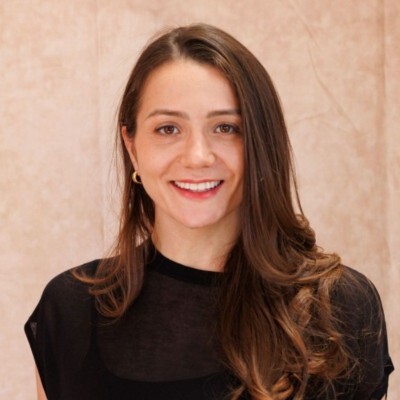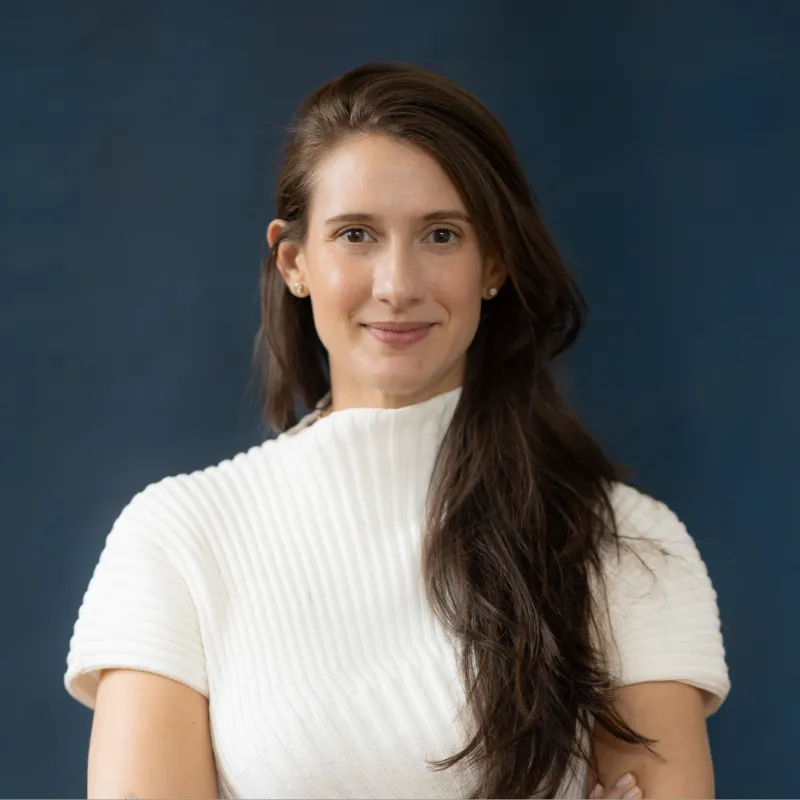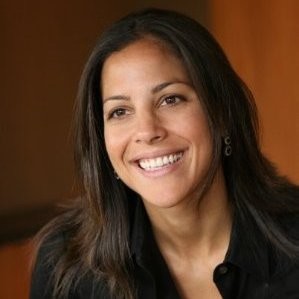
Emily Lindberg
Undeterred Capital
Emily Lindberg brings a genuinely rare perspective to the VC world -- a PhD in biomechanics from UC Berkeley who transitioned into venture through Nucleate, a student-run VC focused on bio companies. That scientific background shapes everything about how Undeterred evaluates deals, and Emily is refreshingly candid about what that means in practice. She emphasizes that even when a fund loves your technology, it has to fit the financial structure of the fund and its return requirements -- a reality many first-time founders overlook entirely.
On the question of what gets a founder into the room, Emily reinforces something that often gets lost: cold outreach can genuinely work, but only if it's targeted and concise. Undeterred reviews everything, but founders need to respect how little time is actually spent on each deck. The clarity of your story matters more than polish or design.
Where Emily really shines is in her advice around the later stages of a raise. She pushes founders hard on the idea that choosing an investor is a decade-long partnership, not just a transaction. Optimizing for valuation over fit is one of the most common and costly mistakes she sees. And once the round closes, she flags a pattern she sees repeatedly: founders going heads-down on tech and losing touch with customers -- the very people whose urgency and engagement will determine whether the company survives.
On what VCs are actually evaluating -- and why great tech alone is not enough
On what makes a team slide stand out at the pre-seed stage
On getting defensive when discussing risks or competition
Common reason startups fail
Mat Vogels (00:10)
Hey everybody, welcome to another episode of fundraising where we interview top early stage investors and ask them all the questions that you as a fundraising founder want to know about the fundraising process. As the name hints, it's called fundraising, but it is not fun. And on the VC side of it, it's also not necessarily fun for us either. So these questions hopefully shine a light on that process.
And today I have Emily from Undeterred Capital. Emily, take it away. Give us a little information on Undeterred.
Emily Lindberg (00:41)
Hi, y'all.
Absolutely. Thanks for having me really excited to be here. So undeterred. We're an early stage fund investing at the pre seed and seed stage. Actually around 80 % of so of our investments are probably at the pre seed or earlier. We have an average tech size between 500 K and 1 million. We lead rounds, co lead round, follow on whatever really the dynamics are with different teams. And we like to invest in two main areas, those being applied robotics and then bioscience platforms.
companies. So on the applied robotics side, I'd say what really gets us excited is applying robotic solutions to real world problems. So this can be in a range of different industries. We have investments in ag tech, logistics, aerospace, fish processing, pretty broad there. And then on the bio side, a bit of a range as well. And so we invest in bio platforms and everything from synthetic biology to material science.
and drug discovery, some early stage investments in diagnostics as well. And outside though we say we invest in those two sectors, we also look at other areas in deep tech as well. Recently I'd say we'd have some interest in areas like more like material discovery as well as like clean tech.
Mat Vogels (01:53)
I love that you mentioned, mean, bio and robotics, it's sometimes we forget, it's easy to forget how broad those categories are and how broad they'll continue to be. So that's great. So we're to dive a little bit more on you, Emily, on the personal side. The first question being, why did you choose to get into VC and what were you doing right before VC?
Emily Lindberg (02:12)
Yeah, absolutely. And I feel like an important distinction I should make to make sure I'm clear before I get into that. We often get the question, do you specifically invest in biorebotics? So just to clarify, that's not the case.
Mat Vogels (02:22)
Yeah.
Emily Lindberg (02:24)
within different areas of those sectors. But yeah, so my background, I actually did a PhD in biomechanics before this at UC Berkeley. My research was in cartilage tissue engineering, but much more a basic science perspective than something that was really commercializable. Unfortunately also, middle of my PhD was during COVID, a lot of alone time in the lab, which made me kind of transition away from wanting to be a scientist full time. But I did want to be involved with a role
Mat Vogels (02:27)
Of course.
Emily Lindberg (02:52)
that was still like very technically heavy. So I joined Nucleate, which is a student run VC that invests in biotype companies. But that was my original exposure to venture and kind of just decided to continue to roll with it after that. As I mentioned, was just really involved, really excited about being involved in a technical role, but didn't necessarily want to be doing the wet lab experiments anymore.
Mat Vogels (03:18)
VC oftentimes get the best of both worlds. What is your favorite part about being a VC or favorite part about the job and then what is your least favorite part about the job?
Emily Lindberg (03:28)
Yeah, favorite part, definitely related to what I was saying before, but I just love being able to like be involved with cutting edge science.
across a variety of different sectors, I think it's really cool. Like for our funds, maybe we're looking at like a company developing robotic systems for biofouling in the morning and then like say the next call is a company developing novel therapeutics. So I think the variety of learning about like really innovative science, I absolutely love. And then related to that, being able to speak to founders who are just so passionate about what they're doing and really, really
It's just such a fun thing to be able to do. And then on the least favorite side, I have to say it's sending rejection emails. So at Undeterred, this is something we've really tried to provide feedback as well as we can to founders when we aren't moving forward with an investment. And this can be something that is really challenging to do when you've spent a lot of time with somebody, you really like them, you really like what they're building, but unfortunately, you like couldn't get over that last bump.
Mat Vogels (04:12)
course.
Emily Lindberg (04:32)
So it's always hard there.
Mat Vogels (04:35)
Yeah, and at the end
of the day, there's more companies that we have to say no to by a lot. So that always makes it hard. Similar to that, what is something that you wish more founders knew about the VC process, about what it means to be a VC? What's a little peek behind the curtain info that you wish more founders maybe understood?
Emily Lindberg (04:53)
Yeah, I think just the sense of VC thinking that unfortunately we aren't just evaluating the tech side of things, but we're also looking at the financial profile and justifying risks and how that aligns with our fund structures. We could think that the tech that you're working on is super amazing, but if it doesn't fit into that structure of we want to return the fund with every investment that we make, then we're not gonna be able to really move forward.
Mat Vogels (05:18)
That's a good one. Maybe last question about this, about the fund. Why should investors, sorry, why should founders pick you to write a check with? Why should they pick Undeterred to be on their cap table?
Emily Lindberg (05:30)
Yeah, it's a great question. And I think it really goes into kind of part of the mission for why our founder originally started the fund. So he was a previous founder at Multiply Labs, pharmaceutical robotics company, and just saw really firsthand the challenges that technical founders experience on like the operational, early commercial, regulatory sides like that. So I think what we pride really to be where we're beneficial is to be able to help founders navigate like those
early challenges we really like to be as hands-on as possible with our founders of course that's going to be dependent on the founder like say you've had three companies probably is going to be less involvement on our side but we always try to be more than just capital
Mat Vogels (06:17)
I love that.
Let's go into the fundraising process itself. I like to tell founders that there's kind of three phases of the fundraising process. The first is how do you get in the room? How do you go from being, I don't have any connections. A lot of folks listening to this are first time founders, first time fundraising founders. They don't have the connections maybe. So how do they get in the room is the first step.
Second is how do they really crush that initial meeting to the point where the next meeting follows and they can go through the fundraising process. And then lastly, we'll talk a little bit about what it means to close out the round and what happens right after. But getting into the room, is there anything that you think founders should be looking for? A lot of times founders make that list of 20, 30, 40, a hundred funds that they should look at or reach out to. Is there any advice that you would give to them when creating that list, some characteristics or things that they should index on?
Emily Lindberg (07:06)
Yeah, so I think early things to think about when developing that list of course, mean the stage, check size, depending on what size round you're planning to raise, sector, those things I feel like are pretty obvious. I think that...
As much as you can, think this is probably unanimous and it can be much easier said than done. But I would say trying to get warm introductions can be super powerful, of course, whether that be from VCs you speak to or from other founders that you may know. We get them from founders that we've invested in or even founders that we haven't invested in. So I think trying to navigate those type of channels are super powerful. I also think though cold outreach
⁓
We look at, you're able to submit docs to our website as well as we of course get so many cold outreaches and we do look at all of those. And so I think that that can also be really powerful, but just like make sure that the stage that your company is currently at, as well as the area that you're building in matches with like the VC that you're reaching out to and that your key information is really like outlined in that email.
Mat Vogels (08:15)
Yeah. So in the email and then also in the pitch deck, the pitch deck is oftentimes the first thing, because I agree almost every VC fund, even though it doesn't feel like it sometimes we look at every single pitch. We look at every single email, but a lot of times we're going and we're finding that one thing, maybe two things. It's a slide. It's a, it's a stat. It's something. What is that for you or for, for undeterred that you look for?
in that initial, let's call it pitch deck. Is there a specific slide or thing that you really index on to get excited about and then hopefully get forward with that first meeting?
Emily Lindberg (08:48)
Yeah, absolutely. So it's...
think that this will be a lot of early stage fund investors are probably going to say this, but when you're investing in the pre-seed stage, it's really about the team. There is likely very minimal traction. Of course, market is super important as well, but we're looking at who the team are. Do they have experience within this space? Have they shown a track record of being able to build companies to move quickly? Engagement with customers in the sector, like really thinking about like, why is this the team to build this company?
If we see a team that's super well suited for something like that's an immediate, we have to meet with them.
Mat Vogels (09:24)
Yep, I like that. Team is obviously critical. It's one of the only things that you can kind of bet on at these early stages. Is there anything, and maybe in that team slide, if we double down on that, that you really are looking for to get a team slide or to get a team to stand out?
Emily Lindberg (09:37)
Yeah, think just like really showing just like experience in your sector. Like I can use Ag Tech for example, like I mentioned, we have a company that is a robotics Ag Tech company. And I think something that was like very promising there is not only as the founder, like a PhD in robotics, but he also is like extremely well.
like well connected with like farmers and things like that. So somebody who can show that they're actually able to like break in to the sector and engage with the customers in the area that they're building.
Mat Vogels (10:09)
That's critical. Are there any mistakes that you see founders often making kind of in this initial outreach phase? Maybe it's in their pitch deck. Maybe it's in the way that they present it. What are some of the mistakes that you think founders should avoid in this first phase of just trying to get that first meeting?
Emily Lindberg (10:24)
Yeah, I mean I think to your point previously about we do look at all the emails all the pitch decks I think to building on that a bit You have to consider how much time also though that we are actually spending looking at the decks So I think it's super important to lay out your pitch in a way that's easy to follow Like have it obvious like what the problem that you're solving is what your solution what your team is what your initial plans are I think making that
story really easy to follow quickly can be like very beneficial for getting an early meeting.
Mat Vogels (10:59)
Yeah, it's, think the average time is seconds as far as when like how much time an investor actually looks at a pitch deck. So the most important slides should be at the very, very top at the least kind of into that same thing. A very common question that we had. I'm curious to get your thoughts was how important is a well-designed pitch deck? Does it matter? Does it not matter? We have a lot of founders that ask if they need to go and get something professionally designed or whatnot. What are your thoughts on that?
Emily Lindberg (11:02)
Thank
not super important to us. don't think it's much more the content. Like, we've been so excited in companies that the pitch has been kind of a mess. And sometimes honestly, this isn't always true. But sometimes it's nice because we think did people just like not take calls with them because it wasn't well.
Mat Vogels (11:43)
because of that. But that's a good insight. Sometimes people will look at a pitch deck
and if it doesn't look good, they might skip it. But for us, maybe that's an advantage, yeah.
Emily Lindberg (11:52)
Yeah, but definitely much more emphasis on the content.
Mat Vogels (11:56)
Yeah, agreed. Okay, so let's say that they've done all these things right. They've landed a meeting with you or undeterred. How do they crush the initial meeting? And I think we can flip the table a little bit. What is it that you, going into these initial meetings, are really looking for, either from the founder, from the presentation, or any of those things in that first initial meeting that you have with them?
Emily Lindberg (12:20)
Yeah.
Absolutely. I mean, this is kind of going back in on a few things that I've said before, but we're really just trying to get a sense of like who this founder is, why are they the person to build this company, why is now the time to build this company, maybe like what didn't make it possible yesterday that's making it possible today. And then also like what is the problem that they're solving and is there truly a need for this problem that's being able to like drive adoption in a timely manner.
Another thing I think we often really look out for on the market side, of course, we haven't talked about market too much, but market is huge. Does the market exist today and yesterday? Or is it projecting on like, it will be there in the future? So really nailing those things down, having a solid story, being prepared to answer questions.
willing to acknowledge like what the risks and challenges may be, but we're looking to kind of get, think through or hear how you think through some of those challenges. Cause of course, I mean, you're building a company. It's going to be extremely difficult. But how are you going to handle that?
Mat Vogels (13:28)
Yeah, those are great. I would call kind of green flags. What are some red flags that you see that founders come in in these initial meetings that they should really try to avoid?
Emily Lindberg (13:39)
Yeah, I think that...
Maybe try to avoid, or it just bothers me when questions aren't really answered directly. So I think that's definitely something to avoid. Also, I just mentioned this previously, but try not to get defensive in regards to risks or competitions. Never say there is no competition because that just, it really can't be true. I think it's super powerful when founders are able to acknowledge what they're scared of, what challenges may come up, but lay.
out how they will be able to like mitigate those risks.
Mat Vogels (14:10)
Yep, that's great. What are some of the questions that founders should ask in those initial meetings? Not necessarily for you as a VC to think, I'm glad they asked that question that shows X, Y, and Z traits, but more for their own process and helping them. What are some of the questions that maybe they should try to get in that first meeting if they can slide them in as well?
Emily Lindberg (14:31)
Yeah, I mean, the obvious things probably like what we talked to, we spoke about in the beginning about like check size, stage, do you follow on, things like that. I think it's also important to get a sense of like what a different firm's diligence process is going to be like, how quickly are they going to be able to move? What are their steps? That's super important. I think also like,
Maybe this isn't like the initial beginning of the diligence, but like throughout the process, you should absolutely be getting a sense of what it's going to be like to work with the VC. Like what type of supports are they going to be able to provide you? Because it's, I mean, it's a partnership that's going to last like a decade. So you need to make sure from both ends that there's a fit there.
Mat Vogels (15:16)
Yeah, we'll touch on some of the reasons why those questions and answers are important as we go to the later phases. So let's say that they've had a really good initial meeting. There's always a gap between, you know, it's this weird in-between area. The meeting goes, it's done. Maybe it went well, maybe it didn't. But there's also this weird period where both sides are kind of reconciling on how it went. Could you shine a little bit of light of maybe what it looks like at Undeterred after that meeting?
Do you meet together with the rest of the team? Like how does it go from being the first meeting to let's bring more people involved?
Emily Lindberg (15:48)
Yeah.
Absolutely. And so I don't think I've mentioned this, but we are a small team. So it's myself, the managing partner and an analyst. And we meet quite frequently to discuss pipeline. So on our end, somebody usually takes the initial call and then we all get together and discuss. Typically aren't diving quite into the data room yet until after a second call or so. But on our end, yeah, it's really getting together, discussing. Everybody, of course, looks at the deck.
took the initial call is able to fill in gaps of what they learned from the meeting, how they're thinking about things, and then we all kind of come to a decision at that point of like what the next step is going to be. Are we moving forward with another meeting? Is it not a fit for us? What's our level of excitement of this company?
always considering things like, they're really close to closing the round, we need to move quicker, or maybe this is going to be a hot round, like we need to move quicker, things like that.
Mat Vogels (16:43)
Yeah, absolutely. So let's move to the next phase, really the last phase before the round is closed. This is kind of the diligence phase. They've had a lot of initial meetings, just like with undeterred, they're going to have internal conversations. Those internal conversations will turn into additional meetings, asking for more materials, maybe more specific questions. Could you shine a little light on how undeterred handles their diligence process specifically once they're in that phase of really trying to get conviction?
Emily Lindberg (17:10)
Yeah!
Absolutely. So as I mentioned, it's usually an inter-call with around one member, then the next call maybe with one or two of the other members, which is more maybe going through the pitch again to different members of our team or getting directly into questions. And then if there's interest after the second call, our team typically digs quite deep into the data room at that point in time. So we're going through everything like information on market, tech, finance.
If there's papers, like reading those, going, I guess, deep into like how we see the different areas, maybe reaching out to other VCs or founders within our network to gain their perspective as well. And then at that point in time, we usually have a longer call with the founder where we really dig into the tech, the go-to-market plan.
And yeah, I think we like to think of ourselves as a pretty technical fund. So definitely going deep in there. And then if we're still interested at that call, after the third or so call, maybe send a few more diligence questions at that point, just like in email format. And then at that point, it really goes to the phase of customer calls or reference calls, depending on the different company. And then usually a no go no.
Excuse me, go no go at that point.
Mat Vogels (18:30)
Yep. And that's a, that's kind of similar to what a lot of folks think we'll expect during that process. you're coordinating a bunch of different conversations all at the same time. That's where it kind of starts to get a little bit stressful, usually towards the end. When you do have interest, you mentioned there being a hot round. A lot of times you will be in a position as a founder where you do have to make decisions on who goes into your cap table. It seems like a nice problem to have and it is, but
it can be very stressful, especially if there's a lot of VCs that are eager to be involved with it. And if it's your first time raising capital, it can be quite stressful on your end. Going back to a point you made earlier and the questions you want to ask some of these funds, what is some of the advice that you would give to a founder that does have to kind of make a selection on who they should be letting in and then ultimately keeping off of their cap table? How do they make those choices?
Emily Lindberg (19:19)
Yeah.
think it's really important and I've kind of touched on this already, but I think you need to think about who you want to partner with and what you want to be able to get from them. So for instance, it may be beneficial to take on like a strategic investor who has like access to customers that they would be able to provide you, things like that. Or maybe you know you, another firm is going to really help you on like, maybe so that's maybe related to go to market, but another firm you know is like very involved.
With things like helping for additional rounds things like that I think it's important to basically just think through what
Try to think through what you think you're gonna need, of course, how you predict that, but just like what is, specifically what is the value add that you're able to get from the different options and like who's going to be the best partner for you. I think like also aligning on like what is the long-term vision that you have versus what your investors have as well. You wanna make sure that you have a match there because as I mentioned before, like this is going to be a partnership for a long time. And so you need to make sure that you're choosing to work with people
that you can get along with as well as people who are going to be putting you in the best position to succeed.
Mat Vogels (20:31)
Yep. Other mistakes that you commonly commonly see founders make with that particular piece, like picking the wrong investor, the wrong fund to go in.
Emily Lindberg (20:40)
think a potential issue people could run into, I guess if they have many different term sheets, be optimizing more for price than who is going to be the better partner. So that's kind of the opposite of what you're saying, but I'd say that's definitely an area that we see.
Mat Vogels (20:58)
Are there any red flag mistakes that you see founders make that they should really try to avoid in this final phase, whether it's in the final diligence pieces or picking some of the funds, having those last minute conversations, any other pitfalls or traps that they could run into?
Emily Lindberg (21:15)
with choosing who to partner with.
Mat Vogels (21:18)
Choosing who to partner with or even just the whole diligence process itself. A common example would be that you see a lot of times where they say they have a customer, but they don't. And so lying about those things can really throw a wrench into this part of the process. So kind of that last like diligence process that could be the diligence or even just in the picking as well.
Emily Lindberg (21:38)
Yeah!
This is probably more the diligence process. Definitely don't lie about things because people will find out. That's just not a not a good position to put your in. But I'd say this is not necessarily the end stage of the process, but I think that a problem that we do see is companies either moving too slowly or too quickly through the diligence process. It's hard to say exactly what that sweet spot is, but I think that's definitely an area that
Mat Vogels (21:43)
Hahaha
Emily Lindberg (22:05)
like requires some optimization.
Mat Vogels (22:08)
Yep, absolutely. All right, so they've closed their round. Champagne bottles are popping, everybody's super excited and celebrating. Can you shine a little light on what undeterred would be on the cap table to those founders going forward? What's the expectation that you set for that relationship? Because like you mentioned, it could be a multi-year, decade-long relationship.
Emily Lindberg (22:27)
Yeah, so I think I kind of alluded to this before and it varies with a lot of our portfolio companies, but basically we're gonna be what you need us to be. If you want us to be super involved, then we will be super involved. If you've done this many times, we can just be like involved every now and then when you need to like bounce an idea off one another or something like that. But I'd say...
We also like, I mean, we're happy to provide support for next funding rounds, interest to other VCs, help on go to market plan, interest to people for hiring, different things like that. And we like to be involved, but it's really what the founder needs.
Mat Vogels (23:07)
Yeah, absolutely. What are some of the things that you see founders make, the mistakes they make right after the round closes? It could be they start hiring too quickly, they move too slowly. What are the most common ones that you see happen right after the fundraise, the decisions founders make?
Emily Lindberg (23:26)
Yeah, so I think for us, we see people often getting two heads down on the tech and forgetting to go back to that engagement with customers. So I think it's a very delicate balance between, of course, working to advance your technology, but making sure you're maintaining relationship with customers. Make sure you're keeping customers in the loop as you are iterating on the technology. Make sure you're considering like the other aspects such as regulatory. So I think...
Mat Vogels (23:33)
Mm-hmm.
Emily Lindberg (23:52)
not, we sometimes see people getting hyper-focused on one area and it's often is the tech that we see. But I think like it's important to think about like the whole picture versus just one specific area.
Mat Vogels (24:07)
Yep.
Absolutely. It's easy to go right back into focus mode after you feel like you've spent weeks just at like a super wide level. You got to resist it. Lastly here, what's a common mistake that you see founders make that end up leading to complete failure? So not even just small things, but after obviously the end game here is that you want to build a successful company. Most companies don't make it that far. What are some of the reasons that you've seen that happen? Be it obviously, maybe not some of your portfolio companies, but just broadly across the ecosystem.
Emily Lindberg (24:37)
Yeah, I think a common thing that we see that causes companies to fail is just unfortunately there's not an urgent need for a solution. Like you may think there is, but maybe there actually isn't. Customers aren't interested, maybe you move too slowly, maybe competition arises or something like that.
Often I think one big thing that we try to avoid in companies we invest in is fitting tech to a problem versus developing a technology specifically for a problem. So I think that if the market's not there, the company's gonna have a really hard time succeeding.
Mat Vogels (25:15)
Well, I mean, that was the full process. Any last bits of advice for founders that are going into the fundraising process across any of those different phases?
Emily Lindberg (25:17)
Okay.
No, I think we've covered most things. if you're building in the applied robotics or bioscience space, we would love to hear from you.
Mat Vogels (25:26)
Yeah.
Absolutely. And we'll make sure in the show notes, we put all the information on how they can get in touch directly. We'll pull out some of the pieces that we had on how they can stand out when applying or sending their pitch to Undeterred as well. This was great. Thank you, Emily. I'm excited to see what founders think.
Emily Lindberg (25:50)
Awesome.
Mat Vogels (25:50)
Have a good one.
Emily Lindberg (25:51)
Thanks, bye.