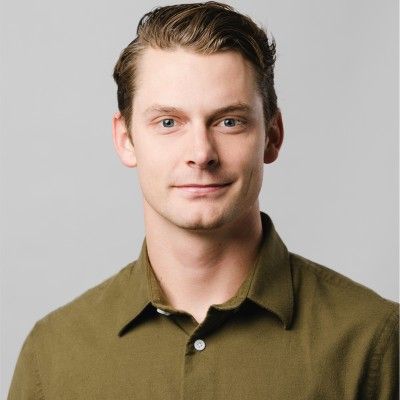
Arkady Kulik
Arkane
Arkady is a scientist and repeat founder who moved into venture specifically to solve a translation problem he kept watching play out: deeply technical founders who can't tell their story, meeting VCs who can't tell whether the science is real or "Theranos 2.0." That background shapes a fund that behaves differently from a default seed check. He leads first rounds, wants to be the first VC on the cap table, and screens on two questions only when he opens a deck: what have these founders understood that nobody else has, and what problem space are they in. Everything else is secondary.
The tactical advice is where the episode earns its time. On outreach, he wants founders to build three or four tiers and start with a "tier zero" of friendly VCs they don't even need, purely to rehearse the pitch and burn through the rough reps before approaching the firms they actually want. On decks, he argues the competition slide is close to useless at pre-seed, because any static two-by-two is a snapshot of a moving target, and early companies die from execution, not from competitors. On process, he time-boxes hard: a non-fit founder is out inside 30 minutes, and even a serious diligence path costs no more than three and a half hours of the founder's time, run through a questionnaire, a scientific partner, and a business partner before a final call. He treats a slow, ambiguous process from other VCs as usually a soft no, not a maybe.
His most contrarian material is about the money itself. He ranks capital plainly: revenue first, debt second, equity last, and calls equity the worst money a founder can raise because it loads on the most liability and the most outside expectations. He refuses to celebrate a close, and warns against "suicide rounds," raising too much at too high a valuation too early, then spending like the cash will never run out. His fix is unglamorous: park it in treasuries and behave as if you never raised. He's equally direct that manufactured FOMO is an instant pass, since reputation in this market dies in hours, and that most failures trace back to execution and founder psychology rather than the balance sheet.
On building a tiered outreach list
Thoughts on the competition slide
On time-boxing diligence
On the reality of raising venture capital
Mat Vogels (00:10)
Hey everyone, welcome to another episode of Fundraising, a podcast where we interview early stage investors and ask them all the tips, tricks, tidbits, and advice that you, as a first time fundraising founder, want to know about the fundraising process. Today I have a very special guest,
Arkady, the general partner of Arkane. Thank you so much for being on today.
Mat Vogels (00:37)
⁓ as as we talk to a lot of founders or in the space, I think that what you get to bring today is a a more technical background. So I'm excited to to dive into that. One of the episodes I heard you on recently, you'd mentioned this, that something like one in five deep tech investors.
have the technical background that that they might need to to invest with, which means the majority, including myself, don't have the technical background as they invest into these very and highly technical businesses, which is kind of crazy.
Arkady (01:05)
man, I think that everybody tries to approach this game from a very different angle. There is a very well-known thing that there are many ways to win in venture. And as long as you've got an edge, play to your strength. I think that people at Deep Chucks are unmatched in terms of your marketing, in terms of your ability to create community and attract people to you. And you should play to your strength. There are many great firms out there. BoostVC is fantastic. They have their own strategy.
And we just need to know what we're good at and utilize it to our best ability. My first advice to the founders.
Mat Vogels (01:39)
Yep, I can I completely
agree. First of many. So at Arkane, could you give us some quick background on average check size stages you invest in and then maybe you mentioned deep tech, any specific areas or sectors that you're interested in?
Arkady (01:54)
We invest in the very first rounds that people raise. If it's a friends and family, perfect. If it's pre-seat, perfect works for us. We do anywhere from 300 to 500 K checks. want to lead your very first round. want to be your very first VC check. We're the most excited about Neurotech, energy and hardware for logistics. We found those three areas to be one of the most impactful for humanity. And we want to make sure that our work is not just lucrative and
pays well to RLPs, but also helps humanity be a little bit better off.
Mat Vogels (02:29)
I love that. That's a great question. why did you choose to get into V C and what were you doing right before?
Arkady (02:36)
I've been an entrepreneur my whole life and I moved to the US to do something in the world of science and technology. And when I met a bunch of founders as an angel, as a consultant, as an advisor, I saw the same problem play out over and over again, deeply technical founders having trouble telling their story. And especially back in 2021, less than technical VCs having trouble to understand.
what kind of technology is real and what kind of technology is Theranos 2.0. So we had to be very focused in translating from deeply scientific language to VC language. I found that to be a very clear problem and I found that my network, my skills and everything that I've done so far in my life would be best fit for a venture fund.
Mat Vogels (03:06)
Ha ha ha.
Yep, yep, I like that. And it makes you, I think, the language barrier that a lot of technical founders might have with a typical VC, even if they are a deep tech VC, they would not have with you, which I think adds a little bit to the the empathy and and just the ability for them to feel at home with with someone like yourself.
Arkady (03:42)
yeah, I can geek out about tensor multiplication if you need me to. Don't tell my wife, please.
Mat Vogels (03:44)
There you go. ⁓ I love that. I love that. ⁓
Yeah, not in the house, not in the house. one of the other questions we have founders ask is what is your favorite part about the job and what is your least favorite part about the job?
Arkady (03:58)
My favorite part is finding really talented people with really talented. I understand it sounds like a kind of a cop out answer, but that's genuinely why I do what I do. When I see things that are read about as a child in a science fiction book and I see those prototypes in my hand, that is a little bit of this wow moment. You're like, what's going on here? Is it really happening to me? So when you see, when you encounter this very, very advanced technologies and people who can make them real, this is very exciting.
My least favorite part is probably paperwork and compliance and K1s and stuff that you have to do every year as a VC. Boring. It is.
Mat Vogels (04:31)
Yeah.
It is very boring. yes, yeah.
It it it's definitely and it's because the the highs are so high. the the admin and clerical work feels like a very low low for sure.
Arkady (04:45)
I try to kind
of spread it across these weeks, like half an hour every day. It's like a very nasty workout. Whichever kind of workout you don't like, whether it's a leg day or arms day, that's this thing for me.
Mat Vogels (04:56)
Mm-hmm.
It's funny, Julian Spiro, who made the introduction to us and I know we've both worked with before, he and I used to do these where we would have meetings that we would schedule together to do these things together. So anything that we didn't want to do that particular week or month, we would schedule co working sessions together and then we would use that time to just do it together on there. 'cause sometimes you need that to get through those things.
Arkady (05:19)
That's smart.
Mat Vogels (05:21)
No, no. What is something that you wish founders better understood about maybe the life of a VC, if only to maybe give them a sneak behind the curtain that would help them in the fundraising process in some way?
Arkady (05:35)
the strategy and the process of the VC. I think one of the biggest thing in fundraising in general that is true for both the founders and the VCs who raise their own funds is that you really want to do your homework really well as early as possible because you will find yourself, you will either find yourself in a world of love and joy and everything is fantastic when you work with your potential investor.
You know who you need to target. You know how to address them. You know what kind of things they're looking for. And then you're happy. They're happy. Everybody's full of joy. Or you will be pitching yourself to people who have no idea what you're doing, who have no interest in what you're doing and who will never become your investor in the first place. Do your homework. Understand every particular VC, every particular investor from the first principles, who they are, why they do what they do, how they do what they do.
Mat Vogels (06:28)
Last question before we go into the fundraising process itself. Why should founders pick you andor Arkane to be on their cap table? We already talked a little bit about maybe that technical background. I'm assuming that should be in there. What other pieces maybe w should founders consider?
Arkady (06:45)
I care about the same things they care about. I want to fix the same problems that they want to fix. And I can be a great translator from their deeply technical mindset. It's not just about vocabulary. It's about how you talk, how you present yourself. What do you talk about? I can be a great translator from this technical, very academia mindset to a more of an entrepreneur mindset. Cause I've done both.
Mat Vogels (07:10)
And I think that the translation you can then have on the VC side as well is gonna be invaluable as they continue to raise more capital or even just to communicate and and give updates to VCs 'cause you know what VCs are looking for and can help them translate that as well.
Arkady (07:25)
Exactly. Yes.
Mat Vogels (07:28)
Alright, let's jump into the fundraising process. We split it up into three different pieces. The first is just getting in the room. A lot of folks listening to this, they may not have the network or the Rolodex of VCs that they can just jump right in with. So the point of this segment is to hopefully give them some tangible advice that they can then use to get in front of VCs to hopefully present their memo or their pitch deck and then go into the later stages of the fundraising process.
Any advice that you would give founders as they're maybe building up that that list of VCs to reach out to? We see a lot of founders that go immediately to the top and they think, I need to send some cold emails to Andreessen and Sequoia and KOSla, which maybe that works and maybe it's not saying you shouldn't do that. But what advice would you give founders at the very beginning of that that journey in in trying to build the list of who to reach out to?
Arkady (08:19)
It would be a very good idea to have at least three different tiers, ideally four different tiers of VCs that you can talk to. I would go with the tier number one, tier number zero even, is your friendly VCs, no matter if they invest in your area or not, just to show them the pitch deck, just to walk, do some role play with them, try to get as much feedback on how you tell your story, how you speak about what you're doing, those kinds of things.
There would be tier one VCs that you are ready to burn through because you're going to burn through some of them. So maybe some of the VCs that you don't necessarily need in your fund, in your fundraise need in your round, but you would love to have them, but it's okay if you don't really succeed. And then I would go for the next tier. That would be your best pick. And the final tier would be your second best pick. I would try to go this way.
Mat Vogels (09:15)
I l I love that. I've never heard it broken down that way. So the f is and the reason you're doing that is because you want to be able to A, almost like perfect your pitch and your deck, get the feedback that you need without, you know, damaging necessarily some of the reputation with the investors that you do want capital from. So I like that a lot. But I like the idea of for the tier three, the second to last one, targeting the people that you really, really do want to have on that cap table.
Arkady (09:32)
Exactly.
Mat Vogels (09:42)
And then if you don't land those, then you can go to your second choice and then probably third choice and fourth choice from there.
Arkady (09:47)
Yes, yes. A lot of people, as you said, just go for indiscriminate reasons of the world. And I'm like, okay, good. what if they say no? You start off your fundraising with a lot of pain and a lot of grief. Is it really worth it? Are you really happy when you do this? Those are the questions I would ask myself if I were doing this.
Mat Vogels (10:06)
Yep, yep, I agree. What are some of the things, let's say if you are getting either what maybe it's a warm introduction or even just some cold email sent to you, before you open the pitch deck, is there something that you are looking for in the the affordable email or I like to call them the blurb? What are you looking for in those initial outreaches to get you excited about even getting to the deck?
Arkady (10:27)
When it comes to cold emails, the most important thing that I'm looking for is to understand if those people did their homework. If it's some kind of an email like, hello, team, I want you to look at my deck about cryptocurrency, like we don't invest in crypto, or this new SaaS platform, we don't do software. So when I see that people have not done any of their homework, that's already a big turn off.
If they send me an email like Arkady, I've read your recent post or I read your recent this or that. Literally yesterday, a guy reached out to me and he said, I have seen that you have mentioned something on LinkedIn about noninvasive neuromodulation. I'm excited to share with you what we're doing. And I will take this kind of conversation. Do your homework, show that you care enough about people's time. And then these people will get back to you with the same attitude.
If you don't care, you just blast out a thousand emails and pray for the best, well, you're probably not going to get any reaction whatsoever.
Mat Vogels (11:27)
Yep, yep, I completely agree. And it's funny how often I'd say more than half of the emails are not that. So even just by taking that extra step, you're gonna already be ahead of ahead of the average.
Arkady (11:38)
100%. That's just... Don't be lazy.
Mat Vogels (11:39)
Into the pitch deck, yeah.
Hmm, don't be lazy. I agree. On the to the pitch deck side, so if you get excited, you're reading through, pitch deck is typically where VCs are gonna land first in in learning more about your business. For you personally, is there a slide or something that you are gravitating towards to kind of figure out if this is something that's even worth more of your time?
Arkady (12:04)
I really want to understand two things from the Peach Deck. Number one, what have those guys understood that nobody else understands? And number two, what is the problem space that they're tackling? To me, those would be the most important things. If I care about the same problem, if I see that they have really understood it better than anybody else, then very likely I will be the person that would be excited about
Mat Vogels (12:28)
Hmm. It's com common feedback that we see with VCs and founders are sometimes frustrated with the you know it's like the unique insight question. It's like what do you see here that no one else sees? Why in your mind is that something that is so important for you to see, but also a lot of other VCs looking for that?
Arkady (12:45)
because everybody should have a right to exist. Honestly, it might be cynical, but if you are not doing something better than it was done before, why bother? Like, nobody asks sports people, Messi or whoever is the flavor of the sports today or Max Verstappen, for example, nobody asks them like, why don't you just do your stuff on average? Why are you just...
Why do you care? Why do you try to score a goal? Why do you try to win a race? What kind of question is that? It's like, if you have something unique about what you do, look at LeBron James, this guy's work ethic is insane. The things he innovated in terms of his recovery, in terms of how he operates, that's just crazy. If you do something in the crowded area, in the field where a lot of people attempted to do something before you, you should
Mat Vogels (13:15)
So true.
Arkady (13:35)
have a unique insight, you should have the right to exist, claim to fame, call it whatever it is. Being average doesn't cut it, Matt.
Mat Vogels (13:45)
Yep, yep, yep. And own it and and don't be afraid to to share it. 'Cause we do see a lot of founders that are overly humble, I would say, in in the way they do that.
On the f flip side, is there a slide that you think founders maybe spend too much time on, and maybe it's in their pitch in general that either you andor you think a lot of VCs actually don't care about as much?
Arkady (14:07)
edition. A lot of people.
Mat Vogels (14:08)
Mm. You're saying that's one that
they spend too much time on their competition?
Arkady (14:13)
I think that I don't care for having a competition slight in the deck in the first place. Especially when we're talking about the early stage startups, pre-seed, friends and family, competition will change so many times over the next couple of years that in my opinion, it is kind of a waste of time for the founder to even try building this. And on top of that stuff,
I always show my founders a comparison between a rock and an iPhone. And like rock has all of those green ticks and iPhone has all of the red crosses next to it. It's so easy to represent your product in such a way that it looks so much better than existing competition. Another fallacy is this kind of two by two quadrant of whatever product properties. there of course, in the top right corner,
They're amazing. They're fantastic. But the thing is they're talking about something that will be there in five years and all the competition is static picture from today. Do you think that all of your competition is going to stay there? Seriously? Like why? I don't think that competition makes any sense. And there is a lot of research on about that, that in the earliest stages of the company, earliest years of the company, the main reasons company die is because of the execution failure and because of the
Mat Vogels (15:02)
Yeah.
Arkady (15:26)
of just bad execution more than anything else, not competition.
Mat Vogels (15:30)
Yep, yep, I completely agree. All right, let's say that they've gotten you excited enough and you're going into that first initial meeting with the founder. Typically it's the it could be the one and only time that you get to meet with this VC. So it's always important to leave a good impression. What are you looking for in that initial meeting with a founder?
Arkady (15:50)
honesty and clarity. I look for the person who is honest with themselves. I look at the person who can be honest with me. I don't need the founder to have all the answers from the get-go. I don't need the founder to know it all from the very first minute that they meet me. What I need is their honesty, humility, and if they don't know something, that's okay. We can figure it out. But if they're lying through their teeth or they're telling me things that are not there,
then the trust goes away immediately and there is no coming back from that.
Mat Vogels (16:22)
from a like a technical perspective in that initial meeting, are you looking for are they walking through the pitch deck, are they trying to explain the technology? Does it just depend or what is the the topics of conversation that you typically like to go through in those initial meetings?
Arkady (16:39)
I'm a very idiosyncratic person in that particular regards. I am...
I'm always, I always have a rubricated set of questions. So I go mainly through blockers. It could be the, the valuation of the round. It could be if the technology is proprietary, it could be their understanding of the market. So I have my own set of questions, but I'm trying to get through the first meeting is to understand if there is some business to be done in principle between me and those people. And if there is none, then let's not waste each other's time. So I'm trying to go through all the biggest deal breakers.
as early as I can in the process.
Mat Vogels (17:14)
Yep. Is there any red flags that come through? So n maybe not just the opposite of what you meant in in clarity or honesty, but any other mistakes maybe that you see founders make in these initial meetings that they should try to avoid?
Arkady (17:27)
I do not assume the role of the judge of how they conduct themselves or how they behave themselves. do not judge them. A lot of people going to those meetings very nervous. They're stumbling on words. They are clearly shaking. I'm trying to hold space for them as much as I can because it's not my place to be the judge of their performance ability on the stage and talking to the crowd using the right voice and the right hand movement.
All of that is BS. What I'm looking for is the person who is passionate about their problem, who's passionate about the solution that they found, who can have a normal conversation. I always read the deck before I meet the person. I always go with a very specific subset of questions after reading this deck. And to me, what's important is that people don't just jump into the pitch mode and try to sell, sell, sell, sell stuff to me. Probably one of the biggest red flags, and it's not a mistake, it's a personality thing.
Mat Vogels (18:16)
Mm-hmm.
Arkady (18:20)
I would ask a question and the person's like, I'm going to answer that. But before, and there was like 15 sentences that have nothing to do with what I need to understand right now. And I'm like, how is that relationship going to work in the future if we already cannot understand each other?
Mat Vogels (18:35)
Yep, yep, I agree. It's a dance that kinda goes through in that in that initial meeting as well. And you need to be able to to ebb and flow and you don't want to necessarily take control the whole time.
Arkady (18:46)
You need to have a normal human conversation because at the end of the day, we see is just another human in front of you. It's not some kind of a damn God or something that you need to be afraid of and then expect them to judge you like tool who does come on.
Mat Vogels (19:00)
It's it is true though, and I think even with founders that we've already invested in and we have good relationships with, you can still feel a little bit of that fear is not the right word. They're not necessarily afraid of us, but there is this sense of you know not wanting to disappoint and needing to impress and constantly show everything is great and positive. and that does carry into that first meeting where you mentioned earlier they're a little bit shaky and nervous and they go into these panic modes of just, you know.
talking really fast and presenting really fast, you need to be able to to slow down and have a conversation.
Arkady (19:32)
But it's so visible though. It's so clearly visible and so painfully obvious when these things happen.
Mat Vogels (19:39)
Yep. What are some of the questions that you think founders should ask VCs, if any, in these initial calls? Not because you're looking at it as like a checkbox of, I'm glad they asked that question, that's a check, but more so that they can take ownership of the meeting for themselves and the process for themselves.
Arkady (19:55)
I think it's critically important to understand if the VC in front of you can do business with you or not. I think that you need to understand their strategy. Ask them point blank. Do you invest in this at these stages? Do you invest in those valuations? How many checks do you plan to write this year? How many checks have you already written this year? Cause if you're meeting somebody in June and they're like, yeah, we're doing 12 checks a year in this area and we've done 11.
You understand your chances. Prioritize your time accordingly.
If there
If their strategy makes sense, try to understand the process. So this is the qualification call. What happens next? Who do I need to talk to? Do you need my deck? Do you need my data room? What exactly do you need to understand? Is there a questionnaire of sorts that I can go through? What are the next steps? Drive the process respectfully. You don't have to push people around, just understand how their process works and go ahead with this process.
Mat Vogels (20:50)
One of the other questions that we get a lot is whether or not they should be bringing their entire founding team onto that initial call. What are your thoughts on that?
Arkady (21:00)
I am indifferent, whatever works for them. Sometimes it works better in groups, sometimes it works better one on one. I've never made any kind of decision based on how many people are on the call. They can bring their grandma for the love of God, I don't care.
Mat Vogels (21:02)
Indifferent. No.
I like that. Maybe no what about what are your thoughts on on advisors when advisors join the call?
Arkady (21:21)
Again, I don't care who joins the call. I need to understand certain things. If their advisors are helpful in explaining those things, great, sure. Okay. I'm not going to judge them. They can have so many reasons why they want this advisor on the call from just being a little nervous with the fundraising down to actually thinking that maybe this advisor will become their first hire. Maybe they want to get this advisor involved deeper. Maybe they want to show some kind of.
And grace to that advisor. And assuming things about that and jumping to conclusions based on my own assumptions. It's not smart.
Mat Vogels (21:56)
Yeah.
That's I feel like that is not a hot take, but a take that I really like 'cause I think I've I've had a ask that question to a lot of ECs and they have very specific like answers to that, which is why founders ask for it, because there have been times where they've said that, the meeting didn't go well, you invited too many people to it, or that you had that and it's it's to the point where founders now have to ask the question because they they they have gotten feedback in so many different ways.
Arkady (22:22)
Now you got me confused, like why would they be unhappy that there are too many people on the call? Are they afraid or something? What's going on there?
Mat Vogels (22:29)
I know, right?
They feel they feel outnumbered. Their egos are hurt.
Arkady (22:33)
That's hilarious.
Mat Vogels (22:35)
Uh-huh. but I think that's a more of a testament to you is is what I was getting at. 'Cause I think it's more normal and normal isn't the right word, more common that V Cs do have some sort of particular especially if it's somebody that's non related to the founding team.
Arkady (22:49)
Look, I genuinely think that it makes zero sense to try to understand why a certain person is on the call. And it makes even less sense to try to judge a founder because there is somebody on the call like that. It's just, it doesn't make any sense to me. I would not advocate for that approach. I think it's a bad idea to judge founders based on that.
Mat Vogels (23:12)
Yep, agreed. All right, let's say that they've in they've impressed you enough on the call, they're kind of moving into the next phases of the process. What does your diligence process look like? So everything going from after that first call to writing the check?
Arkady (23:27)
So it is pretty straightforward. If everything is fine and we think that we can be fit, I will send a questionnaire. I would ask them to complete this questionnaire. Once this questionnaire is completed, I will introduce them to the scientific partner on the deal and the business partner on the deal. Those people will go into the conversation already prepared and knowing what we expect to happen. So those partners of mine will look at the filled out questionnaire data.
And they will then reach out to founders, meet those founders and have a conversation with them. So at that point, the founders spend maybe two and a half hours talking to us. If everything is fine and my partners say, yeah, let's go. Then I'm going to have a final call with the founder. And after that, this is it. We've made our decision. We're going to fill out our own internal scorecard and that's it. So we've optimized the process in such a way that if it's not a fit and the father would not spend more than 30 minutes with us. If it is a fit.
or if it is a potential failure, we're serious about it. No more than three and a half hours of net time of the founder will be spent on our process. I'm very respectful of their time. They've got a lot of things to accomplish. Fundraising should not be the only or even the most important thing on their...
Mat Vogels (24:40)
That is exceptionally fast. again I think another testament to the way that that you operate in this. 'Cause a lot of VCs I think will will be will be much slower than three hours for sure.
Arkady (24:51)
Okay, sure. But at that stage, when we're talking about early stage companies, I understand if you want to go like series A, series B financing, when you have multiple years of audited financials and you need to be very, very thorough, and you need to deploy an enormous amount of capital, like, I don't know, tens or hundreds of millions of dollars, sure, you want to be very diligent about that. We need to understand if technology is real, if the founder is real, if what we are underwriting is feasible.
Mat Vogels (25:04)
Yeah.
Arkady (25:20)
Why spend more time on that than necessary?
Mat Vogels (25:23)
Yep. But I think what I'm thinking is not to put a time on it like three hours or anything like that, but if a founder finds himself in a position where it feels like the process is taking much longer than it should, especially in those early stages, would that then be a red flag for the founder as it relates to even wanting to work with this VC?
Arkady (25:42)
I don't know, it's for the founder to decide. I think that every founder should have, as I said, a clear understanding of the process. And if what has been said to them, what they know about the process is going sideways, then maybe it's a good signal that things are not going really well. It depends. Certain VCs will take a lot of time and will have multiple meetings one after another. That doesn't mean anything, that's just their process.
With other VCs, the same kind of an ongoing like, I didn't know, maybe yes, maybe no. Well, let's talk in month, let's talk in a quarter. More usual than not, it's a signal of no interest rather than signal of interest.
Mat Vogels (26:08)
Yeah.
Yep. Yep. It's a nice problem to have, but if a founder finds themselves in a position where they have maybe an abundance of choice. Paige who we spoke about earlier, from Behind Genius Ventures mentioned this, which I thought was great, then it's sometimes interesting to see the way that founders act, behave, or make decisions when they are faced with abundance versus some some sort of restriction. If they have
multiple leads, if they have, you know, multiple options to kind of fill out their round, what is some of the advice that you would give to founders in in how to to build out their cap table or what should what they should over index on and maybe under index on in some areas?
Arkady (26:58)
I don't know about under index. That's, that's not my place to say what people should under index on. I actually wouldn't even think about that in that sense, in that kind of a vocabulary, if you wish. think what they should over index on always is finding the best partners for what you're doing. This is the only critical thing. If you have the right people on your cap table, on your board, right people in general with you fighting for your case.
then you have a good chance to win in this game. A very, very decent chance. If you are looking for people who will give you the biggest check or who are going to bring the biggest clout to your race, it's very likely that you will find yourself disappointed and unhappy. Look for partners, don't look for money bags. That's how I would put this. Sometimes those things, like by the way, one very important thing, those things are not mutually exclusive.
Mat Vogels (27:46)
Yeah.
I think it's a
Yep. And sometimes yeah, if they can find those two together, it's a it's a win win for sure.
Arkady (28:00)
Yeah, that's what you ideally, ideally everybody wants.
Mat Vogels (28:04)
Yeah. But I think that people forget there's maybe two things in the fundraising process. One, I think a lot of founders go into it wanting to get it over with quickly. And that can sometimes be a mistake is they forget that although the fundraising process might be quick, you are going to have a long term relationship, an ongoing process with that VC for the remainder of your company's life.
Arkady (28:23)
Yeah, look for partners. Don't look for a check. This way you are going to be happy in the long run. If you're just looking for a check, well, you know how those stories go. And then they go and they all tell the sob stories about how this guy pushed me out of my own company and blah,
Mat Vogels (28:41)
You don't want to have that.
Arkady (28:43)
Be smart
about people who you allow in your life and who you allow in your business. It's very important. A lot of advice around VC is the same advice I would give to people who start dating. You might be really, really impressed by the looks of a certain individual. Like, my God, he or she looks ABCD amazing, everything that I want.
Mat Vogels (28:48)
Yeah.
Arkady (29:08)
you are not, if it's a fling, sure. But we're talking about a relationship that's gonna last what, 10, 12 years with the VC, like an average marriage does in the US. If you're looking for a long-term relationship, you probably should not optimize just for the looks, right? No? What do you think about that?
Mat Vogels (29:28)
Yep, I agree. On the other side of that, if they find themselves needing to build FOMO, they they haven't quite filled out their round, what is some feedback or advice you give to founders as they're kind of playing that game of, you know, trying to build FOMO and show momentum, but also maybe not overstepping or or coming off desperate or anything like that?
Arkady (29:50)
I think that building FOMO, think that any artificial kind of engagement is a bad idea, period. Just a bad idea by definition. I think that people who are trying to build FOMO, people who are trying to be sneaky about their fundraising, people who are trying to be manipulative about their fundraising,
This is one of those things where I would be like, I'm out and I'm done. I'm not interested anymore. This is not exciting for me.
Mat Vogels (30:10)
Mm-hmm.
And if you do that, you'll lose a lot of that trust quickly and it's amazing how fast a round can unravel even if you think that you are far along in that process. It can unravel quick.
Arkady (30:26)
Man, look, even the best investors in the world fall victims to those plays. The situation with FTX, right? It's a well-known story that he was playing League of Legends or something like that on the investors' calls. And everyone's like, my God, this guy's playing a video game and talking to us. He's so smart. He can multitask and everything.
Mat Vogels (30:48)
Yeah.
Arkady (30:49)
I'm gonna click
People overindex on the vibe and how cool the founder is. I think that any kind of manipulation is the wrong way to have a relationship. And once you do it, if you get caught, you get caught and that's the end of the story and reputation is tarnished in hours, not days. I would actually vote against any kind of artificial creating form or any kind of tactics like that. I think it hurts everybody in process.
can hurt you much more in the future. Don't try to cheat your way through this life in general. I think it's a very bad idea.
Mat Vogels (31:25)
I think that's great advice. Let's say that they've done all of this, they've closed their rounds, they can celebrate for five minutes, but one of the things that I think is really hard that founders don't appreciate I
Arkady (31:34)
Celebrate what? Celebrate the fact that they
have no obligations and liabilities? Like what are you talking about?
Mat Vogels (31:39)
I exactly
right. Exactly right. And that's what I was gonna say is that I think it's a really weird moment because founders kinda go from they've been working for, you know, weeks, tirelessly, maybe even months, to close this round and then it's closed very quickly and all of a sudden it feels like you know the work now has just begun and it is a milestone. I do think it's worthy of of celebration, but it is a weird shift that founders have to make. one of the things we've had on this podcast is that you've just spent the last, you know, handful of days or weeks
selling to investors and now you have to go and sell to you know your customers and your team and it's a kind of a different shift. Any advice you'd give to founders is there moving from from one phase to another or in your mind is it is it actually not that big of a of a shift?
Arkady (32:23)
I think that celebrating a fundraise is a kind of weird thing to do because
Okay, let's take a step back. There are three sources of money in your business. Revenue, debt, and equity financing. Revenue is the best one. If you can get to revenue without any external funding, go get this done. Really, don't care about anything else, just get this done. And then maybe somebody will come knocking on your door, like asking you, begging you to take their money. Maybe at that point you should really consider why you need this cash. Okay.
You need to raise external capital. Can you raise debt funding? If you can raise debt funding, do this because the only thing that comes debt funding is obligation to pay interest. And that's it. Period. Nothing else. The absolute worst type of capital you can ever raise in your life is equity financing. The absolute worst. What is there to celebrate? You just found a way to put a lot of liability on your shoulders. Yes. Like, like what are you celebrating? I just got some money in the bank account.
Mat Vogels (33:19)
Yep. Yeah. The worst option. Yeah. Yeah.
Arkady (33:30)
Okay, now go get shit done, dude. Like now you owe money to people. Now maybe they're not gonna come chasing your house and your car and stuff like that, but now you have other people who have expectations about you. You've made promises that now you need to fulfill. It's not something I would celebrate.
Mat Vogels (33:33)
Yeah.
Yeah.
And you've set yourself on a path that
I think a lot of founders actually don't understand until they're fully in it.
Arkady (33:58)
I would not celebrate fundraising.
Mat Vogels (34:02)
I love that. it's actually that's a rare take.
I have that same take, so it's nice talking with somebody with the same opinion because I always joke that I try to convince people way more often than not to not raise venture capital, even though that's my job, than it is to to raise venture capital, for sure.
Arkady (34:18)
I mean, like the graveyards of people who raised venture capital and thought that it was a good idea.
Mat Vogels (34:24)
And not only that, if they had not, how happy and or successful they probably could have been.
Arkady (34:29)
Exactly, exactly. there is so many ways to build a successful business. Venture capital is not the only one and it's not the best one. have their own, like VCs have their own expectations about how you should run your company, what targets you should hit, et cetera. It's a pretty specific, it's a pretty specific box you put yourself into.
Mat Vogels (34:48)
Yep, no, no. Any common mistake that you see founders make in the first two to three months after they after they fundraise?
Arkady (34:55)
Hmm. Not really. The thing that would be a common trend would be when people raise what I call suicide rounds, when they raise too much too early, too large of evaluation. And then they think that the money will never run out. And it's a little bit akin to the problems of young athletes who get huge contracts with NFL or NBA.
And they think that money never run out and then they have an injury and boom, everything goes out and they just spend money on watches and cars and unnecessary stuff. And in the world of business, it can be hiring people too soon, spending money on marketing that wasn't necessary without any proof that the product works. spending money on sales without any proof that it works, iterating on the product indefinitely. Every single mistake is going to be different. The only overarching topic would be just burning cash too fast just because you have it.
Put it in the treasuries account and everything that you can put in the treasuries account and behave as if you never raised anything. Just be very cautious with how you spend cash.
Mat Vogels (35:59)
Yep, I like that. What are some of the more common reasons that you see startups fail? Is it that they just ran out of money? Any other things that founders can can look for in those early days that they can maybe try to avoid in the long run?
Arkady (36:12)
Look, saying that the company failed because it ran out of money is saying that the patient died because his heart stopped. It's like, sure, but like why the heart stopped in the first place? A lot of that boils down to human psychology. lot of that stuff. Airbnb was about to go bankrupt, what, six times? They run out of cash? Six times. Look at where they are right now.
Mat Vogels (36:30)
Yeah.
Arkady (36:34)
How many founders do you know who would give up after bankruptcy number three? Maybe one, two. mean, like maybe a founder can't pursue one bankruptcy, maybe two. For a lot of them, number three would be like, yeah, universe is trying to tell me something. I'm done, I'm out of here.
Mat Vogels (36:41)
Number one.
Arkady (36:55)
Execution mistakes. Founder psychology. Those are the most common factors. Unfortunately, sometimes life throws stuff at people like death of a relative and unexpected divorce and things like that. That can just add on top of all the pressure and people just psychologically fault. And they're like, I'm done. I don't care about anything anymore. Psychology of founders and lack of resilience.
lack of drive. This is something that burns way more company than expected and found risk models. That's for sure.
Mat Vogels (37:27)
You just kinda hinted at the fact that yeah, we we joke as VCs and not joke, but we talk about how we're betting on founders in, you know, the beginning of a of a ten year plus journey. Not only does the company and all the variables there have to go, you know, as planned or better, but these folks are still human beings and they have personal lives and things to live as well that can also play into how their businesses ultimately do too.
Arkady (37:53)
And that is sometimes very painful. I don't think we should discount that. things can come from such an unexpected angle and hurt so deeply and in such a profound manner that's one of the big risks of venture capital in general. You as a VC,
Mat Vogels (37:56)
No. Def definitely not.
Arkady (38:13)
have no way of hedging yourself against that kind of situation. There is nothing you can do, like literally nothing you can do with a founder catching some unexpected edge with their spouse or their family. Like there is no way you can hedge yourself against that.
Mat Vogels (38:28)
Alright, we're cutting up on the on the end here. I wanna end on a positive note. Any positive piece of feedback, advice, motivation that you would give to founders out there that are at the beginning of this journey.
Arkady (38:33)
Let's do this.
You're not alone. There are a lot of people who are going through the same thing right now. There are a lot of founders. Every single success story that you've heard about, Elon Musk's and Steve Jobs and Bill Gates and any other person that you poster of whose is on your wall. They all went through trials and tribulations. They all had very, very deep moments of despair and sorrow and they still persevere. You're not alone.
talk to your friends, talk to your investors, talk to your partners, dig yourself out of this hole whenever you find yourself in that hole and keep on walking further. You will win if you persevere.
Only you can say no to your dreams.
Mat Vogels (39:20)
Perfect.
There we go. That's perfect. I love that. thank you so much for being on today. I truly mean that I think your advice on this was was some of the best. This was a great episode. Thank you for for being on today.
Arkady (39:34)
I appreciate him that.
This was lovely. I really appreciate you hosting me today and let me know if you need any more hot takes in the future. Would love to join again.
Mat Vogels (39:43)
Or maybe we'll start a merch store with with some of the quotes too. I'm down for that as well.
Arkady (39:46)
I'll send you
the address for royalties.
Mat Vogels (39:51)
There we
go, there we go.
Thank you. We'll chat again soon. Bye.

















.jpeg)