
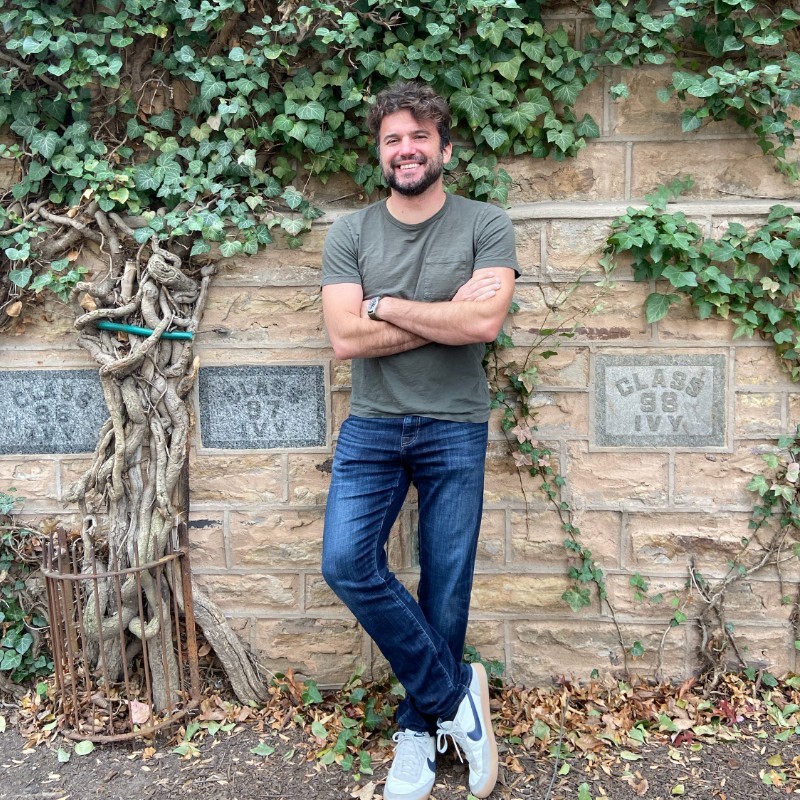
Kyle McNulty
In-Q-Tel (IQT)
Kyle's path into VC is unusual and worth the listen on its own. He was a cybersecurity consultant who started the Secure Ventures podcast during COVID simply because he wanted a "How I Built This" for cyber CEOs. That podcast became his accidental entry into venture, and it informs a lot of his advice: he has literally interviewed hundreds of founders in the trenches, so his pattern matching is grounded in what works, not just what pitches well.
The In-Q-Tel model itself is something most founders have never had explained clearly. Kyle walks through both check types: a standard ~$250K equity check designed to build early relationships, and a larger $1 to $3M check that comes bundled with a paid design partnership and statement of work between the startup and one or more federal agencies. That second structure means In-Q-Tel's diligence is genuinely different from a typical VC, often closing between rounds rather than on a round, and requires building internal champions on the agency side. For any founder whose technology could serve national security, this is a playbook you rarely hear articulated.
On the fundraising mechanics, Kyle is refreshingly blunt about things founders get wrong. He pushes back on seed founders who only chase tier-one logos, warns that VCs absolutely do text each other to verify claims about your process, calls out how a six-minute self-intro reads as insecurity, and shares why being cagey about revenue or hiding behind NDAs is an instant red flag. He also offers a sharp framing on FOMO: the real buzz isn't created by pushing hard on any single investor, it's created when three different investors independently mention your company to each other in the same week.
On VCs verifying fundraising claims
On seed-stage hubris and which funds to actually target first
On what actually earns credibility over resume pedigree
On why pushing for a meeting "tomorrow" backfires
On how FOMO actually gets created in a VC's head
Mat Vogels (00:10)
Hey everybody, welcome to another episode of Fundraising, a podcast where we talk to early stage investors and ask them all the questions that you as a fundraising founder need to know about the fundraising process so that you can close your round. And today I have very special guest.
Kyle McNulty, investor at In-Q-Tel, which is a unique fund that I hope that we can talk a little bit about, because I think people would be interested to hear maybe how some of those things are structured. But before we dive into the fundraising process, can you give a quick overview of yourself and then maybe a high level of what Incutel is investing in, average check size, and maybe the stages that you invest in?
Kyle McNulty (00:52)
Yeah, sure. So Kyle McNulty, investor, like you mentioned, covering largely cyber and AI. So come from a cybersecurity background, I was doing cybersecurity consulting for a handful of years and studied cybersecurity and software development back in college before that as well. So love all things, I guess, software and infrastructure as a result. As far as In-Q-Tel and kind of how we operate, essentially the venture capital partner for the national security community.
So founded by the CIA back in 1999, but now invest on behalf of a broad set of agencies as well.
Mat Vogels (01:27)
that. And it's I think the the expertise that that you guys can bring to the table for for folks that are entering into those spaces is second to none. So it's it's great to have you on here today. Before we go into the fundraising process, we have some questions here that founders had kind of nominated or asked that we asked some of the VCs to just a little peek behind the curtain. One of them a little more personal, why did you choose to get into VC and maybe what were you doing before this?
Kyle McNulty (01:53)
Yeah. Yeah. So like I mentioned, I was doing cyber security consulting for a while. And then during COVID, I was listening to a lot of the podcasts, how I built this with Guy Ross, just when I was doing like whatever long runs, bike rides. And I was like, you know, it would be really interesting if something like this existed for cyber. I love hearing about whatever the founder from Kodiak cakes or Dropbox, but it'd be a lot more relevant for my career if something like this existed for cyber CEOs. And so.
Mat Vogels (02:02)
Great.
Kyle McNulty (02:20)
There was one night where I couldn't sleep and I was lying in bed and I was like, well, maybe this is something I could go ahead and whip together. And so one thing led to another and started my podcast, Secure Ventures, which is about five and five years and change running at this point, interviewing cybersecurity founders who are still in the trenches. And that was just great exposure to the whole ecosystem. And one of my buddies one day was like, Kyle, you've been doing this podcast. Like, have you ever thought about working?
in VC, like it seems like it might lend to your skill set fairly well and you might be interested in it. And the honest answer was no, it had never even crossed my mind until he said that. But spent some more time thinking about it and had met a bunch of VCs through the podcast and decided that was the angle that I wanted to take. And so ended up going to business school and now I've been at Inqutel for just under two years.
Mat Vogels (03:07)
I love that. It's unique background. always find that, you know, it's typically the people that never sought to go into VC that I think end up being some of the better investors. So it's always a great little angle there. Next question was, what is your favorite part about the job and being a VC? And then what is your least favorite part about the job?
Kyle McNulty (03:25)
Hmm. Favorite part, I would say it's just the kind of intellectual curiosity piece, the ability to learn about all these different areas of technology that are at the forefront. One of the nice things is I get to spend time across cyber AI, but even some other like random deep tech businesses. whether it's like mining exploration or some crazy new energy company, it's fun to just get to learn about.
the super wide variety of topic areas day in and day out from some of the foremost minds in the field. my least favorite part is like the strange kind of competition dynamic within venture. I think we're very fortunate at Incutel where we cooperate very nicely with a lot of other funds because our check sizes are so small and we have a very clear kind of strategic value.
Mat Vogels (04:01)
Ooh, yeah.
Kyle McNulty (04:13)
But nonetheless, it is kind of a strange dynamic sometimes, even just being in the room when it's like you get together two of your investor friends, but you realize that they are actually competing with each other fairly directly for deals. And so then there's kind of this weird dynamic that's created as a result.
Mat Vogels (04:30)
Yeah, one thing I want to call out there for the founders listening is this is why it's so valuable because doesn't QTEL ever lead or are you are you always in a position? Yeah, I think finding investors that are not leading can be such a superpower for you because typically they can write a good check, but then they are going to have some of the stronger relationships with other funds that could potentially lead or just continue to follow in there. Because to your point, if you are a lead investor, typically, you know a lot of other lead investors and then you can't
really
reach out to them because they're also, you they're not going to be able to participate in the round. So it does create a weird dynamic. It's kind of similar to the next question. And I don't know if you wanted to double down on that or if there was anything else, but what are, what's something that you wish maybe founders better understood about the VC industry? You mentioned one already being a little bit of the competitive dynamic behind the scene. Is there anything else that you wish maybe that founders had a better understanding of the day in the life of what it was to be a VC?
Kyle McNulty (05:27)
Hmm. I think one that comes to mind, I think a lot of founders get this, but sometimes they don't is that VCs all talk to one another, right? Like if you say that you've had a conversation with this fund or like this fund has offered you a term sheet or maybe not even term sheet, it's like deep in conversations with you really leaning in, like I'm going to text the person that I know at that fund. Or if I don't know them directly, I'm going to find someone at my firm who does and ask them about it.
Mat Vogels (05:35)
Hmm.
Kyle McNulty (05:54)
And so if you are misrepresenting the kind of like level of depth that you've gone to with a certain fund, you can completely shoot yourself in the foot and undermine your credibility. And so I know there's this whole idea of like, you're selling your company and you're selling like how great it's doing and you have to create this little bit of competition between investors, but just be careful not to misrepresent where you are because people are going to kind of check your sources on that.
Mat Vogels (06:18)
Yeah, that's excellent advice. You already mentioned cyber being something that you're excited about. Are there any other industries or areas, maybe it's even within AI and cyber, that is getting you really excited right now?
Kyle McNulty (06:31)
Yeah, I mean, there's a ton, to be honest. I think world models is like super buzz heavy right now, but I genuinely am excited about it. More news to come on that in the coming months here in terms of our kind of like engagement with that space. But in general, I just think that this is a super exciting opportunity and moment in time for this whole new capability of model. It's not yet.
totally clear what the use cases are going to be, but there's kind of this very broad swath of use cases that they might be able to address. I just think the technology is so powerful when you look at some of these early demos and how it might be able to be used in the future across either national security or commercial use cases. So I'm really, really excited to see how the market evolves.
Mat Vogels (07:15)
that. Our last question before we go into the fundraising process, why should founders pick Inqutel or you to be on their cap table as an investor?
Kyle McNulty (07:25)
Yeah. Well, I like to think that this one's hopefully very clear and straightforward. Like if you don't have any interest in pursuing federal government customers, then you probably should not be working with us. But if you are interested in pursuing that whole market opportunity and getting your technology into this huge growth opportunity outside of your kind of normal commercial lane.
then we have the relationships and connectivity across these different organizations that we've built up over several decades and some unique kind of mechanisms with our investment structure, which we can talk about a little bit more later, enables companies to get access to these agencies much earlier than they would otherwise have access to them.
Mat Vogels (08:05)
Definitely a unique value add, definitely very valuable for the companies that are looking to get into that space, that's for sure. All right, let's go into the fundraising process. This is what people are here for. We break it up into three different parts. The first part is how can founders go from, I have an idea, maybe I have a pitch deck.
How do I get it in front of Kyle to get him interested in taking a meeting with me? So it's everything before the meeting. We then go into the meeting itself. It's typically one of the more important segments of the fundraising process. It's that first impression, first 30 minutes that you're meeting with, with an investor. How can they shine in those moments? The last phase is kind of everything else to the finish line. It's you're lining up a lot of first meetings. You're kind of hurting cats a little bit. You're building momentum and trying to maintain it. And then ultimately get over the finish line and close the round. And then we'll have a couple of questions at the end that are
a
little bit more post-fundraise, but starting again with the how do you get it in front of the right people? Typically what we see founders do is they kind of create this list of investors to reach out to. But a lot of times I feel like they get the list wrong, they kind of pick the wrong investors, maybe it's not enough or too little. What is some of the advice that you would give founders on the types of investors, the characteristics maybe for them when they're building out that list of funds or investors to reach out to?
Kyle McNulty (09:20)
I think one that comes to mind, hopefully this isn't too harsh, but like, think a lot of times early stage founders at the seed round, let's say, they don't have a lot of investors on the cap table yet, but they think really highly of the product that they're building and the vision of their company. I think that's awesome. But I think oftentimes there's maybe a little bit too much hubris with like which funds are going to be interested in their
capabilities and saying, okay, we're only going to talk to the tier one funds. Like we need a Sequoia, we need an Andreessen on our cap table. And I think if you go straight to those funds and start reaching out there and are just getting emails that are landing in inboxes and never being looked at, I think you're kind of taking the wrong approach to getting started. There are certainly some companies and some teams that will have that access.
You have like the perfect background. have these unique market tailwinds. You have existing relationships with some of those investors because you've been involved within the ecosystem. Then sure. But I would say just as like general advice, maybe start with a slightly lower bar. It can't hurt to get a term sheet from some other funds further down the stack. And then if your, if your process is going super well, then kind of raise your sights on what that looks like.
Mat Vogels (10:39)
That's great advice. And you can build momentum and everything with those conversations as well. So I think that's really nice. What are some of the better ways that you've seen founders get their pitch deck or memo in front of those VCs? So maybe they've made that list and they have some folks they're reaching out to. What are some of the better, more effective ways that you've seen those things land?
Kyle McNulty (10:58)
I wish I had something that feels like it's going to be groundbreaking here, right? But I think the answer, which you've probably heard plenty of times on the show is like warm intros. It's the same for us as it is for most VCs, right? I do think that like, there are times where if you come talk to me and we say, hey, it's too early for us. I will still make intros to other investors. Like if it's genuinely too early and I'm excited about
Mat Vogels (11:03)
Yeah
Kyle McNulty (11:25)
the team and the company and what you're building, then I'll go and pass it to relevant folks that I know at some of these other firms. And so I do think that like you shouldn't discount the value of having a conversation with an investor, even if it doesn't seem like they, you kind of hit it off and are immediately going to move forward to a term sheet. Yeah, I think really it comes down to who can you leverage in your network? Who are you impressing as you're talking to folks that can then help you?
kind of connect and work your way in. Maybe just the last piece of advice that I would give is like, it doesn't necessarily just have to be one person who gets you into that firm. Maybe you take like kind of a chain approach, right? Where one person gets you an intro to someone who's one step closer, who gets you an intro to someone who's one step closer, who gets you an intro to someone who's one step closer, right? And so you can kind of work your way up that way.
Mat Vogels (12:01)
Hmm.
Yep.
Yep. like that. Warm intro is definitely the most common answer and it's kind of the right one. It's the one that you just have to do. We've had other people on this podcast that have said that the fundraising process starts months before you actually start fundraising and part of it is just building those relationships that could be really important. So let's say you are getting a warm introduction or that you have somebody that sent you something that you're going to take a look at. Do you prefer, we have a lot of folks these days that are preferring memos over pitch decks. Do you have a preference or what are your thoughts
on some of the new pieces there.
Kyle McNulty (12:43)
I would prefer a pitch deck personally, like maybe for some super deeply technical stuff where you really need to get into the weeds. But for the first conversation, I feel like I don't need to get that into the technical weeds most of the time. Like usually I'm going to save that for the second conversation. For the first conversation, I want to hear a little bit more about like, yeah, what's the team background? Why this problem? What do you think the different tailwinds are here? What's your kind of high level solution and some of the core differentiation?
And then in the second call, can talk a little bit more about like, Hey, what's the nitty gritty under the hood? How are you actually getting to this technical differentiation?
Mat Vogels (13:17)
Yeah, one of the more common slides that we always hear about that the founder or that VCs are looking for is obviously that team slide. Is there anything on those, the team slide or some of the slides that you gravitate towards that you wish founders maybe did a better job at executing on?
Kyle McNulty (13:31)
You know, I feel like this isn't usually a slide, but something that I've picked up from my podcast over time. think a lot of the most successful founders have had so many conversations before they decided on a specific company to go ahead and start and a specific product to go ahead and build. think a good example of this in cyber is like, how many chief information security officers have you talked to?
Right. And like cyber starts and all these different accelerators do a fantastic job of giving you access to some of these different CISOs. And that can certainly be a challenge for early stage companies, but I don't usually see this on a slide. Sometimes it comes up in conversation. I am far more impressed if I'm meeting with someone and they say, Hey, we talked to 75 prospective buyers, kind of canvassing the market, figuring out what problems they care about. And this problem came up with 60 of them.
And that's why we're here doing this today. Like that gives you so much more credibility kicking off the conversation that's beyond like what company did you work at previously or like what was your past role?
Mat Vogels (14:34)
Yep. Yep.
It's the story, it's the why, all these things kind of tie together into doing that. All right, let's say they've done all the right things, they've gone through, they've given the pitch deck, you're excited to now hop on that very first call. What is it that you, as an investor, are looking for in that first call? You mentioned already that you're not ready to get into the technical weeds yet. A lot of the things you're investing in are probably highly technical. So then what are you spending the 30 or so minutes in those intro calls doing?
and what are you trying to get out of them?
Kyle McNulty (15:06)
Yeah,
I do think it depends a little bit on my familiarity with the space, to be honest. So maybe this is like a little tip for founders, which is understand a bit the background of the person that you're talking to. Like if we're talking about cyber, I usually, hopefully have a pretty good grasp of like why you're tackling this problem. Some of the underlying market forces that are driving us here. I know about everything that's happened with like Mythos and 5.4 cyber over the last like few weeks.
Stuff like that, right? Whereas in all honesty, like my depth with the whole AI market is certainly a bit shallower. Like I haven't worked as an AI developer for five years before this. And so there's like a slight upleveling in terms of just like where we start the conversation and why you're going after the specific problem. So I guess my point in saying that is like, I want to hear about the problem that you're going after, but a different level of depth is required based on.
Kind of my own background and the product that you're building. Beyond that, I think we touched on a lot of these pieces, right? Like why is your team the right team to tackle this problem? I think differentiation is something that a lot of founders don't have a great answer for, to be honest. And there's like a lot of ways to differentiate a company. The team one is going to be fairly straightforward over the course of a conversation. Like how differentiated do I think your team is, but
There's also the piece of the product of like how differentiated really are these capabilities, especially in a world where there's more and more conversation about how like a software feature is not all that much differentiation anymore as these models make it so much easier to release and develop new capabilities and other folks can copy and imitate your features much more quickly. So I guess the point is like when you come into that
first meeting, I shouldn't even have to ask. Like it should be really clear from the course of your presentation, like why you are the right bet here, what you have really unlocked within this ecosystem that other people haven't figured out and why that's sustainable.
Mat Vogels (17:06)
Yeah.
One of the things that we've had a lot of people on VCs talk about is the first five minutes matter so much because it kind of dictates how the rest of the call is going to go. What I mean by that is, and this is maybe more of a question for you, how can founders best kind of position themselves early to go through their entire pitch deck and get you what they want? A common one is, you know, how should they prime you? Should they ask you how familiar are you with the space? Like, what can we tell you in the 30 minutes? Is there anything that you wish maybe found?
founders
brought to the table to start off the meeting that would best position you to get the most out of those 20 minutes. So it's almost like how do we empower founders to spend these 20 minutes or so wisely?
Kyle McNulty (17:50)
Yeah, that's interesting. I think I'm usually fairly forthcoming about it when a call starts, but I'm sure that that varies across the ecosystem. I don't think it can hurt. Well, honestly, it maybe could hurt. It's like a bit pejorative if you're like, how familiar are you really? Yeah. So I think for that one, like you can just kind of look at their LinkedIn profile and what companies they've invested in previously to have a better sense of their level of familiarity with this technology area. Right. And,
Mat Vogels (18:04)
I know some VCs have weak egos, yep.
Kyle McNulty (18:19)
You know, one thing that sticks out, you talk about the first five minutes, we have a fairly unique investment process, right? And so we spent a lot of time doing just intros at the start of the call, but something that really sticks out is when founders give like a six minute intro about themselves and like all of the things that they did previously. It's like you, it feels like you're kind of stretching to justify your background a little bit more as opposed to just reading well with like three sentences.
Mat Vogels (18:42)
Yeah.
Kyle McNulty (18:46)
So maybe there's just a lesson there that think carefully about what your intro actually looks like and talk about the salient points, but don't give like a full essay to open the call. Cause there's more important things to cover and it feels like you're kind of grasping at straws to explain why you should be in this conversation right now.
Mat Vogels (19:02)
Yep, that's good advice. A couple of rapid fire questions here that the founders were curious about. Do you like when founders have a pitch deck and they just go through a pitch deck for the time? Is there a balance there or what is your thought about the pitch deck being in the meeting?
Kyle McNulty (19:17)
I prefer when a founder has a pitch deck. Like I think there will be times where, maybe founders go too slowly through different parts of the pitch deck. And this goes back to what we just talking about, right? Like, know your audience. You don't have to walk through five slides explaining like why AppSec is important right now, with like Mythos coming out and exploiting more and more vulnerabilities, right? Like I get it. but at the same time, I think it's helpful to.
just structure the conversation a little bit more as opposed to just leaving it like completely open-ended. And it is nice to have some more of the materials on screen just to kind of like even keep you engaged to be honest. Like, otherwise it's easier, I think for your eyes to kind of wander to other things that are popping up on your screen. Like every investor that you're on a call with is going to have notifications coming in constantly. And there is an honest element of like, how are you keeping this person actually engaged in the conversation with you?
Mat Vogels (19:55)
Yeah, like a visual.
Yeah. Should the expectation be that founders, when they go into this, that VCs have read their pitch deck or seen their pitch deck? How often do you think that is the case and where should the assumption be?
Kyle McNulty (20:21)
That's a good question. I feel like it's hit and miss for myself, to be honest. Like, I think it totally depends on where the introduction came from, when the introduction was first made. Like oftentimes, if I see a pitch deck come through, I'll read it really quickly, but then it might be like a week and a half before I actually have that call with the founder. And I'm probably not going to do like a full read through. Again, I'm just going to refresh myself on some of like the high level details.
And so I would say certainly don't expect them to have it memorized. And there's probably a good percentage of the time where they haven't read it at all. I think you can get a sense of that pretty quickly too though.
Mat Vogels (20:57)
Yeah, yeah, and even asking them at the beginning if that's the case doesn't hurt. Last kind of quick rapid fire question here that founders were curious about was, should it just be the CEO there? Do you like seeing, and this again on the first call, seeing the whole founding team there? What are your thoughts on that?
Kyle McNulty (21:13)
The worst thing is if you bring like a funding advisor.
Mat Vogels (21:17)
that's so bad. Please don't do that. Yes.
Kyle McNulty (21:20)
Yeah, this happens like fairly frequently. I mean, talk to a large number of companies every year, right? But that's like such a big red flag. And I think honestly, in some ways, like even using that kind of function can be a red flag, but at least keep it like transparent and behind the scenes. If yeah, if your investment advisor and like someone who's helping you with the funding processes in the pitch call, like that's a really, really bad look. Otherwise,
Mat Vogels (21:23)
It does.
Kyle McNulty (21:47)
I think it's fine to have two or three folks. I sometimes we bring a ton of people onto calls as well. It depends on the background. I think it's usually best for the second meeting. Like I think if it's a first meeting CEO, maybe CEO and CTO is fine. CEO and COO, if you're like confident about it and you like that kind of combination, I don't feel all that strongly about it.
Mat Vogels (22:08)
We talked about some of the things that you want to get and cover from there, but what are some of maybe the characteristics or traits that founders can bring to these calls that get you excited? Are there any green flags that you see there?
Kyle McNulty (22:21)
Yeah, I mean, I think there's all kinds of, of green flags, just like there's all kinds of red flags, right? You're talking specifically personality traits. I mean, I think the, the kind of energy of a founder goes a long way as well, right? There's certainly times where I'm kind of worn out from a day and the founder I'm sure is worn out too. Like they've given whatever 50 pitches already and yeah, like they're exhausted. I get it. but I think like, if you hop into a call, you're like enthusiastic.
Mat Vogels (22:41)
Back to back to back pitches, yeah.
Kyle McNulty (22:50)
There's always like the whatever 90 seconds of like random banter at the beginning of one of these calls, right? And it's very easy to just be like, hey, how's your week? Okay, good. Cool. Let's get into it. Right. And like, that's easy. But I think if you're able to just strike up like one small, like little story or some like little piece of connection, it makes the rest of the call go so much more smoothly. And that doesn't mean that you're going to end up getting the investment because you found out that
you have a shared hobby like you were both skiing last weekend or whatever, right? But I do just think it kind of warms the room so much more and again, will make the person much more engaged, much more receptive and probably like dramatically impact your likelihood to at least be considered.
Mat Vogels (23:32)
I guess the jitters out a little bit too, kind of on both sides, like rough things up a little bit. So, so that is nice. Are there any questions that you think founders should ask VCs during that first meeting, whether it's about the fundraising process or anything else, nothing again, that's more, Hey, like they asked that question. That's a checkbox for you, but more because we should empower founders to get the information that they need from these calls as well. Are there any questions that you think are important?
Kyle McNulty (24:00)
Hmm. I mean, I think one for us in particular is like, what do you see as the national security use cases for the technology? Right. And I think there are some companies that I talk to and I have a very clear idea of how it might be used and like have talked to representatives at some of these different agencies. And there are some where I'm like, I think this could be a potential fit, but I don't know off the top of my head and I'm going have to go and get some more folks.
engaged across the company to figure out where this would best fit within the groups that we work with. I guess that's a very specific piece, but in some ways it's almost like testing the value that we're saying we can provide. If we're saying our core value proposition is connecting you with the national security community, then I think it's a fair question that also shows that you're genuinely interested in that value proposition that we're providing. And yeah, I think it's a fair question where I can level with you as well and say,
You know, I'm not totally sure right now, but like I am going to go back and have a conversation and see if I can figure that out for you.
Mat Vogels (25:00)
that. Any other mistakes or pitfalls or things that founders make during that initial call, maybe it's red flags, maybe it's mistakes, but things that founders should avoid doing on those calls.
Kyle McNulty (25:11)
You know, there's one that comes to mind that I just think is super funny whenever founders when I'm like, what's your revenue at roughly today? And they're like, we don't disclose that like, or like we would need to sign. so that's one I would say it's like when you're completely not willing to disclose your revenue, like I'm just going to assume it's effectively zero, right? Like, yeah, you can tell me that it's close to zero, like, I'm going to have the same impression otherwise.
Mat Vogels (25:31)
zero.
Kyle McNulty (25:38)
And so just think it's funny when founders are cagey about that. But the other one that's related as when founders are like, to talk about that, we would need to sign an NDA. And I completely understand like some founders are particularly cagey about that. And like there are some technology areas where that might make more sense. We'd never sign NDAs just by nature of some of the like interactions that we have with these different agencies and just kind of where we sit.
so for us, it's kind of like, okay, then we don't have to talk about it. but there was probably a way that the founder could have just handled that a lot more gracefully and talked about some of the things that weren't specifically covered under NDA. And, like, are you worried that we're going to go and like take your technology and build it ourselves or, so I don't know. I guess the point is sometimes, that, that.
mention of like specifically NDA just creates this kind of weird vibe in the conversation all of sudden, are probably ways to handle that more gracefully.
Mat Vogels (26:36)
Yeah, it is tough because most VCs will not sign NDAs. It's just kind of the way it is. Because we get so many pitches, it would take forever for us to do that. But I do understand as a founder, because there are times where VCs will become privy to information. Maybe they're talking to two or three other companies that are in the same space, and they will share that information with other people that are pitching them. It'll come off as a question. We just talked to a company doing XYZ, and they're doing it this way.
So it does happen, I can understand why founders are weary about that, but the unfortunate truth is that that's just kind of the way of the game and you just have to kind of move forward with that in mind, unfortunately.
Kyle McNulty (27:13)
Well, I think also unpacking that just like one level further, right? Is what is the kind of information that you're going to share in like a three minute blurb that is going to be so crucial and important to your company that is going to like dramatically alter the landscape of your competitors? Like I, I don't think there's much, right? Yeah. A good example is
Mat Vogels (27:31)
I don't think it is either. No, we're not asking for
like schematics on something that you're building or like the code that you're writing. Yeah.
Kyle McNulty (27:36)
Right.
Right. So I think the the likelihood of you sharing something that truly ends up being used nefariously back against you is so low. And if there really is something like that, then yeah, sure. Like, by all means, you can have that stance. But like both sides should probably be aware that you've kind of touched that line and the vast, vast majority of the time you're not actually at something that sensitive.
Mat Vogels (28:01)
Agreed, yeah. Maybe last question here, because it feeds into the next phase of the fundraising process. How should founders end these calls? We get a lot of questions of founders kind of confused at, do we just leave things there? Do we try to schedule a follow-up meeting? It's kind of that awkward moment when the call is ending. How would you say founders should end these calls going into, yeah, at the end of the fundraising, or sorry, at the end of this initial conversation?
Kyle McNulty (28:27)
Yeah. I think it depends a lot on the firm that you're working with, right? Again, for us, like we're a little bit slower than a typical VC firm and we have a slightly different investment structure, which we actually haven't talked about too much on this call. That's fine. But like for some of our investments where we're actually making a connection with one or more of these agencies, like it can sometimes take a month, two months before we're actually.
closing an investment. So if I say at end of a call, like, hey, it might be a little bit from until you hear back from us, like that is an honest statement. That doesn't mean we've forgotten about you. Whereas for some funds that are like trying to lead, if you don't hear back from them in a week, like the opportunity is gone. So I don't know, I think the more general answer there, which again, has probably been given 100 times is like, can ask the VC, hey, what are the next steps look like? Is it okay if I follow up with you in a week, something like that.
Super easy, just like basic communication.
Mat Vogels (29:21)
Yeah, I kind of, mean, going into the rest of fundraising process too, you start getting into this line of building momentum without being pushy. And that's a great example of that. You want to maintain momentum and ask questions, but you also don't want to be pushy. I've had founders that say like, Hey, could we get you guys on a call tomorrow to follow up on this? And it's tough to do that because it feels like you're really trying to build momentum and FOMO, but a lot of VCs just can't react that quickly. So, so it's a fine line.
Kyle McNulty (29:48)
Yeah, I think one more piece related to this, right? It's like, you want to seem like you're in demand if you're pushing super hard for a conversation the next day. It's like, well, it seems like you probably don't have that many other options. If you had Sequoia breathing down your neck, you're probably not begging me for a conversation tomorrow kind of deal, right? So there's that kind of tricky line to balance.
Mat Vogels (30:05)
Exactly. Yeah, comes off as desperate.
I've never met a founder that has way too much demand that is also demanding that we just met and you're all like you you love me so much that you like you don't want me to miss out on this deal and you like you're going to do everything in your power to make sure I'm in on it. It feels great. you know, the investors do have some some big egos at times. But it does signal more often that there's less demand than than what you're trying to signal there. So yeah.
Kyle McNulty (30:23)
For sure.
For sure.
Mat Vogels (30:35)
All right, going into the rest of the process, this is again, where it feels like herding cats, this is kind of what the diligence process has. You kind of hinted at it there a little bit. Maybe this is the time to talk a little bit about what that incutel process might look like from, you how you invest, what does that process look like from the initial meeting to closing the rounds, if you wanted to shed some light on there.
Kyle McNulty (30:56)
Yeah, so basically we have two different types of investments that we make. The first is like a standard equity investment, call it like a quarter of a million dollars designed to build a relationship with an earlier stage company that doesn't yet have a product ready to deliver to government. So that's kind of like the very quick and dirty overview, right?
The second type of investment is the more kind of unique special In-Q-Tel one. It's like one to $3 million check. So a little bit bigger, but obviously not kind of game-changing for most companies. But the valuable part is we're essentially setting up a kind of paid design partnership between the company and one or more of the different agencies that we work with. Right. And so this is kind of our unique value proposition where we're creating with the investment, a kind of like statement of work for the company.
to deliver on key requirements that this agency needs in order for the technology to be useful for their mission use case, right? And so the reason I mentioned this is you think about what the diligence process looks like for each of these. The standard equity investment doesn't look all that different from a normal VC, but we do have like some extra kind of security checks and processes compared to normal VC, again, just based on like the relationships that we have. For the second type of investment,
There's the whole piece around like the statement of work that I just mentioned, right? And ensuring that you have both parties aligned on the kind of key requirements over the course of call it like a 12 month kind of design partnership deal. and so the agency needs to be on board. The company needs to be on board. There's a lot more back and forth, like ensuring that the agency does really think this is a high priority for them and is willing to kind of lean in on the time required to work with the company over that next 12 months. And so just.
Genuinely, there is more diligence and this kind of like unique diligence angle of working with them and kind of building champions on that side that you don't have with a normal VC. And so we typically close those second types of investment kind of between rounds as opposed to perfectly with around, which does give us some more flexibility. There's a whole lot more to go into there, but I think that's kind of the rough breakdown is, hey, we have a lot of the kind of standard diligence pieces of any VC looking at your
customers look at the cash position, finances, projections, but then also kind of building government interest and ensuring that the government's excited about it and figuring out what it would actually look like to make this technology usable for them.
Mat Vogels (33:14)
Yeah, it's unique diligence process, but the value add that they can, or you can then provide is unique as well and worth the wait and almost worth the effort in that case, because that's where you start to see a big, big multiple on that endeavor.
One of the questions that founders have kind of during this phase is how do you build momentum and FOMO? And we mentioned this kind of without being pushy or without being desperate. Any feedback or advice at a high level on how founders can, again, herd these cats that investors, because everybody's busy. Even if we are really interested, we're always chasing other deals at the same time. What are some of the most effective ways that you've seen founders maintain momentum and build FOMO?
But again, without coming off as pushy or desperate.
Kyle McNulty (33:58)
This is really tricky in practice. I feel like it's not going to be that tangible, but like I mentioned at the beginning of this conversation, right? Investors talk to each other. And when there's any conference or any time I'm meeting with another investor, we're constantly chatting about like, what are we looking at? Right. And again, maybe that's in part because we follow and we have very good relationships with folks. if I talk to whatever, like five investors over the course of a couple of days and
Mat Vogels (34:01)
Yeah.
Kyle McNulty (34:26)
three of them mentioned the same company to me. It's like, okay, this company is doing something right. This company is hot, whatever, right? And so I don't know what the specific tactical advice is there. Maybe that's like, if you stack all of your pitches within a week or two, if you possibly can, then like, there's going to be more buzz created around it for that specific time. But there's potential pitfalls to that as well, where like, if people start passing and you kind of miss that two week window, then it looks like you already did your process. So
Mat Vogels (34:43)
Yeah, that could be good advice.
Kyle McNulty (34:53)
Yeah, I guess the point is like how do you create that FOMO and make you feel like the company's hot? Well, it's if everyone is talking about it and so again like even if you are not talking to Sequoia directly like if you talk to three funds that partner at Sequoia is like friends with or talks to from time to time and then they hear about you that way then they're gonna be way more interested right so you didn't even specifically network your way into an intro there but just by being in the buzz and
by talking to people that are in their circle, you're gonna have more shots on goal.
Mat Vogels (35:26)
Yep.
I like that. I think you're right. There's really no right or wrong answer. I do like one of the tactical things there could be to try to batch your meetings together. And maybe, you you batch 10 together and then you stop for like a week or two, like reassess, see how you can make better and then go to another wave of like 10 together and kind of do that too. So I like that. And time is such an important aspect. It kills all deals. It wins all deals. And you know, the quicker you can bring all those things together, I think the better. Let's say that the founder though, they have a
of VCs, do have interest. One of the hardest parts about fundraising, and again, it sounds like a nice problem to have, is picking the right investors when you have more than enough to fill your cap table. Any advice that you would give founders if they are in that lucky position on what they should kind of index on? And let's say this is either their very first fundraise or maybe it's still an early seed. So it's still very early in the process. But how should founders think about what VCs to bring on their cap table and which ones to leave off?
Kyle McNulty (36:22)
There's a lot, a lot to go into there. I guess a couple that come to mind is like, who does that firm have relationships with that can set you up for the next round, right? Cause like when you first raise a seed round, it's very much on you. But when you go to raise an A, like you should be leaning on your existing investors fairly hard to help you make a bunch of those intros and help set up that fundraise to be successful. So who has that?
investor gotten in the series a for some of the other companies that they've invested in, like who are the specific intros that they think they could make for you? Like you could ask that as you are at the kind of term sheet decision point. You know, another thing, this feels kind of sad to say, but like I do think reputation matters. So like when you're thinking about funds, like you might have a friend at fund a that like you've known for a while.
Like they can help you in a variety of different ways. I would just like urge you to at least consider the reputation of a fund that you're taking money from because it does make a big difference when another investor looks at you in the future. So obviously there's gonna be different terms that come with that and it's just.
Mat Vogels (37:26)
Then hiring customers,
it carries weight even outside of the fundraising process too.
Kyle McNulty (37:31)
Yeah, I think the customers is a really good point as well. Like there are folks who are just like working in technology who know a handful of the big funds and that's kind of it. So it's not the end all be all, but like it's at least worth considering.
Mat Vogels (37:45)
Yeah, yeah. All let's say that they've closed their round. It feels like everybody's celebrating. It's good for five minutes and then you kind of got to snap and get back to work. But what are some of the mistakes now that you've invested in companies and kind of seen them? Any advice you'd give founders or mistakes that you see immediately after the fundraising process, maybe for the first three or so months as they go into that, especially because a lot of times it's the first time they've maybe seen capital like this.
what are some of the things or advice you'd give them on how they can properly start executing on that capital?
Kyle McNulty (38:17)
I mean, you have so many priorities at that point, right? And like founders love to talk about being heads down and yeah, I think like after a fundraise, you want to hire great talent and you want to build product and make sure that you're kind of moving the ball forward, right? But I think those are pretty obvious. I don't know. Maybe one that I would say is if you are like the hottest, hottest company, then you are going to have whatever investors breathing down your neck constantly. And I totally get it. If you want to be like heads down, if you're
not at that echelon, then I think you should still at least entertain the idea of having conversations with other investors even after you've just closed around. if you, yeah, it can go both ways, right? But I do think it's valuable to kind of keep those relationships. And if that investor really wants to be engaged with you, then they can potentially open up some like customer conversations. And I just think that there's sometimes founders raise money and they're like, okay,
I'm done raising. I'm not going to talk to investors for six months. But like you said, right, you want to be building relationships with these investors before you actually need money. And if you brush them off and then hit them back up in nine months, right as you're raising around and after your couple of key targets have already passed and decided not to give you a term sheet, you're in a way worse position than if you just take in that kind of initial 30 minute call, built a relationship, maybe could get other things out of it, like a customer intro and be in a way better position when you next go to fundraise.
Mat Vogels (39:42)
Always be raising, unfortunately. It's like the path you kind of set yourself out on for forever. Kyle, this was awesome. Before we kind of hang it up here, where can folks continue to follow you? I know you had the podcast, we'll put that in the show notes as well. But where can folks continue to follow you and what InQtel has going on?
Kyle McNulty (39:58)
LinkedIn is probably the best for me specifically. Feel free to hit me up on there. Yeah.
Mat Vogels (40:05)
Love it. Kyle, thanks again. There was a lot of information packed into here. I think founders are going to appreciate it. I appreciate you being on today and I'm sure we'll talk soon. In fact, we're going to see each other in real life tomorrow. So it'll be good.
Kyle McNulty (40:16)
Yeah, yeah, thanks
Matt. No, I think it's cool that you're doing this and I appreciate being here.
Mat Vogels (40:22)
Sounds good. Have a good one.




























.jpeg)