


Paul Graham combines his background as both a computer scientist and painter to view great programmers as artists rather than engineers, which shapes how he evaluates founders as creative makers, and he co-founded Viaweb, one of the first web-based SaaS companies written in Lisp, giving him unusually deep experience with early internet software. He has become uniquely influential as a startup essayist, writing dozens of canonical essays like "How to Get Startup Ideas" and "Do Things that Don't Scale" that communicate his investment philosophy, and he turns his observations from Y Combinator founders into generalizable principles through this distinctive feedback loop between investing, observing, and publishing.
What they've been talking about across their social media accounts
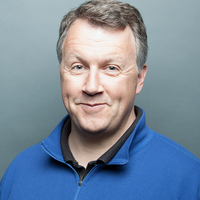
- A strong emphasis on the craft of writing and the necessity of conciseness. He frequently discusses the struggle of the editing process, comparing writing to fixing a broken machine, and advises that when addressing important people, one should relentlessly cut every unnecessary word to ensure clarity.
- Perspectives on how artificial intelligence elevates the value of human judgment and taste. He argues that in an era where AI makes generation easy, the ability to discern what is actually good and asking the right questions becomes the defining competitive advantage.
- Admiration for founder resilience and persistence in the face of criticism. He highlights entrepreneurs who continue building despite dedicated detractors and regulatory hurdles, viewing this stamina as a key trait of success.
- Interest in infrastructure products that simplify complex financial operations. He points to companies that act as the API layer for moving money, comparing them to Stripe, indicating a preference for startups that abstract away messy back-end problems for other businesses.
- Observations on the economic consequences of public policy and taxation on startup hubs. He analyzes how local regulations in places like San Francisco create incentives for companies to outsource roles or relocate to more favorable environments like Miami.
- Appreciation for art, history, and the definition of quality. He uses examples ranging from John Singer Sargent portraits to the seven-century refinement of mechanical watches to explore what constitutes bold experimentation and enduring craftsmanship.
- A focus on the relationship between personality traits and high achievement. He reflects on advice given to young people about balancing high imagination with the discipline required to prevent it from becoming neuroticism.
About their Fund

Y Combinator

Sectors
AI, SaaS, Devtools, Deeptech / Hardware, Fintech
Rounds
Pre-Seed - Series A
Avg Check Size
$150K
Notable Investments
YC pioneered the modern batch-based accelerator model in 2005, systematically transforming tiny MVPs into venture-scale companies at industrial scale with 400+ startups per batch and a portfolio exceeding 4,000 companies, achieving unusually high success rates where ~4.5-5.5% become unicorns compared to ~2.5% for other venture-backed startups. The program functions as a "brutal" peer-pressure learning environment where ~200 founders rapidly stress-test each other's ideas while Jessica Livingston serves as the fund's "social radar" to screen for founder character and create a psychologically safe, founder-first culture—positioning YC as career-risk infrastructure that makes starting a startup less risky for talented people rather than just a capital provider.

Notable Fund
Investments

































Is this information out of date? Let us know
Popular Investors
investor name
Active in
Rounds
Avg. Check
Links


Deeptech / Hardware
.svg)
Robotics

Biotech
+
12
View more in profile...
Unknown
Pre-Seed - Seed
Unknown
$400K - $2M
Unknown


Defense
Deeptech / Hardware

Energy
+
7
View more in profile...
Unknown
Pre-Seed - Series A
Unknown
$100K - $5M
Unknown

Defense
Deeptech / Hardware
Energy
+
7
View more in profile...
Unknown
Pre-Seed - Series A
Unknown
$100K - $5M
Unknown

Biotech

Health
Deeptech / Hardware
+
2
View more in profile...
Unknown
Pre-Seed - Seed
Unknown
$250K - $2M
Unknown




Climate
Deeptech / Hardware

Materials
+
4
View more in profile...
Unknown
Pre-Seed - Seed
Unknown
$400K - $1.5M
Unknown

Deeptech / Hardware
Robotics
Biotech
+
7
View more in profile...
Unknown
Pre-Seed - Seed
Unknown
$400K - $2M
Unknown
.jpeg)
Deeptech / Hardware
Robotics
Biotech
+
2
View more in profile...
Unknown
Pre-Seed - Seed
Unknown
~$750K
Unknown


Fintech
Deeptech / Hardware

Devtools
+
2
View more in profile...
Unknown
Pre-Seed - Series A
Unknown
$250K-$1M
Unknown


Or automatically find your investor matches
Upload your pitch deck to get your best investor matches in minutes.
Reveal the very best VCs to pitch for your startup
Get matching investors' email addresses
No ads. No catch. Free from VC Sheet.
Thank you! Your submission has been received!
Oops! Something went wrong while submitting the form.
Success. Check your email in 5 minutes.






.jpeg)































































.png)



































































































.jpeg)








.jpeg)



































































.jpeg)